cb.web.local

twitter Facebook Linkedin acp Contact Us

FLSmidth starts construction of first African aftermarket hub

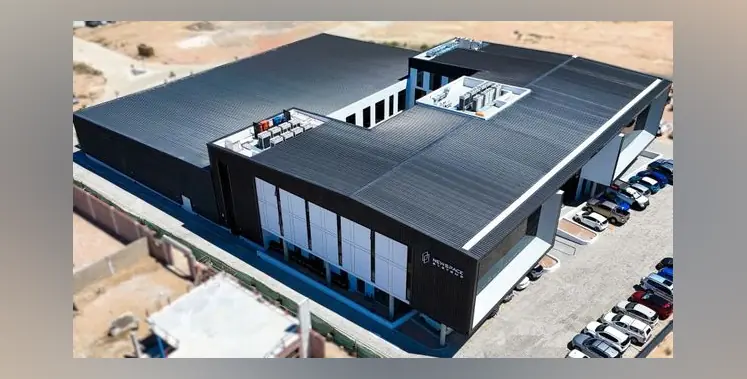
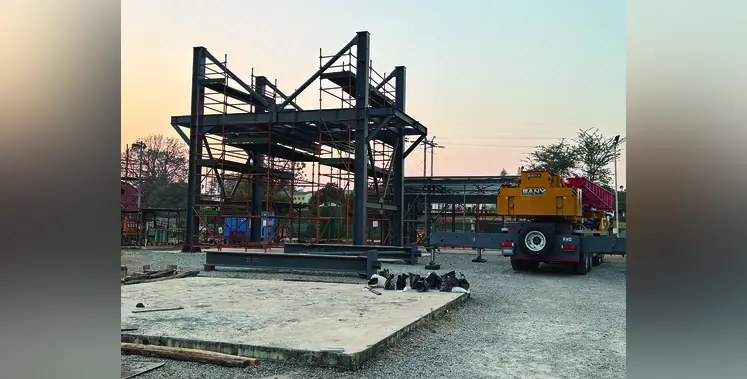
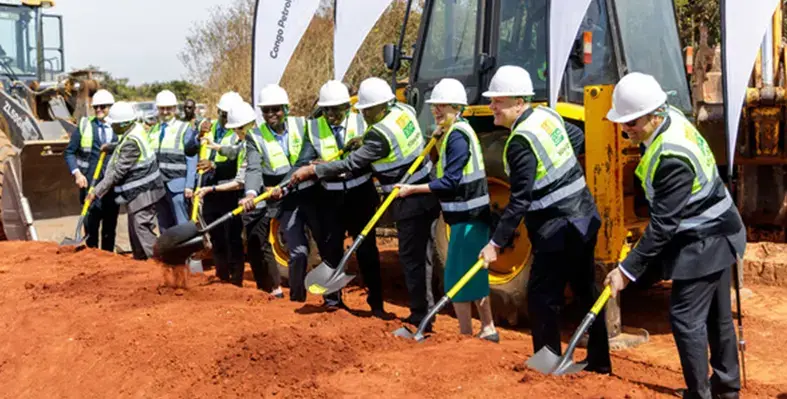
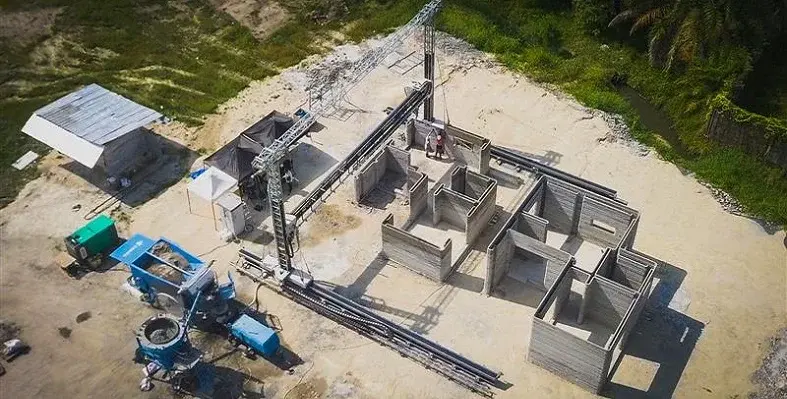
Construction starts at the FLSmidth supercentre at Delmas in Mpumalanga. (Image source: FLSmidth)

Engineering company FLSmidth has started construction on the first African aftermarket hub at Delmas in Mpumalanga

The facility will house a concentrated stock of machinery and provide South African construction base and repair services for all FLSmidth activities.

FLSmidth consultant Dave Reid said, “The supercenter will be tailored to meet customer needs related to warehousing, rebuilding and repairing capabilities in areas of plant efficiency and safety. The facility will boost the customers’ competitive advantage and also contribute to safety records.

“FLSmidth supercenters are always located close to customer operations in order to provide localised services that ensure timely delivery and support.”

The geotechnical survey of the site was completed in 2011 and bulk earthworks, conducted by Advance Projects, were completed in April 2012. 

The main building contractor, Gridline Construction, has already launched it operations at the site and construction is advancing on schedule for completion by the end of the year.

Reid added that the development of the supercenter will make an important contribution to the local municipality, both in terms of rate contributions and local employment, wherever possible.

The supercenter will comprise an office and training centre complex, workshop, stores and tool store facilities and a mobile plant workshop.

Top Stories

Grid List

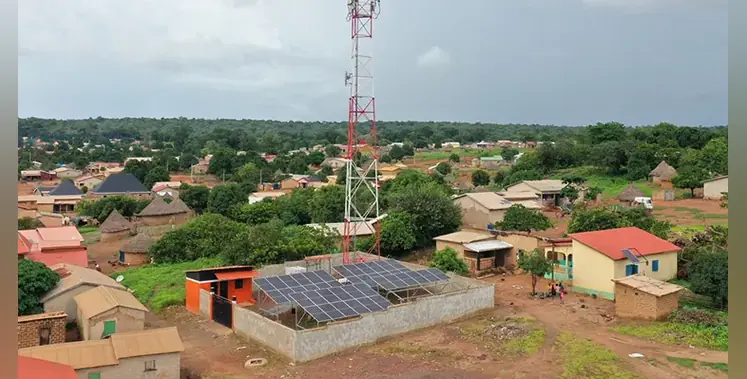
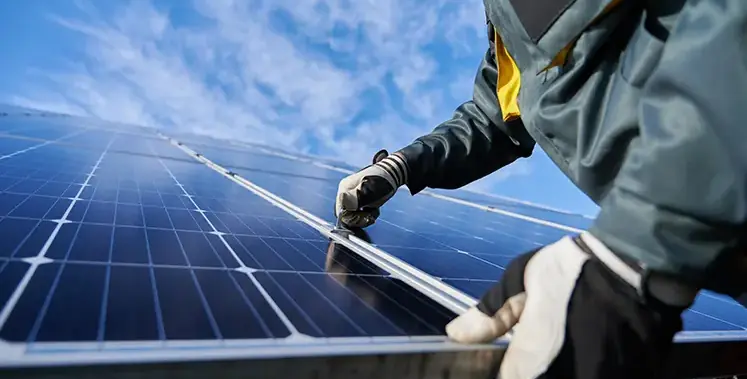
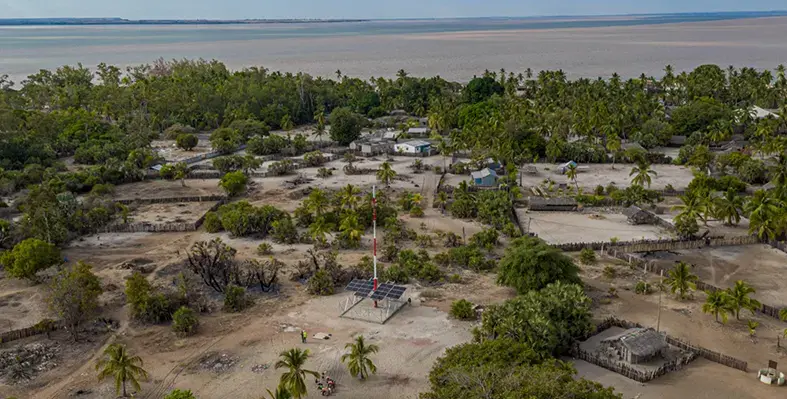
Delivering cleaner power to remote telecom sites in Africa (Image source: IFC)

Energy

IPT PowerTech has secured investment from the International Finance Corporation (IFC) to expand clean on-site power for telecom networks in Ethiopia, Liberia and Sierra Leone

The funds will support the modernisation, operation and maintenance of 2,235 telecom sites across the three countries, more than 90% of which are located in off‑grid or weak‑grid locations.

“This agreement with IFC reflects a shared vision for a greener telecom industry,” said Nabil Haddad, CEO of IPT PowerTech Group, a company based in Lebanon.

“It empowers IPT PowerTech to scale its innovative energy platforms and deliver measurable environmental and operational impact across our global footprint.”

With new solar and battery systems powering most of the sites, mobile networks will experience fewer outages, improved service quality, and reduced reliance on diesel generators, an IFC statement noted.

By improving the quality and stability of on-site power to telecom towers, the initiative will strengthen coverage and ensure households, schools, health centres and small businesses can rely on more consistent digital services.

It will also bring with it cost savings. Optimising the energy mix is estimated to reduce power costs for operators by up to 30% in Liberia, 26% in Sierra Leone, and 52% in Ethiopia, the IFC statement added.

“Reliable and affordable power for telecom networks is a cornerstone of Africa’s digital transformation,” said Nathalie Kouassi-Akon, IFC division director, West Africa Gulf of Guinea.

“Through this partnership with IPT PowerTech, we are supporting a scalable, private sector-led solution that enables mobile operators to extend coverage, improve service quality, and reach underserved and fragile communities more sustainably.”

To enable the expansion, IFC is providing a US$45mn corporate financing package consisting of an A‑Loan of US$27mn and US$18mn in blended finance from the Canada‑IFC Blended Climate Finance Program and the IDA20 Private Sector Window Blended Finance Facility.

It marks IFC’s first direct infrastructure engagement in Liberia in a decade and in Sierra Leone in six years and will help scale solar‑ and battery‑based power systems that reduce reliance on diesel and support greener, more resilient telecom networks.

“This investment demonstrates how innovative InfraTech solutions can simultaneously strengthen connectivity, reduce emissions, and unlock economic opportunity at scale,” said Kouassi-Akon.

Read more:

Mauritania on-site power for Into Africa Procurement

New on-site power plant for Benin's Cotonou stadium

Motheo copper mine on-site power project 

HAMM's Smart Compact Pro integrates real-time density, boosting asphalt quality and reducing construction costs. (Image source: HAMM)

Construction

Roller manufacturer Hamm has introduced the Smart Compact Pro under the motto “Measure it right. Measure it now.”

For the first time, real-time density is being used as a decisive parameter for qualitative assessment and integrated into automated compaction. Smart Compact Pro makes a significant contribution to extending the service life of road surfaces and, in the long term, reduces construction and repair costs, as well as potential additional expenses for the contractor.

Automated compaction with Smart Compact

Despite advances in digitalisation, asphalt compaction has so far been heavily dependent on empirical data and the experience of the roller driver. Consistent double passes and the correct use of dynamic compaction were often dependent on the driver’s knowledge. Since 2022, the Smart Compact digital compaction assistant from Hamm has been simplifying the compaction process in asphalt construction by controlling the compaction modes and forces based on the selected layer type – base, binder or surface course – automatically and separately for both drums.

The system continuously monitors the asphalt’s physical properties, such as temperature and rigidity, as well as its complex cooling behaviour, to ensure homogeneous compaction by applying the optimum compaction energy and modes in each case. There is even the option of incorporating local weather data.

Smart Compact Pro with real-time density measurement: Higher quality, lower costs

Hamm is now expanding Smart Compact to incorporate an essential measured value – real-time asphalt density. Industry experts agree that it is the decisive parameter for qualitative assessment during the compaction process and will become the key indicator for rigorously meeting regulatory requirements and minimising financial deductions.

Smart Compact Pro closes this gap by integrating the new “Realtime Density Scan” sensor into the automated compaction process. It determines the asphalt density in real time by measuring the dielectric conductivity of the asphalt mix to be compacted, therefore forming the basis for the correlation with the asphalt density or the porosity. Both parameters are crucial for self-monitoring or control testing. With the help of real-time density, Smart Compact Pro is able to provide construction companies with a decisive advantage by accurately implementing regulatory requirements.

This can significantly reduce potential financial deductions due to inadequate quality in the construction work and also save costs for premature repairs. Using Smart Compact Pro also significantly reduces the costs for extracting drill cores.

In summary, the world-first integration of real-time density into automated compaction represents a significant step forward for asphalt compaction. Even inexperienced operators can achieve optimal compaction results with Smart Compact Pro, with no need for extensive prior knowledge. This offers a significant boost for construction companies in times of an increasing shortage of skilled workers.

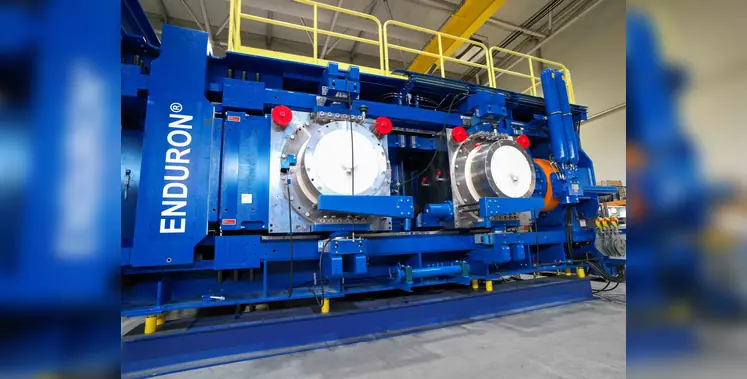
Weir has been selected to supply its ENDURON high pressure grinding rolls (HPGR) to Ivanhoe Mines’ Platreef Mine. (Image source: Weir)

Mining

Weir Group has been awarded a contract to supply its ENDURON high pressure grinding rolls (HPGR) to Ivanhoe Mines for use at the Platreef Mine, supporting the project’s Phase 2 expansion

The HPGR circuit will form part of the concentrator’s tertiary crushing stage. The decision to incorporate this technology draws on its proven performance at the Kamoa-Kakula Copper Complex, which Ivanhoe Mines operates in partnership with Zijin Mining.

Situated roughly 280 km northeast of Johannesburg, the Platreef Mine represents one of the largest undeveloped precious metals deposits globally. Phase 1 production commenced in November 2025, while Phase 2 is scheduled for completion by the end of 2027. Ivanhoe Mines is also planning a further expansion phase aimed at positioning Platreef among the world’s largest and lowest-cost producers of platinum group metals (PGMs).

ENDURON HPGR technology offers an energy-efficient comminution solution, using up to 40% less energy than conventional tumbling mills. This contributes to reduced operational costs and lower carbon emissions. The financial details of the contract have not been disclosed.

Bjorn Dierx, Weir, director of HPGR and Process, said, "Weir is delighted to be partnering with Ivanhoe Mines to supply our proven ENDURON HPGR technology. There has been a discernible trend in the mining sector towards reducing its environmental impact in recent years. The continued adoption of HPGR systems as the preferred solution for efficient, high-performance and sustainable ore processing provides one of the most significant opportunities in this regard."

"We have a large installed base of ENDURON HPGRs, and these orders reflect the strong confidence miners have in Weir’s advanced grinding technology and process expertise."

"Weir has always prioritised the service and support element of these partnerships. We understand the importance of being close to our customers and, in this case, we have a service centre less than 10km from the site to ensure we can provide immediate support during operations."

Steve Amos, Ivanhoe Mines, executive vice-president, projects, remarked, ‘HPGR technology is now fairly standard in the mining industry and has proven to be cost and energy efficient. Ivanhoe Mines has extensive HPGR operational experience gained from the three operating HPGRs at our Kamoa copper mine in DRC. We look forward to a successful and long-lasting partnership with Weir.’

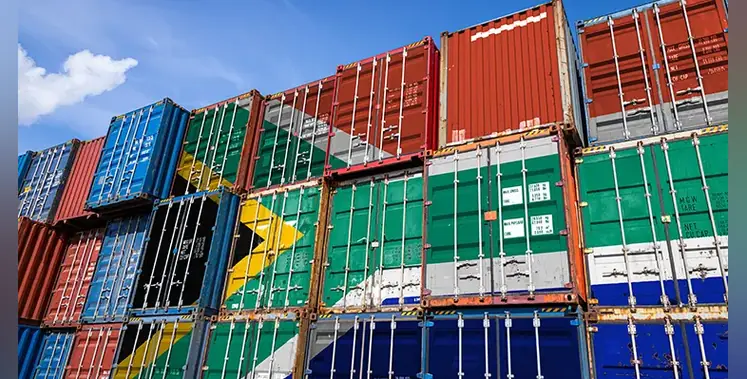
Africa's growing integration into global markets (Image source: Adobe Stock)

Logistics

Sub-Saharan African economies are strengthening their integration into global trade and investment flows, according to the latest DHL Global Connectedness Report 2026
 
It highlights the region’s growing relevance in international commerce despite heightened geopolitical tensions and global trade uncertainty.
 
“As supply chains across the globe continue to develop and trade routes expand into new territories, connectedness is emerging as a key differentiator for businesses and nations alike,” said Hennie Heymans, CEO of DHL Express Sub‑Saharan Africa.
 
“The countries in our region that are strengthening their global links are becoming more visible in international trade networks,” he noted, adding that Africa is “increasingly shifting from a narrative of aid to one of trade.”
 
The report, produced by DHL in partnership with New York University Stern School of Business, draws on more than nine million data points tracking global flows of trade, capital, information and people.
 
It found that global connectedness reached 25% in 2025, matching a record high first achieved in 2022.
 
Several countries are emerging as notable long-term improvers.
 
Namibia ranks among the top three globally for increases in connectedness since 2001, while Mozambique also features among the strongest performers over the same period.
 
More recent gains have been recorded in Nigeria and Zambia, which have posted some of the largest improvements since 2022.
 
Beyond trade and investment, the report notes a strong recovery in cross-border movement of people following the pandemic.
 
UN data shows that Africa recorded a 17% increase in international tourist arrivals in 2025 compared with 2019, the second-largest increase among world regions after the Middle East.
 
In the report’s latest ranking of 180 economies, South Africa placed 53rd globally.
 
Other African economies with relatively strong positions include Seychelles (40th), Mauritius (65th), Namibia (68th), Ghana (97th), Nigeria (100th), Mozambique (107th) and Kenya (119th).
 
“To fully unlock this potential, the region needs strong regional connectivity, predictable cross-border processes and partners that understand both local conditions and global trade requirements,” added Heymans.
 
“At DHL Express, we are committed to being a catalyst for growth in Africa, ensuring that not only is Africa a part of global trade but a key driver within it.”
 
Read more:


Afreximbank accession to help power South Africa’s economy (Image source: Adobe Stock)

Finance

South Africa has joined the ranks of the African Export-Import Bank (Afreximbank), bringing with it an US$8bn country programme that will target industrialisation efforts in the republic, and support projects in sectors like mining, automotives and manufacturing

It becomes the 54th state to accede to the banking group, marking the formal entry of one of Africa’s largest economies into the Bank’s membership, “heralding deeper financial sovereignty,” an Afreximbank statement read.

The bank called the accession a “historic milestone” as the two partners seek to unlock trade opportunities “within a global financial architecture that is rapidly fragmenting due to protectionist policies and shifting trade blocks.”

The US$8 billion country programme aims to enhance industrial development and regional supply chains and boost intra-African trade and investment flows, Afreximbank said.

“We have put together what we consider an important package of US$8bn for South Africa,” said Dr George Elombi, the bank’s president and chairman.

“The country programme is aligned with South Africa's national development plan 2030 and national industrial and trade priorities, and targets key strategic areas.”

He added that Afreximbank’s current pipeline of projects in South Africa, at different stages of review, already exceeds US$6bn, spanning healthcare, financial services, manufacturing, energy and the industrial and mining sectors.

Leveraging Afreximbank’s trade infrastructure and pan-African reach, South Africa can also more readily diversify export markets and further regional economic integration.

South African President Cyril Ramaphosa called it a milestone in the quest to realise the economic integration of our continent.

“South Africa’s accession to the African Export-Import Bank affirms our commitment to African industrial development and to deepening trade, investment and development across our continent,” he said.

“Once finalised, the South African-Afreximbank country programme will be operationalised with a finance package that will initially support a range of strategic projects across the trade and industrial cluster.”

He said one of those areas to receive immediate effect will be the nation’s Transformation Fund with the aim of supporting more black businesses.

“This partnership will strengthen in more ways than one South Africa’s ability to support South African exporters, industrial projects and regional value chains while advancing our continent’s progress.”

Read more:

AFC confirms Nigeria power bond issue

Africa poised for growth despite geopolitical upheaval

AFC, Eaglestone share the Lobito limelight


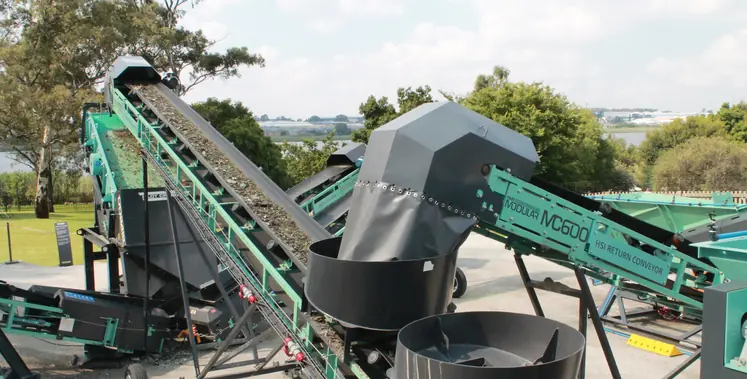
Modular glass crushing plants from Pilot Crushtec are built to grow with production needs, making it easy to increase output as throughput requirements rise. (Image source: Pilot Crushtec)

Manufacturing

Glass remains one of the most recyclable materials in the world, yet in South Africa significant volumes still end up in landfill. According to Francois Marais, sales and marketing director at Pilot Crushtec, improving glass recycling rates presents a clear opportunity to reduce energy consumption, lower carbon emissions and stimulate new business growth

Every discarded bottle or jar represents not only wasted material but also untapped economic and environmental potential.

“Unlike many materials, glass can be recycled indefinitely without losing quality,” commented Marais. “Each time we recycle glass, we are not only reducing pressure on landfills but also helping industries save energy and cut carbon emissions.”

From an environmental perspective, the advantages of recycling glass are immediate. Re-melting recycled glass, commonly referred to as cullet, requires significantly less energy than processing virgin raw materials such as silica and limestone. Lower furnace temperatures translate into meaningful energy savings and reduced emissions. At the same time, keeping glass out of landfill reduces environmental risk and supports broader sustainability goals, offering clear benefits to both industry and the environment.

The application of recycled glass goes well beyond the manufacture of new containers. Cullet plays an important role in producing fibreglass insulation products. Within the construction industry, crushed glass is increasingly being adopted as an alternative to conventional aggregates in concrete and asphalt mixes. Manufacturers of bricks and blocks are also recognising that incorporating glass cullet can improve product strength while enhancing environmental performance.

“There is a growing market for glass in construction and infrastructure,” Marais explained.

“Crushed glass can strengthen road bases, add aesthetic value to concrete surfaces and even contribute to eco-friendly brick production. This opens real opportunities for businesses to innovate and differentiate themselves.”

Demand for recycled glass is also rising in landscaping and decorative design. Once treated and processed, it can serve as a long-lasting, colourful mulch for gardens or as an eye-catching surface material for walkways and water features. In addition to its visual qualities, glass cullet is increasingly used as a filtration medium in water treatment facilities and swimming pools, where it has been shown to outperform traditional sand filters.

Its potential extends even further. Glass cullet is incorporated into reflective road markings to enhance night-time visibility and safety. In certain coastal regions, it is also being explored as a material to help restore eroded beaches. These varied uses highlight the role of glass recycling not only in everyday products but also in larger environmental and infrastructure solutions.

Pilot Crushtec is helping to advance this shift by improving access to efficient glass processing technology. The company offers modular crushing and screening plants designed to convert waste glass into premium-quality cullet. These systems are engineered for ease of installation, affordability and scalability, making them suitable for recyclers, municipalities and entrepreneurs seeking entry into the expanding glass recycling sector.

“Glass recycling represents the perfect meeting point between sustainability and profitability,” stated Marais. “It creates jobs, drives innovation and provides industries with valuable raw materials. At Pilot Crushtec, we are committed to providing the equipment that makes this possible but the real transformation will come from a broader commitment across business and society to embrace recycling as both an environmental responsibility and a business opportunity.”