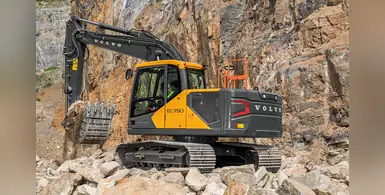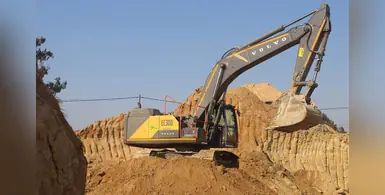







Western Cape advances Franschhoek Pass road upgrade
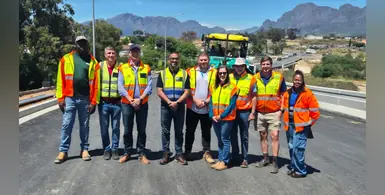
Western Cape advances a R1.165 billion road upgrade to improve Franschhoek Pass safety. (Image source: Western Cape Government)
The Western Cape Government is advancing a R1.165 billion (approx. US$12.25mn) road improvement and flood-recovery project along Franschhoek Pass, focusing on safer travel, improved regional connectivity and stronger infrastructure capable of withstanding extreme weather
Led by the Department of Infrastructure, the MR191 project includes road upgrades, resurfacing, drainage improvements and repairs to sections damaged by repeated flooding. Construction is expected to be completed in July 2027, subject to favourable conditions.
Franschhoek Pass is expected to reopen during the construction holiday, from mid-December to mid-January, with stop-and-go traffic controls in place. However, the reopening will depend on safety assessments, and the road will remain closed if conditions are considered unsafe.
Repeated flooding prompts major road repairs
Severe rainfall in October 2023 caused 16 slope failures and slips along Franschhoek Pass, leaving sections of the route damaged. Further heavy rainfall in May 2026 resulted in five additional slips and erosion at the Du Toits River bridge abutment on the Villiersdorp side.
The recurring damage has highlighted the challenges of maintaining transport links in areas exposed to extreme weather. The additional flood-recovery work has therefore been incorporated into the wider MR191 improvement programme, combining urgent repairs with measures intended to improve long-term road resilience.
Engineering measures target road safety and slope stability
The project covers several sections of the road network, with work focused on upgrading deteriorated surfaces, improving drainage and stabilising vulnerable slopes.
Approximately 9.57 km of MR191 between Old Paarl Road (MR189) and Helshoogte Road (MR172) is being widened and upgraded to a Class 1 road. Rehabilitation work also covers approximately 14 km between the Helshoogte intersection and the Franschhoek urban area, as well as approximately 16 km between Franschhoek and the Theewaterskloof Dam.
Construction activities include asphalt surfacing, pavement reconstruction, drainage upgrades and repairs to the Du Toits River bridge abutment. Specialist slope protection measures include soil nails, high-strength steel mesh, anchored gabion walls and reinforced concrete structures.
These engineering interventions are designed to address existing damage, improve road stability and reduce the risk of further deterioration during periods of heavy rainfall.
Road construction supports local employment and businesses
Beyond its transport benefits, the Franschhoek Pass project is creating opportunities for local workers, suppliers and emerging contractors.
The project has generated 94,090 person-days of local labour, exceeding its target of 70,160 person-days. A total of 357 work opportunities have been created against a target of 440, while 57 local enterprises have supplied goods and services, surpassing the target of 40.
Six emerging contractors have received subcontracting opportunities, meeting the project's target. Meanwhile, R141.15 million (approx. US$8.53mn) has been directed towards targeted enterprises, exceeding the planned allocation of R126.17 million.
These figures illustrate the wider economic contribution of infrastructure development, particularly through local procurement, employment and opportunities for smaller businesses to participate in major public works projects.
Minister Simmers emphasises on long-term infrastructure resilience.
Minister Simmers highlighted the importance of strengthening transport infrastructure following repeated flood damage and ensuring that public investment delivers lasting benefits for communities and businesses.
“The damage caused by successive flooding events reminds us why investing in resilient infrastructure is so important.
“We are not simply repairing damaged roads. We are strengthening vital transport connections, improving road safety and investing in infrastructure that must serve our communities and economy for years to come.
“Equally important is the economic value created during construction. With more than 94,000 person-days of local labour and over R141 million directed towards targeted enterprises, this project demonstrates how infrastructure investment can support livelihoods and create opportunities for local businesses
“Our commitment remains to deliver infrastructure that is safer, more resilient and capable of supporting economic growth across the Western Cape.”
Franschhoek pass upgrade targets July 2027 completion
Work on the MR191 road improvement and flood-recovery programme will continue across the affected sections, with completion anticipated in July 2027, subject to construction conditions.
The planned holiday-period reopening will depend on whether the route can be operated safely under the required traffic controls. The Department of Infrastructure will prioritise road-user safety if weather conditions or other hazards prevent the safe passage of traffic.
Once completed, the project is expected to provide improved road conditions, stronger slope protection and better drainage, helping safeguard an important regional transport connection while supporting economic activity across the Western Cape.