







South Africa’s green industrial transition has taken a step forward with the development of a first-of-its-kind green methanol facility in Gauteng that will convert municipal sewage sludge into low-carbon fuel
Green eFuels Producers (GeFP) has signed a development agreement for the project, to be located near the Sebokeng Wastewater Treatment Works in the Vaal region.
Climate Investor Three, through its affiliate SA-H2 Fund, this week committed up to US$4mn to back the pioneering waste-to-fuel venture.
“This investment is a major milestone for our project and a strong endorsement of our vision to produce green methanol using innovative, circular solutions,” said Chris Heinermann, co-founder of GeFP.
“This project will contribute to decarbonising hard-to-abate industries while addressing local wastewater challenges, creating jobs, strengthening local value chains and generating long-term value for the Vaal region.”
The facility is expected to process around 90,000 tonnes of sewage sludge annually, transforming waste material into approximately 14,300 tonnes of green methanol each year.
The project combines waste management, renewable energy and hydrogen technology in a circular industrial model aimed at reducing emissions while addressing mounting wastewater disposal challenges facing South African municipalities.
Renewable energy from a planned 50 MW solar installation, together with additional wind power sourced through South Africa’s wheeling framework, will power a 10 MW electrolyser to produce green hydrogen for methanol production.
Green methanol is gaining traction globally as industries seek alternatives to fossil-based fuels, particularly in hard-to-abate sectors such as shipping, aviation and heavy manufacturing.
Unlike conventional methanol, which is produced using fossil fuels, green methanol uses renewable energy and sustainable carbon sources.
Project developers estimate the facility could avoid nearly 119,000 tonnes of CO2-equivalent emissions annually once operational.
The development is also expected to deliver regional economic benefits: up to 300 construction jobs are anticipated during the build phase, with around 60 permanent operational roles planned once commercial production begins, currently targeted for 2029.
In addition, the plant is expected to return between 50,000 and 60,000 cubic metres of industrial-grade water annually to the local utility system, supporting water resilience in the Vaal region.
Mphokolo Makara, CEO of SA-H2 Fund Managers, said the scheme demonstrates the effects of energy transition for industrial operations in the real economy, turning everyday waste into a low-carbon fuel.
“By transforming sewage into a productive resource, it addresses a key waste management challenge while supporting local jobs and strengthening South Africa’s industrial base through a just transition,” said Makara.
“It demonstrates how circular economy solutions can play a practical role in decarbonising hard-to-abate sectors."
The project marks Climate Investor Three/ SA-H2’s second development funding in South Africa, following its investment in Hive Hydrogen’s Coega green ammonia plant in the Eastern Cape Province in 2025.
Read more:
Africa's AI ambitions face critical infrastructure questions
Funding boost for SA green methanol plant
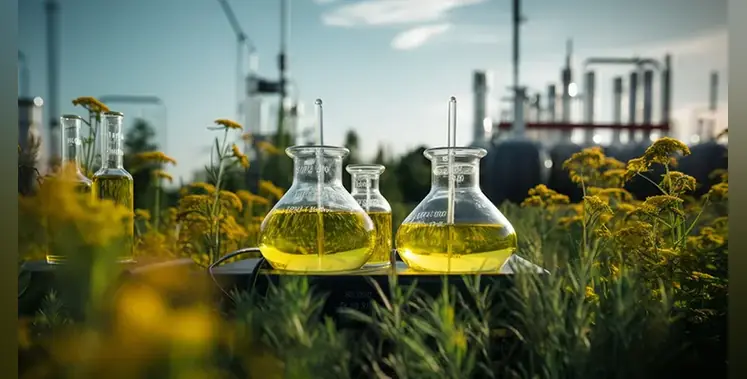
Pioneering South Africa’s green methanol segment