




vb

twitter Facebook Linkedin acp Contact Us

Project implementation at Elgin Orchards (Image source: Schneider Electric)

Schneider Electric and Technoserve Medium Voltage (MV) have implemented RM AirSeT SF₆-free medium voltage (MV) switchgear at Elgin Orchards, one of South Africa’s leading fruit producers

Situated in Grabouw in the Western Cape, the project marks another step in the continued adoption of RM AirSeT and its pure-air switchgear technology in the South African marketplace.

“The RM AirSeT installation at Elgin Orchards delivers 100% elimination of SF₆, improved reliability, and cost savings of up to 20% over the system’s lifecycle,” said Brighton Mwarehwa, offer and marketing director for power systems at Schneider Electric.

“It’s more than equipment; it’s a step toward responsible growth and energy resilience”.

The installation of the RM AirSeT forms part of Elgin Orchard’s journey to establish sustainable and resilient operations.

The switchgear replaces an existing Schneider Electric RM6 unit which has been moved to a new cold storage plant – a move that underscores the fruit producer’s commitment to resource efficiency.

“At Elgin Orchards, sustainability is at the heart of everything we do,” said Neil Reid at Elgin Orchards.

“Togeher with Schneider Electric and Technoserve Medium Voltage we’ve made a change that aligns to reliable, safe and low-carbon energy”.

According to Schneider Electric, the RM AirSeT represents the ‘next generation’ of sustainable switchgear, using pure air insulation and vacuum technology instead of sulphur hexafluoride (SF₆), a greenhouse gas (GHG) with 24,300 times the global warming potential of carbon dioxide.

By removing SF₆ entirely, Elgin Orchards has achieved measurable carbon footprint reduction and eliminated associated regulatory risks, while ensuring uninterrupted operations for its cold chain and processing facilities.

“The RM AirSeT offers not just reliability but future-proof flexibility,” said Evans Coetzee, general manager at Technoserve MV.

“It’s compact, robust and digital-ready, providing Elgin Orchards with a durable and sustainable medium-voltage solution that’s simple to install and maintain. The swap from RM6 to RM AirSeT was seamless and completed in a single day, minimising downtime.”

Coetzee said the RM AirSeT delivers up to 10,000 switching cycles and offers integrated digital capabilities for real-time monitoring and diagnostics through Schneider’s Easergy T300 platform.

“This makes it ideally suited for hybrid energy systems, frequent operations and future smart grid integration,” he said.

“The Elgin Orchards project is a clear example of how sustainability and performance can coexist,” said Mwarehwa.

“By replacing SF₆ with pure air, we are helping our customers transition towards cleaner, more resilient energy systems without compromising reliability or safety.”

Mwarehwa added: “It demonstrates how innovation in electrical distribution can make a tangible impact on climate goals while supporting South Africa’s all-important agricultural sector.”

Read more:

Phelan selects Honeywell technology for South Africa eSAF

iTek Drives expands SA industrial base

Booyco Engineering expands global defence HVAC solutions amid demand 

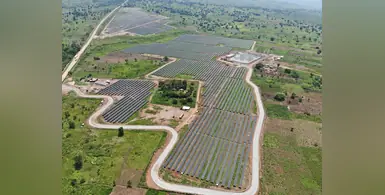
Toyota Tsusho launches two Tunisia solar plants, delivering 100MW clean energy to 120,000 homes nationwide. (Image source: Toyota Tsusho)

Toyota Tsusho Corporation has announced that, through its Group company AEOLUS SAS, it has completed construction of two solar power plants in Tunisia with a combined capacity of 100MW, and both facilities have now entered commercial operation

The development marks Toyota Tsusho’s first renewable energy project in Tunisia and the first investment project undertaken by AEOLUS.

The two plants were developed in Tunisia’s Sidi Bouzid Governorate and Tozeur Governorate through an operating company financed by AEOLUS and Scatec ASA, a Norwegian company specialising in the construction and operation of solar power facilities.

The Sidi Bouzid Mezzouna PV Power project, with a capacity of 50MW, commenced commercial operations on January 1, 2026. The Tozeur PV Power facility, also rated at 50MW, began commercial operations on March 4, 2026.

Together, the two plants are expected to provide electricity equivalent to the yearly consumption of around 120,000 Tunisian households. The project is also projected to reduce carbon dioxide emissions by approximately 108,000 tonnes annually. Power generated from the facilities will be supplied to the Tunisian Company of Electricity and Gas under a 30-year agreement.

Both solar projects were selected under the Ministry of the Environment, Japan Financing Programme for Joint Crediting Mechanism (JCM) Model Projects in fiscal year 2023.

Toyota Tsusho Group stated that it is advancing carbon neutrality initiatives to help create a better global environment for future generations. In Africa, under the key message 'for the future children of Africa,' the Group said it will continue promoting green businesses that support social development and economic growth across the continent.

The Ministry of the Environment, Japan has been implementing the 'JCM Model Projects,' which provide financial assistance covering up to half of the initial investment costs. The programme is designed to support projects that lower greenhouse gas emissions through advanced decarbonisation technologies in developing countries, while enabling the acquisition of JCM credits that contribute to Japan’s emissions reduction goals and partner countries’ climate targets. This Tunisia project is being carried out with the cooperation of the Tunisian and Japanese governments.


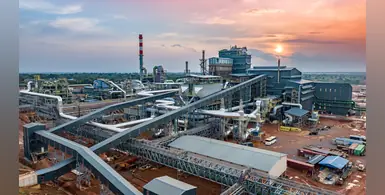
Sogara set to bolster refining capacity in Gabon (Image source: Adobe Stock)

Technip Energies has been awarded two front-end engineering design (FEED) contracts by Société Gabonaise de Raffinage (Sogara) for its refinery in Port-Gentil, Gabon

The FEED scope covers both the revamp and the expansion of the existing refinery.

"We are pleased to have been entrusted by Sogara with these two contracts, which reflect our recognised expertise in both brownfield optimisation and complex greenfield project development,” said Loïc Chapuis, president project delivery & services at Technip Energies.

The first contract covers the FEED for debottlenecking Sogara’s existing refinery.

It targets key process units and includes a new kerosene sweetening unit and four new storage facilities.

Technip Energies will ensure full process integration across existing and new units.

The second contract covers the FEED for a new, modularised hydrocracker complex designed to significantly expand refining capacity.

The scope also includes various infrastructure works, including a new marine jetty and offloading facility.

Chapuis said that Technip Energies will leverage its engineering and integration know-how into the projects, including its proprietary Steam Methane Reforming (SMR) technology for hydrogen production.

“The new hydrocracker complex demonstrates our ability to combine engineering excellence, technology integration, and our proprietary SMR hydrogen technology to deliver integrated, high-impact solutions,” Chapuis added.

Both projects are designed to meet Africa 5 fuel quality standards – the continent’s most stringent specifications for sulphur content in transportation fuels – supporting a meaningful reduction in sulphur emissions and improved air quality for local communities.

They will also support Gabon’s economic development and local employment.

“This award reinforces our commitment to modernising refining infrastructure across Africa and creating lasting value for our clients and local communities,” said Chapuis.

Read more:

Power and telecom firms join Mission 300 initiative

Renewable capacity hits record global expansion levels

Hybrid power: energy security for mines in Africa

Phelan selects Honeywell technology for South Africa eSAF. (Image source: Honeywell)

Phelan Green, through its clean fuels division Phelan eFuels, has selected process technology from Honeywell for its planned electro-sustainable aviation fuel (eSAF) facility in Saldanha Bay, Western Cape, South Africa

The project will utilise Honeywell UOP’s Fischer Tropsch (FT) Unicracking technology, which converts FT liquids and waxes derived from CO₂ into eSAF that meets aviation industry standards. The technology is designed to enable efficient and scalable production of low-carbon fuels.

“We selected Honeywell’s Fischer Tropsch Unicracking process technology because it provides a proven, bankable pathway to produce sustainable aviation fuel at scale,” said chairman Paschal Phelan.

“This project is a major milestone for Phelan Green and for South Africa’s emerging eFuels economy, and demonstrates our commitment to industrial development, job creation and innovative energy projects that are at the cutting edge of emission reduction.”

The planned facility is a central component of the Phelan Green Hydrogen Project, a R47bn (approximately US$2.5bn) private investment that has been officially recognised by the South African government as a nationally strategic green industrial initiative. Once operational, it is expected to rank among the world’s first commercial-scale eSAF plants, supplying more than 140,000 tonnes of fuel to markets in the EU and the UK.

“Honeywell’s technologies are designed to enable scalable, efficient and flexible production of low-carbon fuels,” said Rajesh Gattupalli, president of Honeywell UOP.

“In this case, our Fischer Tropsch Unicracking process technology will help support Phelan eFuels’ goal to encourage commercial scale sustainable aviation fuel production in South Africa.”

Construction of the Saldanha Bay facility is scheduled to begin in the fourth quarter of 2026. The development is expected to generate thousands of jobs across its various phases, while strengthening South Africa’s position as a future export hub for next-generation aviation fuels.

Vodacom Group highlighted renewable energy pathways and policy reforms to decarbonise Africa’s ICT sector and support sustainable growth

As climate pressures intensify and energy demand continues to rise, Africa faces the dual challenge of reducing carbon emissions while expanding access to reliable and affordable power that supports development, job creation and digital inclusion

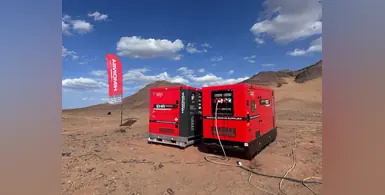
However, many sectors, including telecommunications, healthcare, mining, logistics and manufacturing, remain heavily dependent on carbon-intensive and expensive diesel generators due to weak grid infrastructure and inconsistent electricity supply.

Addressing this issue at scale will require stronger multi-sector collaboration, coordinated efforts between public and private stakeholders, and reforms within energy systems to unlock investment in renewable and decentralised solutions.

Against this backdrop, Vodacom Group has released a new white paper titled Decarbonising Africa’s ICT Sector. The report offers insights into one of the continent’s fastest-growing industries, where expanding digital and network infrastructure is driving increased energy demand while the sector works to balance decarbonisation with ongoing economic and social development.

“Decarbonisation in Africa cannot be approached in isolation or through a single-sector lens,” said Ayman Essam, chief officer: external affairs at Vodacom Group. “While we have set an ambition to work towards net-zero emissions, progress depends on systemic change across the energy ecosystem. This includes policies that enable private sector participation, new financing models, and partnerships that can scale renewable energy solutions beyond individual organisations.”

The research highlights that although Africa is highly vulnerable to climate change, it continues to face significant energy-related challenges that hinder decarbonisation. Weak grid systems, financially constrained utilities, complex regulatory frameworks and unreliable power supply all contribute to the slow uptake of renewable energy. As a result, many industries, including telecommunications, continue to rely on diesel-powered generation to sustain operations.

To overcome these barriers, the white paper outlines several practical pathways to accelerate decarbonisation across the ICT sector. These include reforms to encourage greater private sector participation in energy markets, the adoption of renewable procurement models such as power purchase agreements, and the expansion of decentralised solutions like mini-grids to support remote network infrastructure.

Vodacom’s own progress demonstrates that meaningful emissions reductions are achievable even in energy-constrained environments. In the past financial year, the company matched 100% of its purchased grid electricity with renewable sources, reducing scope 2 market-based emissions to nearly zero across most of its operations. Since FY2020, it has cut scope 1 and 2 market-based greenhouse gas emissions by 77%, largely through improved energy efficiency and renewable procurement. Continued network optimisation has also enhanced efficiency, lowering the energy required to carry increasing data volumes from 1.55 MWh per terabyte in FY2020 to 0.36 MWh per terabyte in FY2025. Currently, 61% of Vodacom’s total scope 1 and 2 energy consumption is derived from renewable sources, including onsite generation, power purchase agreements and renewable energy certificates.

While mobile network operators are significant energy consumers, the report underscores their critical role in enabling Africa’s digital and economic growth, making their participation in the low-carbon transition both complex and essential.

Developed with technical support from the Carbon Trust, the research is based on sector analysis, case studies and interviews with stakeholders across the ICT and energy value chains, including utilities, technology providers, financial institutions and regulators.

“By sharing insights and identifying pathways forward, the report aims to support more coordinated action across the industry and take up the significant opportunity for Africa to build a more resilient, inclusive and sustainable digital economy,” concluded Essam.

More Articles …