




cc.web.local

twitter Facebook Linkedin acp Contact Us

Energy

Scatec platform advances C&I renewables

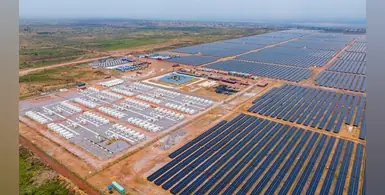
Scatec’s South African joint venture renewable platform, Lyra Energy, has secured power purchase agreements with three leading commercial and industrial customers for a substantial share of the 255 MW Thakadu solar power project

The agreements mark the first solar development under the Lyra platform in South Africa and signal growing private sector demand for dependable and competitively priced renewable energy solutions.

“The announcement of Lyra Energy’s first solar plant in South Africa is a milestone for this trading platform. Securing offtake agreements with private sector customers for the Thakadu project demonstrates the growing appetite amongst businesses for reliable, cost-effective clean power. Our aggregator model is making renewable energy more accessible, helping South African companies reduce costs and emissions while supporting the country’s energy transition,” remarked Scatec CEO Terje Pilskog.

Eben de Vos, Head of Lyra, highlighted the collaborative structure behind the project and its broader significance for the market.

“We’re proud to launch the Thakadu solar power plant with strong commercial and industrial partners onboard. By pooling resources and offering flexible, risk-managed contracts, Lyra Energy is empowering businesses of all sizes to benefit from large-scale renewable energy. This project is a testament to the strength of our partnership and our commitment to building a sustainable future for South Africa,” commented Eben de Vos, Head of Lyra.

Scatec will deliver Engineering, Procurement and Construction services for the plant, alongside Asset Management and long-term Operations and Maintenance support. Development will proceed in two phases. Financial close and construction commencement for the first phase are anticipated in the first quarter of 2026, with the second phase expected to follow later in the year. Detailed information regarding capital expenditure, financing arrangements and the full scope of Scatec’s EPC responsibilities will be confirmed at financial close.

Lyra Energy operates as a partnership between Scatec, Standard Bank and Stanlib, with Scatec holding a 50% stake and the remaining share owned by its partners. The platform is designed to provide medium and large commercial and industrial users with a lower-risk, adaptable power supply model through flexible contracting structures. By aggregating renewable generation capacity and distributing it among multiple corporate customers, Lyra enables businesses to access utility-scale clean energy without having to independently develop and finance their own projects.


Solar plant to power Botswana mining site (Image source: Adobe Stock)

Tshukudu Metals Botswana has signed a deal for a 21 MW solar power plant to be built at its Motheo copper mine near Ghanzi in Botswana

A subsidiary of Australia’s Sandfire Resources, the mining group has agreed a seven-year leasing agreement with Release, a flexible, soft financing venture majority owned by renewables group, Scatec.

Designed to overcome financial and technical barriers associated with adopting solar energy, Release offers a flexible leasing agreement for re-deployable solar PV and battery equipment to deliver clean, reliable power.

It is owned by Scatec (68%) and Climate Fund Managers (32%) via its EU-supported Climate Investor One Fund, a US$1bn blended finance facility focused on renewable energy infrastructure in emerging markets.

The Botswana solar energy project will provide clean renewable energy to Sandfire’s copper producing asset at Motheo, as well as support its decarbonisation ambitions.

In a statement, Release noted that the agreement represents the latest milestone in the expansion of its mining portfolio in Africa.

It also builds on Scatec’s established presence in Botswana following the commissioning of its 120 MW solar portfolio in the country.

“This agreement demonstrates the strength of our lease-to-own solution, where we combine technical expertise with flexible financing to enable our clients to access large-scale solar without upfront capital investment,” said Hans Olav Kvalvaag, CEO of Release.

“Bringing this solution to Botswana for the first time and in partnership with mining operation Motheo, is a major milestone for our company.”

Release will now commence project implementation with start of operations expected by the end of 2026.

Once operational the plant will generate approximately 40 GWh annually and cover about 30% of Motheo’s annual electricity demand.

Motheo is located in the central portion of the Kalahari Copper Belt in Botswana, with output exported via the port of Walvis Bay in neighbouring Namibia.

Read more:

Phoenix 30MW Ethiopian energy deal for data mine

Ethiopia's Tulu Kapi gold mine finance deal agreed

Ivanhoe Mines upgrades on-site power supply


The new installation is expected to lower UMZA’s energy expenses significantly while improving operational stability and performance. (Image source: Empower New Energy)

Empower New Energy, Paras Energy and Huawei have officially inaugurated a hybrid solar PV and battery power system at the UMZA Rice and Oil Mill in Kano, Nigeria.

The new installation is expected to lower UMZA’s energy expenses significantly while improving operational stability and performance.

The project represents a major step forward for distributed clean energy adoption in northern Nigeria. Through this investment, Empower and its partners aim to extend access to dependable and affordable solar power to more businesses across Kano, supporting regional economic growth and job creation.

“This first solar and battery investment in Kano is not only important for UMZA but will also result in wider economic and socially benefits for Nigeria's second largest industrial hub”, commented CEO of Empower New Energy Terje Osmundsen.

Official launch in Kano

The commissioning ceremony was held in Kano, where Empower New Energy joined project partners Paras Energy and Huawei to celebrate the completion of the hybrid solar and battery facility. The event was hosted by UMZA chairman and president of the Kano Rice Mills Organization, Hon. Mohammed Abubakar.

More than 30 business leaders from the region attended, alongside representatives from the Norwegian Embassy and the Kano Electricity Distribution Company (KEDCO), to witness the project and learn more about its impact on industrial energy supply.

Delivering reliable and clean power

The rooftop installation combines 1 MWp of solar PV capacity with a 2.15 MWh battery energy storage system, delivering stable, affordable and environmentally responsible electricity in a region that has historically experienced grid instability.

The project reached completion in under a year following the signing of a 10-year agreement between Empower New Energy and UMZA. Under the agreement, Empower financed, developed and will operate the plant. Paras Energy handled engineering, design, construction and operations, while Huawei supplied the solar PV and battery technology.

Strengthening industrial resilience

UMZA is one of the leading commercial rice producers in the Kano region, playing a critical role in rice cultivation and processing. As demand for rice continues to increase, dependable energy has become essential to maintain high productivity levels and efficient processing operations.

Prior to adopting solar, UMZA faced daily power outages lasting several hours, alongside frequency and voltage fluctuations that disrupted production and increased reliance on costly diesel generators. The new system integrates solar panels, battery storage and grid supply to provide a more stable and cost-effective energy mix.

“We are very satisfied with the operations of the solar and battery plant” said UMZA chairman Hon. Mohammed Abukabar at the event and added “We hope this pioneering initiative will stimulate many businesses in Kano to go solar”.

Beyond operational improvements, the investment is also expected to create employment opportunities and contribute to local economic development in Kano.

Partner perspectives

“At Paras Energy, we are dedicated to pioneering sustainable energy solutions that drive progress and preserve our planet. The innovation and installation at UMZA will make a positive impact on the economy, environment and society, enabling UMZA to not only achieve cost savings but also enhance operational efficiency”, commented Yashwant Kumar, managing director at Paras Energy.

“The solar project demonstrates how integrated battery and solar solutions improve energy reliability, reduce costs and support sustainability at the same time”, says Quan Green, Director for Digital Power, Huawei Nigeria.

“This partnership marks a significant first step in our mission to provide sustainable energy solutions in the economically important Kano region in Nigeria. By empowering UMZA Rice Mill with solar energy, we are not only enhancing their operations but also contributing to the economic resilience of the local region”, says Terje Osmundsen, CEO of Empower New Energy

Celebrating success in Nigeria

Jubail Bros has completed the testing of new MWM gas generator sets at its Nigeria facility - it marks the latest step in a new partnership with the global genset producer

“We’ve successfully completed the factory testing of our first-ever two × 1 MW gas generator sets powered by the MWM TCG2020V12 engine— right here at our Nigeria factory, and in the presence of an MWM representative,” Jubail Bros said in a statement posted on its social media.

“This marks a major step forward in our journey toward high-capacity, efficient gas power solutions, delivered with the quality, precision, and OEM-backed assurance our projects demand.”

The company called it a proud moment for its team “and a strong signal of what’s ahead in gas power execution.”

It added that the new units are part of a larger integrated power package combining gas and diesel generation, synchronisation, and ABB transformers “engineered for reliability, flexibility, and performance.”

Jubaili Bros last year announced its collaboration with MWM, a provider of sustainable gas gensets, to provide large, gas-fuelled electrical power solutions across Africa and the Middle East.

The partnership is to be built around MWM’s expertise in gas engine and gas genset technology as well as the extensive engineering and aftersales network.

As a result of the collaboration, Jubaili Bros will offer MWM gas generators with 42% and above efficiencies ranging from 400 to 4,500kW electrical that are suitable for a range of applications.

“We are confident that this collaboration will enable us to meet the growing demand for gas powered generators in the region,” Dr. Marcus Schumacher, CEO of Jubaili Bros said at the time the collaboration was announced.

Read more:

Volvo Penta launches G17 natural gas engine

Bobcat launches new generators for Africa market

Perkins names Katanga Engineering DRC distributor 

Northern Cape utility-scale solar expands

SolarAfrica has reached financial close on US$81mn to develop SunCentral 2, the next 114 MW phase of its flagship utility-scale solar programme in the Northern Cape

The funding, provided by RMB and Investec Bank Limited, represents a major step in expanding access to affordable, clean energy for South African businesses, with first power expected in 2026.

SunCentral 2 follows SunCentral 1, which also achieved financial close at 114 MW at the end of 2024. Together with SunCentral 3, these projects make up Phase 1 of the broader SunCentral vision, totalling 342 MW. At full build-out, SunCentral is planned to reach 1 GW, establishing it as one of South Africa’s largest solar initiatives designed specifically for one-to-many, bilateral wheeling.

“Businesses want power they can trust – clean, affordable and predictable – and SunCentral is being built exactly for that purpose. It’s encouraging to see the confidence from our funding partners as we move into the next stage of delivery,” said David McDonald, CEO of SolarAfrica.

He added: “More than a big solar project, SunCentral is a long-term infrastructure investment that gives companies the ability to manage their costs, cut emissions, and reduce their reliance on utility power that is often vulnerable to unpredictable tariff hikes. This next step gets us closer to bringing that value to even more South African businesses.”

Like the first plant, SunCentral 2 incorporates community development initiatives to ensure local residents benefit socially and economically. Job creation, education, local procurement, and skills development remain central to the programme, supporting economic activity in the surrounding areas in collaboration with the project’s main contractors.

SunCentral also forms a key part of SolarAfrica’s broader 3 GW wheeling pipeline under development across South Africa. By pairing utility-scale renewable generation with flexible delivery through wheeling, the company is enabling businesses to access green energy without the upfront capital typically required for on-site solar installations.

A portion of funding from each SunCentral project is allocated to the development of the Main Transmission Substation (MTS). Designed for up to 2 GW of green-power evacuation, the MTS will strengthen the national grid and facilitate the connection of future renewable projects more efficiently.

“With wheeling, we have a model that puts control back into the hands of commercial and industrial customers. Instead of just surviving tariff hikes, it allows companies to plan for growth with a cleaner, more dependable energy mix,” said McDonald.

More Articles …