






cb.web.local

twitter Facebook Linkedin acp Contact Us

Energy

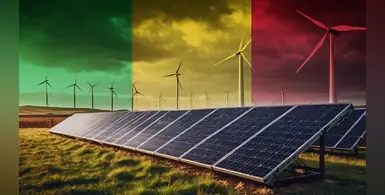
The Guinea-Mali interconnector is a major regional energy project (Image source: Adobe Stock)

The African Development Bank (AfDB) has announced a 20-month debarment of a Mali-registered company, IYA S.A.R.L, in connection with a flagship cross-border energy transmission project

“An investigation conducted by the Office of Integrity and Anti-Corruption of the African Development Bank Group established that, in the context of the tender for the construction of electricity infrastructure under the Guinea-Mali Electricity Interconnection Project (the PIEGM Project), IYA S.A.R.L. committed a fraudulent practice,” the AfDB said in a statement.

It added that the company now faces a 20-month debarment, with “conditional release, requiring the company to complete an integrity compliance programme.”

During the debarment period, IYA S.A.R.L. and any affiliates will not be eligible to participate in AfDB-financed activities.

IYA S.A.R.L. is a construction company registered in the Republic of Mali.

No other details were released, but the AfDB’s Office of Integrity and Anti-Corruption is responsible for preventing, deterring and investigating allegations of corruption, fraud and other sanctionable practices in group-financed operations.

At the expiry of the debarment period, IYA S.A.R.L. will only be eligible to resume participation in ADB-financed activities upon evidence of satisfactory completion of an integrity compliance programme consistent with the bank’s guidelines.

The PIEGM project is a major cross-border transmission scheme designed to contribute to the reinforcement of electrical energy exchanges between the countries of the West African sub-region and in particular, between Guinea and Mali, and to promote the socio-economic development of both countries through increased access of the population to high-quality, low-cost electricity.

The main project objectives are to increase electricity supply to the eastern part of Guinea, as well as enable electricity trade between Guinea and Mali, and to increase Guinea’s electricity export capability towards other West African Power Pool countries.

The AfDB has debarred half a dozen other companies in recent months across various parts of the continent, citing fraudulent practices, including Tetralink Taylor & Associates East Africa Limited and Malawi’s J&J Construction Company.

Société Malienne de Construction, de Transport et d’Hydrocarbure (SOMACOTH SA), another company registered in Mali, together with its former general manager, Boubacar Bah, was also debarred in December, as well as Yessan Sarlu, registered in Togo, and its general manager, Ayitévi Yao Mawulolo Amadote.

The list also includes Chinese-registered companies, Jiangxi Transportation Engineering Group Limited and Hangzhou Fuchuan Electric Equipment Co., Ltd.

Read more:

Mozambique gets transmission lines, data centre boost

South Africa secures World Bank loan for infrastructure revival

Weza Power to accelerate Burundi electrification


Totogi has been selected by an Africa-based MVNE to run 30 mobile brands and nearly one million subscribers on a single cloud-native charging platform

Totogi Today has revealed that an Africa-based mobile virtual network enabler (MVNE), supporting around one million subscribers across 30 mobile brands, has chosen Totogi Charging-as-a-Service to manage its entire multi-brand operation on a single cloud-native charging platform

The MVNE oversees a broad mix of prepaid, eSIM, broadband, and value-added mobile services for both consumer and enterprise offerings, all delivered through a unified infrastructure. By adopting Totogi’s pay-as-you-grow, price-per-transaction model, the operator aims to maintain tighter cost control, enable flexible scaling, and simplify the management of multiple brands through one multi-tenant charging environment.

Totogi’s multi-tenant platform introduces a new operating model for the MVNE. Each MVNO brand operates within its own dedicated tenant, with full autonomy to create tariffs, set pricing, and launch promotions, without relying on the MVNE for routine changes. This approach allows brand teams to move faster, while the MVNE retains overarching visibility and governance across the platform. The self-service capability removes much of the operational friction typically associated with supporting multiple MVNOs.

“Running multiple brands on one charging platform is the kind of operational complexity that would paralyse a legacy charging deployment,” said Danielle Rios, CEO of Totogi. “With Charging-as-a-Service on AWS, this MVNE gets elastic scale, instant pricing changes, and the ability to spin up new MVNOs, each with its own separate tenant, without spinning up new infrastructure. Each MVNO controls its own offers; the MVNE manages the platform. This is what modern charging looks like: one platform, 30 brands, a million subscribers, zero change requests.”

The deployment is currently in progress, with full implementation expected to be completed in early 2026.

Ethiopia investing in solar energy

South Africa’s Thabo Consulting Engineering (TCE Africa) and Portugal’s Sun Business Development (Sun BD), have been awarded a contract to provide consultancy services for Ethiopia’s Weranso solar PV project

The contract, worth US$706,790, includes consultancy services for a feasibility study; preparation of an environment and social impact assessment; preparation of a resettlement action plan; and to compile bidding documents for the utility-scale project.

The 100MW Weranso project is being led by the Ethiopian Electric Power (EEP) with support from the African Development Bank and will be built in the country’s north-eastern region, near to Djibouti.

It forms part of a broader Ethiopia-Djibouti interconnection initiative and expands on the country’s bold energy production ambitions.

The Ethiopian government is also looking at the construction of another utility-scale solar PV projects, Gad II, also 125MW, as it seeks to further expand its renewables power capacity.

In 2025, the country inaugurated the flagship Grand Ethiopian Renaissance Dam, which has an installed hydro capacity of 5,150MW.

The government hopes to raise Ethiopia’s total installed capacity from around 9,750MW currently to 14,000MW by 2030, with a strong focus on solar, hydro, wind, geothermal and other renewable energy sources.

EEP is simultaneously upgrading its transmission and distribution infrastructure, most recently completing a capacity expansion at the 230kV Legetafo substation, which it called “a major milestone in strengthening Ethiopia’s regional power grid.”

A defining feature of the project, it noted in a statement, was its execution by its own maintenance professionals, “demonstrating the strength of in-house technical capacity.”

EEP is also moving forward with the Gimbi-Tulu Kapi transmission and substation project in support of the nation’s mining sector, supplying reliable energy to the Tulu Kapi gold mine.

On the Weranso project, TCE Africa and Sun BD secured their contract against competition from other international consultants, including firms from China, Nigeria and Germany.

Read more:

Phoenix 30MW Ethiopian energy deal for data mine

Ethiopia's Tulu Kapi gold mine finance deal agreed

Ethiopia inaugurates GERD hydro dam

AI streetlights could finance Lagos–Calabar Coastal highway.(Image credit: iLamp)

Nigeria’s long-stalled Lagos–Calabar Coastal Highway could gain new momentum through an unconventional financing model that turns roadside infrastructure into a major source of income

A proposal led by British greentech company Conflow Power Group, in partnership with Nigerian infrastructure firm Mora Energy, is being discussed with the Nigerian Government to address the project’s persistent funding challenges. The plan centres on the deployment of thousands of iLamps, solar-powered smart streetlights that also function as nodes in a distributed, AI-driven data centre network.

The iLamps operate entirely off-grid, requiring no external electricity supply. Each unit is equipped with Nvidia AI processors, allowing it to provide computing power that can be rented by global AI companies, including OpenAI, creating a continuous revenue stream alongside its public infrastructure role.

Through a collaboration with UK-based AI Factories Limited, every iLamp would serve as part of a decentralised AI computing network. Each unit is expected to generate up to US$4,500 per year in fees paid by AI service providers

If rolled out along the full 700km highway, the proposed installation of around 28,000 iLamps could generate approximately US$1.26bn annually, potentially covering a significant portion of the highway’s construction and long-term financing needs.

Stanley Chuka-Umeora, founder of Mora Energy, said, “Our government contacts immediately understood the significance of what Conflow was proposing. For 50 years, Nigeria has struggled with this project because we were applying 20th-century solutions to 21st-century problems. iLamp represents genuinely innovative thinking. It is not just infrastructure, it is revenue-generating technology that brings AI capabilities to Nigeria for the first time.

“Government officials were particularly impressed that iLamp solves multiple problems simultaneously. It's not just about financing, it's about security, communications infrastructure, and bringing cutting-edge technology to Nigerian communities.”

Zainu Goba, CEO of iLamp Africa, highlighted the commercial appeal of the model.

“The financial mathematics are compelling. iLamp doesn't just provide lighting and security, it creates a new revenue stream that could contribute more than a billion dollars towards project costs annually. Combined with zero operational costs through solar power, this improves the project's attractiveness to private investors and has the potential to positively transform the lives of millions of Nigerians,” he said.

Under the proposal, revenue generation would begin as soon as completed sections of the highway become operational, reducing dependence on toll revenues and public funding. Beyond lighting, the smart streetlights would deliver a range of services, including surveillance, vehicle recognition, emergency response systems, public connectivity and environmental monitoring, all powered entirely by solar energy.

The initiative would also create one of Africa’s largest distributed AI computing networks, allowing data processing to take place locally rather than abroad. This could support Nigeria’s expanding technology ecosystem and strengthen its position as a regional hub for AI infrastructure.

Discussions between iLamp Africa, Mora Energy, the Nigerian Government and other project stakeholders are ongoing, with the aim of formally integrating the technology into the Lagos–Calabar Coastal Highway.

Originally conceived in the 1970s, the 700km highway is intended to link nine coastal states and stimulate trade, tourism and economic development across southern Nigeria. Despite its strategic importance, the project has faced repeated delays due to funding gaps, political transitions and economic pressures.

Although construction resumed in 2024, only about US$747mn has been secured so far, representing less than 6% of the estimated US$11–12.5 billion total cost. The remaining shortfall of more than US$10bn continues to raise concerns that progress could once again be stalled without innovative financing solutions.

Namibia is keen to lead Africa’s nascent green ammonia sector (Image source: Adobe Stock)

A flagship green ammonia project in Namibia, led by Zhero, a European clean energy developer, has received a US$5.15mn funding boost from SDG Namibia One Fund

Namibia’s energy transition and green hydrogen fund is supporting the Zhero Molecules Walvis Bay Project through funding provided by the European Union’s Global Gateway and Invest International.

Expected to start commercial operations in 2030, the project aims to produce 500,000 tonnes of green ammonia annually, avoiding an estimated 1.2 million tonnes of carbon emissions a year.

“Namibia has the natural resources, strategic location and national vision to become a global leader in green ammonia and hydrogen,” said Paolo Gallieri, Zhero’s chief operating officer.

“With this support, we are strengthening our ability to deliver a world-class facility that can attract long-term investment, create economic opportunities for the country and contribute to global decarbonisation efforts.”

Zhero Molecule Walvis Bay is the company’s flagship project in green molecules.

The project will be powered by an integrated renewable energy system comprising 3 GW of solar PV, 2.2 GWh of battery energy storage, a 1.6 GW electrolyser system and 110 km of new transmission infrastructure.

A desalination plant is planned as part of the project’s water supply solution.

Green ammonia produced by the project is expected to serve global decarbonisation markets, including fertilisers, maritime fuels and industrial feedstocks.

SDG Namibia One Fund (also known as Climate Investor Three Namibia) is managed by Climate Fund Managers (CFM), a climate-focused blended finance investment manager, in partnership with Dutch development finance institution, Invest International, and the Environmental Investment Fund of Namibia (EIF).

“Zhero’s project aligns strongly with Namibia’s ambition to build a competitive green hydrogen and ammonia industry, as well as with the mandate of our SDG Namibia One Fund,” said Darron Johnson, regional head of Africa at CFM.

“The site benefits from exceptional solar resources, ample land and direct access to deep-water export infrastructure at Walvis Bay, making it well-suited for industrial-scale green ammonia production. Through its blended finance structure, SDG Namibia One is providing early-stage development capital alongside Zhero needed to de-risk the project and prepare it for financial close, creating the conditions for private capital to invest at scale in the construction phase. We look forward to working with Zhero to bring this important project from development, through construction and into operation.”

Green ammonia is produced by combining green hydrogen, generated through electrolysis powered by renewable energy, with nitrogen extracted from the air.

It is a zero-carbon fuel and chemical feedstock with applications across sectors including fertiliser production, maritime shipping and industrial processes; green ammonia is seen as important for decarbonising these hard-to-abate industries, where few alternative zero-carbon solutions currently exist.

The industrial-scale green ammonia facility, located near Walvis Bay in the Erongo region on Namibia’s central coast, is expected to create 6,000 jobs during the construction phase and around 500 permanent roles.

A final investment decision is targeted for 2027, with commercial operation expected in 2030.

Read more:

IAEA explores Africa nuclear power options

Liebherr explores green ammonia potential for power generators

Namibia hydrogen project marks another milestone

More Articles …