




vc.web.local

twitter Facebook Linkedin acp Contact Us

Energy

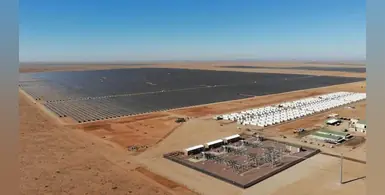
The projects will see the construction of nine solar power plants with a combined installed capacity of 595 kW, supported by 1.7 MWh of battery energy storage. (Image source: CEI Africa)

Stichting Clean Energy and Energy Inclusion for Africa (CEI Africa) has, through its Crowdlending Window, finalised a US$1.5mn junior secured loan with Mionwa Generation SA, OnePower’s special purpose vehicle in Benin, in partnership with crowdfunding platform Energise Africa

As part of the same financing round, Energise Africa has secured a further US$970,000 in senior secured debt and plans to raise an additional US$420,000.

Together, the financing totals US$2.9mn and will fund the development of nine solar mini-grid projects in rural areas of Benin. The projects will see the construction of nine solar power plants with a combined installed capacity of 595 kW, supported by 1.7 MWh of battery energy storage. Once commissioned, the mini-grids are expected to supply clean, dependable electricity to around 4,700 households and businesses, replacing more polluting energy sources while providing continuous power.

In parallel with the debt financing, CEI Africa has committed up to US$972,000in results-based financing grant support. Additional results-based funding has been secured from the Universal Energy Facility (UEF), a multi-donor programme managed by Sustainable Energy for All (SEforALL), which has allocated a total of US$1.66mn in incentives across five project sites.

“This financing marks a major milestone for the OnePower Mionwa portfolio in Benin. By combining CEI Africa’s and UEF’s RBF’s with debt from CEI Africa and Energise Africa, we are able to bring commercially viable, sustainable, utility-grade solar mini-grids to communities that have historically been left behind by the central grid” said Matthew Orosz, CEO of One Power Group.


New All-in-One energy storage system targets residential and small C&I users with scalable, intelligent performance. (Image source: GoodWe)

Building on the strong market reception of its single-phase ESA Series, GoodWe has unveiled a new three-phase All-in-One energy solution tailored for residential and small commercial and industrial (C&I) applications

Designed to seamlessly combine solar power generation, energy storage, and intelligent energy management, the new system raises the bar for flexible, high-performance energy solutions, offering greater efficiency, autonomy, and reliability across a wide range of use cases.

Simple installation, flexible expansion

The ESA three-phase solution features a pre-wired, modular architecture that enables fast installation and straightforward commissioning. With one-click configuration and upgrade capabilities, users can deploy the system quickly with minimal complexity.

To support evolving energy needs, the system is compatible with four battery module capacities — 5, 6, 8, and 9kWh, and allows mixed use of new and existing modules with different capacities. This approach enables capacity expansion without replacing current equipment, safeguarding the user’s initial investment.

The system supports the parallel connection of up to 12 battery modules, delivering a maximum storage capacity of 108kWh, while up to six systems can operate in parallel in both on-grid and off-grid modes. With a scalable range of 5–30kW / 5–108kWh, the ESA three-phase solution is well suited to both homes and small C&I environments.

Higher output, lower overall cost

Engineered to deliver strong performance with reduced upfront investment, the system is designed to maximise energy output while controlling system complexity and cost. Dual output ports simplify overall system design by minimising the need for additional components, reducing installation time and long-term maintenance, while also enabling full off-grid operation for enhanced energy independence.

With 1C charge and discharge capability, the system supports faster energy cycling, allowing the same power output to be achieved using fewer battery modules. Support for 21A per string PV input and up to 200% PV oversizing further enhances solar harvesting, helping users increase self-consumption, shorten payback periods, and maintain a stable power supply during peak demand or low-sunlight conditions.

Intelligent energy management for greater value

The system integrates seamlessly with GoodWe’s SEMS+ intelligent energy management platform, turning advanced hardware into measurable user value. Leveraging AI-driven algorithms, SEMS+ forecasts power generation using weather data and dynamically optimises charging and discharging to maximise solar utilisation.

Users also gain access to detailed energy usage analytics and revenue reports, offering clear visibility and control over consumption patterns while supporting both financial savings and sustainability goals.

Safe, quiet, and dependable operation

Designed with safety and comfort in mind, the ESA three-phase solution incorporates AI-powered protection features, including six-layer safety protection and AFCI 3.0 technology to guard against overheating, overcurrent, short circuits, and arc faults.

The system is built for dependable performance in demanding conditions, featuring an integrated heating function for stable operation down to -20°C and an IP66 rating for resistance to dust and water. Smart fan cooling keeps operational noise below 35dB, while ultra-fast backup switching of less than 4ms ensures uninterrupted power during grid outages.

From single-phase to three-phase applications, and from residential to small C&I use, the GoodWe ESA All-in-One series continues to evolve. With its focus on flexible scalability, intelligent cost efficiency, and robust safety, the new three-phase solution sets a new benchmark for energy storage across diverse scenarios.

Looking ahead, GoodWe remains committed to advancing innovation in the renewable energy sector, delivering smarter and more sustainable energy solutions worldwide, and supporting the transition toward a greener, low-carbon energy future.

Proving the viability of Madagascar’s mini-grids. (Image source: CrossBoundary Access)

CrossBoundary Access and ANKA have completed the acquisition of an asset company owning four operational mini-grid projects developed, built, and operated by ANKA in Madagascar

ANKA is a mini-grid developer, while CrossBoundary Access describes itself as Africa’s first blended finance platform for mini-grids.

The Madagascar portfolio comprises 1.7MW of solar PV and 5.6MWh of battery storage, serving thousands of customers across the Atsimo-Andrefana region.

“This acquisition demonstrates our confidence in Madagascar’s mini-grid market and ANKA's proven track record,” said Gabriel Davies, managing director, CrossBoundary Access.

“It shows that best-in-class mini-grids developers, working with supportive government policies and donor support, can deliver both impact and commercial returns.”

The acquisition is the first phase of a US$20mn partnership announced by Access and ANKA in June 2025.

Together, the two sides will finance, build and operate mini-grids to provide power to over 62,000 people across Madagascar, aligned with national energy priorities and the Mission 300 Initiative.

CrossBoundary Access becomes new majority shareholder alongside ANKA which remains a shareholder of the asset company.

The two companies aim to demonstrate that decentralised infrastructure can reach scale, liquidity, and profitability — all while delivering universal energy access and complying to the highest technical standards.

In a statement, CrossBoundary Access noted that Madagascar presents a “compelling investment opportunity for mini-grid infrastructures.”

It added: “With a national electrification rate of 36%, and a rural electrification rate of 15%, and clear regulatory framework, the Malagasy market has established the foundations for private sector energy access solutions.”

It noted that the transaction paves the way for more developers and investors to structure similar microgrid partnerships, with a “replicable example” of how to align early-stage venture capital, concessional funding, project cashflows, and local developer capacity.

Camille André-Bataille, founder and CEO of ANKA, called it a signal to the market.

“It supports the business model of developers, and shows that when execution meets ambition, the developer itself becomes investable. This is what the sector needs to grow: unlocking corporate finance for developers who can replicate these successes across multiple geographies.”

Read more:

Sierra Leone solar mini-grid project

Solar mini-grids could power 8.5 million Zambians by 2030

https://africanreview.com/energy/grant-funding-approved-for-12mw-eritrea-mini-grid-project


JA Solar launches integrated PV storage system for microgrid

As energy reliability and sustainability become critical priorities for commercial and industrial (C and I) operations, JA Solar Technology Co., Ltd. has introduced an advanced Battery Energy Storage System (BESS) designed for on-grid and off-grid C and I microgrids

The integrated PV storage generator solution tackles core energy management challenges, providing a dependable framework for businesses operating in regions with unstable power supply. By combining solar photovoltaic generation, energy storage and backup generators, the system delivers continuous power, cost efficiency and environmental gains.

C and I energy environments face a range of challenges. Unreliable grids and frequent load shedding result in expensive downtime, disrupting operations and productivity. Fluctuating electricity tariffs, alongside dependence on diesel generators, make energy costs volatile and environmentally damaging. In addition, misalignment between solar generation and demand often leads to low self-consumption and energy losses through curtailment. Together, these factors increase operating costs and limit progress toward sustainability goals.

JA Solar’s BESS solution addresses these issues through a set of advanced capabilities. The system supports both AC and DC coupling and enables multi-parallel Power Conversion Systems of up to 3MW. It allows rapid switching from grid-connected to island mode within 20ms using PQ and VF control modes, ensuring uninterrupted power to critical loads during grid outages. A site-level Energy Management System coordinates PV systems, storage units and generators to optimise energy dispatch. This significantly reduces diesel usage while maintaining stable power supply. The black start function enables autonomous system recovery and energy reconstruction, allowing fast restoration following outages.

The benefits are both immediate and wide-ranging. The integrated PV storage generator architecture improves power reliability and overall system stability, reducing the impact of grid failures and load shedding. Energy storage enables peak valley arbitrage, allowing users to store lower-cost energy during off-peak periods and use it during peak demand. This can cut electricity costs by 6 to 12% while lowering reliance on costly backup generation. By smoothing renewable energy fluctuations, the system increases solar self-consumption and reduces curtailment losses.

Safety is a key pillar of the solution. JA Solar applies rigorous battery cell screening, with multi-dimensional selection and testing processes. Multi-layer protection combines electrical, structural and explosion-proof measures, supported by a three-level fire protection design. The company reports zero safety incidents, reflecting a strong safety record. From a cost perspective, the integrated PV storage generator control system optimises total energy expenditure, with low auxiliary consumption, high overall efficiency and a modular design that simplifies operation and maintenance.

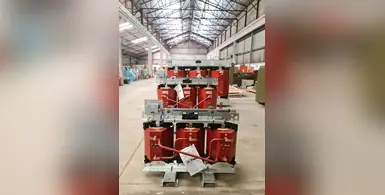
Reliability is further reinforced through seamless grid-connected and off-grid switching, black start capability and strong resistance to environmental and electromagnetic interference, supported by an isolated transformer. JA Solar also offers one-stop service and full lifecycle intelligent operation and maintenance support to ensure long-term system performance.

The solution is available across multiple models, including JAP-100kW, JAP-150kW, JAP-250kW, JAG-500kW and JAG-1000kW. Nominal AC power ranges from 100kW to 1000kW, with nominal currents between 144A and 1445A. All models operate at a nominal voltage of 400V with a voltage range of 320 to 460V and a frequency of 50 or 60Hz. Power factor adjustment ranges from 1.0 leading to 1.0 lagging, with overload capacity of 110 percent long term and 120 percent for one minute. On-grid and off-grid switching is completed within 20ms.

PV integration is optional, with MPPT trackers ranging from two on smaller systems to sixteen on the JAG-1000kW model. MPPT rated power spans from 150kWp to 1200kWp. Battery systems use 3.2V 280Ah LFP cells, with configurations from 1P240S to 10P240S and nominal energy capacities from 215kWh to 2150kWh. All systems feature IP54 protection, intelligent air cooling and operation at altitudes up to 2000m, with derating above this level. Fire suppression uses aerosol systems for smaller units and HFC-227ea for larger models, while EMS communication is supported via RS485 and TCP/IP. MPPT and battery configurations can be customised to meet project-specific requirements.

JA Solar’s BESS solution demonstrates a future-ready approach to C and I microgrids, combining safety, efficiency and resilience.

For inquiries, contact This email address is being protected from spambots. You need JavaScript enabled to view it. or visit www.jasolar.africa. This innovation not only stabilizes energy supply but also drives economic and ecological advantages, positioning businesses for a resilient future.


Pulse is a software backbone for companies delivering financed products, initially powering Bboxx’s services in Africa and now expanding to other businesses. (Image source: Bboxx)

Abci-Nexus, the technology-enabled holding company, has introduced Asopo Technologies, bringing its proprietary Pulse software to market as a standalone offering

The holding company also includes Bboxx, a retail and consumer credit company focussed on the provision of essential services across Africa.

Building on the legacy of Bboxx built up over 15 years, this latest move by Abci-Nexus marks a major evolution for the group and is designed to accelerate scale, impact, and long-term value creation across its markets.

Under the new company architecture, Bboxx will continue as the group’s retail and consumer credit business, headquartered in Kigali and focussed on serving aspiring urban and underserved rural customers with clean energy, clean cooking, smartphones, e-mobility and selected financial services, using pay-as-you-go and other asset-financing models powered by Pulse.

The new company Asopo Technologies will commercialise and scale Pulse, the group’s fully integrated operating system originally designed to run Bboxx’s distributed operations, into new geographies and across multiple sectors, developing a leading B2B SaaS platform for asset-financed products in growth markets.

Anthony Osijo, group CEO, Abci-Nexus, said, “This marks a new beginning for the company. This structure allows each part of the group to focus on what it does best. Abci-Nexus will concentrate on capital, partnerships and governance; Bboxx on delivering reliable products, great service, and meaningful impact for households, businesses, and communities; and Asopo Technologies on building world-class scalable software. By focussing on our strengths in each vertical, we can improve quality and efficiency, scale faster, and further catalyse our impact.”

Pulse integrates mobile money, device and asset tracking, and credit operations into a single AI powered platform, improving customer quality and operational efficiency for Bboxx and its partners. Asopo Technologies takes its name from the Yoruba word for “connection”, reflecting its role in connecting people, data, and finance.

Christopher Baker-Brian, co-founder and chief technology officer, Bboxx and Managing Director, Asopo Technologies, remarked, “Pulse has always been the digital backbone powering Bboxx’s growth for more than a decade, enabling us to build and scale distributed, asset-financed businesses in some of the world’s most complex markets. By spinning it out under Asopo Technologies, we can offer the same infrastructure to other companies. Our goal is to make building and scaling asset-financed businesses in emerging markets dramatically easier, across Africa and beyond.”

Pulse already processes millions of transactions a month, connects thousands of agents, and supports the delivery of clean, affordable energy and connectivity to more than six million people.

Representatives of Abci-Nexus’s shareholder consortium, who include PIDG (Private Infrastructure Development Group) said, “As long-term investors, we are fully aligned behind this next chapter for Abci-Nexus. Over the past two years we have worked closely with the leadership team to strengthen the group, sharpen its strategic direction, and position it for sustainable growth. The new architecture provides the clarity, focus, and operational discipline needed to unlock the full potential of Bboxx, Asopo Technologies and the wider portfolio. We remain committed to supporting Abci-Nexus as it scales its impact, deepens market penetration, and delivers life-changing products and services to millions more people.”

Abci-Nexus is, through its portfolio companies, already positively impacting the lives of more than six million people in seven operating markets, directly contributing to 12 of the 17 UN Sustainable Development Goals. It is one of the largest retail networks in Africa, with more than 3,000 staff across the continent and support teams in Europe and Asia.

More Articles …