






Burundi PPP funding deal to unlock electrification
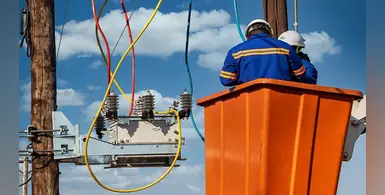
Burundi to expand electrification (Image source: Adobe Stock)
Burundi is poised to hasten electrification efforts in the country in the wake of a new public-private partnership (PPP) deal that could unlock US$1.4bn in new financing
Like other countries in the region, many people Burundi still lack access to basic services including electricity.
Expanding access to electricity remains an important development priority for Burundi, particularly in rural communities where access has historically been limited.
Addressing this challenge requires not only increased power generation, but also sustained investment in transmission and distribution infrastructure to ensure that reliable and affordable electricity reaches communities, farms, businesses and industries across the country.
To mobilise additional funding, the government has signed a 25-year PPP agreement with Weza Power targeting grid expansion to more than half of Burundi.
It also establishes Africa's first new national-scale electricity distribution concession to be operated by a private company in decades, marking a significant milestone for the country and for Africa’s energy sector.
Burundi President Évariste Ndayishimiye called electricity the foundation of his country’s economic transformation plans and a key pillar in its Vision 2040-2060 ambitions.
“This partnership will expand opportunities for our people, strengthen our industries, and create conditions for investment, jobs and lasting prosperity,” said Ndayishimiye.
“It proves what can be achieved when government and private sector partners unite behind a shared national vision.”
Distribution agreement
The PPP establishes a model for expanding energy by bringing together government with private investment and development finance to grow electricity access from approximately 15% on grid electrification today to more than 50% — providing first-time or improved access for an estimated 8 million people.
Burundi's electricity utility, REGIDESO, will continue to supply electricity through the national transmission network and maintain responsibility for distributing power in half the country, while Weza Power will expand and operate the distribution network in the other half.
This will mean delivering 52,000 km of new and upgraded distribution lines, connecting over 1.2 million new households and businesses.
It will also create over 2,000 direct installation and operational jobs and over 30,000 indirect jobs for locals.
Funding structureThe blended finance structure will mobilise both private commercial capital and concessional funding without increasing public debt, drawing on money from Mission 300 partners, including the World Bank’s ASCENT programme, the International Finance Corporation (IFC), MIGA and the African Development Bank.
It will also draw support from the US International Development Finance Corporation (DFC), Gridworks, a part of British International Investment, US Trade and Development Agency, NORAD, and other partners.
PPP electrification model
Weza Power is a part of the Anzana Electric Group, which has invested in Burundi since 2018 through Songa Energy, which comprises one operational hydropower plant and a second currently under construction.
“This PPP will strengthen Burundi's ability to compete, attract investment and retain more value from its own resources,” said Brian Kelly, CEO of Anzana Electric Group and Weza Power.
“Reliable electricity will give businesses the confidence to invest, enable critical industries to grow, and unlock more of the country's economic potential at home.”
Burundi also demonstrates an approach to national electrification that Anzana is advancing across Africa: in Zambia, the Democratic Republic of Congo, and other markets it is working alongside governments and partners to develop integrated electricity platforms built on the same commitment to commercially sustainable infrastructure and national transformation.
Infrastructure priorities
Dr. Hassan Kibeya, Minister of Mineral Resources, Energy, Industry, Trade, and Tourism said the partnership with Weza Power addresses one of Burundi's “most important infrastructure priorities” by expanding and strengthening the distribution network.
“With Burundi's installed generation capacity at approximately 183 MW, our focus must now be on ensuring that existing and future generation can be delivered to more homes, businesses and productive sectors across the country,” Kibeya said.
“Reliable electricity will power Burundi's industries, enable local processing of critical minerals, and fuel sustainable economic growth.”
The agreement also contributes to Burundi's National Energy Compact under Mission 300 — the joint World Bank Group and African Development Bank initiative to connect 300 million Africans to electricity by 2030.
It also underscores stronger US-Burundi relations, as evidenced by recent project announcements in critical minerals, and lays the ground for the essential infrastructure that can unlock further private investment.