Côte d’Ivoire turns local clay into lower-carbon cement
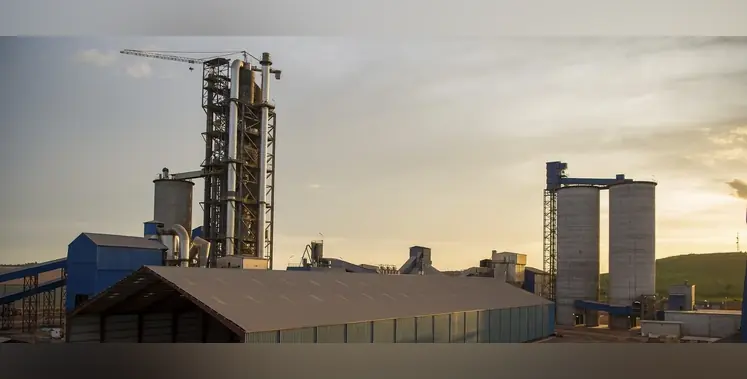
Cement factory supporting lower-carbon construction materials production in Côte d’Ivoire. (Image source: African Development Bank Group)
The African Development Bank Group has approved €20 million in financing for Ciments écologiques de Côte d’Ivoire (CIMECI), part of YESHI Group, to establish a low-carbon cement manufacturing complex at Attingué, north of Abidjan
The development will comprise a calcined-clay plant with an estimated annual production capacity of 350,000 tonnes and a cement grinding facility capable of producing up to 500,000 tonnes a year.
Using locally sourced clay and limestone, the facilities will manufacture limestone calcined clay cement (LC3). The process will replace a proportion of the clinker traditionally used in cement production, helping to cut emissions while reducing Côte d’Ivoire’s dependence on imported clinker.
“Côte d’Ivoire’s demand for construction materials is growing, but expanding production need not perpetuate carbon-intensive manufacturing. The project demonstrates how locally available raw materials, private capital and lower-carbon technology can work together to strengthen domestic industry,” said Solomon Quaynor, vice-president for Private Sector, Infrastructure and Industrialisation at the African Development Bank Group.
He added that the financing reflects the Bank’s objective of attracting private investment into green industrial development and climate-resilient infrastructure. It also aims to support the conversion of domestic resources into competitive, lower-carbon manufactured goods and reinforce local value chains.
Cement production in Côte d’Ivoire currently depends heavily on imported clinker. The use of locally available clay is expected to keep a greater share of economic value within the country, limit vulnerability to supply-chain interruptions and encourage the development of domestic technical capabilities.
The complex will supply the Ivorian market, where demand for construction materials continues to be supported by housing, commercial building and infrastructure development.
“The technology will significantly reduce CO₂ emissions from cement production compared with those of traditional, clinker-intensive cement. Through this project, we aim to transform a locally available resource into a construction material produced in Côte d’Ivoire. Our ambition is to strengthen national industrial capacity, develop local technical expertise, and secure supplies for the Ivorian market, while reducing dependence on imported clinker,” said Khalid Iben Khayat, Managing Director, Industry Division, YESHI Group.
The financing contributes to the African Development Bank Group’s Ten-Year Strategy for 2024–2033, particularly its priorities around green industrialisation and private-sector growth. The project also supports Côte d’Ivoire’s wider objectives of developing domestic manufacturing, improving industrial supply chains and increasing the supply of lower-carbon construction materials.