






The Société d'Exploitation du Transgabonais (SETRAG) — the concessionaire of Gabon's national railway network — has signed a €312mn financing agreement with the International Finance Corporation (IFC) and Proparco
The funds will be deployed for the continued modernisation of the Trans-Gabon Railway, a strategic asset for the West African country’s economic and social development.
SETRAG's shareholders include Eramet Comilog (51%), Meridiam 40%, and the Gabonese State 9%.
The latest financing complements public funding provided by the French Development Agency (AFD) and the European Union to Gabon to finance its share of the broader Gabon Railway Modernisation and Safety Programme (PMS).
Christian Magni, CEO of SETRAG, said the successful completion of the financing marks a “decisive milestone” for both the concessionaire and Gabon.
“It reflects the confidence our financing partners have in our business model and operational trajectory,” said Magni.
“With this support, together with the ongoing operational backing of our shareholders, we now have the means to accelerate the safety upgrades and full modernisation of the Trans-Gabon Railway, strengthening its position as a benchmark logistics corridor in Central Africa and as a driver of sustainable development for local communities and the national economy.”
SETRAG is responsible for railway superstructure equipment, including rails, sleepers, ballast, signaling systems.
As the delegated project owner, it carries out maintenance and renewal works on behalf of, and in the name of, the granting authority, the Gabonese state.
The state itself is responsible for maintaining public infrastructure assets, including bridges, hydraulic infrastructure and passenger transport equipment.
The Proparco–IFC–SETRAG financing agreement forms part of Phase III of the Trans-Gabon Railway PMS, which includes €225mn in new financing and the refinancing of €87mn from the previous phases.
The programme will continue the renewal of the 648-kilometre railway line linking Owendo, on the Atlantic coast, to Franceville in eastern Gabon.
It also includes the modernisation of the railway’s infrastructure and systems to enhance safety and capacity, while supporting the diversification of rail services beyond the mining sector, particularly for passenger and general freight transport.
Since the launch of the programme, 457 kilometres of track have been renewed with concrete sleepers, and 186 kilometres have already been fitted with new 60kg rails.
In regions where alternative transport options are often limited or unavailable, the Trans-Gabon Railway is a vital economic lifeline, contributing approximately 20% of Gabon’s GDP.
It provides an essential public transport service for communities in remote and landlocked areas and also plays a critical role in transporting manganese, a mineral for which Gabon is one of the world's leading producers.
Manganese is a critical raw material that is essential to the energy transition and global industrial value chains.
“Reliable transport infrastructure is essential to private sector development, regional competitiveness and job creation,” said Ethiopis Tafara, IFC’s regional vice-president for Africa.
“Through this partnership…IFC is supporting the modernisation of a strategic railway infrastructure that will strengthen supply chains, improve connectivity for communities and businesses, and support Gabon's long-term economic diversification.”
Read more:
DP World advances Port of Ndayane construction
Trans-Gabon Railway funding boost
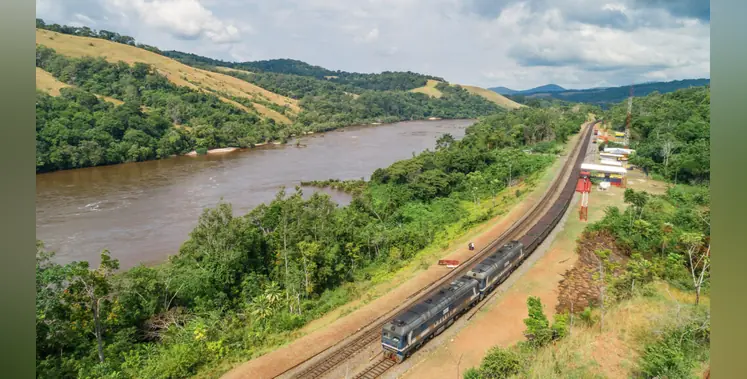
Gabon's railway is a lifeline for the economy (Image source: Eramet)