




cc.web.local

twitter Facebook Linkedin acp Contact Us

Event News

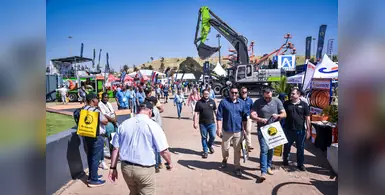
Mining Indaba is deliberately shifting influence beyond boardrooms and into the lived realities of mining-affected communities across the continent. (Image source: Mining Indaba)

Mining Indaba, in partnership with The Impact Facility Investing in African Mining, has doubled down on its commitment to communities by naming ten winners of its 2026 Community Voices Competition, up from five in 2025, and introducing complimentary tickets for community representatives and artisanal miners

The move sends a clear signal to the global mining industry: communities and Indigenous people are no longer on the margins of the conversation. They are shaping it.

As Africa’s most influential mining investment platform prepares for its 2026 edition in Cape Town from 9 to 12 February, Mining Indaba is deliberately shifting influence beyond boardrooms and into the lived realities of mining-affected communities across the continent.

The message is direct and uncompromising. The future of mining will be co-created with communities, or it will not be sustainable.

Delivered through the Mining Community Voices platform in partnership with The Impact Facility, the initiative places grassroots leaders alongside mining executives, investors and policymakers as equal contributors to the dialogue shaping Africa’s mining future.

Under the 2026 theme Stronger Together: Progress Through Partnership, Mining Indaba is embedding community experience into the core of its agenda, not as a side programme but as a strategic pillar of the event.

“This is not about representation for optics,” said Laura Nicholson, industry director at Mining Indaba. “By doubling the number of Community Voices winners, we are making it clear that communities are central to decision making across the mining value chain. Stronger Together is a call to action for how mining must operate going forward.”

Community Voices driving the agenda

The ten Community Voices winners represent a new generation of leadership rooted in accountability, economic realism and social impact, spanning Kenya, Zimbabwe, Tanzania and beyond.

Among them is Nkosi Sibanda, regional manager for the Africa Division at the Human Rights Measurement Initiative.

“We are strongest when prosperity is shared, justice is served, and decisions are made at the same table,” Sibanda said.

Sibanda will join fellow Community Voices winners Maureen Mwuese Mato and Alpha Ntayomba as speakers on the panel Stronger Together in Practice: Building Meaningful Partnerships in Critical Mineral Communities on Tuesday, 10 February. The session is designed to move beyond principle into practice, examining what functional partnerships between communities, companies and the state look like on the ground.

“Progress becomes truly sustainable when communities are not just included but have a real seat at the table as trusted partners shaping their own futures,” said Mato, monitoring and evaluation officer at Ziva Community Initiative.

Alpha Ntayomba, executive director and natural resources management expert at the Population and Development Initiative, underscored the economic stakes. “Mining contributes 10.1% to Tanzania’s GDP, up from 3.5% in previous years. The challenge now is ensuring that this growth delivers lasting value for communities.”

Other winners reinforced a broader reframing of mining success.

“Responsible mining is not just about what we extract, but how we organise land, infrastructure and communities around the resource,” said Ayoo Liza of the Kenya Chamber of Mines.

“Progress is not measured in tons of minerals extracted, but in roads repaired and access to basic social services,” added Prisca Bahati from the Women Entrepreneurs Initiative for Sustainable Development.

From entrepreneurship to engineering, the winners reflect a holistic vision of value creation. Yamikani Jimusole, founder and CEO of Yami Gemstone Lab and Exports, said she is committed to “turning gemstones into stories of growth and opportunity for Africa.”

Sapiens Ndatabaye, founder and CEO at Xeltis Ltd, framed the issue globally. “Africa has a key role to play in ensuring equitable access to the minerals that underpin the global economy. That responsibility comes with shared accountability.”

From community voices to system-wide change

The Community Voices platform is not an endpoint. It feeds directly into a broader Community and Indigenous Peoples agenda at Mining Indaba 2026 that tackles the sector’s most pressing social and economic questions, including:

• Mining investment models that deliver shared prosperity
• Regional alliances to amplify community impact
• Partnerships to ensure communities benefit from critical minerals
• Post-mine closure strategies that drive economic renewal
• Fair and ethical community resettlement

These sessions bring together traditional leaders, CEOs, financiers, sustainability executives and governments across multiple days, reinforcing that community outcomes are inseparable from commercial success.

David Sturmes Verbreek, Co-Founder of The Impact Facility, said the shift is long overdue. “Community engagement is no longer a compliance exercise. It is an investment strategy. Companies that understand this will unlock resilience, trust and long-term value.”

Mining Indaba’s commitment to investing in people is also reflected in the elevation of past Community Voices winners into leadership roles on the agenda. Sonwabo Modimoeng, a winner of the MI25 Community Competition, returns in 2026 as a moderator, now serving as Social Performance Manager at Mogale Tailings Retreatment.

“Mining can only be sustainable when communities are not an afterthought, but true partners in value creation,” said Estrella Matondo, senior community social performance advisor at Rio Tinto and a 2026 Community Voices winner.

Mining Indaba 2026 is drawing a line under performative engagement. The ten Community Voices winners are not symbolic. They are strategic.

View the full Communities and Indigenous Peoples agenda and be part of the conversations shaping the future of African mining at Mining Indaba 2026.

https://miningindaba.com/agendas/conference-agenda

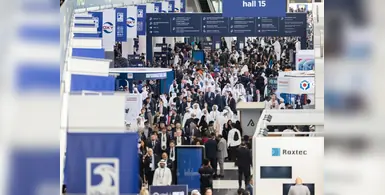
Big 5 Global unites global suppliers, innovators and policymakers to support resilient, efficient and sustainable construction. (Image source: Big 5)

Across the Middle East, Africa and South Asia, rapid urban expansion is reshaping economies at an extraordinary pace. With the United Nations forecasting that nearly 68% of the world’s population will live in cities by 2050, Africa in particular faces surging demand for housing, transport networks and large-scale urban infrastructure

As construction activity intensifies, industry stakeholders are turning to Big 5 Global (www.Big5Global.com) to source technologies and solutions that reinforce supply chains, boost efficiency and support sustainable development.

Welcoming participants from more than 165 countries, with 70% of solutions presented by international exhibitors, Big 5 Global serves as a gateway linking Africa’s construction community with a worldwide ecosystem of manufacturers, suppliers and technology providers.

Strengthening supply chains for project delivery

Big 5 Global hosts 2,800 exhibitors and showcases over 60,000 products, systems and services designed to enhance the reliability of construction operations. International pavilions from Germany and Italy return with advanced building materials such as high-performance concrete, cement, marble and stone technologies. India expands its presence with innovative MEP and smart construction systems suited for large projects across the Middle East and Africa. Austria and Pakistan also rejoin the event, displaying modular building solutions, interior systems and cost-efficient MEP technologies that streamline execution. Additional exhibitors from Armenia, Croatia, Hungary, Jersey, New Zealand, Norway and Serbia further widen procurement options for buyers seeking resilient and diversified sourcing channels.

“As Africa accelerates its infrastructure development agenda, collaboration across borders has become vital to advancing sustainable and resilient construction,” said Lufuno Ratsiku, president, South African Council for the Projects and Construction Management Professions (SACPCMP) and managing director, Gentec Consulting. “Big 5 Global provides an essential meeting point for this exchange, connecting implementers, policymakers and innovators under one roof. Beyond theoretical discussion, it enables high-impact dialogue on urban development, construction and technology solutions, helping position Africa’s industry professionals at the forefront of regional growth and resilience.”

With regional demand rising, digital technologies are rapidly transforming procurement and project execution.

Technology reshaping procurement and construction workflows

At Digital Construction World, leading companies such as Autodesk, Nemetschek Group, Odoo, Premier Construction Software, Procore Technologies, RIB Software and Trimble highlight digital tools that improve transparency and coordination across supply chains. Odoo offers an integrated suite linking procurement, HR and operations, while Premier Construction Software simplifies budgeting and project management. Trimble demonstrates automated solutions that reduce site rework by up to 25%, directly improving project timelines and profitability. Meter Technology showcases its fully integrated digital platform that modernises surveying and engineering workflows by removing long-standing inefficiencies.

Ahmed Al-Ansary, chairman, founder and CEO of Meter Technology, commented, “Meter transforms surveying and engineering from traditional to tech-driven. As the world's first fully integrated digital platform, we've eliminated decades-old inefficiencies. Our AI-powered system completes complex projects within 48 hours with exceptional precision across nine countries. Big 5 Global offers the opportunity to connect with industry leaders and explore sector development worldwide under ‘From the UAE to the World’, where geospatial and engineering digital innovation forms the foundation of real estate sustainability.”

Sustainable manufacturing and advanced material innovation

Several global exhibitors are also reimagining material production, transportation and reuse to reduce environmental impact. China introduces a new Eco-Friendly Zone built entirely from recyclable materials and dedicated to low-carbon construction solutions.

Grundfos Gulf Distribution highlights high-efficiency pumping systems designed to cut water and energy consumption. Deewan Equipment Trading LLC presents modular and precast manufacturing plants that reduce onsite waste and speed up project timelines. Hitech Concrete Products showcases precast hollow-core and insulated wall systems engineered for superior thermal performance and lower material use.

GF returns with advanced MEP and sustainable building technologies that support efficient construction and environmentally conscious project delivery. "The region is pursuing one of the world’s most ambitious development programs, where sustainable water management is key to realizing this vision. GF is uniquely positioned to support this progress through its comprehensive solutions portfolio, our local presence including manufacturing, offsite-manufacturing and customer experience facilities, long-standing regional partnerships and dedicated teams who understand the market’s unique challenges," said Michael Rauterkus, executive committee member of GF and president of GF Building Flow Solutions.

These collective contributions are helping the UAE build smarter cities aligned with long-term net-zero ambitions.

“As rapid urbanisation increases demand for project efficiency, quality and delivery, the global construction landscape must accelerate efforts toward net-zero goals and cross-sector collaborations,” said Josine Heijmans, senior vice-president, dmg events. “Big 5 Global continues to connect government entities, international manufacturers and regional stakeholders, helping strengthen construction supply chains and advance sustainable growth across the built environment.”

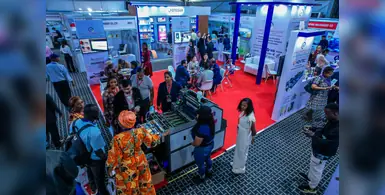
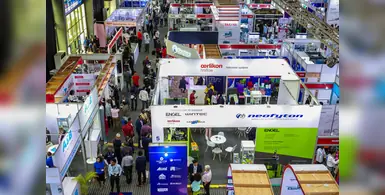
Glimpses from last year’s Propak West Africa as the region’s leading packaging trade show returns in 2025. (Image source: Propek West Africa)

West Africa’s leading exhibition and conference for the packaging, plastics, printing and processing industries, Propak West Africa, is set to take place from 9–11 September 2025 at the Landmark Centre in Lagos, Nigeria

Returning to Lagos for the 12th edition, Propak West Africa will bring together over 5,500 attendees for three action packed days in Lagos.With 250 global brands exhibiting, this years edition will be the largest yet and professionals from across the supply chain from industries working in the packaging, plastics, printing and processing industries will be in attendance.

As Propak has grown over the years it has continued to attract the biggest names in the industry from all corners of the globe, including BBM Maschinenbau, Danfra Solutions, Krones AG, Milacron India, Neofyton, Piovan Group, Reifenhauser Blown Film, Sacmi, Snetor and Windmoeller & Holscher among many others internationally.

The organisers are also delighted to welcome back many Nigerian exhibitors including Adeco Project Engineering, Ankan Group of Companies, Beaumont Industrial Services, E-One Machinery, JMG Ltd, Proxima, SBA Nigeria, Stav Ltd and Veepee Group among the largest contingent of Nigerian companies to date.

This September will also see the highest number of machines on display ever at the exhibition, with more than fifteen live in action including various forms of injection and blow mould machine, sachet, packing and weighing machines including some new to the West African market.

Taking place alongside the conference, there is a full range of conference and technical sessions for CEO’s and technicians alike to discover, learn and engage with thought leaders on multiple topics. The headline summit this year will look into topics around Shaping the Future of Packaging in West Africa on the first day with the third day focus on Access to Finance for Industrial Growth. Speakers on these stages come from the likes of Guinness Nigeria, Unilever Nigeria Plc, UAC Foods and FrieslandCampina to name just a few.

KPMG Nigeria are returning as strategic partners to run the dedicated sustainability focus day on the 10th September under the theme, Lifecycle Data Management for Sustainable Packaging Systems, which promises to engage the manufacturing community on ways such that data becomes an enabler of the circular economy.

With the exhibition now a little over two months away, the organisers have said there is much more to be announced over the course of the coming weeks and urge all those interested in staying in touch to register for the exhibition and be kept informed of the new conference sessions, exhibitors and features that are in store.

For more information visit: www.propakwestafrica.com

Minerals face growing demand

African Mining Week (AMW) 2025, which is scheduled for October 1–3 in Cape Town, promises to be a landmark event because it will impact the future of the African mining industry

The conference has the theme From Extraction to Beneficiation: Unlocking Africa’s Mineral Wealth, and it will bring both global and African mining stakeholders together at that time. Dialogue will be fostered, deals will be signed, and mineral demand will be addressed. Mineral production must rise by nearly 500% by 2050 in order to meet global demand, which is increasing—making Africa a key player in global supply chains.

A launchpad for mining projects

Through AMW 2025, a key platform, African mining projects will receive the necessary capital. African nations strive to produce more and beneficiate minerals to a greater extent, as the international community seeks new investment opportunities. Mining will help Zimbabwe build a US$12 billion economy by 2030; Angola expects diamond output to increase to 17.53 million carats by 2027; and Ghana aims for 8 million tons of manganese production by 2025. Meaningful investments will be required to achieve these ambitious goals, and AMW 2025 seeks to attract them.

Addressing challenges, exploring opportunities

Minerals face growing demand. Improved technology and sustainable mining practices are increasingly in demand. AMW 2025 will work to tackle key challenges facing the African mining sector. These challenges include securing capital, technology, and expertise. Important sessions include The Investor Perspective: Financing Africa’s Mineral Industrialization, Mergers, Acquisitions, and Partnerships: Building Resilience, and highlights on cobalt, Botswana’s diamond legacy, Ghana’s gold, and South Africa’s PGM industry, which all build resilience. A Technology Forum will explore mining technology innovations that are youth-driven, including AI, robotics, and autonomous mining.

Strategic networking opportunities

AMW 2025 will offer many networking opportunities and will foster collaboration between global and African mining partners. Roundtable discussions will cover critical topics, including US-Africa Collaboration in Critical Mineral Infrastructure, China-Africa Cooperation on Critical Minerals, and European Partnerships in African Mining. The event will also feature a Women in Leadership Forum and a Junior Miners Forum, which will present opportunities for women and youth in the industry.

Navigating critical minerals gaps

AMW 2025 is positioned strategically to explore Africa’s role in the global energy transition, with the continent holding 30% of the world’s critical minerals. Africa will become a key driver of this shift as demand increases for vital minerals such as cobalt, lithium, and nickel.

DRC Mining Week 2025 signals shift toward sustainable, standards-driven mining future. (Image source: SRK Consulting)

Developments in the Democratic Republic of Congo show that the country’s mining sector is transitioning from volume-driven extraction to a more structured industry focused on global standards and sustainability

Reflecting on the recent 20th DRC Mining Week in Lubumbashi, SRK Consulting (Congo) chairman and geological consultant Dominique Sambwa said the event highlighted a range of positive signs that are underpinning the country’s future prospects as a mining giant. These included infrastructure for energy security, adoption of mining industry standards, and a peace agreement that could facilitate better access to mineral deposits.

“With the number of attendees reaching about 5,000 this year, the event was a significant forum for all stakeholders including government, who provided encouraging updates on progress in power and transport infrastructure projects,” said Sambwa. “These developments are essential in allowing mining companies to scale their operations, as well as for exploration efforts to access new areas – so that the DRC’s mining sector can continue to diversify beyond copper and cobalt.”

Lobito rail link

Among the key infrastructure projects underway was the Lobito Corridor – a rail link connecting the DRC’s mineral-rich regions with the Angolan port of Lobito – which is supported by the International Finance Corporation.

He highlighted the growing interest in lithium deposits such as Manono in DRC’s eastern region, and diamond prospects in central DRC. Investor interest is certainly increasing, he noted, with significant representation at the event from Western countries like the US.

“Everyone active and interested in the DRC has also been heartened by the moves to secure a peace deal between the DRC and Rwanda, as this could catalyse further investment and mining expansion – especially in areas that have been destabilised by military activity,” remarked Sambwa.

Clean power

The World Bank-funded phase 1 of Inga 3 hydroelectric scheme was another topical project discussed at DRC Mining Week that holds great promise for the future of mining, said Nicolaas Steenkamp, principal consultant at SRK Consulting (South Africa).

“Clean hydropower through a large scheme like this will facilitate considerable expansion of mining operations, by strengthening the availability and reliability of power through the main grid,” said Steenkamp. “Where it could replace costly diesel-generated power on mines, such an energy source could also make production costs more globally competitive, while helping mines to decarbonise as part of industry-wide sustainability efforts.”

He noted that the DRC’s cleaner sources of grid energy could also position the country’s producers as leaders in the move toward a preference for ‘green copper’ among customers pursuing the energy transition away from fossil fuels. The 240MW Busanga hydroelectric plant north of Kolwezi on the Lualuba River is among the most recent renewable projects to be commissioned. There are also a number of solar power developments underway on mines, aiming to harness renewable sources while stabilising on-site power supply and driving the green agenda.

Socio-economic impact

The mining industry’s recent trajectory in the DRC has been marked by local regulations to harness its positive impact on the economy and broader society, as well as by a growing acceptance of global standards – especially those related to environmental, social and governance (ESG) concerns. The evolving regulatory framework hopes to nurture local suppliers and professional service providers to the industry, as well as improve relationships between mines and communities through more systematic engagement, said Sambwa.

“Subcontracting firms in mining must now be at least 51% owned by Congolese shareholders, and there are local procurement requirements for mining and service contracts,” he said. “Mining companies are also mandated to prioritise the employment of locals – to promote the integration of the domestic economy.”

Standards show the way

With international focus on the integrity and ethics of the mining supply chain, and led by major global players already active in the DRC, miners in the country are increasingly embracing industry standards, according to SRK Consulting (South Africa) partner and principal environmental scientist Wouter Jordaan.
“As a strategy to meet international best practice and mitigate risk – while also aligning with the requirements of the larger financial institutions and stock exchanges – we are seeing a definite trend in the DRC towards compliance with one or more standards,” said Jordaan. “Mining companies are recognising that they are part of a value chain is becoming more demanding.”

He added that standards like The Copper Mark and the Initiative for Responsible Mining Assurance (IRMA) are not only well-recognised by others in the supply chain, but they provide mines with a clear and structured path to compliance. Other industry benchmarks are also coming into focus for players in the DRC, commented Malcolm Maber, partner and principal geotechnical engineer at SRK Consulting (SA).

“As exhibitors at DRC Mining Week, we engaged with many visitors about the requirements of the Global Industry Standard on Tailings Management (GISTM), especially the ESG elements,” said Maber. “It is clear that companies operating in the country are keen to start understanding and implementing this standard – if they haven’t already started.”

Looking ahead

Sambwa said the DRC Mining Week emphasised the potentially positive impacts of government efforts to date in trying to optimise the benefits that nearby communities gain from mining operations. This included the social investment of 0,3% of mines’ turnover to community funds, to support upliftment and local economic development.
“Of course, the social benefit is unevenly spread across the country, as it only applies in the mining regions,” he said. “However, the impact can be positive if the arrangement is well managed by skilled professionals, and if there is a high level of transparency in matters such as revenues and contributions.”

More Articles …