




vb

twitter Facebook Linkedin acp Contact Us

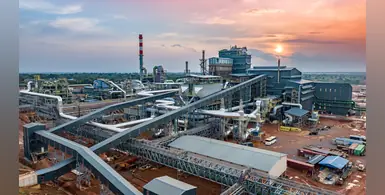
Artistic impression of the planned waste-to-energy project (Image source: Kanadevia Corporation)

Kanadevia Inova AG (Inova) has signed a concession agreement for a 33.5-year waste-to-energy project in Morocco, scheduled for first operation in 2030

A wholly-owned subsidiary of Kanadevia Corporation, Inova’s role will cover the design, financing, construction and operation of the facility, to be located in Casablanca.

“The project will construct a waste-to-energy plant adjacent to Médiouna landfill, one of the largest landfill sites in Africa,” a Kanadevia Corporation statement read.

“The facility will process approximately 1.5 million tonnes of waste per year and have a power generation capacity of approximately 126 MWe. The objective is to hygienically treat waste while effectively utilising it as an energy resource.”

Inova will carry out the project with Nareva, a leading Moroccan integrated energy company, and Japan’s Itochu Corporation.

A Special Purpose Company (SPC) is to be established to implement the project while proceeding with engineering, procurement and construction (EPC) and long-term maintenance agreements.

The statement added that the facility will incorporate advanced technologies, including Inova’s large-scale combustion and boiler systems and its proprietary Autaro automatic combustion control system.

In addition, it will include a 50 MW solar power facility, a 4 MW landfill gas recovery and utilisation facility and a leachate treatment unit.

“By reducing methane emissions, which have a global warming potential approximately 28 times greater than CO2, the project is expected to generate around 1 TWh of electricity annually, equivalent to the annual electricity demand of approximately one million people,” the statement noted.

The facility has also been designed to enable the future introduction of carbon capture technologies (CCUS).

“By capturing, utilising, or storing CO2 contained in flue gases, the project aims to further reduce greenhouse gas emissions and support long-term decarbonisation.”

Read more:

First Quantum diversifies Zambia energy supply

Malawi unveils first standalone utility-scale BESS project

On-site trigeneration plant for Ivorian pasta factory

At the inauguration of Malawi’s BESS project (Image source: JIVO Energy)

Renewable energy company, JIVO Energy, has outlined its role following the recent commissioning of Malawi's first grid-scale battery energy storage system (BESS)

The 20MW/ 40MWh utility-scale BESS project is located at the Kanengo Substation in Lilongwe and was officially inaugurated recently by Dr. Jean Mathanga, Minister of Energy, alongside representatives from the Electricity Supply Corporation of Malawi (ESCOM) and other government officials.

The ceremony marked the start of commercial operations for Malawi's first utility-scale BESS, a project that is expected to strengthen grid reliability, enhance energy security and support the integration of renewable energy into Malawi's electricity network.

JIVO Energy served as the turnkey engineering, procurement and construction (EPC) contractor, delivering the project from engineering and procurement through construction, testing and commissioning.

“It is a proud moment that proves JIVO Energy’s capacity to execute complex, high-impact utility-scale energy projects to international standards using Tier-I equipment,” said Jorge Lascas, the company’s chief commercial officer speaking during the commissioning ceremony.

Lascas also recognised the contribution of the project team.

“JIVO Energy’s team dedication and hard work made this project possible. Their passion, resilience, and attention to detail have been remarkable. They met every engineering challenge head-on with unwavering commitment.”

The commissioning of the Kanengo BESS marks an important step in Malawi’s efforts to strengthen and modernise its electricity network.

It was supported by US$20mn in grant financing from the Global Energy Alliance for People and Planet, a nonprofit founded in 2021 by The Rockefeller Foundation, IKEA Foundation and Bezos Earth Fund.

JIVO Energy has been engaged in renewable energy business in Africa and beyond since 2018 focused on project development, EPC, operations & maintenance, and investing in renewable energy projects.

The company has implemented projects in Kenya, Uganda, Zimbabwe, Ethiopia, Malawi, Cape Verde, Sao Tome, Senegal, Sierra Leone, Burkina Faso, Liberia and Zambia.

It has constructed (or has under construction) more than 100MWp of solar PV and more than 60MWh of BESS, with another 200MWp+ of solar PV and 150MWh+ of BESS under development across 12 African countries.

Read more:

Malawi unveils first standalone utility-scale BESS project

Hydra: Africa's largest hybrid renewable project

EAAIF backs Egypt's landmark solar and storage project


Rethinking energy supply options in Zambian mining (Image source: Adobe Stock)

First Quantum Minerals continues to diversify its energy supply options for its mine sites in Zambia amid persistent shortages from the national power system
 
In a Q2 results statement, it reported that various wind and solar projects were advancing, through which it intends to take offtake power.
 
“Supplementary power-sourcing arrangements are expected to remain in place through mid-2027 as hydropower resources recover and structural constraints on the national grid continue to ease,” the statement noted.
 
The energy crunch stems from hydro generation shortages and the force majeure declared by Zesco, the state power utility, in early 2024 which remain in effect.
 
According to the Q2 statement, Zambia’s national power system continued to recover during the quarter.
 
Hydrological conditions improved materially through the wet season, with Lake Kariba reaching approximately 48% usable storage in late June 2026, compared with approximately 23% at the same time in 2025.
 
Zesco continues to manage the reservoir conservatively while storage levels continue to rebuild to mitigate the system from future drought risk.
 
Crucially, First Quantum said the company experienced no material power-related production impact during the quarter.
 
“To ensure operational continuity, the company maintained its diversified power-sourcing strategy,” the statement read.
 
During the quarter, approximately 80% of the company’s Zambian power requirements was sourced from imports and domestic independent power producers, with approximately 20% supplied by Zesco.
 
These arrangements, implemented in coordination with the state power utility and other stakeholders, support grid stability, reduce reliance on Kariba-based generation, and allow for continued rebuilding of reservoir levels, the statement added.
 
“During the quarter, progress was made on medium- and long-term power sourcing solutions,” it noted.
 
“Development of the previously announced wind and solar power project, from which the company intends to offtake power, remains on track. Joint grid-stability initiatives with the state power utility also advanced. For the Kansanshi STATCOM project, major equipment orders have been placed, manufacturing is underway, and site installation is scheduled to commence in early 2027.”
 
The Kansanshi STATCOM project is a major joint grid-stability initiative between First Quantum and Zesco.
 
The mining group added that supplementary power-sourcing arrangements are expected to remain in place through mid-2027 as hydropower resources recover and structural constraints on the national grid continue to ease.
 
“While Zesco-supplied power is expected to be progressively reinstated as reservoir levels rebuild, the company expects to maintain a diversified supply mix to support operational reliability and manage system risk.”
 
In Zambia, First Quantum operates the Kansanshi mine and smelter in Solwezi, and the Sentinel copper mine and the Enterprise nickel mine in Kalumbila.
 
Read more:


Commissioning Malawi’s new BESS facility (Image source: Global Energy Alliance for People and Planet)

Malawi has commissioned the country’s first standalone utility-scale battery energy storage system (BESS) — a landmark 20 MW / 40 MWh installation located in Kanengo, Lilongwe

The project brings together state utility, Electricity Supply Corporation of Malawi (ESCOM) Limited, together with the Global Energy Alliance for People and Planet, a nonprofit founded in 2021 by The Rockefeller Foundation, IKEA Foundation and Bezos Earth Fund,which provided US$20mn in grant financing.

The project is intended to help stabilise the national grid, reduce reliance on diesel generation and lay the foundation for a more resilient and reliable energy system.

William Kayipa, CEO of ESCOM, said the launch represents more than the switch-on of a battery system: it marks the moment Malawi's grid became smarter, stronger and future-ready.

“For years, grid instability forced us to curtail renewable energy we had already generated and to fall back on costly diesel at the expense of our consumers and our climate commitments,” said Kayipa.

“The Kanengo BESS changes that calculus entirely. By storing and deploying power instantaneously, we are stabilising feeder voltages, reducing system losses, and unlocking about 100 MW of renewable generation that was previously constrained.”

He continued: This is not just an engineering achievement, it is the foundation for ESCOM's transformation into a financially viable, high-performing utility capable of supporting Malawi's target of 70% electricity access by 2030.”

Malawi’s electricity grid has long faced systemic challenges, including instability, high levels of renewable energy curtailment, dependence on hydropower as well as a dependency on diesel back-up generation.

The new facility will avoid over 10,000 tons of carbon emissions per year while improving energy access for households, commercial and industrial (C&I) sectors, and critical public services and ensuring resilience to climate shocks.

As part of the Global Energy Alliance BESS Consortium — a global initiative to scale battery storage across low- and middle-income countries — the project demonstrates how storage can be deployed to strengthen grid performance and build a pipeline of investable storage assets across emerging markets.

“Malawi has demonstrated that Africa does not have to choose between energy access and clean energy transition,” said Woochong Um, CEO, Global Energy Alliance for People and Planet.

“This is the Global Energy Alliance’s biggest BESS milestone in Africa to date, and we are proud to have delivered it in partnership with the Government of Malawi and ESCOM. It is proof that catalytic philanthropic capital, when deployed strategically, can de-risk transformative infrastructure and inspire far greater investment at scale.”

The Malawi project forms part of the Alliance's Grids of the Future initiative, which leverages digitalisation and distributed energy integration to leapfrog ageing infrastructure and build a resilient, future-ready power system.

Rather than treating storage as a standalone technology, the facility reflects a strategic shift toward integrating BESS as core grid infrastructure, enabling more flexible power systems and modernising market design.

It is also an opportunity to unlock a new revenue stream for Malawi through ancillary services, providing a critical foundation for long-term economic growth and market development as the region scales its renewable energy capacity.

Read more:

Hydra: Africa's largest hybrid renewable project

Lephalale solar plant powers Exxaro's greener mining

EAAIF backs Egypt's landmark solar and storage project

Clarke Energy to supply 4MW trigeneration plant powered by INNIO’s Jenbacher gas engines (Image source: Clarke Energy)

Clarke Energy has landed a contract with Capraci to deliver a 4 MW natural gas-fuelled trigeneration power plant at its production facility in Abidjan

The project will help improve energy security, lower operating costs and support the long-term environmental objectives of Capraci, one of Côte d'Ivoire's leading pasta manufacturers.

“This project perfectly embodies our mission: supporting African industries with high-performance, reliable and sustainable energy solutions,” said Jacques Soulayrac, managing director France & Africa at Clarke Energy.

“We are not simply delivering a power plant; we are providing a long-term competitiveness lever.”

The trigeneration facility will be powered by INNIO's Jenbacher gas engines, with Clarke Energy to design and deliver the balance of plant.

The new system is engineered to generate electricity, heat and cooling from a single fuel source, enabling Capraci to significantly improve overall energy performance.

A high-efficiency exhaust heat recovery system will produce 130°C superheated water used directly in pasta processing, while an absorption chiller will provide 11°C chilled water for on–site cooling.

Together, these integrated functions will help streamline production, reduce emissions and improve the plant's energy footprint.

After installation, Clarke Energy will operate and maintain the equipment under a long-term service agreement, ensuring continuous performance, high availability and sustained technical support.

“This partnership is part of a long-term vision,” added Soulayrac. “Our objective is to ensure operational reliability and long-term peace of mind for Capraci.”

Capraci's investment forms part of a broader drive to modernise industrial infrastructure in Côte d'Ivoire and further strengthens Clarke Energy's role as a trusted partner for high-efficiency energy solutions across West Africa.

Read more:

On-site power for Gabon flare gas

Everllence unveils on-site genset for data centres 

DRC on-site hybrid mining power project advances

More Articles …