







Nigeria is seeking to accelerate the roll out of mini-grids, solar home systems and other decentralised power for communities and businesses not served by the national grid
It follows the recent launch of a US$300mn Distributed Renewable Energy (DRE) Fund to boost the proliferation of mini-grids across the country.
The Nigeria Sovereign Investment Authority (NSIA) and Africa50 are co-managing the new vehicle, with Sustainable Energy for All (SEforALL) providing energy-access leadership and the World Bank as a founding partner.
The World Bank is contributing an initial US$25mn through its International Development Association (IDA) arm, representing about 8.3% of the US$300mn target.
The partners first announced the commercial launch on the sidelines of the United Nations General Assembly in New York on 21 September 2026.
NSIA managing director Aminu Umar-Sadiq described the step as a signal that Nigeria’s distributed renewable market is “investable, credible and ready to operate at scale.”
Africa50 group chief executive Alain Ebobissé said the partnership is designed to turn electricity need into investable opportunities and to offer a model that can be repeated elsewhere in Africa.
Capital is expected to go into local developers across solar home systems, isolated mini-grids, storage, and commercial and industrial (C&I) installations.
C&I on-site power already provides a significant source of Nigeria's overall energy supply, with industry users investing in their own power plant in the face of erratic grid-based supply.
Mini-grid systems are also on the ascendcy.
Through the earlier Nigeria Electrification Project, developers built 180 solar hybrid mini-grids in 23 states, connecting more than 146,000 households and deploying 19.2 MW of renewable capacity, TechCabal reported on 28 September 2026, cited by local firm Kowatek Solar in a press release.
Headquartered in Asaba, Delta State, Kowatek Solar designs and delivers premium solar, lithium storage and hybrid power systems for homes, estates, businesses, hotels, churches, schools and industrial sites.
The same reporting put 2024 electricity access at 62.5%, leaving more than 80 million people unserved, it added.
In its press release, Kowatek Solar said the fund’s shift into deployment is the signal the market has been waiting for, with financing now matching projects that are already technically proven.
“A dedicated equity and investment platform does not by itself install a system,” the company noted in its release.
“Developers still need bankable designs, load studies, storage architecture and after-sales support. Companies already building hybrid solar and lithium systems in Nigeria are positioned to supply that delivery layer as capital starts to move.”
Read more:
Egypt deploys Gotion 5mwh systems for grid storage
Zambia receives power investment boost
BESS system powers up at OCPS Benguerir mine site
Nigeria to grow distributed solar mini-grids
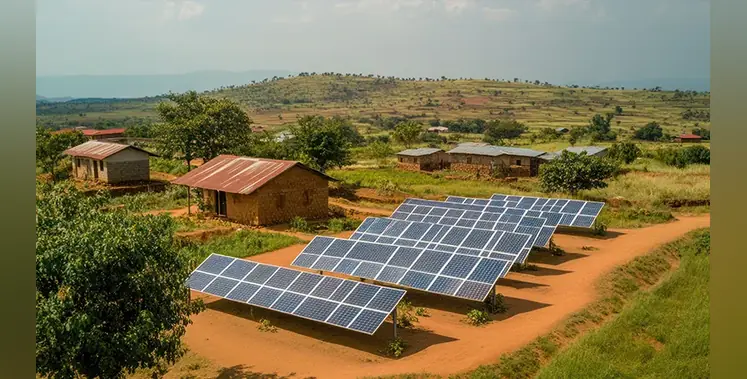
Transforming Africa’s energy system through mini-grids (Image source: Adobe Stock)