




cc.web.local

twitter Facebook Linkedin acp Contact Us

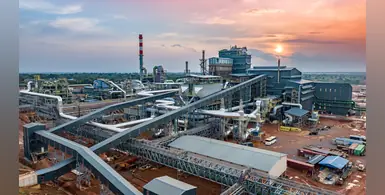
Rethinking energy supply options in Zambian mining (Image source: Adobe Stock)

First Quantum Minerals continues to diversify its energy supply options for its mine sites in Zambia amid persistent shortages from the national power system
 
In a Q2 results statement, it reported that various wind and solar projects were advancing, through which it intends to take offtake power.
 
“Supplementary power-sourcing arrangements are expected to remain in place through mid-2027 as hydropower resources recover and structural constraints on the national grid continue to ease,” the statement noted.
 
The energy crunch stems from hydro generation shortages and the force majeure declared by Zesco, the state power utility, in early 2024 which remain in effect.
 
According to the Q2 statement, Zambia’s national power system continued to recover during the quarter.
 
Hydrological conditions improved materially through the wet season, with Lake Kariba reaching approximately 48% usable storage in late June 2026, compared with approximately 23% at the same time in 2025.
 
Zesco continues to manage the reservoir conservatively while storage levels continue to rebuild to mitigate the system from future drought risk.
 
Crucially, First Quantum said the company experienced no material power-related production impact during the quarter.
 
“To ensure operational continuity, the company maintained its diversified power-sourcing strategy,” the statement read.
 
During the quarter, approximately 80% of the company’s Zambian power requirements was sourced from imports and domestic independent power producers, with approximately 20% supplied by Zesco.
 
These arrangements, implemented in coordination with the state power utility and other stakeholders, support grid stability, reduce reliance on Kariba-based generation, and allow for continued rebuilding of reservoir levels, the statement added.
 
“During the quarter, progress was made on medium- and long-term power sourcing solutions,” it noted.
 
“Development of the previously announced wind and solar power project, from which the company intends to offtake power, remains on track. Joint grid-stability initiatives with the state power utility also advanced. For the Kansanshi STATCOM project, major equipment orders have been placed, manufacturing is underway, and site installation is scheduled to commence in early 2027.”
 
The Kansanshi STATCOM project is a major joint grid-stability initiative between First Quantum and Zesco.
 
The mining group added that supplementary power-sourcing arrangements are expected to remain in place through mid-2027 as hydropower resources recover and structural constraints on the national grid continue to ease.
 
“While Zesco-supplied power is expected to be progressively reinstated as reservoir levels rebuild, the company expects to maintain a diversified supply mix to support operational reliability and manage system risk.”
 
In Zambia, First Quantum operates the Kansanshi mine and smelter in Solwezi, and the Sentinel copper mine and the Enterprise nickel mine in Kalumbila.
 
Read more:


Commissioning Malawi’s new BESS facility (Image source: Global Energy Alliance for People and Planet)

Malawi has commissioned the country’s first standalone utility-scale battery energy storage system (BESS) — a landmark 20 MW / 40 MWh installation located in Kanengo, Lilongwe

The project brings together state utility, Electricity Supply Corporation of Malawi (ESCOM) Limited, together with the Global Energy Alliance for People and Planet, a nonprofit founded in 2021 by The Rockefeller Foundation, IKEA Foundation and Bezos Earth Fund,which provided US$20mn in grant financing.

The project is intended to help stabilise the national grid, reduce reliance on diesel generation and lay the foundation for a more resilient and reliable energy system.

William Kayipa, CEO of ESCOM, said the launch represents more than the switch-on of a battery system: it marks the moment Malawi's grid became smarter, stronger and future-ready.

“For years, grid instability forced us to curtail renewable energy we had already generated and to fall back on costly diesel at the expense of our consumers and our climate commitments,” said Kayipa.

“The Kanengo BESS changes that calculus entirely. By storing and deploying power instantaneously, we are stabilising feeder voltages, reducing system losses, and unlocking about 100 MW of renewable generation that was previously constrained.”

He continued: This is not just an engineering achievement, it is the foundation for ESCOM's transformation into a financially viable, high-performing utility capable of supporting Malawi's target of 70% electricity access by 2030.”

Malawi’s electricity grid has long faced systemic challenges, including instability, high levels of renewable energy curtailment, dependence on hydropower as well as a dependency on diesel back-up generation.

The new facility will avoid over 10,000 tons of carbon emissions per year while improving energy access for households, commercial and industrial (C&I) sectors, and critical public services and ensuring resilience to climate shocks.

As part of the Global Energy Alliance BESS Consortium — a global initiative to scale battery storage across low- and middle-income countries — the project demonstrates how storage can be deployed to strengthen grid performance and build a pipeline of investable storage assets across emerging markets.

“Malawi has demonstrated that Africa does not have to choose between energy access and clean energy transition,” said Woochong Um, CEO, Global Energy Alliance for People and Planet.

“This is the Global Energy Alliance’s biggest BESS milestone in Africa to date, and we are proud to have delivered it in partnership with the Government of Malawi and ESCOM. It is proof that catalytic philanthropic capital, when deployed strategically, can de-risk transformative infrastructure and inspire far greater investment at scale.”

The Malawi project forms part of the Alliance's Grids of the Future initiative, which leverages digitalisation and distributed energy integration to leapfrog ageing infrastructure and build a resilient, future-ready power system.

Rather than treating storage as a standalone technology, the facility reflects a strategic shift toward integrating BESS as core grid infrastructure, enabling more flexible power systems and modernising market design.

It is also an opportunity to unlock a new revenue stream for Malawi through ancillary services, providing a critical foundation for long-term economic growth and market development as the region scales its renewable energy capacity.

Read more:

Hydra: Africa's largest hybrid renewable project

Lephalale solar plant powers Exxaro's greener mining

EAAIF backs Egypt's landmark solar and storage project

Clarke Energy to supply 4MW trigeneration plant powered by INNIO’s Jenbacher gas engines (Image source: Clarke Energy)

Clarke Energy has landed a contract with Capraci to deliver a 4 MW natural gas-fuelled trigeneration power plant at its production facility in Abidjan

The project will help improve energy security, lower operating costs and support the long-term environmental objectives of Capraci, one of Côte d'Ivoire's leading pasta manufacturers.

“This project perfectly embodies our mission: supporting African industries with high-performance, reliable and sustainable energy solutions,” said Jacques Soulayrac, managing director France & Africa at Clarke Energy.

“We are not simply delivering a power plant; we are providing a long-term competitiveness lever.”

The trigeneration facility will be powered by INNIO's Jenbacher gas engines, with Clarke Energy to design and deliver the balance of plant.

The new system is engineered to generate electricity, heat and cooling from a single fuel source, enabling Capraci to significantly improve overall energy performance.

A high-efficiency exhaust heat recovery system will produce 130°C superheated water used directly in pasta processing, while an absorption chiller will provide 11°C chilled water for on–site cooling.

Together, these integrated functions will help streamline production, reduce emissions and improve the plant's energy footprint.

After installation, Clarke Energy will operate and maintain the equipment under a long-term service agreement, ensuring continuous performance, high availability and sustained technical support.

“This partnership is part of a long-term vision,” added Soulayrac. “Our objective is to ensure operational reliability and long-term peace of mind for Capraci.”

Capraci's investment forms part of a broader drive to modernise industrial infrastructure in Côte d'Ivoire and further strengthens Clarke Energy's role as a trusted partner for high-efficiency energy solutions across West Africa.

Read more:

On-site power for Gabon flare gas

Everllence unveils on-site genset for data centres 

DRC on-site hybrid mining power project advances

Tapping into the power of flared gas (Image source: Adobe Stock)

Capstone Energy+, Inc. is to provide a C600 Signature Series microturbine to oil operator Maurel & Prom for its flare gas valorisation project at an onshore field in Gabon

The microturbine will convert associated gas into reliable on-site power at the remote onshore platform under a 36-month lease agreement.

Capstone Energy+ is a leading provider of behind-the-meter clean microturbine energy solutions for commercial and industrial (C&I) businesses, as well as solutions designed for emerging data centre applications.

For nearly four decades, it has delivered proven energy solutions that allow firms to operate with certainty in an increasingly constrained and unpredictable power environment.

The Gabon project will support Maurel & Prom’s flare gas valorisation efforts, in which gas that would otherwise be wasted is recovered and converted into a useful form of energy.

The microturbine will operate on recovered associated gas to provide electricity for other platform operations, with commissioning expected in November 2026.

Structured under Capstone’s Energy-as-a-Service (EaaS) business model, Capstone is providing the C600S through its ‘Lease-to-Own’ (LTO) offering, enabling Maurel & Prom to leverage an operating expense-based solution while preserving capital flexibility.

“For operators like Maurel & Prom, flare gas valorisation solves two problems at once: it eliminates a meaningful source of emissions and generates the reliable power that remote operations depend on,” said Vince Canino, president and CEO of Capstone Energy+.

“Converting fuel that would otherwise be wasted into dependable on-site electricity, in a tropical environment far from any grid, is exactly the kind of application our technology was built for.”

Across Africa, associated gas has commonly been flared where no capture infrastructure exists, representing both a significant emissions source and wasted energy value.

The microturbines convert any waste gas into productive on-site power without requiring pipeline connectivity or major infrastructure investment.

Capstone’s microturbine platform is engineered for reliable, continuous operation on variable-composition fuel streams, including associated gas.

Its single-moving-part, air-bearing design requires no oil, no coolant, and fewer service interventions than conventional reciprocating engines, a key advantage for remote sites where conditions add logistical complexity.

“Turning gas that would otherwise be flared into reliable on-site power supports both our environmental goals and the energy needs for our operations in Gabon,” said Ibrahim Ben Ameur, lead process engineer, Maurel & Prom.

The project marks Capstone’s continued expansion in the African upstream energy sector.

Built on its core 30kW, 65kW, and 200kW microturbine platforms, its scalable multi-megawatt solutions are designed for rapid deployment, continuous operation and simplified maintenance.

It also serves other critical industries including data centres, hospitals, agriculture and industrial facilities where uptime and energy certainty are essential.

Read more:

Everllence unveils on-site genset for data centres

DRC on-site hybrid mining power project advances

Gensets to boost Algeria's powdered milk production

Everllence’s 175D GenSet delivers 3 MVA of dependable standby power in a compact design for modern data centres (Image source: Everllence)

Everllence — formerly MAN Energy Solutions — has unveiled its new 175D genset for data centre applications

Designed for reliable backup power for digital infrastructure, the 175D high-speed engine stationary genset has been tailored for the growth of the data centre market across the world.

“Demand for data centres is rising rapidly, driven in particular by the growing use of AI, which increases the need for a reliable power supply,” said Alexander Stöckler, head of power segment at Everllence.

“The 175D GenSet delivers this reliability based on our proven in-house high‑speed engine of the same name.”

Made in Europe, the engine delivers 2.4 MWe (3 MVA) of standby power and is engineered for fast, stable load-acceptance in accordance with international standard ISO 8528‑5.

As a European OEM, Everllence operates an integrated engine-production system with the 175D manufactured in both Germany and Denmark. The company produces key components in-house, including the engine block, turbochargers and cylinder heads.

In addition, the SaCoS 5000 engine control system, developed by Everllence, is designed to ensure the highest cybersecurity standards.

“With more than 37 GW of installed power-plant capacity worldwide, we are a long‑standing and reliable partner to the energy sector,” said Marius Zasche, global business development, highspeed, Everllence.

“Everllence is the only supplier that provides data centre operators with both medium‑speed engines for primary power supply and high‑speed units for backup.”

At the same time, customers also benefit from a global service network. More than 140 Everllence PrimeServ locations offer rapid support, spare parts and predictive maintenance, ensuring the engines’ long‑term operational reliability.

The standardised 175D genset, which can be flexibly integrated into containerised solutions, is designed for a grid frequency of 50 Hz and features a compact design with high power-density. The robust design and electrically powered cooling systems ensure reliable and long-lasting operation even under varying environmental conditions.

The new genset also supports alternative fuels, being HVO‑capable and methanol‑ready, making it suitable for operators seeking to eventually decarbonise their power supply.

“The 175D genset technical platform is based on more than 15 years of experience in high‑speed engine development,” said Tobias Kappelmann-Münch, senior product manager, highspeed, and project manager, data centre, Everllence.

“We are now expanding the range of applications of this proven technology to data centre operations.”

Read more:

Lephalale solar plant powers Exxaro's greener mining

DRC on-site hybrid mining power project advances

Gensets to boost Algeria's powdered milk production

More Articles …