




vb

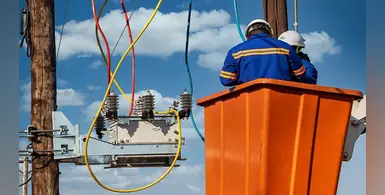
GE Vernova will extend the operating life of five gas turbines at three Egyptian power plants by up to 15 years. (Image source: GE Vernova)

GE Vernova has signed a services agreement to provide Rotor Life Extension (RLE) solutions for five of its 9F gas turbines operating at the Kureimat, Nubaria and Cairo North power plants in Egypt

The agreement has been signed with affiliates of the Egyptian Electricity Holding Company (EEHC), including Upper Egypt Electricity Production Company (UEEPC), Middle Delta Electricity Production Company (MDEPC) and Cairo Electricity Production Company (CEPC), and has been endorsed by EEHC.

Under the agreement, GE Vernova is expected to extend the operating life of the five gas turbines by 13 to 15 years. Together, the turbines represent approximately 1,250 MW of generating capacity, with the relevant services scheduled to be carried out between 2028 and 2035.

Extending gas turbine operating life

The gas turbine rotor is a core component of a power plant and requires scheduled maintenance as part of its lifecycle. GE Vernova will apply its expertise to assess the full residual life of components as part of the Rotor Life Extension programme, with the aim of supporting more efficient and effective operation.

The agreement builds on the ongoing collaboration between GE Vernova, EEHC and its generation company affiliates. By focusing on the long-term integrity of the gas power assets, the initiative is intended to support the reliability and efficiency of Egypt’s electricity generation.

“This agreement reflects EEHC’s continued focus on preserving the long-term performance and reliability of important generation assets across our fleet,” said Eng. Gaber El-Desouki, Chairman of the Board of Directors & CEO, Egyptian Electricity Holding Company (EEHC). “By working with GE Vernova and our generation companies, we are taking practical and proactive steps that can help protect strategic assets, support efficient and reliable power production, and contribute to Egypt’s broader electricity and energy objectives.”

“Extending the life of these gas turbines across our generation companies is expected to support grid stability and the continued availability of dispatchable power, while helping us increase the value of existing infrastructure and avoid premature, capital-intensive replacement,” said eng. Mahmoud Al-Naqeeb, full-time board member for Electricity Production Companies Affairs.

Egypt’s evolving power sector

Egypt’s power sector is balancing rising energy demand with efforts to improve operational efficiency and integrate a growing share of renewable energy.

Thermal power generation, primarily based on combined-cycle gas turbines, continues to play a central role in the country’s electricity system, accounting for approximately 80% of Egypt’s electricity production.

“As Egypt’s electricity needs continue to evolve, maintaining and modernizing existing gas power assets, such as those at Kureimat, Nubaria, and Cairo North, is essential to support reliability, improve fuel use, and strengthen energy system resilience,” said Joseph Anis, president & CEO, Europe, Middle East & Africa, GE Vernova’s Gas Power business.

“This agreement reflects our continued commitment to working closely with EEHC, its affiliates, and other stakeholders in Egypt to support energy security through reliable and more efficient power generation. By helping extend the life of critical gas turbines, we aim to support our customers’ long-term operational priorities, optimize the value of existing infrastructure, and contribute to the continued development of Egypt’s power sector.”

GE Vernova supports Egypt’s power fleet

The latest agreement follows GE Vernova’s ongoing work to support the modernisation and long-term performance of Egypt’s power generation fleet.

In April 2026, GE Vernova announced an order from MDEPC for modernisation work at the Banha and Nubaria power plants. The project includes Advanced Gas Path upgrades and multiyear services agreements.

The latest initiative builds on more than five decades of cooperation between GE Vernova’s businesses and Egypt’s power sector, supporting the country’s electricity infrastructure through technology, solutions, local talent development and project financing.

GE Vernova currently supports customers in Egypt across power generation, transmission, software and services. Its installed base in the country includes more than 60 gas and steam turbines, with a combined generating capacity of approximately 10 GW.

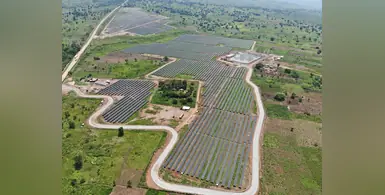
USTDA funds a feasibility study to expand hydropower and electricity networks across the DRC and Zambia's Lobito Corridor. (Image source: USTDA)

The U.S. Trade and Development Agency (USTDA) has signed an agreement with Anzana Electric Group Limited to fund a feasibility study aimed at strengthening power infrastructure along the Lobito Corridor in the Democratic Republic of the Congo (DRC) and Zambia

The study will assess opportunities to expand hydropower generation and upgrade electricity distribution networks across Lualaba Province in the DRC and North-Western Province in Zambia.

The project is expected to improve power reliability for copper and cobalt mining operations and more than three million people across the region.

“Reliable power allows mines to operate, businesses to profit, and families to thrive,” said Thomas R. Hardy, USTDA’s deputy director.

“USTDA’s investment will help to strengthen the mineral supply chains America’s security and economy depend on, while building the power systems our partners in the DRC and Zambia need to grow.”

Power infrastructure along the Lobito Corridor

The Lobito Corridor provides a transport route for copper, cobalt and other critical minerals to overseas markets through the Port of Lobito in Angola. The USTDA-funded feasibility study will examine the rehabilitation of existing hydropower assets, the development of new hydropower generation and the expansion of electricity distribution infrastructure.

The proposed infrastructure would support mining operations that supply the Lobito Corridor while also serving surrounding communities.

The study will identify suitable U.S. sources of supply and assess how the project can be structured to attract financing. This could create opportunities for U.S. equipment and engineering services in electricity distribution and hydropower generation.

USTDA-funded programmes are carried out by U.S. companies. The request for proposals for the feasibility study will be posted on USTDA’s website.

Expanding electricity access

Reliable electricity access remains a challenge in the DRC and Zambia, where mining activity consumes the majority of available power, leaving households and local businesses underserved.

The project is intended to bring new electricity connections to homes and businesses while helping mining companies along the Lobito Corridor reduce their reliance on diesel generation.

Brian Kelly, CEO of Anzana Electric Group, said, “The countries along the Lobito Corridor are uniquely positioned to create long term economic value from their critical minerals. Realizing that ambition depends on reliable electricity, which underpins industrialization, drives local value addition, creates jobs and strengthens economies. Anzana’s win-win approach to infrastructure development brings together public and private partners to identify investment opportunities that advance national development priorities while strengthening strategic supply chains. We are proud to partner with USTDA on an initiative designed to catalyze long term private investment in the infrastructure needed to support sustainable economic growth and expand opportunity across the Lobito Corridor.”

The agreement forms part of USTDA’s wider support for the Lobito Corridor. Its other support includes projects focused on power generation, digital connectivity, port modernisation, and critical minerals extraction and processing.

BESS facility at Morocco mine site (Image source: Envision Energy)

Morocco's first large-scale lithium iron phosphate (LFP) battery energy storage system (BESS) has been successfully energised at OCP Green Energy's Benguerir mining site

The energization milestone marks the start of the progressive commissioning of this large-scale BESS.

The 25 MW / 125 MWh system was supplied and commissioned by Envision Energy under a contract signed in late 2025, and is now undergoing testing before entering commercial operation.

“The successful energisation of Morocco's first large-scale battery storage project demonstrates the reliability, flexibility and cost-effectiveness of integrated renewable-plus-storage solutions in industrial applications,” said John Lee, general manager of Envision Energy for the Middle East and Africa.

“Envision is proud to be part of this landmark project and to contribute green technology to Morocco's energy transition.”

Envision Energy provided the full storage system and led the commissioning work, integrating the BESS with the site's solar generation, grid conditions and industrial load profile.

The system is designed to shift surplus solar power from daytime generation to peak consumption hours, reducing the site's peak-hour electricity bill by approximately 25%.

With five hours of storage capacity, the BESS functions as an industrial energy management tool rather than a short-duration grid asset.

It is supported by US$20mn from the Clean Technology Fund, managed through the African Development Bank, and is designed for a 25-year lifetime with daily charge-discharge cycles.

The project marks a milestone for battery storage and industrial decarbonisation in Morocco and supports the country’s target of achieving 52% of installed electricity capacity from renewable sources by 2030.

For OCP, the value lies not in battery capacity, but in the system’s ability to reduce peak-hour costs over a 25-year operating life.

“Storage is the natural extension of our energy strategy. It allows us to reconcile the variable output of renewable energy with the continuous needs of our industrial platforms, while strengthening the reliability of our energy supply,” said Omar Kadir, CEO of OCP Green Energy.

“Beyond OCP Group's own needs, this technology paves the way for a more harmonious integration of renewable energy into the national power system. By bringing greater flexibility and resilience to the grid, it will help accelerate the deployment of renewable capacity.”

On 21 September, OCP S.A. also announced that it had raised almost US$150mn in financing, to be used for corporate purposes, through a tap issue on its April 2026 hybrid bond.

Read more:

Exergy to pursue East Africa's clean energy opportunity

Norway guarantees financing for South African solar project

Nuclear power key to Africa's growing energy needs

Exergy and TICA leaders at the opening of Exergy East Africa's Nairobi office (Image source: Exergy)

Clean energy group Exergy International has established a permanent local presence in Nairobi as its gateway to Kenya and the wider East African region

The opening allows the company, which is headquartered in Italy and a part of TICA Group, to pursue opportunities in geothermal power, renewable energy and industrial energy efficiency.

“After several years of studying the market and evaluating its opportunities, we are pleased to establish Exergy East Africa Ltd and begin a new phase of direct engagement in Africa,” said Luca Pozzoni, deputy CEO of Exergy.

“The region combines exceptional renewable resources with fast-growing demand for reliable and affordable electricity.”

From Nairobi, the newsubsidairy will work more closely with customers, project developers, industrial partners and institutions, gaining a deeper understanding of market requirements and providing direct support throughout the development of new energy projects.

“Africa will be a strategic growth market for Exergy in the years ahead and we aim to support its energy development with technologies and international expertise that can strengthen industrial growth, energy resilience and a responsible and equitable transition,” added Pozzoni.

In a statement, the company cited Africa’s exceptional renewable resources and rapidly growing electricity demand, describing it as one of the most attractive markets for energy and infrastructure development.

Private-sector clean energy investment in Africa almost tripled, from approximately US$17bn in 2019 to nearly US$40bn in 2024.

However, the statement noted that investment remains below the levels needed to support future demand and achieve the continent’s energy and development objectives, leaving “considerable opportunities” for new projects, technologies and long-term industrial partnerships.

Kenya, for years a regional renewable energy leader with its geothermal history, is a prime example.

Exergy said that it selected Kenya as the base for its East African operations because of the country’s established renewable energy ecosystem, strategic regional position and recognised leadership in geothermal development.

The country is already the world’s sixth-largest geothermal market, with around 980 MW of installed capacity and an estimated potential of up to 10 GW.

Across the wider East African Rift System, largely untapped geothermal resources have been estimated at up to 20 GW.

“Together with growing opportunities in solar power, energy storage and industrial energy efficiency, this creates a broader market for technologies that can provide reliable power generation, improve efficiency and reduce emissions,” the statement noted.

As well as nurturing closer relationships with local stakeholders, understanding regulatory and technical requirements, and becoming involved in projects from their earliest stages, the Nairobi office will also serve as a platform for developing opportunities in geothermal generation, renewable energy, industrial waste-heat recovery, energy storage and energy efficiency.

Matteo Cavadini will be permanently based in Nairobi and serve as business development manager for Africa, working alongside Erdoğan Arpacı, general manager of Exergy Turkey, who leads the company’s business development activities across Africa, and Pozzoni.

“A permanent presence in Nairobi will allow us to engage directly with the market and build relationships based on continuity, local knowledge and shared objectives,” said Arpacı.

“We want to work alongside customers and partners from the earliest stages of project development, combining Exergy’s international engineering and operational experience with a clear understanding of local priorities and operating conditions.”

The company said that it will primarily focus on projects where advanced energy-conversion technologies can improve efficiency, reliability and long-term economic performance.Its portfolio combines Organic Rankine Cycle solutions for geothermal power generation and industrial waste-heat recovery with high-efficiency heat pumps and battery energy storage systems.

Read more:

Norway guarantees financing for South African solar project

China's GoGo Power launches in Mali

Solar power set for record growth in 2026


Norway supports 255 MW solar project in South Africa. (Image source: Scatec)

Norway is supporting the expansion of South Africa’s renewable energy capacity and the development of its power market through a state guarantee of up to NOK 150 million (approx. US$16.1mn)

Norwegian renewable energy company Scatec will develop and operate the solar power plant

The support is intended to encourage investment in solar generation for industrial users while helping reduce the risks associated with private-sector investment in South Africa’s energy market.

Norway’s Minister of International Development Åsmund Aukrust said the initiative could deliver economic benefits beyond electricity generation, including employment and additional tax revenues.

The Norwegian guarantee scheme for renewable energy is a real win-win. It is cost-effective development assistance because the guarantee costs nothing unless the beneficiary incurs a loss.

"The project creates jobs which are key to reducing poverty and generates tax revenues the country can use to provide welfare for its citizens. This is exactly the type of support African leaders say they want from countries like Norway," said minister of international development Åsmund Aukrust in a press release at regjeringen.no.

South Africa has experienced persistent challenges related to electricity shortages and an unreliable power supply, while its electricity system continues to rely heavily on coal.

The guarantee scheme is administered by Norad and was launched in 2025. The Thakadu Solar project represents the first guarantee issued to the private sector under the scheme.

Norad director General Gunn Jorid Roset said the mechanism can help reduce risks for private companies investing in renewable energy and support wider development of the electricity market.

"This is an effective way to use development funding. When we issue a sovereign guarantee, we help reduce the risk for private actors that want to contribute to expanding renewable energy. This is not just about a single power plant, but about contributing to an evolving energy market. Access to energy is fundamental to development, and in this effort, we need to work together with the private sector."

Supporting renewable generation and private power sales

The guarantee will support Scatec’s development and operation of the Thakadu Solar power plant, in which the company is also a co-owner.

Once completed, Thakadu Solar will add 255 MW of renewable electricity generation. The project’s output is equivalent to the electricity consumption of approximately 150,000–200,000 households.

The additional renewable capacity is expected to contribute to increased clean electricity generation, lower emissions and continued development of South Africa’s electricity market.

The project forms part of Lyra Energy, a platform established by Scatec with South African partners to supply electricity to large private-sector customers. Norway’s guarantee is designed to reduce counterparty risk for Lyra Energy, supporting the financing required to unlock the investment.

Scatec CEO Terje Pilskog said investment in renewable generation remains important for reducing electricity costs and improving energy access in emerging markets.

– Investment in renewable power generation in emerging markets is critical to reducing power costs and securing energy access, and schemes such as the state guarantee help accelerate the energy transition through solutions like these, said Scatec CEO Terje Pilskog.

Scatec has established Lyra Energy Trading with Standard Bank South Africa and Stanlib. The trading platform is designed to connect electricity producers with private-sector buyers.

The arrangement means Norway’s support extends beyond the addition of solar generation. It also contributes to the development of a market in which private electricity producers can sell power directly to industrial customers in South Africa.

Guarantee designed to unlock project financing

Norad is providing Standard Bank South Africa with a guarantee of up to US$15mn, approx. NOK 150 million. The guarantee will cover part of the payment risk associated with private buyers purchasing electricity.

The guarantee is a key condition for lenders to finance the solar power plant. By reducing the risks associated with private-sector power purchasers, the mechanism is intended to enable investment in new renewable generation that commercial players may otherwise be unwilling to finance independently.

Per Fredrik Pharo, Director of the Department for Climate, Nature and Private Sector at Norad, said the guarantee is intended to support financing for the solar project while contributing to broader reforms in South Africa’s electricity market.

The purpose of this guarantee is to help secure financing for a planned 255 MW solar power plant in South Africa.

Per Fredrik Pharo, director of the department for climate, nature and private sector at Norad added that the initiative would also support a developing market structure in which private electricity generators can supply industrial customers directly.

"In addition, the guarantee will support the development of the power market, in which private producers can sell electricity directly to industry – an important part of the country’s power market reform."

More Articles …