







As industries place greater emphasis on electrical safety, reliability, maintenance and environmental considerations, dry-type transformers are gaining adoption as an alternative to conventional oil-filled transformers
The technology is being used across applications including mining, mineral processing, manufacturing, commercial facilities and renewable energy projects, particularly where indoor installation, reduced fire risk and low maintenance are important considerations. Trafo Power Solutions supplies dry-type transformer solutions for a range of industrial applications in Africa.
According to David Claassen, managing director of Trafo Power Solutions, the growing interest in dry-type transformers reflects a shift towards electrical infrastructure that considers not only initial equipment costs, but also safety, reliability, maintenance and operating conditions.
"Customers today are evaluating electrical infrastructure far more strategically than they did in the past," commented Claassen.
"They are looking beyond the initial purchase price to consider safety, reliability, maintenance requirements, environmental impact and total cost of ownership. Dry-type transformers offer significant advantages across all of these areas."
Unlike oil-filled transformers, dry-type transformers do not use insulating oil as the cooling and insulation medium. Depending on their design, dry-type transformers can use air and solid insulation systems, including cast-resin or vacuum pressure impregnation (VPI) technology. This eliminates the need for transformer oil and removes the associated risk of oil leakage.
The absence of insulating oil can also provide advantages where fire safety and environmental protection are important. Trafo Power Solutions notes that its dry-type transformers are suitable for indoor, confined and demanding industrial environments, while its cast-resin technology is classified according to international fire-resistance requirements.
These characteristics have supported wider use of dry-type transformers in mining and mineral processing. In mining applications, the technology can be used for underground operations, processing facilities and mobile or modular substations. Trafo Power Solutions has supplied customised dry-type transformer solutions for mining projects, including applications where equipment must meet strict space, environmental and operating requirements.
Manufacturing facilities can also benefit from dry-type transformers where equipment must operate reliably in demanding environments while limiting routine maintenance requirements. Trafo Power Solutions has supplied dry-type transformers for industrial facilities, including an automotive plant expansion near Pretoria, where 10 transformers and two mini-substations were installed.
"One of the greatest strengths of dry-type transformer technology is its versatility," explained Claassen. "Whether it is supporting a remote mine, a modern manufacturing facility, a commercial development or a renewable energy installation, the technology delivers reliable performance while addressing increasingly important safety and environmental requirements."
Another advantage is the elimination of oil-related environmental risks. Oil-filled transformers require measures to manage potential oil leakage and, depending on the installation, may require additional containment infrastructure. Dry-type transformers do not require insulating oil, which can simplify installation in applications where oil containment and fire protection are significant considerations.
Maintenance requirements can also differ between the two technologies. Trafo Power Solutions has highlighted the relatively low maintenance requirements of its dry-type transformers, with the company previously noting that routine inspection requirements can be significantly simpler than those associated with oil-filled equipment.
As industrial electrical systems become increasingly application-specific, Claassen believes transformer selection should take into account the operating environment, load requirements, available space and other project-specific conditions.
"There is no single transformer solution that suits every application," he said. "Each project has unique operating conditions, load profiles and environmental considerations. By understanding these requirements, we can engineer solutions that deliver reliable performance, maximise operational efficiency and provide long-term value throughout the life of the installation."
Dry-Type transformers support safer industrial power
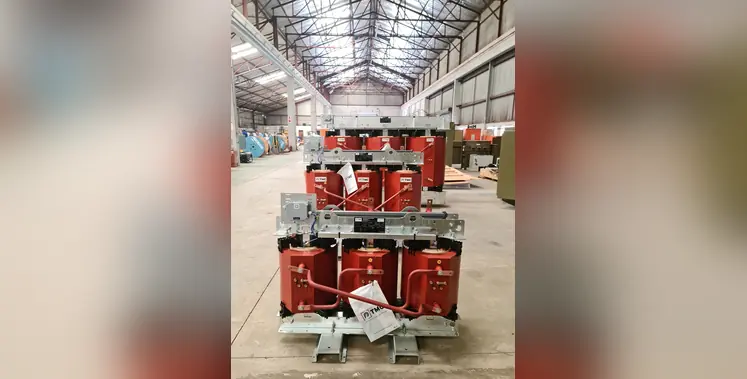
From mining and manufacturing to renewable energy and data centres, Trafo Power Solutions delivers dependable dry-type transformer solutions for demanding environments. (Image source: Trafo Power Solutions)