




vb

twitter Facebook Linkedin acp Contact Us

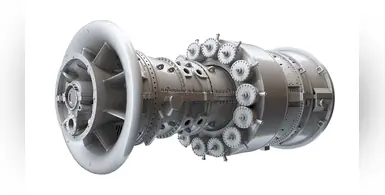
Everllence’s 175D GenSet delivers 3 MVA of dependable standby power in a compact design for modern data centres (Image source: Everllence)

Everllence — formerly MAN Energy Solutions — has unveiled its new 175D genset for data centre applications

Designed for reliable backup power for digital infrastructure, the 175D high-speed engine stationary genset has been tailored for the growth of the data centre market across the world.

“Demand for data centres is rising rapidly, driven in particular by the growing use of AI, which increases the need for a reliable power supply,” said Alexander Stöckler, head of power segment at Everllence.

“The 175D GenSet delivers this reliability based on our proven in-house high‑speed engine of the same name.”

Made in Europe, the engine delivers 2.4 MWe (3 MVA) of standby power and is engineered for fast, stable load-acceptance in accordance with international standard ISO 8528‑5.

As a European OEM, Everllence operates an integrated engine-production system with the 175D manufactured in both Germany and Denmark. The company produces key components in-house, including the engine block, turbochargers and cylinder heads.

In addition, the SaCoS 5000 engine control system, developed by Everllence, is designed to ensure the highest cybersecurity standards.

“With more than 37 GW of installed power-plant capacity worldwide, we are a long‑standing and reliable partner to the energy sector,” said Marius Zasche, global business development, highspeed, Everllence.

“Everllence is the only supplier that provides data centre operators with both medium‑speed engines for primary power supply and high‑speed units for backup.”

At the same time, customers also benefit from a global service network. More than 140 Everllence PrimeServ locations offer rapid support, spare parts and predictive maintenance, ensuring the engines’ long‑term operational reliability.

The standardised 175D genset, which can be flexibly integrated into containerised solutions, is designed for a grid frequency of 50 Hz and features a compact design with high power-density. The robust design and electrically powered cooling systems ensure reliable and long-lasting operation even under varying environmental conditions.

The new genset also supports alternative fuels, being HVO‑capable and methanol‑ready, making it suitable for operators seeking to eventually decarbonise their power supply.

“The 175D genset technical platform is based on more than 15 years of experience in high‑speed engine development,” said Tobias Kappelmann-Münch, senior product manager, highspeed, and project manager, data centre, Everllence.

“We are now expanding the range of applications of this proven technology to data centre operations.”

Read more:

Lephalale solar plant powers Exxaro's greener mining

DRC on-site hybrid mining power project advances

Gensets to boost Algeria's powdered milk production

Powering Africa's next data centre generation

Master Power Technologies (MPT) has strengthened its presence in Africa's fast-growing data centre market with the opening of a new Customer Experience Centre and regional headquarters in Midrand, South Africa

The new facility reflects the company's continued investment in critical power and digital infrastructure, providing a dedicated space where customers, partners and engineers can experience, test and develop technologies designed for modern data centres.

Established in 1999 by electrical engineer Menno Parsons, MPT has evolved from a specialist uninterruptible power supply (UPS) provider into a pan-African engineering company delivering turnkey critical power and data centre solutions across Africa and the Middle East. Its portfolio includes products designed, manufactured and assembled under the company's SURE and AIVA brands, specifically engineered to meet the operational demands of African environments.

Located between Johannesburg and Pretoria, the 6,000m² Midrand campus will serve as MPT's African headquarters and accommodate around 200 employees. Its proximity to major data centre developments provides convenient access for customers and industry partners.

A key feature of the investment is the R50mn Customer Experience Centre, which enables visitors to evaluate MPT's technologies in a practical environment. The facility houses a 2MVA UPS testing platform alongside a 400kW cooling systems testing centre, described as the continent's most comprehensive installation of its kind.

The testing facilities are designed to validate system performance against European certification standards, reinforcing MPT's commitment to quality and energy efficiency. In 2025, the company became the first African organisation to be certified as an Endorser of the European Code of Conduct for Energy Efficiency in Data Centres.

"The Experience Centre represents a new chapter for Master Power Technologies. It's about creating a space where customers can engage with our technology, see it in action, and understand the depth of our capabilities," commented managing director and founder of MPT Menno Parsons.

"This centre will be the most impressive UPS and cooling training facility in Africa, allowing our clients to touch, feel, and work with real systems in a way that has never been possible before."

The new centre also demonstrates the company's commitment to local engineering and manufacturing. MPT assembles complete modular data centre and energy centre solutions within Africa, reducing logistics risks while supporting regional supply chains and delivering solutions tailored to local operating conditions.

In addition to product demonstrations, the facility will function as a training and collaboration hub for customers and engineers. It also incorporates MPT's Advanced Infrastructure Visual Analytics (AIVA) platform, which monitors and records operational data across more than 200 African data centres.

"Our business has always been about more than just selling equipment. We engineer solutions for Africa, by Africa. This Experience Centre is a testament to that philosophy, which strengthens our ability to train, innovate and deliver world-class infrastructure while remaining rooted in local expertise," says Parsons.

As demand for resilient, energy-efficient and scalable data centre infrastructure continues to grow, the Midrand investment further strengthens MPT's capacity to support customers across Africa and the Middle East.

Aerial view of the new Hydra project in South Africa (Image source: TotalEnergies)

South Africa’s Hydra project, thought to be the largest hybrid renewable energy development in Africa, has been inaugurated in the Northern Cape

TotalEnergies and partners Hydra Storage Holding and Reatile Renewables announced the start up of the project on 16 July.

It combines a 216 MW solar photovoltaic plant with a 500 MWh battery energy storage system.

The facility will supply 75 MW of dispatchable renewable electricity to the national grid under a 20-year power purchase agreement signed with state utility, Eskom.

This represents more than 400 GWh of electricity per year, equivalent to the consumption of approximately 200,000 South African households.

“We are delighted, together with our partners Reatile Renewables and Hydra Storage Holding, to bring the Hydra project into operation,” said Magali Pailhé, managing director of TotalEnergies Southern Africa.

“It enables us to supply dispatchable renewable power to the South African grid, thereby strengthening the country’s energy security while decarbonising its electricity generation.”

Pailhé also said that the project reinforces the company’s own renewable production capacity in South Africa, the continent’s largest power market in terms of electricity consumption.

TotalEnergies and Hydra Storage Holding each hold a 35% in the development, with Reatile Renewables holding the remaining 30%.

It forms part of South Africa’s Risk Mitigation Independent Power Producer Procurement Programme launched by the Department of Mineral Resources and Energy.

Read more:

Lephalale solar plant powers Exxaro's greener mining

DRC on-site hybrid mining power project advances

EAAIF backs Egypt's landmark solar and storage project

Lephalale solar plant powers Exxaro's greener mining. (Image source: Exxaro)

Exxaro Resources has reached a major milestone in its energy transition strategy with the commercial operation of the 68 MWac Lephalale Solar Project (LSP), its first utility-scale self-generation renewable energy facility

Developed through its wholly owned renewable energy business, Cennergi, the project reflects the growing shift among mining companies towards cleaner, more secure power sources as rising electricity costs, grid constraints and decarbonisation targets reshape the sector.

Located adjacent to Exxaro's Grootegeluk Mine in Limpopo, the behind-the-meter solar photovoltaic (PV) plant comprises 129,024 solar modules installed across 185 hectares. Unlike grid-scale solar farms that primarily supply electricity to national utilities, behind-the-meter facilities generate power directly for industrial operations, reducing dependence on the public grid while improving operational reliability. The plant is expected to generate approximately 176 GWh of renewable electricity annually, supplying daytime power to the mine under a 25-year power purchase agreement.

The project achieved Commercial Operations Date (COD) on 20 April 2026, following financial close in June 2023, construction beginning in August 2023, first power delivery in December 2025 and full generation capacity reached later that month. With an investment of R1.7bn (approx. US$104mn), the project demonstrates Exxaro's ability to develop, finance, construct and operate large-scale renewable energy assets while strengthening energy resilience for its mining operations.

Mining companies across Southern Africa are increasingly investing in captive renewable energy as they seek to reduce exposure to power shortages, volatile electricity tariffs and carbon-related costs. South Africa's ongoing electricity supply challenges, combined with corporate net-zero commitments and supportive regulatory reforms for private generation, have accelerated renewable energy deployment across the mining sector. Solar PV has become one of the fastest-growing technologies due to its relatively short construction period, predictable operating costs and ability to offset daytime energy demand.

The Lephalale Solar Project is designed to reduce Exxaro's Scope 2 greenhouse gas emissions by approximately 17%, while lowering electricity costs for Grootegeluk Mine by more than R100m (approx. US$6.1mn) annually. The facility has also been licensed for future integration with a Battery Energy Storage System (BESS), allowing excess solar generation to be stored and dispatched when required. This future capability will improve energy flexibility and help maintain operations beyond daylight hours as storage technologies become increasingly economical.

Speaking at the official opening, Exxaro CEO Ben Magara said the project marks an important step in delivering the company's Sustainable Growth and Impact strategy.

"The official opening of the Lephalale Solar Project is far more than the completion of a renewable energy facility; it marks another significant milestone in the delivery of our sustainable growth and impact strategy," he said.

"The project demonstrates our ability to successfully develop, finance, construct and operate large-scale renewable energy infrastructure through our growing renewable energy business, Cennergi."

Beyond reducing emissions, the project is expected to strengthen Exxaro's long-term operational resilience by providing greater energy security, reducing exposure to carbon taxes and supporting more predictable electricity costs.

The project has also delivered measurable socio-economic benefits during construction. It created 808 jobs, of which 557 positions (69%) were filled by members of local host communities, including three people living with disabilities. Local procurement accounted for 41.9% of project spending, benefiting 13 local subcontractors and supporting regional economic development.

To support a just energy transition, Exxaro invested R1.12m (approx. US$68,400) in community bursaries and workforce development programmes, providing training in photovoltaic installation, firefighting, first aid, incident investigation and other construction-related skills that will remain valuable beyond the project itself.

The successful delivery of the Lephalale Solar Project strengthens Cennergi's renewable energy portfolio and provides a scalable model for future industrial renewable energy developments. As mining companies continue balancing productivity with sustainability, self-generation projects such as Lephalale are expected to play an increasingly important role in reducing emissions while improving operational efficiency and long-term competitiveness.

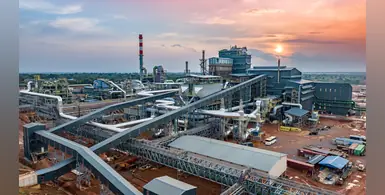
Smelter operations at Kamoa-Kakula (Image source: Ivanhoe Mines)

Ivanhoe Mines said its Kamoa-Kakula on-site solar facility with battery storage is set to ramp up to full capacity during Q3 2026 — with plans well advanced to double on-site solar capacity to 120 MW by the end of 2027

In a Q2 update, the company reported that commissioning of Kamoa-Kakula’s on-site solar photovoltaic (PV) facilities in the Democratic Republic of Congo (DRC) are underway, as part of efforts to drive down energy costs and expand mining output.

Once fully ramped up during the third quarter, the facilities will deliver 60 MW of continuous baseload power to Kamoa Copper as its sole offtaker, it noted.

The solar and battery storage facilities are owned, operated and funded by CrossBoundary Energy and Green World Energie.

The two facilities have a combined 433 MW of peak installed solar PV capacity and 1,107 megawatt-hours (MWh) of battery energy storage system (BESS) capacity.

The facility is the largest hybrid solar PV and BESS facility installed by a mining company in Africa.

Looking ahead, Kamoa-Kakula is also advancing plans to double on-site solar power capacity, with battery storage, up to 120 MW by the end of 2027.

During Q2, a tender was awarded and a power purchase agreement (PPA) signed with Green World Energie for an additional 30 MW on-site hybrid solar PV facility with BESS.

Construction is expected to be completed in Q3 2027, Ivanhoe Mines said in its update.

A further 30 MW solar PV facility is currently undergoing final contract negotiation and is expected to be awarded soon, it added.

As well as work at the Kamoa-Kakula complex, Ivanhoe Mines is also looking to upgrade energy facilities at the ultra-high-grade Kipushi zinc-copper-germanium-silver mine, also in the DRC.

The company is expected to releasemore details when it publishes its Q2 2026 financial results at the end of July.

Read more:

Nesa Power gets cash boost for C&I power growth

Gensets to boost Algeria's powdered milk production

Nestle sites gain nearly seven megawatts of solar


More Articles …