




cb.web.local

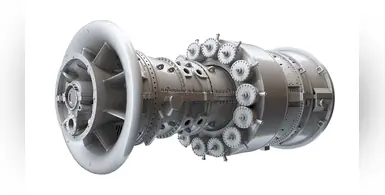
Perkins 5016 EP engine (Image source: Perkins)

Perkins has unveiled its latest power generation engine designed to support Africa’s growing energy demands across the data centre industry, healthcare, airports and remote worksites

Its new 5016 full-authority electronic engine for power generation is now in production in both India and the UK and available for markets in Africa and worldwide, offering reliable power, fuel efficiency and robust load acceptance.

The full range of 6-, 8-, 12-and 16-cylinder 5000 Series engines offer up to 2500 kVA of standby power and up to 2250 kVA of prime power for customers around the world.

The new 5016 delivers a powerful 1400-2500 kVA range at 50 Hz for base load, prime and standby applications.As with all engines in the 5000 Series range, the 61-litre, V16 configuration engine has been designed specifically for power generation.

The 5016 is engineered to offer reliable power at worksites where uptime matters.

“With the 5016 in production, we have a comprehensive range of 6-, 8-, 12-and 16-cylinder full-authority electronic engines, delivering up to 2500 kVA, available to power our customers’ prime and critical standby applications,” said Dan Bentley, EAME sales director at Perkins.

Fuel efficiency benefits

Engineered to meet ISO G3 and NFPA110 standards to handle demanding load acceptance challenges, the 5016 uses a pair of smaller turbochargers on each bank, which are designed to reduce transient response time when compared with a single large unit.Its exhaust manifolds are engineered to optimise gas flow to the turbochargers, further reducing ramp-up time and enhancing load acceptance.

The power unit is also built to world-class standards for optimised efficiency and improved fuel consumption.

An advanced electronically controlled fuel injection system precisely manages fuel delivery to optimise combustion, improving engine efficiency, reducing fuel consumption and supporting lower emissions.

The engine also incorporates a unique low-pressure fuel system developed specifically for the 5000 Series, providing excellent tolerance to variations in fuel quality and enabling operation on biodiesel blends up to B20 or 100% HVO1.

The use of renewable HVO fuel can reduce lifecycle greenhouse gas emissions, helping customers meet their sustainability goals while maintaining engine performance and reliability, with low oil consumption and extended 750-hour service intervals helping to minimise waste, reduce maintenance requirements and lower total cost of ownership.

Ideal for fast-growing territories

While particularly well suited to data centre and critical power installations, the company believes the 5016 is an attractive choice for other high-power applications around the world, including projects in rapidly growing territories where demand for dependable large-engine solutions continues to increase.

“The 5006, 5008 and 5012 models are already delivering dependable power in a wide variety of electric power generation installations around the world,” said Bentley.

Equipped with the latest technology to operate at peak efficiency over its full rated output range, the 5016 has been designed as a compact package, making it an ideal choice for space-limited applications.

Electronically controlled injectors can alter both timing and pressure to accommodate a broad range of ambient temperatures and altitudes without sacrificing performance.

Working together with the advanced turbocharging technology developed for the 5000 Series the combination has been proven to help optimise load acceptance, altitude capability and fuel consumption.

“The extensive endurance testing work across the range, including the 5016, means I have every confidence that the 16-cylinder will also meet our customers’ expectations for uptime,” added Bentley.

As with all Perkins engines, the 5000 Series is backed by Perkins’ global service and support network of authorised distributors offering connectivity and condition monitoring solutions and ongoing engine maintenance and repair.

Read more:

BESS system powers up at OCPS Benguerir mine site

On-site power boost for Kamoa Copper

On-site trigeneration plant for Ivorian pasta factory 


Transforming Africa’s energy system through mini-grids (Image source: Adobe Stock)

Nigeria is seeking to accelerate the roll out of mini-grids, solar home systems and other decentralised power for communities and businesses not served by the national grid

It follows the recent launch of a US$300mn Distributed Renewable Energy (DRE) Fund to boost the proliferation of mini-grids across the country.

The Nigeria Sovereign Investment Authority (NSIA) and Africa50 are co-managing the new vehicle, with Sustainable Energy for All (SEforALL) providing energy-access leadership and the World Bank as a founding partner.

The World Bank is contributing an initial US$25mn through its International Development Association (IDA) arm, representing about 8.3% of the US$300mn target.

The partners first announced the commercial launch on the sidelines of the United Nations General Assembly in New York on 21 September 2026.

NSIA managing director Aminu Umar-Sadiq described the step as a signal that Nigeria’s distributed renewable market is “investable, credible and ready to operate at scale.”

Africa50 group chief executive Alain Ebobissé said the partnership is designed to turn electricity need into investable opportunities and to offer a model that can be repeated elsewhere in Africa.

Capital is expected to go into local developers across solar home systems, isolated mini-grids, storage, and commercial and industrial (C&I) installations.

C&I on-site power already provides a significant source of Nigeria's overall energy supply, with industry users investing in their own power plant in the face of erratic grid-based supply.

Mini-grid systems are also on the ascendcy.

Through the earlier Nigeria Electrification Project, developers built 180 solar hybrid mini-grids in 23 states, connecting more than 146,000 households and deploying 19.2 MW of renewable capacity, TechCabal reported on 28 September 2026, cited by local firm Kowatek Solar in a press release.

Headquartered in Asaba, Delta State, Kowatek Solar designs and delivers premium solar, lithium storage and hybrid power systems for homes, estates, businesses, hotels, churches, schools and industrial sites.

The same reporting put 2024 electricity access at 62.5%, leaving more than 80 million people unserved, it added.

In its press release, Kowatek Solar said the fund’s shift into deployment is the signal the market has been waiting for, with financing now matching projects that are already technically proven.

“A dedicated equity and investment platform does not by itself install a system,” the company noted in its release.

“Developers still need bankable designs, load studies, storage architecture and after-sales support. Companies already building hybrid solar and lithium systems in Nigeria are positioned to supply that delivery layer as capital starts to move.”

Read more:

Egypt deploys Gotion 5mwh systems for grid storage

Zambia receives power investment boost

BESS system powers up at OCPS Benguerir mine site


Dangote to boost Kenya's fuel supply (Image source: Adobe Stock)

As Africa looks to strengthen its energy security from within, a new generation of home-grown industrial projects is reshaping the continent’s fuel landscape

Dangote’s latest refinery venture in Kenya is another sign of African capital and expertise being mobilised to build the infrastructure needed to meet Africa’s growing energy demand.

Honeywell Technologies has been chosen by Dangote Petroleum Refinery and Petrochemicals FZE to assist in its Kenyan refinery project in a deal worth around US$300mn.

It will provide process technologies, licensing, engineering services, proprietary catalysts, equipment and digital solutions for the planned 700,000 barrel-per-day (bpd) refinery.

Once complete, the facility is expected to become the world’s largest single-train refinery.

Dangote, Honeywell collaboration

The project builds on nearly a decade of collaboration between the two companies and leverages proven engineering designs that Honeywell Technologies developed for Dangote’s refinery in Lekki, Nigeria (Honeywell powers Dangote's bold refinery capacity transformation).

In a statement, Honeywell Technologies said that Dangote’s ability to draw on these established designs will help reduce the development schedule for the new facility by nearly two years – nearly 30% sooner than typical newly constructed facilities.

“Large-scale refinery projects require a combination of proven technologies, engineering expertise and digital capabilities,” said Rajesh Gattupalli, president of Honeywell Technologies UOP.

“Through our long-standing relationship with Dangote, we have developed proven large-train engineering designs that can be applied to the Kenya refinery to help significantly reduce time-to-market. We will also provide modifications that enable the refinery to process a wide range of crude feedstocks, helping improve operational flexibility and reduce reliance on any single crude source or supply region.”

The Kenyan refinery will produce gasoline, diesel, jet fuel and polypropylene.

It will also have the flexibility to process a wide variety of crude oils, from light to heavy grades, enabling the use of feedstocks sourced from multiple regions and reducing reliance on any single supply source.

Fund-raising efforts

The announcement comes as Dangote works through an initial public offering (IPO) to raise funds for the expansion of its refinery in Nigeria and the new facility in Kenya.

The IPO worth US$1.6bn is believed to be Africa’s largest to date (Dangote refinery seeks US$1.6bn in Africa's biggest IPO).

The company has also been raising additional funding to assist with its growth plans (Dangote refinery secures US$2.5bn investment ahead of expansion).

“Dangote is committed to expanding Africa’s refining capacity and strengthening long-term energy security for the continent while also serving growing export markets,” said Aliko Dangote, president, Dangote Petroleum Refinery and Petrochemicals FZE.

“Our proven collaboration with Honeywell Technologies will enable us to bring the facility online faster and provide the flexibility to process a broad range of crude oils. Together, these capabilities will help us meet growing global demand for fuels and petrochemical products.”

In its statement, Honeywell Technologies said the new project underscores how proven refining technologies and digital solutions can help accelerate project execution while supporting energy security, supply chain resilience and economic growth.

Over the past year, Dangote announced that Honeywell Technologies would provide licensing, engineering, catalyst, digital services to help boost fuel and petrochemical production and enhance workforce capabilities at the Lekki facility, as well as support efforts to increase refining capacity, optimising existing assets and accelerating market delivery.

The company has also put in place other deals with equipment suppliers ahead of its group-wide expansion (Dangote seals XCMG refinery infrastructure pact).

The storage systems will support renewable energy integration at two major sites. (Image source: Gotion)

Egypt is set to deploy large-scale battery energy storage systems across the Nefertiti and Horus projects, with Gotion Grid supplying its 5MWh storage systems for what will be Africa’s largest standalone energy storage facilities once completed

The projects, developed by AMEA Power and built by China Energy Engineering Group, represent Egypt’s first large-scale standalone energy storage projects. The systems are intended to strengthen grid stability, support the integration of solar and wind power, and contribute to Egypt’s 2030 clean energy goals.

Gotion has begun global delivery of the equipment, with 50 heavy-duty trucks carrying its self-developed Gotion Grid 5MWh storage systems departing simultaneously from its Jinzhai and Nantong facilities.

The storage systems will support renewable energy integration at two major sites. At the Benban solar complex, the technology is designed to enhance solar power consumption, while at the Zafarana wind farm it will provide flexible peak-shaving capabilities.

The systems have been upgraded for operating conditions including extreme heat, sandstorms and salt fog. According to Gotion, their capabilities include high-voltage stability, high safety and millisecond-level response, features intended to support reliable operation in Egypt's challenging environmental conditions.

The deployment also highlights the role of battery energy storage in managing variable renewable generation. By storing electricity and providing flexible grid support, standalone storage can help align renewable power generation with periods of demand and provide additional operational flexibility for power systems with increasing shares of solar and wind generation.

Gotion completed the first shipment within three months of signing the project, reflecting its role in large-scale storage integration, global supply chain coordination and localised delivery.

"This shipment opens a new stage of broader cooperation," said by Hussain Al Nowais, chairman of AMEA Power, "We are proud and satisfied with our partnership with Gotion and are actively exploring new opportunities across the Middle East and Africa."

Li Chen, Senior vice-president of Gotion and president of Gotion Americas said, "Egypt is Gotion's key step into the Middle East and North Africa, proving it can deliver end-to-end, operate locally, and commit for the long term."

Dangote is seeking to bolster Nigeria’s fuel supplies (Image source: Adobe Stock)

The proposed expansion of Nigeria’s Dangote oil refinery marks a significant step in the West African country’s push to build up domestic fuel production and reshape its role in the continent’s oil industry

An initial public offering (IPO) in the refinery has attracted “enormous” support from investors, according to the group’s founder, Aliko Dangote.

The US$1.6bn IPO is now open in a bid to raise additional funding to double capacity.The Lagos refinery is a key installation to ease energy shortages in the West African country, one of the continent’s biggest oil and gas producers.

The funds will partially finance a massive capacity expansion to 1.4 million bpd by 2029.

The IPO comes as Nigeria seeks to strengthen its domestic energy supply and reduce reliance on imported refined petroleum products, while also positioning itself as a major refining hub for West Africa.

The scale of the expansion also reflects the growing ambitions of Africa’s private sector to finance large, strategically important infrastructure projects through local capital markets.

Dangote told reporters in Kenya, where the group plans a separate refinery, that the outlook for the IPO is encouraging.

“Demand is there, enormous demand,” he was quoted as saying by Reuters.“In fact, I didn’t know the depth of our capital markets until now, really, because we have never tested it,” he added.

The IPO, Africa’s largest to date, is scheduled to close 13 October, 2026.

The Nigerian refinery, located in Lekki, Lagos, commenced operations in 2024, and is the largest single-train oil refinery in the world.

In Kenya, Dangote is hoping to replicate its refining ambitions in East Africa with a planned 700,000 bpd refinery in Lamu, although the project has faced local challenges.

More Articles …