






vc.web.local

twitter Facebook Linkedin acp Contact Us

Energy

Morocco’s largest solar project commissioned

OCP Green Energy, the renewable energy subsidiary of OCP Group, has commissioned the first phase of its investment program, delivering a total solar capacity of 202 MWp

The portfolio spans three sites: Benguerir (67 MWp), Foum Tizi (30 MWp), and Oulad Farès in Khouribga, with Oulad Farès now the largest photovoltaic plant in operation in Morocco at 105 MWp.

These solar farms support OCP Group’s mining and industrial operations by covering a significant share of energy needs, reducing the carbon footprint, and providing low-cost electricity, estimated at around 368 MAD/MWh, for the production of customized fertilizers. Developed under the authorisation of Morocco’s Ministry of Energy Transition and Sustainable Development, the projects comply with national grid regulations and involve connection agreements with ONEE to optimise power transmission across OCP’s sites, including desalination plants and strategic industrial facilities.

OCP Green Energy executed the projects with strong involvement from local Moroccan industrial partners across engineering, design, and construction, completing the phase on time, on budget, and to international standards. Representing nearly MAD 1.8 billion in investment, the projects also benefited from international financing, including €100 million from the IFC and support from KfW and the Clean Technology Fund.

Omar Kadir, managing director of OCP Green Energy, stated, “Integrating a solar plant at the heart of an active mining site, without disrupting its operations and while strictly complying with grid code standards, represented a major challenge. Thanks to OCP Group’s support, our teams’ commitment, and close collaboration with the IFC and other financial and industrial partners, we have delivered this project in line with the best international practices in safety, performance, and sustainability — demonstrating our ability to combine operational excellence with energy transition.”

Alongside the solar farms, OCP Green Energy is launching the Battery Energy Storage System (BESS) Phase I project in Benguerir, the first confirmed deployment of LFP batteries in Morocco. With a capacity of 25 MW / 125 MWh, the system will store solar energy for use during peak hours, ensuring continuous renewable supply, improved demand management, and enhanced grid flexibility.

“Large-scale deployment of storage technology is a true inflection point that accelerates the rollout of renewable capacity. By leveraging this flexibility, we significantly reduce the intermittency of renewable sources, ensure better alignment with demand profiles, reinforce grid stability, and thereby secure greater integration into the national power system,” added Kadir.  

Looking ahead, OCP Green Energy plans to expand its renewable portfolio to 1.2 GW by 2027 and over 2 GW beyond, including at least 2 GWh of storage. The initiative is central to OCP Group’s energy transition strategy, aiming to fully meet industrial electricity needs from renewable sources by 2027 and achieve carbon neutrality by 2040, while strengthening the company’s low-carbon competitiveness globally.

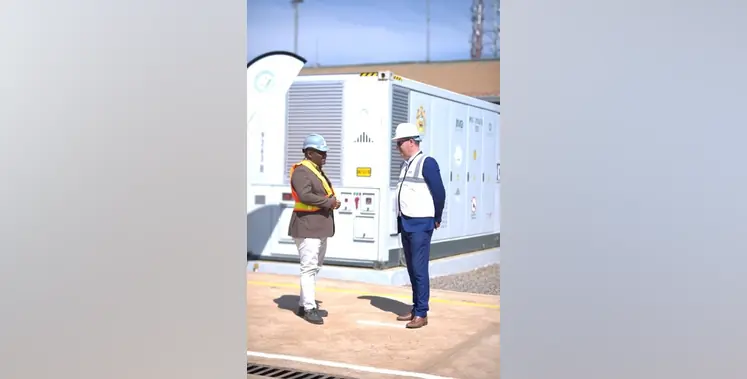
NCP Chlorchem and Terra Firma unveil one of South Africa’s largest industrial behind-the-meter solar programmes at Johannesburg site. (Image source: NCP Chlorchem)

NCP Chlorchem, one of South Africa’s leading producers of chlorine and essential water treatment chemicals, has partnered with Terra Firma , a top developer of commercial and industrial solar and battery-storage projects, to launch a 27 MWp multi-phase solar initiative

This programme ranks among the largest standalone behind-the-meter solar installations in the country and will power NCP’s primary manufacturing site.

The site is designated as a National Key Point due to its vital contribution to providing safe, potable water to millions across South Africa. The solar rollout will meet a considerable portion of the facility’s power needs, with several phases already operational. More capacity is expected to be added in early 2026, and the full programme is projected for completion by the end of that year.

As core industries navigate high electricity prices, grid instability and increasing demands to cut carbon emissions, onsite renewable energy is becoming an essential part of long-term operational and financial planning.

NCP’s production processes require substantial amounts of energy, making reliable long-term energy supply and emissions reduction fundamental to its sustainability agenda. The company began its solar partnership with Terra Firma in 2023 through a 1.1 MWp pilot system, installed under earlier regulatory constraints that capped project size. After the pilot proved successful, NCP progressed to a 10 MWp second phase consisting of rooftop, carport and ground-mounted systems, now nearing commissioning. Construction of an additional 17.5 MWp is underway, bringing the total solar capacity to 27 MWp.

“As a producer of essential chemicals used in water and sanitation, sustainability is central to how we operate,” said Schalk Venter, managing director, NCP. “Working with Terra Firma has allowed us to lower our carbon emissions and manage long-term energy costs more effectively. It’s a major step in building a more resilient and sustainable future for our operations.”

“As South Africa’s energy transition accelerates, more large energy users in complex industrial sectors are turning to onsite renewable systems to meet their cost and sustainability targets,” said Grant Berndsen, CEO, Terra Firma.

“Supporting a facility as vital as NCP’s, where uninterrupted operations are essential to public health, highlights the importance of getting these projects right. Integrating a 27 MWp solar system into a live chemical production site demands careful planning and collaboration, with the highest possible safety standards and processes. The success of this programme shows how renewables can be delivered effectively within such a high-stakes environment. It sets a benchmark for secure, compliant industrial decarbonisation.”

Vodafone boosts AI-driven power backup across Europe, Africa

Telecom and internet outages highlight just how dependent modern life is on uninterrupted digital connectivity. From GPS to mobile banking to emergency services, critical operations falter when networks fail. In response, Vodafone has accelerated its Enhanced Power initiative, a comprehensive programme designed to strengthen network resilience, extend power backup, and maintain vital connectivity for emergency and critical online services across Europe and Africa

Boosting AI and backup power

The increasing frequency of climate-related disasters and grid instability underscores the urgent need for resilient communications infrastructure for emergency services. Power outages caused by floods, wildfires, earthquakes, or blackouts can affect local, regional, or national areas. Though prolonged outages remain rare in Europe, last summer’s extreme weather alone is expected to cost the EU economy €126 billion by 2029.

The Enhanced Power initiative was fast-tracked following a major blackout in April 2025, which disrupted essential services including telecoms, transportation, and banking in Portugal and parts of Spain and France. At the outage’s peak, about 60% of Portuguese mobile users experienced connectivity loss or difficulties.

Vodafone’s programme aims to strengthen more than 10,000 critical mobile infrastructure sites supporting emergency services across Europe, beginning with Portugal and rolling out across Vodafone’s European markets over the next two years. The initiative combines existing temporary backup systems with AI-powered software to predict, control, and optimise backup power. Solutions are designed to handle outages depending on severity and scale, while also reducing CO2 emissions.

Local, regional, and national response capabilities

For localised outages affecting up to ten mobile sites, Vodafone will continue to deploy portable solutions such as Cells on Wheels (COW), complemented by the Instant Network Emergency Response (INER) programme. INER, active since 2012, provides free Wi-Fi and phone charging stations during disaster relief efforts and has supported 28 disasters worldwide, most recently Hurricane Melissa in Jamaica.

For larger regional outages impacting dozens or hundreds of sites, Vodafone deploys temporary and backup units alongside its AI-controlled Adaptive Power Backup system, which remotely extends base station battery duration, potentially doubling backup times.

Vodafone has also developed contingency plans for national or cross-border blackouts. Over 10,000 essential radio and backhaul access sites across Europe, including hospitals, government offices, airports, and transport hubs, will be equipped with at least four hours of backup power, while core mobile sites (over 400 data centres and backbone facilities) are guaranteed 72 hours of power or diesel generator refuelling within 48 hours. Aggregation sites, critical for routing customer data, are ensured a minimum of four hours’ backup.

Vodafone is exploring further resilience options by connecting emergency responders’ smartphones and other cellular devices via satellite even in extreme conditions.

AI to the rescue

Vodafone has launched its AI-driven Adaptive Power Backup service in Greece, with trials ongoing in Turkey before broader deployment in 2026. The system predicts outages and optimises energy usage, nearly doubling backup duration and keeping emergency services connected three times longer than industry standards. Non-essential equipment is remotely powered down or placed in low-energy “cell sleep mode,” while crucial communication channels remain operational.

AI adoption also reduces the capital needed for additional backup batteries, which would otherwise divert resources from network upgrades. Ofcom estimates that mandating four-hour backup at all UK telecom sites would require £2.2–4.4 billion (€2.6–5.2 billion), with similar costs expected across Europe. Vodafone is exploring collaboration with other operators and electricity providers, pooling resources to participate in electricity markets and using Virtual Power Plant services, enabling revenue generation from idle capacity. Government incentives are needed to drive wider adoption.

Africa focus

Vodacom, Vodafone’s African business, leverages AI to address challenges posed by frequent load-shedding. Its AI-on-the-edge solution prioritises energy sources, reduces diesel runtime, and ensures base stations operate on the most cost-efficient energy source without compromising availability. Initial results show a 10% – 15% reduction in diesel use, lower operational costs, fewer site visits, and improved customer experience.

Aligned with European frameworks

Vodafone’s resilience programme aligns with EU cybersecurity and infrastructure protection frameworks. Vodafone seeks to collaborate with Brussels and national authorities to ensure compliance, speed implementation, and explore co-funding opportunities. Operators alone cannot shoulder the burden, government support through funding and policy alignment is critical to sustain and expand infrastructure, ensuring Europe’s digital and telecom sectors remain resilient during major outages.

Vertiv unveils hybrid power evolution. (Image source: Vertiv)

Vertiv has launched the Vertiv PowerDirect 7100 Energy, a hybrid-ready DC power system designed to help telecom and edge operators enhance network reliability and advance their energy transition goals

The system offers scalable power and intelligent controls suited for a wide range of operating environments, from stable utility grids to remote or off-grid locations, giving operators the adaptability needed to manage emerging energy sources and increasing digital demand.

Now available across Europe, the Middle East, and Africa (EMEA), the Vertiv PowerDirect 7100 Energy supplies up to 52 kW of scalable 48 V DC power and delivers efficiency levels of up to 98 percent. Built on Vertiv’s fourth-generation hybrid architecture, it smoothly incorporates grid, generator, and alternative energy inputs such as solar, wind, or fuel cell systems to ensure continuous power in areas with limited grid dependability.

The system features Vertiv solar converters and Vertiv modular rectifiers, overseen by the Vertiv NetSure Control Unit (NCU). These elements work together to provide advanced load management, remote monitoring, and energy scheduling to boost performance and prolong the life of critical equipment.

“The world expects energy efficiency and flexibility with the growth of communications, such as 5G and edge connectivity”, said Dave Wilson, director of global hybrid solutions at Vertiv. “The Vertiv PowerDirect 7100 Energy gives operators a single, intelligent platform capable of adapting to any grid condition, delivering reliable power while supporting the transition to cleaner, more efficient energy strategies.”

Engineered for compact and demanding environments, the Vertiv PowerDirect 7100 Energy is offered in 500 A, 750 A, and 1000 A options for telecom and edge data racks. Its front-access layout makes installation and maintenance straightforward, while its operating range from minus 40 C to plus 65 C ensures dependable performance in remote or outdoor settings.

The Vertiv PowerDirect 7100 Energy enhances Vertiv’s global portfolio of Vertiv NetSure DC power solutions and hybrid energy systems within its broad power train architecture. When combined with Vertiv’s thermal management, IT management, and lifecycle services, it delivers a strong platform for efficient, reliable, and future-ready digital infrastructure.

Quibala substation in Angola. (Image source: Mitrelli Group)

In a project engineered and executed by the Swiss-based Mitrelli Group, Angola has inaugurated the Quibala substation, the ninth and final substation to be delivered under the Sumbe-Gabela-Waco Kungo (SGWK) energy corridor

This milestone builds on earlier phases that added six substations and more than 600 km of overhead transmission lines (OHL) reaching up to 220 kV.

Together, this growing infrastructure forms the backbone of the SGWK corridor, improving the lives of 2.3 million people across the Cuanza Sul province, fuelling economic growth and industrialisation across the heart of the country.

The newly inaugurated Quibala 220/60 kV and 60/30 kV substation in Cuanza Sul Province will deliver reliable, renewable energy, adding 335 MW of available power to support industries, enhance public services and improve daily life across the region, a Mitrelli statement read.

It added that theconstruction of the substations has already created 900 direct jobs, with broader energy access expected to stimulate an additional 12,000 jobs across multiple sectors.

It also forms part of a broader, regional transformation with Mitrelli, in partnership with US-based energy investor HYDRO-LINK, advancing a landmark 1,150 km cross-border transmission corridor to link Angola and the Democratic Republic of Congo (DRC).

“This project will enable Angola’s renewable energy surplus, primarily from hydropower, to reach the DRC’s mineral-rich Copperbelt,” the Mitrelli statement noted.

“It represents a crucial step toward regional energy integration, improving grid stability, unlocking cross-border trade and strengthening energy security across Africa.”

Beyond residential and industrial use, the substations also support Angola’s agriculture and agri-processing sectors, critical pillars of its export diversification strategy.

Reliable electricity boosts production, reduces post-harvest losses, and expands cold storage capacity.

Rodrigo Manso, CEO, Mitrelli, also said that the transition to grid-connected, renewable power is expected to reduce dependence on diesel generators, cutting CO2 emissions by an estimated 392,000 cubic metres per year — the equivalent of generating 335 MW through fossil fuels.

“We are proud to stand alongside the Angolan government in expanding energy access as a foundation for inclusive national development,” said Manso.

“These projects drive economic growth, support businesses, and create jobs. The inauguration of the Quibala substation reflects Angola’s commitment to sustained progress. By combining global expertise with deep local knowledge, we’re helping build a more connected, self-sufficient, and prosperous future.”

Read more:

Africa construction market drives Mota-Engil growth

Wia Gold outlines energy plans at Kokoseb mine

Hilton to triple Africa hotel portfolio


More Articles …