




Energy
ABB strengthens power stability at MMC Refinery
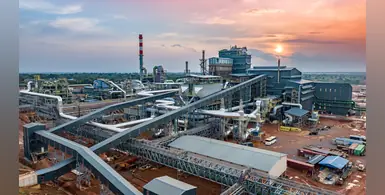
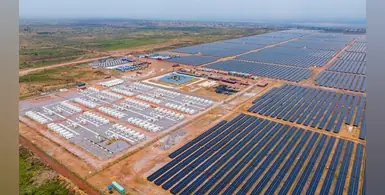
ABB deploys high performance rectifier and controller technology to stabilise power at MMC refinery in Mbombela. (Image source: ABB)
ABB has implemented advanced controller technology for high-power rectifier systems at the Manganese Metal Company refinery in Mbombela, strengthening power stability at the facility
Located in South Africa’s Mpumalanga province, MMC holds a unique position in global markets as the only producer of high-grade electrolytic manganese metal outside China. It is also the world’s largest refinery of 99.9% selenium-free EMM. The company supplies more than 120 customers across 20 countries, with approximately 95% of its annual output exported for applications such as lithium-ion battery production, alloying, welding and electronics.
To safeguard operational continuity in a competitive international environment, MMC required a solution to counter power instability that had been placing strain on ageing transformers. ABB addressed this challenge by integrating its AC 800PEC high-performance controller with six MCR1000 high-power rectifier units. The controller is engineered for rapid and accurate responses to grid fluctuations, supporting high-speed control algorithms with cycle times as low as 100 microseconds for fast control loops.
The upgraded system is designed to ensure a more stable power flow to the manganese production plant, enhancing availability and supporting higher productivity levels. According to the customer, the advanced control platform has significantly reduced unplanned outages and improved overall operational reliability, resulting in more predictable production performance.
“We were faced with several critical challenges that affected our operations and potentially our market position,” said Teheli Morabe, chief operating officer, MMC.
“Technical constraints, particularly the use of older rectifier technology, resulted in trips whenever there was adverse weather and during electrical grid fluctuations. The plant’s continuous production demands meant that downtime was not an option, and so we had to resolve these issues without disrupting operations. ABB’s innovations not only addressed our immediate operational challenges but also established a foundation for long-term stability and competitiveness.”
“Our project with MMC is an example of ABB working in an unseen way yet making a significant positive impact to important customer operations,” said Ralph Burgener, Global Business Unit Manager for High-Power Rectifier, ABB’s Process Industries division.
“Power supply challenges exist the world over but are particularly well-known in South Africa. To be able to overcome that with automated, power control technologies brings a great deal of satisfaction to our teams as engineers. We are enabling this manganese plant to compete internationally, which aligns with ABB’s mission of engineered to outrun.”
BluEnergy secures NERSA trading licence
BluEnergy Trading has been granted a multi-year energy trading licence by the National Energy Regulator of South Africa (NERSA)
It marks a significant regulatory milestone that unlocks a new era of power access for South African municipalities, the company noted in a statement.
A part of JSE-listed Blu Label Unlimited group, BluEnergy said the move empowers it to deliver renewable energy solutions by connecting municipalities, independent power projects (IPPs) and energy users, ensuring a more resilient and cost-effective energy supply for local communities.
“This licence is a critical enabler of BluEnergy’s strategy — it allows us to actively participate in the buying and selling of power,” said Aaron Suckerman, CEO of BluEnergy.
“By combining long-term power purchase agreements with proven prepaid revenue collection and settlement infrastructure, we are removing the barriers to entry and providing municipalities with a secure, long-term solution for their energy needs.”
BluEnergy’s execution and delivery capability is underpinned by its partnership with Cigicell, a leading provider of prepaid electricity vending and revenue assurance systems embedded in more than 95 municipalities across nine provinces.
NERSA’s approval positions BluEnergy to play a central role in South Africa’s power sector reform agenda which aims to increase private sector participation, enhance energy security and accelerate the transition to renewable energy.
The company operates through three specialised entities spanning project development: asset ownership, operations and maintenance, and energy procurement and trading.
“This robustly integrated approach enables BluEnergy to manage the technical and commercial aspects of energy delivery, grid integration, wheeling frameworks and contractual performance,”the company’s statement added.
“The model is designed to support localised generation and efficient energy flows, offering end-to-end solutions for municipalities and energy users.”
Mark Levy co-CEO of Blu Label Unlimited, added that the licence reflects the group’s long-term commitment to infrastructure-led growth in South Africa.
“Energy accessibility is a foundational marker of economic growth and social development,” he said.
“BluEnergy’s ability to act as both offtaker and trader, supported by Blu Label’s strong balance sheet and fintech capabilities, positions the business to deliver sustainable energy solutions at scale while contributing meaningfully to national energy transition and decarbonisation.”
By enabling efficient energy management and reliable offtake, the company also aims to support improved municipal resilience, financial performance and service delivery that help create conditions for broader economic growth and development.
With regulatory approval secured, BluEnergy stated that it will now focus on “aggressively” building out its project pipeline, operationalising trading activities in line with its mandate to support South Africa’s transition to a more resilient, decentralised and sustainable power system.
Read more:
Uganda signs Amari transmission deal with Gridworks
GE powers South Africa's first landfill gas projects
Bobcat launches new generators for Africa market
Kulani Energy boosts transmission EPC capacity
South Africa is gearing up for a major upgrade to its transmission network (Image source: Adobe Stock)
Kulani Energy has acquired key assets from Optipower, which historically operated as a division of Murray & Roberts Limited, one of South Africa’s best-known construction groups
The acquisition was concluded through Kulani Energy’s subsidiary, OptiProjects, which focuses on power transmission, distribution and renewable energy infrastructure.
Kulani Energy is a wholly black women-owned engineering and energy infrastructure firm.
The acquisition expands its engineering, procurement and construction (EPC) capacity to support South Africa’s grid expansion, according to Thinga Nethanani, the company’s chief operating officer.
“South Africa’s grid expansion depends not only on capital investment, but on retaining experienced delivery teams with the ability to execute complex transmission projects,” said Nethanani.
“This acquisition augments important execution capability in a constrained market, and highlights the role that Kulani Energy can play in stabilising and scaling critical national infrastructure capacity.”
Concluded at the end of January 2026, the transaction was executed while Murray & Roberts Limited was in business rescue, preserving critical EPC capability that may otherwise have exited the market.
OptiProjects will deliver high-voltage transmission lines, substations, and renewable energy projects, including solar and wind.
Prior to business rescue, Optipower was one of the EPC contractors approved on Eskom’s Panel A, supporting the utility’s planned 14,000-kilometre transmission rollout to 2030.
Kulani Energy has re-employed specialist technical resources, including project managers, construction managers and technical planners, safeguarding scarce skills in a sector that has experienced sustained contraction.
The acquisition was funded with support from Differential Capital, which recognised the strategic value Kulani Energy brings as an operator and integrator of complex infrastructure assets.
The partnership addressed a structural financing gap in the construction sector, where limited access to funding often prevents local players from competing with multinationals and undertaking large-scale infrastructure projects.
“Our confidence was driven by the experience, track record and disciplined execution of the Kulani Energy team,” said Vincent Anthonyrajah, CEO of Differential Capital.
“Importantly, they identified and secured the key individuals required to stabilise and rebuild Optipower, positioning the business for sustainable delivery.”
Anthonyrajah said Kulani Energy had also presented a credible long-term business plan capable of generating attractive shareholder returns while strengthening an EPC sector that has historically delivered low returns on capital.
“Kulani Energy was an ideal partner to rebuild Optipower, while building stronger, more competitive local infrastructure capability,” he said.
With the addition of OptiProjects’ EPC capability, Kulani Energy has since been contracted to participate in a 100MW solar photovoltaic project in Guinea, valued at approximately US$180mn, signalling growing regional demand for its delivery platform.
“OptiProjects will operate as part of Kulani Energy’s broader platform strategy spanning professional services, EPC delivery, operations and maintenance, and investments,” said Nethanani.
Read more:
Motheo copper mine on-site power project
Jubail Bros Nigeria's on-site power milestone
Uganda signs Amari transmission deal with Gridworks
Mphanda Nkuwa hydro project inches closer
More than a decade in the planning, Mozambique’s mighty Mphanda Nkuwa hydropower project is moving closer to becoming a reality
The country, in partnership with the African Development Bank (AfDB) is working to secure financing for the US$4.5bn scheme, a major initiative aimed at strengthening Mozambique’s energy infrastructure and boosting regional power exports.
The project is being developed by a strategic consortium comprising EDF and TotalEnergies of France, alongside public sector partners.
Most recently, a high-level technical workshop was held at AfDB’s country office in Maputo, which brought together representatives from the Ministry of Finance, the Ministry of Mineral Resources and Energy, Electricidade de Mozambique (EDM) and the Mphanda Nkuwa Implementation Office (GMNK).
The session focused on operationalising a Credit Enhancement facility designed to de-risk the project and attract private capital to reduce the cost of energy for Mozambique.
The bank has acted as a strategic adviser to the government throughout the project’s development, supporting a transparent framework that led to the selection of a reputable strategic investor consortium.
The project is now positioned to start discussions on its security structure, with a Partial Risk Guarantee (PRG) seen as a key element for bankability.
The government has requested a Partial Risk Guarantee facility to backstop the liquidity obligations of EDM, mitigating off-taker risk for international lenders.
In addition, AfDB plans to mobilise concessional and grant funding to support the Mozambique regional transmission line that will deliver power from the Mphanda Nkuwa site to industrial centres and enable exports to neighbouring countries.
"This workshop marks the shift from advisory to execution,” said Rômulo Corrêa, AfDB’s country manager.
“Having worked with the government to structure the transaction, we are now intending to de-risk Mphanda Nkuwa by utilising AfDB support. Under our ADF-17 mandate to 'Unlock Capital at Scale,' we intend to secure the financing framework that will position Mozambique as the energy powerhouse of southern Africa.”
Once operational, the 1,500 MW run-of-river Mphanda Nkuwa project will provide universal energy access across Mozambique, supply competitive power to industries, and serve as a baseload exporter to the Southern African Power Pool (SAPP), as well as generating hard currency revenues for the country.
Read more:
Ethiopia inaugurates GERD hydro dam
Burundi's Jiji hydro power plant opened
Globeleq to support Zambia hydro project