The Emerging Africa & Asia Infrastructure Fund (EAAIF), a Private Infrastructure Development Group (PIDG) company managed by Ninety One, has committed US$18.15mn in financing to Ghanaian conglomerate LMI Holdings
The funding, channelled through its subsidiaries Solar for Industries Ltd (SFI) and Enclave Power Company Ltd (EPCL), will support the construction and operation of a 100MWp ground-mounted solar photovoltaic (PV) plant in Dawa, Ghana.
The facility will provide lower-cost renewable electricity to more than 95 energy-intensive manufacturers operating in the Tema Free Zone and Dawa Industrial Zone.
The financing consists of US$15.65mn from EAAIF and US$2.5mn from Ninety One’s Africa Credit Opportunities strategy. SFI has been established as a special-purpose vehicle focused on solar generation, while EPCL serves as LMI Holdings’ principal operating utility. EPCL is Ghana’s first and only licensed private electricity distributor, offering an alternative to reliance on state off-takers and demonstrating a privately operated utility model for Africa’s energy transition.
The project’s first phase has a total cost of US$88.6mn. The International Finance Corporation (IFC) led the financing, contributing a direct loan of US$24.2mn and working with EAAIF, Ninety One and the World Bank’s International Development Association (IDA) to mobilise a further US$60.6mn in debt. LMI Holdings provided the remaining US$28mn through an equity investment.
During Phase 1, the 100MWp solar plant is forecast to produce 129.5 GWh of electricity annually. EPCL will transmit the generated power over approximately 40 kilometres of Ghana’s national grid under a Transmission Service Agreement (TSA), delivering electricity to more than 95 industrial customers in the Tema Free Zone and Dawa Industrial Zone.
The development is expected to advance industrial decarbonisation while supporting LMI Holdings’ backward integration strategy. By providing a more predictable and affordable electricity supply to manufacturers in Ghana’s key industrial hub, the project aims to reduce indirect greenhouse gas emissions and improve the environmental credentials and export competitiveness of businesses in sectors such as cocoa, cement and steel.
Exports represent approximately 35% of Ghana’s GDP, making reliable and competitively priced energy an important factor in sustaining the performance of export-oriented industries.
The project also contributes to Ghana’s Renewable Energy Master Plan, which targets a 10% share for renewables in the country's electricity generation mix by 2030. It is consistent with PIDG’s 2023–2030 Strategy, which focuses on expanding climate finance, transforming markets and mobilising private investment across emerging economies.
Martijn Proos, co-head of Emerging Market Alternative Credit, Ninety One, the fund manager of EAAIF, stated: “This transaction highlights EAAIF’s commitment to financing transition infrastructure that accelerates green growth and delivers affordable, reliable power to Ghana’s manufacturing heartland.”
Kojo Aduhene, founder, chairman, and CEO of LMI Holdings, said, “Following the success of our 16.8MWp Helios Solar rooftop project in Tema, we are privileged to be part of this structural evolution in Ghana’s power and energy sector by effectively demonstrating how private innovation can drive the nation’s sustainable economic development.”
Nathalie Kouassi Akon, IFC division director for West Africa Gulf of Guinea, said, “Ghana’s clean energy transition is also an investment in the country’s industrial growth and competitiveness. This solar project will help manufacturers lower electricity costs and reduce emissions strengthening their capacity to expand production, create jobs, and compete in regional and global markets ”
Ghana solar plant to supply clean power to more than 95 manufacturers
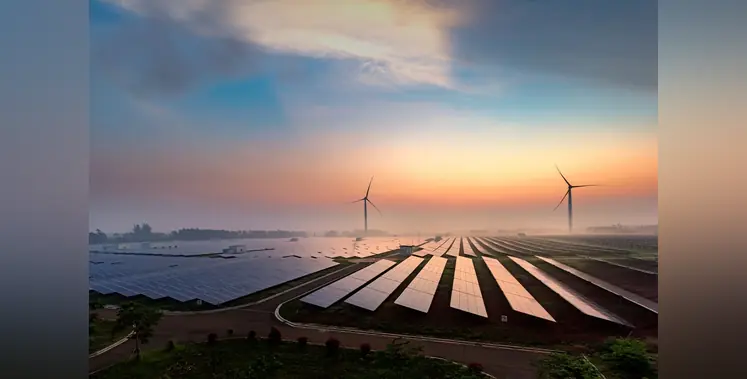
EAAIF commits US$18.15mn to Ghana's 100MWp solar project