Ivanhoe Mines has reported that the new on-site hybrid solar photovoltaic (PV) facility at its Kamoa-Kakula mine in the Democratic Republic of Congo (DRC) is expected to slash energy costs by US$0.10/lb. to US$0.20/lb. of payable copper produced
In its Q3 update, it noted that the on-site power plant with battery energy storage system (BESS) was fully ramped up by the end of the quarter, delivering 60 MW of continuous baseload electricity to the DRC complex.
“This is expected to reduce energy costs by $0.10/lb. to $0.20/lb. of payable copper produced, as Kakula dewatering is switched over from being powered by back-up diesel generators, to the new facility in mid-October,” the company reported in early November.
Kamoa-Kakula is now advancing plans to double baseload power from the hybrid solar facilities to 120 MW by the end of Q1 2028.
Two tenders, totalling 60 MW, were awarded, along with accompanying power purchase agreements (PPA) signed in Q2 and Q3.
In addition, discussions are underway to expand the existing hybrid solar facilities by a further 30 MW, bringing total on-site planned capacity to 150 MW, Ivanhoe Mines added.
Founder and co-chairman Robert Friedland said operational improvements made are now delivering tangible results.
“Our phased investment in solar power is already displacing very expensive diesel-powered generation,” he said.
“These structural improvements will strengthen Kamoa-Kakula’s competitiveness long after our current challenges have been overcome.”
Kipushi zinc mine
A similar blueprint is in place to provide power for its Kipushi zinc mine as well.
The tender for Kipushi’s hybrid solar PV project is expected to be awarded in the first quarter of 2027, the company said in its Q3 update.
The facility will be designed to provide 10 MW of continuous baseload power, providing approximately 50% of the site’s energy needs.It is expected to be operational by mid-2028 and will “significantly reduce diesel consumption from on-site backup generators,” the statement added.
Since quarter-end, Kipushi’s operations have also been supported by an additional 10 MW of grid-supplied power from third-party providers.
“The additional power is expected to reduce power instability at Kipushi and reduce power costs from the back-up diesel generators,” the company noted.
Kamoa-Kakula on-site power costs tumble
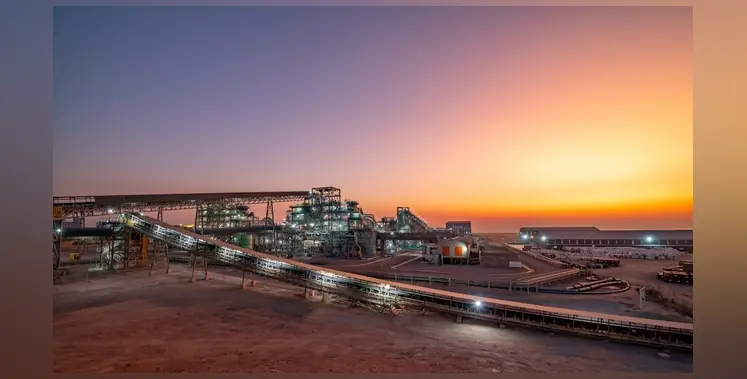
Powering up the DRC's Kamoa-Kakula mine (Image source: Ivanhoe Mines)