








Global goods trade grew faster in the first half of 2026 than in any half-year over the past 15 years, apart from the exceptional rebound following the Covid pandemic
Demand for products used to build artificial intelligence (AI) infrastructure, including semiconductors and data-transmission equipment, was a major contributor to the increase. According to WTO and OECD analysis, AI-enabling goods accounted for 42% of goods trade growth in 2025, rising to 76% in the first quarter of 2026.
These findings appear in the latest edition of the DHL Globalization Tracker, released by DHL and New York University's Stern School of Business. Drawing on more than 30 million data points, the report examines international flows of trade, capital, information and people. Previously known as the DHL Global Connectedness Tracker, the publication has adopted its new name for this edition.
AI buildout boosts global trade
The expansion of AI infrastructure is increasing demand for specialised equipment and strengthening cross-border supply chains.
"The biggest story in global trade right now is AI, not tariffs," said John Pearson, CEO of DHL Express. "Every AI query ultimately depends on logistics. Chips, networking equipment and the many other goods behind this technology must be in the right place at the right time. DHL connects the businesses and markets behind these complex supply chains. Whenever innovation creates new trade flows, our global network helps keep them moving."
Global effects of Iran war and tariffs remain limited
The war involving Iran and the closure of the Strait of Hormuz disrupted important trade routes, although the effects remained concentrated in economies dependent on the waterway. In the first five months of 2026, trade value fell by 37% in Saudi Arabia and 7% in the United Arab Emirates compared with the same period in 2025.
US tariffs reached their highest levels in decades, but their global impact remained limited. The US accounted for 13% of world imports in recent years, with approximately half of those imports exempt from tariff increases as of August 2026. Most countries avoided broad retaliatory measures, with many pursuing new trade agreements to secure access to alternative markets.
Global trade outlook improves through 2029
Global goods trade is projected to grow by an average of 3.4% annually through 2029, compared with the 2.7% annual growth rate recorded over the previous decade.
"The surprise is not only that global trade kept growing through new tariffs and the Iran war," said Prof. Steven A. Altman, Director of the DHL Initiative on Globalization at NYU Stern's Center for the Future of Management. "The outlook is now stronger than it was before either shock. This reminds us to look beyond the most visible disruptions and recognize the deeper reasons why trade remains so resilient. The AI trade boom highlights the demand for goods and services that can only be provided efficiently when specialized producers work together across countries. It also shows how companies continually adapt to keep trade moving through disruptions and policy shifts."
US-China trade links weaken without a global split
Trade and investment ties between the US and China have weakened considerably, but the shift has not resulted in a broader division of the global economy into rival blocs. Trade between the two countries accounted for 3.5% of world goods trade at its peak in 2015, falling to 1.6% during the first five months of 2026. Their share of international business investment was even smaller, at less than 1%.
Meanwhile, close US allies have largely maintained their economic relationships with China, challenging the idea that the two countries' decoupling is dividing the global economy into competing blocs.
Direct trade figures also understate US reliance on China. Goods imported into the US from other countries increasingly contain Chinese materials and components. When these indirect imports are included, US reliance on China had declined only slightly through 2024, the latest year for which data were available.
Sub-saharan Africa records strong trade growth
Sub-Saharan Africa's trade value increased by 11% in the first five months of 2026 compared with the same period in 2025, despite higher tariffs, geopolitical tensions and disruptions to major trade routes. This followed a period in which the region recorded the world's fastest trade value growth during the first six months of 2025.
"The narrative around Africa often focuses on challenges. What this data shows is that trade across the region continues to grow, even amid geopolitical uncertainty and market disruption. That's a strong signal of the resilience of African businesses and the growing connections between African markets and the rest of the world. The next step is making sure more SMEs can access those opportunities and grow beyond their home markets," said Hennie Heymans, CEO of DHL Express Sub-Saharan Africa.
Globalisation reaches a new record
The report measures globalization through international flows of trade, capital, information and people, using a scale from 0%, representing no cross-border flows, to 100%, where borders and distance have no impact.
Globalisation reached a record level of 25.8% in 2025, supported partly by AI-related trade and investment. All four categories of international flows contributed to the record. Information flows remained the most globalized, followed by capital and trade, while people flows remained the least globalized.
About the DHL Globalization Tracker
The DHL Globalization Tracker is a report and interactive website providing regular updates on globalization and international trade. It complements the DHL Globalization Report, published regularly since 2011.
Drawing on more than 25 public, private and academic sources, the Tracker analyses over 30 million data points covering international flows of trade, capital, information and people. Its interactive charts allow users to explore trends by region, geopolitical alignment and individual country, with options to download data and charts for offline analysis.
Sub-saharan Africa trade expands despite global disruptions
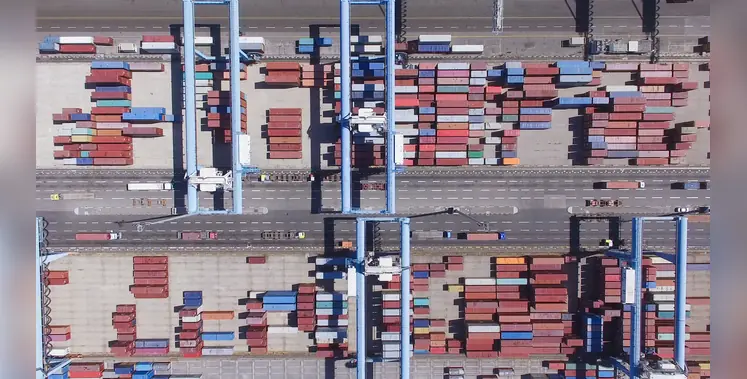
Global trade grows as Sub-saharan Africa records 11% rise