






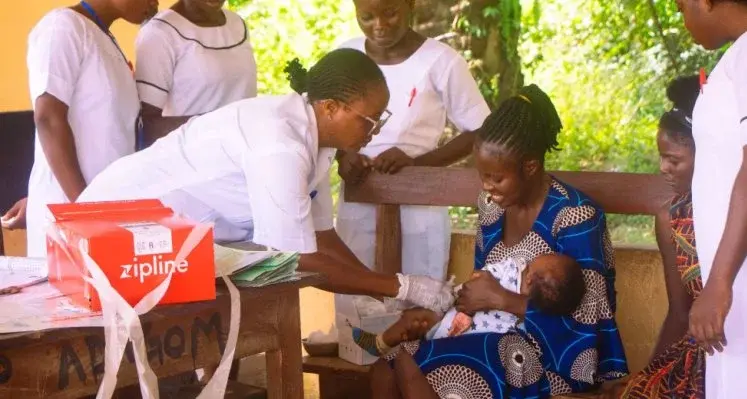
Zipline, the U.S.-based robotics company operating the world’s largest autonomous delivery network, has signed a landmark agreement with the U.S. Department of State to significantly expand its drone-powered medical logistics services across Africa
The initiative aims to triple the number of hospitals and health facilities served, from 5,000 to 15,000, ultimately giving as many as 130 million people rapid access to blood, medicines, and other essential supplies.
The partnership is structured under a first-of-its-kind pay-for-performance model, through which Zipline may receive up to US$150mn to scale its AI-driven, robotics-enabled delivery infrastructure. African governments using the service will pay up to US$400mn in performance-based fees, with funds released only upon signing expansion agreements that guarantee long-term service commitments.
Keller Rinaudo Cliffton, CEO and co-founder of Zipline, emphasised the significance of the collaboration, stated, "We started Zipline to build a logistics system that serves all people equally…today, the U.S. government is doubling down on our work." Jeremy Lewin, Under Secretary of State, added: "This partnership is an example of the innovative, results-driven partnership at the core of the America First foreign assistance agenda."
Zipline’s system, designed and manufactured in the U.S., has completed 1.8 million autonomous deliveries since 2016 with zero safety incidents. Independent evaluations highlight substantial improvements in health outcomes, including reduced maternal mortality, fewer stockouts, and increased immunization coverage. In many regions, Zipline has cut delivery times from 13 days to under 30 minutes.
African governments have funded Zipline’s services for years, and this expansion amplifies their existing investments. The agreement also marks a new chapter in commercial diplomacy, integrating U.S. technology into global health infrastructure. Rwanda is expected to be the first country to formalise its participation.
The model ensures that U.S. financing will be deployed only after countries commit to expansion targets. Each new Zipline hub will serve as a permanent logistics centre staffed entirely by local employees, supporting skilled job creation and economic development.
Rwanda’s minister Paula Ingabire affirmed the impact of past collaborations, stated, "We have witnessed the extraordinary impact of drone delivery saving time, saving money, and saving lives." Nigeria’s health minister, Muhammad Ali Pate, echoed the sentiment, noting Zipline’s potential to support a "healthier, more equitable future," while Côte d'Ivoire’s health minister Pierre Dimba emphasised the service’s alignment with national goals for rapid, equitable access to essential health products.
As autonomous logistics currently reaches less than 1% of the global population, Zipline and its partners view this initiative as a pivotal step toward closing that gap. The State Department hopes the model, paying for measurable results and fostering sustainable national ownership, can be replicated by other donors and development organisations worldwide.
Drone partnership expands African healthcare access
Zipline partners with the US State Department to scale autonomous medical delivery across Africa