







Weir has built the most extensive footprint of dewatering and slurry pumps across Africa’s mining landscape by supporting customers in reducing operational risk
This is achieved through a combination of advanced engineering, ongoing equipment refinement and a service network grounded in a fully compliant social licence to operate.
Marnus Koorts, General Manager – Original Equipment at Weir, explained that the company’s market position is shaped not only by the strength of its pump technologies, but by a comprehensive value chain approach that addresses risk throughout the lifecycle of mining operations.
“Mining is continuous and extremely capital intensive, so equipment must perform reliably and optimally,” said Koorts. “It is no surprise, therefore, that mines are risk averse when partnering with solution providers – they need to deal with partners they can trust.”
He notes that meeting the demanding uptime and performance requirements of modern mines calls for deep process knowledge and engineering capability, supported by a widespread service presence across the continent.
“Our customers’ first question is often about our references in a specific country or commodity,” he said.
“Thanks to our extensive footprint and vast experience, we’re almost always familiar with their operating environments – from the minerals being mined and processing conditions to the local regulatory landscape.”
Koorts points out that Weir’s large installed base provides a key advantage, generating valuable operational data across diverse commodities, climates and working conditions. This data is continuously fed back into product development and refinement.
“We are continuously releasing new variants of components based on feedback from the field,” commented Koorts.
“We are also digitally monitoring a large portion of our installed base, so it is not just physical site visits, but smart monitoring that allows us to improve performance, longevity and total cost of ownership.”
These insights enable Weir to deliver practical solutions, including equipment standardisation across multiple sites. In one recent West African gold project, the company recommended a minor design modification that allowed two operations to adopt a unified mill pump configuration.
Drawing on experience from the first site, Weir advised the engineering contractor on aligning motors and gearboxes, resulting in significant savings on spare parts inventory while lowering the risk of downtime.
“We have this capability due to our institutional knowledge of hundreds of projects and product applications,” remarked Kroots.
“This is a crucial part of the value that we bring as an OEM where we can collaborate with customers in applying the best solutions possible.”
Koorts also emphasises the importance of regulatory compliance across different African markets, where procurement frameworks vary widely. Ensuring adherence to these requirements is critical for maintaining a strong and dependable value chain.
“Weir’s service network in Africa is staffed by local engineers, account managers and process specialists,” Koorts says. “We employ and empower local people, and we invest heavily in skills development.”
The company’s graduate programmes play a key role in this effort, recruiting talent from regional universities and developing young engineers into long-term professionals within the organisation.
“This is all part of being a good corporate citizen and it ensures that our customers are supported by experts who understand the terrain, the language and the mining culture,” he says.
Weir’s continued success in Africa reflects its understanding that supplying pumps is only one part of the value it delivers. This is reinforced by engineering expertise, a strong local presence, continuous performance data and governance systems that support a sustainable social licence to operate.
“Working with Weir gives customers access to our knowledge, our compliance and our ability to mitigate their operational risk. Our market leading products are just the visible part of a complex value chain,” Koorts concludes.
Weir strengthens Africa mining with risk reducing pump solutions
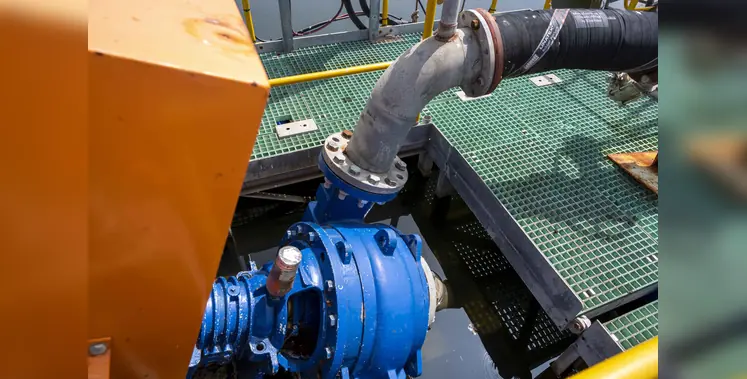
Africa’s largest installed base of mining pumps is supported by Weir’s technical know-how and reliable service network. (Image source: Weir)