






Guinea-Conakry is targeting five operational alumina refineries by 2030, with three already under construction, according to Daouda Diakité, senior adviser to Guinea’s minister of mines and geology
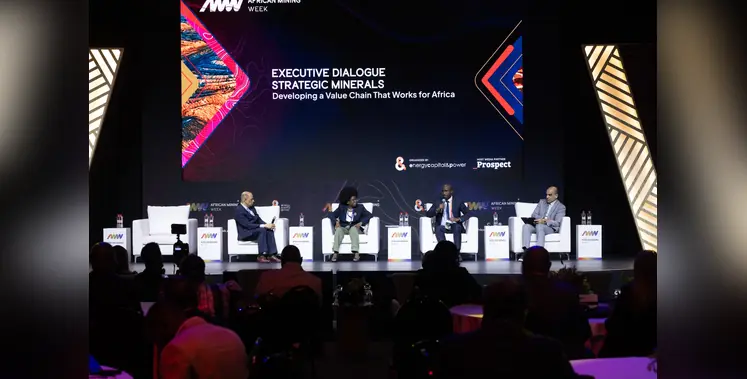
He announced the target during a ministerial panel at African Mining Week (AMW) 2026 in Cape Town on Wednesday.
The plan is a key component of Guinea’s Simandou 2040 strategy, which aims to move the country beyond raw mineral exports towards domestic processing and industrial development. Guinea intends to achieve annual alumina production capacity of seven to eight million tons by 2030, supported by investment in steel manufacturing, electricity generation and downstream infrastructure.
“Simandou 2040 is a strategy to shift from being a raw material exporter to developing a strong processing base that can sustain the country’s downstream sector. To achieve this, we are encouraging investment in domestic aluminum and steel production, as well as power projects that can support downstream development.,” he stated.
By building on its substantial bauxite and iron ore reserves, Guinea aims to develop domestic processing capabilities and attract investment in refining facilities, industrial infrastructure and power supply. These developments are intended to strengthen the country’s downstream industries and increase the value generated from its mineral resources.
Diakité also outlined progress towards domestic steel production associated with the Simandou iron ore project, confirming that feasibility work is nearing completion.
“The steel from Simandou has to be processed in Guinea, and we are finishing the feasibility study for that,” he added.
Guinea’s downstream development programme also extends to gold, with work progressing towards establishing a domestic gold refinery.
Uganda is pursuing a similar approach, using mineral processing to support industrialisation and regional trade. Monica Musenero Masanza, minister of energy and mineral development, said the country operates ten gold refineries that serve neighbouring East African markets.
“Rather than every nation enduring the high cost of building refineries, Uganda offers a regional solution. We allow our East African neighbors to bring gold in tax-free for toll processing, and because our operations run on excess renewable energy, the final product is truly green gold,” she stated.
In addition to gold refining, Uganda is developing its capacity to process tin to 99.9% purity and is advancing beneficiation initiatives for iron ore and phosphate. These activities are intended to supply materials for infrastructure projects and agricultural production.
“Uganda’s rapid development requires massive amounts of steel and fertilizer. With 14 companies lined up to produce steel billets from local iron ore and active plans to process our phosphate reserves, we are adding value to our minerals directly to build our infrastructure and fuel our agricultural needs,” Masanza added.
Egypt, meanwhile, is seeking to support Africa’s mineral-producing countries through logistics and infrastructure development. Its plans focus on improving links between mining sites, processing facilities and international markets.
Mohamed Zada, deputy minister for strategic industries, identified potential for cross-border investment in electricity generation, seaports and mineral transportation networks to facilitate the growth of Africa’s downstream industries.
“Egypt’s strategic location makes it a natural logistics hub. By partnering across the continent to build power plants and seaport infrastructure, we can optimize supply chains and bring Africa's finished mineral products to global markets,” he stated.
The developments discussed at AMW 2026 reflect a wider push to expand mineral refining, manufacturing and logistics capabilities across Africa. By investing in these areas, countries aim to retain more value from their mineral resources and create opportunities throughout the continent’s mining value chain.
African nations advance mineral processing and downstream industries
Guinea, Uganda and Egypt outline plans to expand mineral processing