






Wastewater is still too often viewed as the end of a process, something to treat and discharge once it leaves a home, business, mine, or industrial site
In a water-scarce country, that linear view overlooks its value and the consequences of returning it to a connected water system.
South Africa’s rivers and water-transfer systems carry water across municipal, provincial, and national boundaries. Water may be abstracted, used, treated, returned, altered, and abstracted again downstream. The performance of wastewater infrastructure therefore affects far more than the site or municipality operating it.
“Some by-products of wastewater treatment can be used to generate energy that is fed back into the treatment infrastructure, reducing its demand on the grid,” says Kosikee Emma-Iwuoha, associate and water civil engineer at WSP in Africa. “Treated effluent can also be reused for irrigation or, with further treatment, in industrial processes.”
Wastewater is already part of the water system
Discharged water does not disappear from the resource system. Lee Boyd, technical director and water resource scientist at WSP in Africa, says return flows already form part of the water available to downstream users in South Africa’s connected catchments.
“South Africa’s water is reused extensively. Return flows can be abstracted again downstream, where their quality affects domestic users, agriculture, industry, and aquatic ecosystems. Water quantity and quality are connected and should not be managed separately,” says Boyd.
Return flows are incorporated into reconciliation planning in all catchments. However, Boyd cautions that return flows do not always meet the required quality after treatment, and sewer failures can prevent it from reaching treatment works.
Emma-Iwuoha’s earlier career experience includes extending a treated-effluent pipeline to potential users in the Western Cape where he saw firsthand that effective reuse ultimately hinges on reliable collection, treatment, monitoring, and clear end‑use planning.
A disposal mindset sends risk downstream
When the objective is simply to move wastewater through the system and dispose of it, less attention may be paid to the condition of the material entering the receiving environment.
Emma-Iwuoha says poorly managed discharge can overload natural systems, contribute to eutrophication, affect downstream water quality, and create environmental and health risks. The linear model also loses economic value that could support monitoring, maintenance, and further treatment.
The bulk network is central to this problem. Treatment capacity has limited value if sewers leak, surcharge, or release wastewater before it reaches the plant. Upgrades therefore need to cover collection, conveyance, treatment, monitoring, and discharge as one system.
Boyd says investment must also be matched by operational capability: “A treatment works can be upgraded, but the wider question is who will run it, whether there are enough people, and whether they have the skills and support to monitor performance.”
Design should begin with the catchment
Catchment assessments and water quality management plans help define what wastewater infrastructure needs to achieve before the physical solution is selected.
A catchment assessment identifies the downstream communities, industries, ecological systems, risks, and reuse opportunities that may be affected. It helps establish the required capacity and which receiving environments need protection.
“A suitably detailed catchment assessment gives us a better understanding of the risks, needs, and opportunities. The water quality management plan provides the benchmarks for choosing treatment processes, monitoring performance, and responding under normal and emergency conditions,” says Emma-Iwuoha.
Boyd adds that site-level wastewater and surface-water decisions should reflect the condition and objectives of the broader catchment. That depends on reliable evidence, yet monitoring information is often fragmented across government departments, municipalities, mines, industries, laboratories, and other water users.
Consolidating and verifying that information would improve treatment planning and allow problems to be identified sooner. A report received months after a pollution incident may explain what occurred, but it cannot reduce the impact while contaminated water is still moving downstream.
Resilience depends on people as well as assets
Wastewater systems need to be designed for expected growth rather than present demand alone. Government plans, municipal budgets, industrial expansion, urbanisation, and long-term operating requirements influence how much capacity is needed and how soon another upgrade may be required.
Emma-Iwuoha says coordination between government and industry can help prevent infrastructure from reaching capacity shortly after commissioning. Community involvement is equally important because acceptance cannot be assumed simply because a solution is technically sound.
Residents may have concerns about location, odour control, downstream river use, and the implications for health and livelihoods. Engagement needs to address these concerns while explaining the sanitation, environmental, and economic benefits.
Shared data requires similar trust. Boyd says a credible platform that verifies and protects monitoring information where necessary could strengthen catchment-wide planning without duplicating work.
Innovation has to reinforce the fundamentals
Waste-to-energy is one of the most promising opportunities identified by Emma-Iwuoha.
As treatment processes improve, organic material from wastewater can contribute to energy generation and, in suitable applications, create synergies with solid-waste management. It can reduce the energy burden of treatment where the scale, feedstock, economics, and operational capacity support it.
WSP has built capabilities in solid waste management and is expanding its capacity in wastewater treatment and process engineering, supported by expertise in water science, environmental assessment, and civil engineering.
Bringing these disciplines together allows teams to define what needs protection, set the required water quality targets, and translate those requirements into infrastructure that can be funded, built, operated, and adapted over time.
South Africa will not unlock the resilience value of wastewater through technology alone. Functioning bulk networks, skilled operators, verified data, appropriate treatment, credible governance and community support must be considered together.
Planned as a single system, wastewater can support the country’s water security rather than remaining an obligation at the end of a pipe.
Read more:
Atlas Copco launches portable emergency trash pumps
Aveva to host key industrial event in Johannesburg
WEC Water takes on unsafe sanitation in South African schools
Rethinking South Africa’s wastewater infrastructure
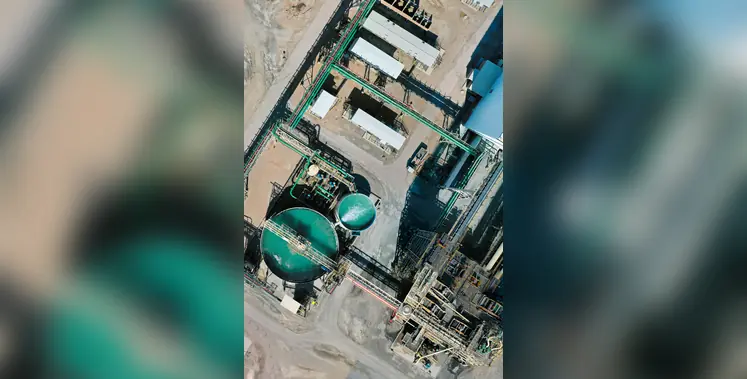
Rethinking South Africa's wastewater potential (Image source: Adobe Stock)