






The African Development Bank (AfDB) Group has approved a €100mn (approx. US$117mn) loan to Gotion Power Morocco to support the construction of an integrated lithium iron phosphate (LFP) battery gigafactory in the Rabat-Salé-Kénitra Free Trade Zone, marking a significant step in the development of Africa's electric vehicle manufacturing ecosystem
In addition to its direct financing, the Bank intends to mobilise up to a further €141mn (approx. US$165mn) from financial partners under the New African Financial Architecture for Development (NAFAD), where it will serve as the Mandated Lead Arranger. The blended financing package is designed to accelerate delivery of one of the continent's largest battery manufacturing investments.
Building Africa's battery manufacturing capacity
The project is being developed by Gotion High-Tech Co. Ltd., a leading global battery producer headquartered in Hefei, China, and listed on the Shenzhen Stock Exchange. Once operational, the facility will become the first fully integrated cathode-to-cell LFP battery manufacturing plant in both Africa and the Middle East and North Africa (MENA) region.
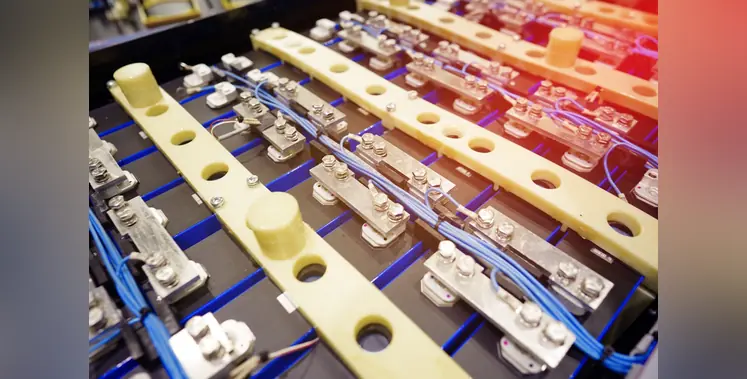
Phase one of the project will deliver an annual production capacity of 10 gigawatt-hours (GWh) of battery cells and battery packs for electric vehicles, with long-term plans to increase output to 100 GWh. The investment is expected to reinforce Morocco's position as an emerging global centre for electric mobility manufacturing and green technology supply chains.
The project also reflects growing investment in battery production as demand for electric vehicles and renewable energy storage continues to expand worldwide. By establishing large-scale local manufacturing capacity, Morocco aims to strengthen regional supply chains while supporting the transition towards cleaner transport and energy systems.
Kevin Kariuki, the Bank group's vice-president for Power, Energy, Climate and Green Growth, said, "Battery storage is the missing link in Africa's clean energy transition. A facility of this scale, powered primarily by renewable energy, strengthens the foundations for the large-scale integration of solar and wind power, which our grids increasingly depend on. This is exactly the kind of project that will deliver reliable, low-carbon energy while creating green industrial jobs and building the resilient value chains Africa needs to sustain its energy transition."
Supporting industrial growth and local value creation
Beyond expanding battery production, the gigafactory is expected to generate significant economic benefits for Morocco. During its initial phase, the development is projected to create more than 600 direct jobs while achieving a 70% local industrial integration rate, supporting skills development and strengthening domestic manufacturing capabilities.
The project is also intended to encourage the growth of local supplier networks and increase value addition within Africa's critical minerals sector, helping retain more economic value from resources that are essential to global energy transition technologies.
Achraf Tarsim, the African Development Bank group's country manager for Morocco, commented, "This gigafactory will be a major catalyst for strengthening Morocco’s industrial competitiveness and for accelerating its emergence as Africa’s manufacturing hub for sustainable mobility industries. It will help foster an African industrial ecosystem for batteries and electric vehicles while promoting the local beneficiation of critical minerals essential to the energy transition."
Advancing Africa's clean energy ambitions
The investment supports the African Development Bank Group's Four Cardinal Points strategic vision by promoting resilient infrastructure, accelerating industrialisation, increasing value addition to Africa's natural resources and strengthening regional integration.
As demand for battery storage continues to rise alongside renewable energy deployment and electric vehicle adoption, projects of this scale are expected to play an increasingly important role in positioning Africa within global clean energy and electric mobility value chains. By expanding domestic battery manufacturing and energy storage capabilities, the initiative is set to support the continent's transition towards a lower-carbon economy while enabling wider deployment of renewable energy technologies.
You may also like:
SEW-EURODRIVE powers high-speed converter manufacturing
Lagos welcomes advanced manufacturing innovation hub
AfDB backs Morocco's first integrated LFP battery gigafactory
Beyond expanding battery production, the gigafactory is expected to generate significant economic benefits for Morocco.