








AVEVA, Schneider Electric and Elsewedy University of Technology (SUTech) – Polytechnic of Egypt, have signed a partnership agreement to equip Egyptian youth with the practical, digital and innovation capabilities needed to succeed in growth industries such as energy management, industrial automation, sustainability and advanced industrial technologies
As Egypt accelerates its industrial and digital transformation, demand continues to grow for talent capable of working with clean technologies, smart infrastructure, automation systems and industrial AI. Through this collaboration, signed at AVEVA World in Milan, the three parties aim to help bridge the gap between academic learning and evolving industry needs while furnishing future generations with the skills required to support more sustainable and resilient industries across Egypt and Africa.
The partnership will see the three parties collaborate on the development of Training Excellence Centers at SUTech, leveraging the two companies’ platforms, technologies and ecosystems. It will involve the establishment of advanced laboratories, practical training environments and future-focused curriculum development aligned with industry and sustainability goals. It is also designed to boost skills Africa-wide through joint capacity-building programmes and initiatives targeting youth and entrepreneurs across the continent.
Students will gain practical exposure to advanced industrial digital solutions, such as AVEVA E3D, AVEVA Processing Simulation, and AVEVA PI System. They will learn to develop virtual replicas of entire industrial facilities, enabling them to detect potential issues and bridge the gap between academic learning and industry application.
Engineering graduates in Egypt generally leave university with a very strong theoretical knowledge, but often lack practical skills and applied learning. Elsewedy University (SUTech) – Polytechnic of Egypt’s mission is to address this gap, with a focus on applied learning that addresses the dynamic and evolving needs of industry. Its Bachelor’s degree in technology (B.Tech) combines practical and theoretical learning, giving graduates the practical skills and industry experience required by the market today. SUTech has invested significantly in technology, laboratories, workshops and other facilities, providing internship and apprenticeship opportunities. Its 19 accredited programmes are developed in consultation with industry to ensure they will equip students with the right competencies, skills and technology, thereby providing employers with a sustainable funnel of job-ready employees.
Mrs Hanan Elrihany, CEO of Elsewedy Edtech, said, “This strategic partnership embodies the vision of SUTech to link industry leadership with applied higher education. Integrating AVEVA and Schneider Electric’s cutting-edge solutions into our academic ecosystem actively shapes future talents and accelerates the energy and industrial transition across the region. This collaboration positions our university at the forefront of developing the next-generation workforce, empowering students with simulation tools and real-time data to drive industrial innovation in Egypt.”
Elrihany added that the collaboration would give more confidence to students, families and the community that applied learning is a valid educational path, addressing misconceptions and the bias towards traditional theory-based degrees. She also stressed the need for agility in order to be able to adapt programmes as technology evolves.
Khaled Saleh, vice-president of Africa at AVEVA said, “It’s a great honour to receive the trust of such a reference in the world of engineering in Africa. We believe this collaboration will accelerate engineering talent development across the African continent.”
Sebastian Riez, cluster president of Schneider Electric North Africa & Levant added that the collaboration reflects a shared commitment to preparing the next generation of engineering talent for a more digital, efficient and sustainable future.
New partnership to develop Egypt’s future engineering workforce
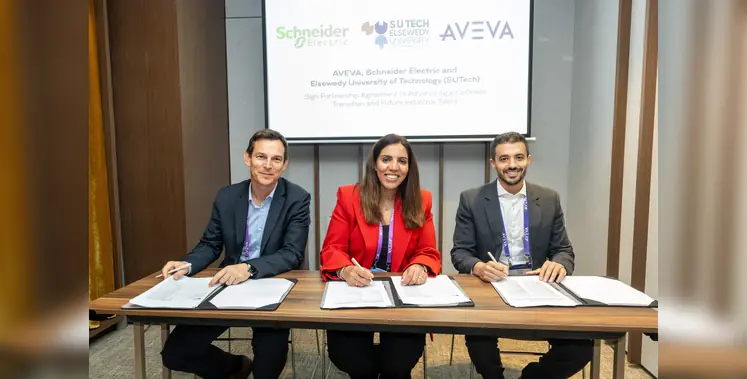
The partnership signing. (Image source: AVEVA)