







Across Africa’s power and water sectors, the project pipeline is rarely the problem. Announcements, memoranda of understanding and opportunity lists are everywhere. The harder question is whether those opportunities are ready for capital, ready for diligence and ready for decisions
That is where many projects still lose momentum. Investors, development finance institutions and lenders are not short of interest in African infrastructure. They are short of opportunities that arrive with enough structure, clarity and maturity to move quickly through assessment. Developers face their own difficult reality: permitting delays, uncertain offtake arrangements, stakeholder misalignment, grid constraints and project timelines that can shift before financing is secured.
The result is a persistent gap between project intent and bankable progress.
In practical terms, projects often stall because the fundamentals are not yet strong enough. Revenue certainty remains a major pressure point, particularly around offtake, tariff realism, creditworthiness and enforcement. Grid access is another critical issue, especially when connection capacity and transmission build-out cannot keep pace with development ambition. Permitting, land rights, risk allocation, data room readiness, governance, delivery capability, country risk and currency exposure all influence whether capital can move with confidence.
Across the continent, there are many strong project concepts. The bigger challenge is developing more opportunities that are investable at speed.
This is the challenge the Project & Investment Network, taking place at Enlit Africa 2026, is designed to address. Rather than treating investment conversations like ordinary networking, P&IN aims to create a more structured deal-making environment where investors, developers, utilities, public sector leaders and financiers can engage with clearer intent.
The emphasis is on mechanisms rather than marketing. Stronger matchmaking, sharper project briefings and decision-focused dialogue can help reduce the friction that often slows investment conversations. For developers, this means testing whether their projects are truly ready for investor scrutiny. For financiers, it means engaging with opportunities that are better aligned to mandates, risk appetite and delivery expectations. For public sector and utility leaders, it creates space to confront the delivery constraints that shape bankability in practice.
A key feature of the programme is its focus on what happens next. Too many infrastructure conversations end with broad interest but no disciplined follow-through. P&IN is intended to help participants define the immediate milestones that can move a project closer to investment readiness, whether that involves clearer risk allocation, stronger documentation, more realistic timelines or better alignment between stakeholders.
This matters because Africa’s infrastructure constraints are no longer abstract development challenges. They are delivery constraints affecting grid reliability, industrial growth, water security and economic competitiveness. Capital can play a transformative role, but only where opportunities are structured well enough for risk to be understood, priced and managed.
Enlit Africa 2026 takes place from 19 to 21 May at the CTICC in Cape Town, co-located with Water Security Africa, the Utility CEO Forum, the Municipal Forum, Women in Energy and the Project & Investment Network. Together, these platforms bring decision-makers into the same environment to confront the practical questions shaping Africa’s energy and water future.
For developers, investors, DFIs, utilities and public sector leaders, the message is clear: project ambition on its own will not unlock capital. The next frontier is bankability, decision velocity and disciplined execution.
Turning project intent into investable progress
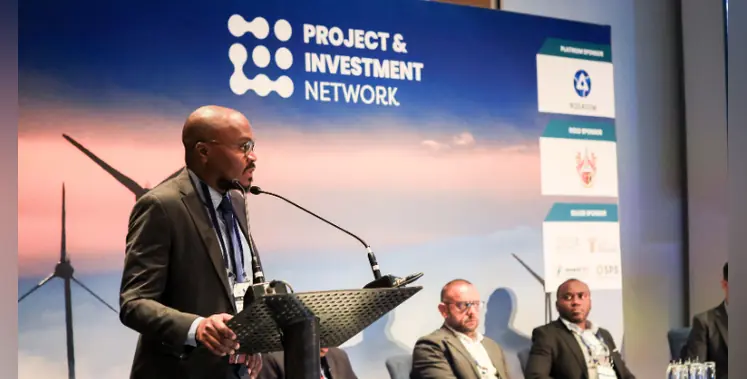
Enlit Africa targets investment readiness. (Image source: VUKA Group)