







UK-based Gridworks has has signed two agreements with the Ugandan government that will enable its Amari transmission project to begin construction in the coming weeks
It follows an Implementation Agreement with Uganda’s Ministry of Energy and Mineral Development, and a Transmission Services Agreement with the national utility, Uganda Electricity Transmission Company Limited (UETCL).
It means Amari will become the first independent transmission project (ITP) on the continent to move into the construction phase, marking a major milestone in the adoption of private sector funding models for transmission infrastructure in Africa.
“This is a decisive step that will allow the Amari transmission project to move into construction,” said Gridworks’ CEO Chris Flavin.
“By prioritising strategic transmission infrastructure, the government is laying the foundations for reliable power supply, industrial growth, and long-term economic development. We now look forward to starting construction in the coming weeks and to delivering this important project.”
The US$50mn project will upgrade four high voltage electricity substations at key points on Uganda’s grid:
Tororo 220kV station, in eastern Uganda, close to the Kenyan border.
Nkenda 132kV station, in the West, at the intended high voltage interconnection point to DRC.
Mbarara North 132kV station and
Mbarara South 220kV station in western Uganda.
According to Gridworks, a subsidiary of British International Investment (BII), the UK government’s development finance institution, the project will improve the supply of electricity to industrial users in line with Uganda’s plans to improve the competitiveness of its industry, particularly the manufacturing sector.
Amari will also allow the uptake of more renewable energy onto the grid and provide capacity to support future regional interconnection with Uganda’s neighbours.
Once completed, it will support Uganda’s growing electricity demand, enable the evacuation of current and future generation capacity, and contribute to lower system losses and improved power quality across the network.
“As UETCL, we view this partnership as strategic and transformative and we look forward to the effective implementation and tangible improvements to the national grid,” said Richard Matsiko, CEO of UETCL.
As a pilot for private sector transmission in Uganda, the project has supported the creation by the government of a regulatory framework equipped to attract finance for future grid investment.
There is a growing trend of African governments beginning to work with the private sector to develop and fund critical electricity grid infrastructure.
Several countries have initiated private transmission projects or regulatory reforms designed to allow private finance to flow into the sector.
Ruth Nankabirwa, Uganda’s Minister of Energy and Mineral Development, called the Amari project a “strategic pillar” within the government’s long-term agenda to modernise the nation’s power network.
“By strengthening transmission infrastructure, we are enabling reliable power supply for industrial growth, regional power trade, and inclusive socio-economic transformation,” she said.
“Our partnership with Gridworks reflects our commitment to mobilising sustainable private capital and expertise to accelerate delivery of priority energy investments.”
Gridworks has a portfolio of further ITPs in development, including Chimuara-Nacala (Phase II & III), a US$450mn, 460km high voltage transmission line connecting the central and northern regions of Mozambique; and Mbale-Bulambuli, a project building 80km of high-voltage lines and two new substations in eastern Uganda.
Most recently, it announced an agreement with the Ethiopian government to develop two large scale transmission projects, Degehabur–Kebridehar and Hurso–Ayisha, covering over 400km and with a combined value of around US$400mn.
The Gridworks portfolio also includes Moyi Power, a greenfield, solar-powered utility that will provide electricity to a million people in three cities in DRC; and distributed utility companies, Sustainable Power Solutions and Anzana Electric Group.
“Transmission is a vital part of electrifying the African continent,” said Chris Chijiutomi, managing director and head of Africa at BII.
He said the Amari announcement “demonstrates the role that development capital can play in connecting millions of families and businesses to reliable and affordable power.”
Read more:
Mozambique gets transmission lines, data centre boost
South Africa secures World Bank loan for infrastructure revival
Weza Power to accelerate Burundi electrification
Uganda signs Amari transmission deal with Gridworks
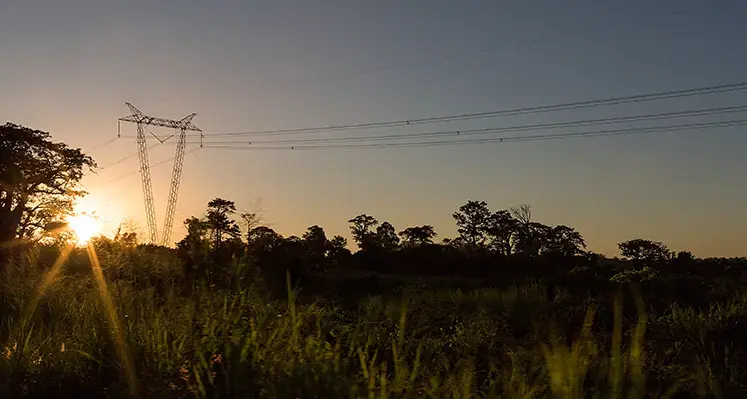
Uganda to get transmission boost (Image source: Adobe Stock)