






Himoinsa delivers off-grid power in Morocco
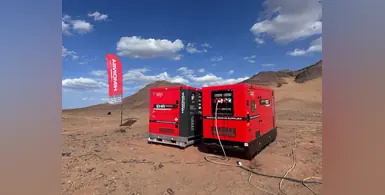
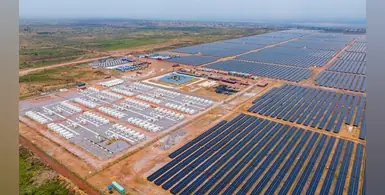
Power plant in the desert (Image source: Himoinsa)
How a hybrid off-grid power system combined diesel generation and battery energy storage to deliver reliable electricity in a demanding, remote environment for a high-profile motorsport event in the Sahara
Himoinsa deployed a hybrid power system combining diesel generators and battery energy storage to supply up to 1 MW of power at the 2026 Rallye du Maroc, demonstrating an approach to managing variable electricity demand in remote, off-grid environments.
As Official Power Supplier to the rally, the company provided more than 20 pieces of power and lighting equipment to support temporary bivouacs in Agadir and Zagora, Morocco.
The installations supplied electricity for vehicle maintenance, communications, medical facilities, catering and race administration, operating in conditions characterised by heat, dust and limited access to infrastructure.
According to David Serieys, Himoinsa's event coordinator, the main technical challenge was designing an off-grid system capable of adapting to changing loads while operating continuously in remote locations.
“What made this project technically demanding was not just its size – although we deployed more than 20 units and made up to 1 MW of power available,” he said.
“The real challenge was designing an off-grid system capable of adapting to very different loads – while operating continuously in heat, dust and remote locations.”
The hybrid configuration combined generators, which provided sustained power and reserve capacity, with battery storage systems designed to respond to short-duration demand peaks and supply electricity during periods of lower consumption.
This approach also allowed generators to remain switched off when demand was limited, reducing unnecessary engine running hours.
“The generators provide the sustained power and reserve capacity the bivouac needs, while the batteries respond immediately to load variations, cover low-demand periods and reduce unnecessary engine running hours,” said Serieys.
Himoinsa's EHR battery energy storage technology is designed to store energy and supply electricity when required.
The EHR 45/60 model has a nominal power rating of 45 kVA and a nominal battery capacity of 56.8 kWh, using lithium iron phosphate (LFP) battery technology.When appropriately configured, combining battery storage with diesel generation can reduce fuel consumption, engine operating hours, maintenance requirements and noise compared with generator-only operation, the company said.
The deployment also included mobile lighting towers to support overnight vehicle repairs and maintenance, with more than 20 personnel involved in the operation.
“The lighting towers were equally important,” added Serieys.
“Once the competitors arrived, the service areas remained active throughout the night, with mechanics carrying out repairs and preparing the vehicles for the next stage. We needed mobile, autonomous lighting units that could be transported and repositioned quickly, withstand the desert environment and provide safe, reliable illumination.”
While the rally provided a demanding temporary application, the same hybrid power approach can be used in other settings where grid electricity is unavailable or inadequate, according to Himoinsa.
Construction projects, mining operations, rental power and critical infrastructure are among the potential applications, it says, where matching generation to actual demand can help improve operational efficiency.