




vc.web.local

twitter Facebook Linkedin acp Contact Us

Energy

New subsidiary targets renewable energy driven data centre growth across Mozambique and Southern Africa

Yellow Tulip Inc has announced the launch of Cleanwatts Mozambique, a new majority-owned subsidiary dedicated to building renewable energy-powered data centres in Mozambique and across the Southern African region

The venture is being established in partnership with Memoryvanguard and Nyala Capital.

The new entity will deploy Cleanwatts Digital’s AI-driven energy management platform as the technological backbone of its data centre projects. Designed to optimise energy use, integrate battery storage and coordinate Virtual Power Plant operations, the platform will support the development of sustainable, grid-independent computing infrastructure. This approach aims to address the accelerating demand for AI and cloud computing capacity across Africa.

Mozambique presents a strong case for such investment, offering plentiful renewable energy resources, a strategic coastal location and rising regional demand for digital infrastructure. The country’s extensive hydroelectric generation capacity, strong solar potential and available natural gas reserves create multiple pathways to power high-density, energy-intensive data centre facilities. In addition, its coastline enhances access to submarine cable systems, strengthening connectivity to international networks.

Cleanwatts Mozambique will follow a development-for-sale strategy, focusing on institutional investors and infrastructure operators looking for ready-to-operate, renewable-powered data centre assets. Each facility will be delivered in line with international standards and will incorporate Cleanwatts Digital’s energy management solutions from inception. This ensures that buyers acquire fully operational assets engineered for efficiency, resilience and sustainability from the outset.

"Cleanwatts Mozambique represents a significant expansion of Yellow Tulip's footprint into one of the most promising markets for sustainable infrastructure development," said Basílio Simões, CEO of Yellow Tulip Inc and chairman of Cleanwatts Mozambique. "The convergence of AI-driven compute demand and the global imperative for sustainable infrastructure creates an exceptional opportunity. By combining Mozambique's renewable energy potential with Cleanwatts Digital's proven platform, we are positioned to deliver data center assets that meet the highest standards of performance and sustainability. Our strong pipeline reflects great market interest, and we look forward to bringing these projects to market for institutional investors seeking exposure to Africa's digital infrastructure growth."

Cleanwatts Digital, part of Yellow Tulip’s investment portfolio, supplies the AI-based energy management system that will underpin all Cleanwatts Mozambique developments. The platform currently oversees 1.5 TWh of energy each year across four continents and has a proven track record in enhancing renewable generation performance, managing battery storage systems and balancing complex energy loads.

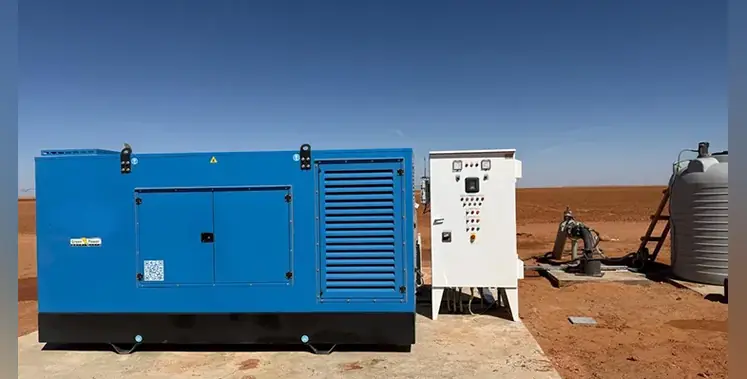
Aerial view of the onsite power project in Burkina Faso (Image source: Africa Power Services)

Africa Power Services has released images of a recently-completed project in Burkina Faso to supply an undisclosed mining site

The on-site power project dates back over two years, the France-based company noted in a statement posted on its social media.

“On a mining site in Burkina Faso, the project began in 2023 with the rental of a power plant to secure the existing electricity supply,” it commented.

“Two years later, in 2025, our client renewed its trust in us for the construction of its power plant under an EPC contract.”

To initiate this new phase, Africa Power Services teams deployed an 8 MW rental power plant, available 24/7, and capable of taking over instantly in the event of a grid failure, calling it a “key solution to ensure uninterrupted operations throughout the construction phase.”

The project then continued with the construction and commissioning of a 16 MW thermal power plant, designed to provide long-term reliability, the company added.

Africa Power Services said the project demonstrated its expertise in supporting clients and delivering scalable, complementary solutions, from rental through to EPC.

At the end of last year, the company also commissioned a hybrid power plant in the Democratic Republic of Congo (DRC) for another mining site.

After months of mobilisation in challenging terrain, its team successfully commissioned a 19 MWp solar field and 18 MVA BESS that will strengthen an existing on-site hybrid power plant, as part of a transition to reaching 100% renewable energy production.

Read more:

Ivanhoe Mines upgrades on-site power supply

Kiniero mine on-site power plant nears completion

Wia Gold outlines energy plans at Kokoseb mine


Uganda to get transmission boost (Image source: Adobe Stock)

UK-based Gridworks has has signed two agreements with the Ugandan government that will enable its Amari transmission project to begin construction in the coming weeks

It follows an Implementation Agreement with Uganda’s Ministry of Energy and Mineral Development, and a Transmission Services Agreement with the national utility, Uganda Electricity Transmission Company Limited (UETCL).

It means Amari will become the first independent transmission project (ITP) on the continent to move into the construction phase, marking a major milestone in the adoption of private sector funding models for transmission infrastructure in Africa.

“This is a decisive step that will allow the Amari transmission project to move into construction,” said Gridworks’ CEO Chris Flavin.

“By prioritising strategic transmission infrastructure, the government is laying the foundations for reliable power supply, industrial growth, and long-term economic development. We now look forward to starting construction in the coming weeks and to delivering this important project.”

The US$50mn project will upgrade four high voltage electricity substations at key points on Uganda’s grid:

Tororo 220kV station, in eastern Uganda, close to the Kenyan border.

Nkenda 132kV station, in the West, at the intended high voltage interconnection point to DRC.

Mbarara North 132kV station and

Mbarara South 220kV station in western Uganda.

According to Gridworks, a subsidiary of British International Investment (BII), the UK government’s development finance institution, the project will improve the supply of electricity to industrial users in line with Uganda’s plans to improve the competitiveness of its industry, particularly the manufacturing sector.

Amari will also allow the uptake of more renewable energy onto the grid and provide capacity to support future regional interconnection with Uganda’s neighbours.

Once completed, it will support Uganda’s growing electricity demand, enable the evacuation of current and future generation capacity, and contribute to lower system losses and improved power quality across the network.

“As UETCL, we view this partnership as strategic and transformative and we look forward to the effective implementation and tangible improvements to the national grid,” said Richard Matsiko, CEO of UETCL.

As a pilot for private sector transmission in Uganda, the project has supported the creation by the government of a regulatory framework equipped to attract finance for future grid investment.

There is a growing trend of African governments beginning to work with the private sector to develop and fund critical electricity grid infrastructure.

Several countries have initiated private transmission projects or regulatory reforms designed to allow private finance to flow into the sector.

Ruth Nankabirwa, Uganda’s Minister of Energy and Mineral Development, called the Amari project a “strategic pillar” within the government’s long-term agenda to modernise the nation’s power network.

“By strengthening transmission infrastructure, we are enabling reliable power supply for industrial growth, regional power trade, and inclusive socio-economic transformation,” she said.

“Our partnership with Gridworks reflects our commitment to mobilising sustainable private capital and expertise to accelerate delivery of priority energy investments.”

Gridworks has a portfolio of further ITPs in development, including Chimuara-Nacala (Phase II & III), a US$450mn, 460km high voltage transmission line connecting the central and northern regions of Mozambique; and Mbale-Bulambuli, a project building 80km of high-voltage lines and two new substations in eastern Uganda.

Most recently, it announced an agreement with the Ethiopian government to develop two large scale transmission projects, Degehabur–Kebridehar and Hurso–Ayisha, covering over 400km and with a combined value of around US$400mn.

The Gridworks portfolio also includes Moyi Power, a greenfield, solar-powered utility that will provide electricity to a million people in three cities in DRC; and distributed utility companies, Sustainable Power Solutions and Anzana Electric Group.

“Transmission is a vital part of electrifying the African continent,” said Chris Chijiutomi, managing director and head of Africa at BII.

He said the Amari announcement “demonstrates the role that development capital can play in connecting millions of families and businesses to reliable and affordable power.”

Read more:

Mozambique gets transmission lines, data centre boost

South Africa secures World Bank loan for infrastructure revival

Weza Power to accelerate Burundi electrification


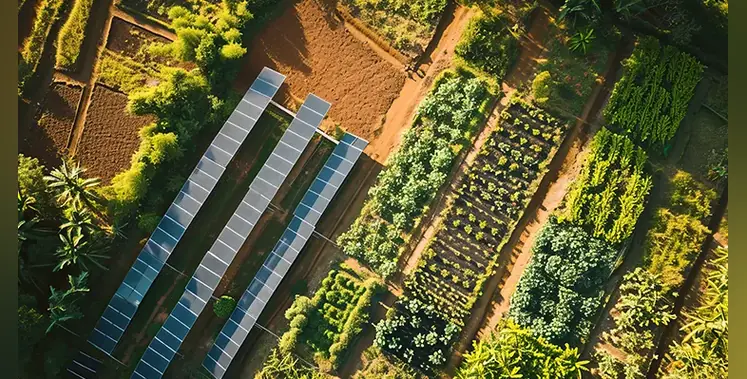
The projects will see the construction of nine solar power plants with a combined installed capacity of 595 kW, supported by 1.7 MWh of battery energy storage. (Image source: CEI Africa)

Stichting Clean Energy and Energy Inclusion for Africa (CEI Africa) has, through its Crowdlending Window, finalised a US$1.5mn junior secured loan with Mionwa Generation SA, OnePower’s special purpose vehicle in Benin, in partnership with crowdfunding platform Energise Africa

As part of the same financing round, Energise Africa has secured a further US$970,000 in senior secured debt and plans to raise an additional US$420,000.

Together, the financing totals US$2.9mn and will fund the development of nine solar mini-grid projects in rural areas of Benin. The projects will see the construction of nine solar power plants with a combined installed capacity of 595 kW, supported by 1.7 MWh of battery energy storage. Once commissioned, the mini-grids are expected to supply clean, dependable electricity to around 4,700 households and businesses, replacing more polluting energy sources while providing continuous power.

In parallel with the debt financing, CEI Africa has committed up to US$972,000in results-based financing grant support. Additional results-based funding has been secured from the Universal Energy Facility (UEF), a multi-donor programme managed by Sustainable Energy for All (SEforALL), which has allocated a total of US$1.66mn in incentives across five project sites.

“This financing marks a major milestone for the OnePower Mionwa portfolio in Benin. By combining CEI Africa’s and UEF’s RBF’s with debt from CEI Africa and Energise Africa, we are able to bring commercially viable, sustainable, utility-grade solar mini-grids to communities that have historically been left behind by the central grid” said Matthew Orosz, CEO of One Power Group.


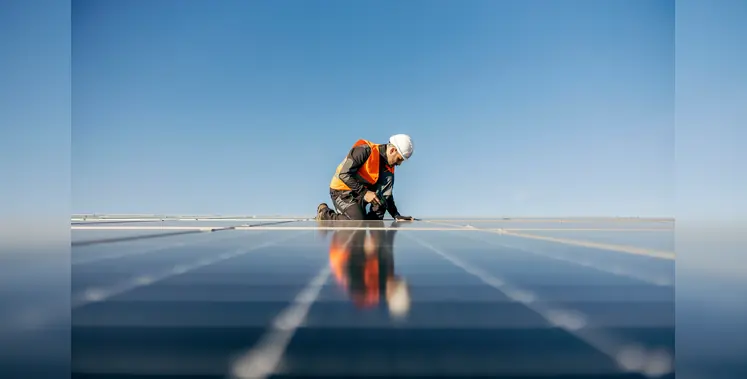
New All-in-One energy storage system targets residential and small C&I users with scalable, intelligent performance. (Image source: GoodWe)

Building on the strong market reception of its single-phase ESA Series, GoodWe has unveiled a new three-phase All-in-One energy solution tailored for residential and small commercial and industrial (C&I) applications

Designed to seamlessly combine solar power generation, energy storage, and intelligent energy management, the new system raises the bar for flexible, high-performance energy solutions, offering greater efficiency, autonomy, and reliability across a wide range of use cases.

Simple installation, flexible expansion

The ESA three-phase solution features a pre-wired, modular architecture that enables fast installation and straightforward commissioning. With one-click configuration and upgrade capabilities, users can deploy the system quickly with minimal complexity.

To support evolving energy needs, the system is compatible with four battery module capacities — 5, 6, 8, and 9kWh, and allows mixed use of new and existing modules with different capacities. This approach enables capacity expansion without replacing current equipment, safeguarding the user’s initial investment.

The system supports the parallel connection of up to 12 battery modules, delivering a maximum storage capacity of 108kWh, while up to six systems can operate in parallel in both on-grid and off-grid modes. With a scalable range of 5–30kW / 5–108kWh, the ESA three-phase solution is well suited to both homes and small C&I environments.

Higher output, lower overall cost

Engineered to deliver strong performance with reduced upfront investment, the system is designed to maximise energy output while controlling system complexity and cost. Dual output ports simplify overall system design by minimising the need for additional components, reducing installation time and long-term maintenance, while also enabling full off-grid operation for enhanced energy independence.

With 1C charge and discharge capability, the system supports faster energy cycling, allowing the same power output to be achieved using fewer battery modules. Support for 21A per string PV input and up to 200% PV oversizing further enhances solar harvesting, helping users increase self-consumption, shorten payback periods, and maintain a stable power supply during peak demand or low-sunlight conditions.

Intelligent energy management for greater value

The system integrates seamlessly with GoodWe’s SEMS+ intelligent energy management platform, turning advanced hardware into measurable user value. Leveraging AI-driven algorithms, SEMS+ forecasts power generation using weather data and dynamically optimises charging and discharging to maximise solar utilisation.

Users also gain access to detailed energy usage analytics and revenue reports, offering clear visibility and control over consumption patterns while supporting both financial savings and sustainability goals.

Safe, quiet, and dependable operation

Designed with safety and comfort in mind, the ESA three-phase solution incorporates AI-powered protection features, including six-layer safety protection and AFCI 3.0 technology to guard against overheating, overcurrent, short circuits, and arc faults.

The system is built for dependable performance in demanding conditions, featuring an integrated heating function for stable operation down to -20°C and an IP66 rating for resistance to dust and water. Smart fan cooling keeps operational noise below 35dB, while ultra-fast backup switching of less than 4ms ensures uninterrupted power during grid outages.

From single-phase to three-phase applications, and from residential to small C&I use, the GoodWe ESA All-in-One series continues to evolve. With its focus on flexible scalability, intelligent cost efficiency, and robust safety, the new three-phase solution sets a new benchmark for energy storage across diverse scenarios.

Looking ahead, GoodWe remains committed to advancing innovation in the renewable energy sector, delivering smarter and more sustainable energy solutions worldwide, and supporting the transition toward a greener, low-carbon energy future.

More Articles …