







Egypt deploys Gotion 5MWh systems for grid storage
The storage systems will support renewable energy integration at two major sites. (Image source: Gotion)
Egypt is set to deploy large-scale battery energy storage systems across the Nefertiti and Horus projects, with Gotion Grid supplying its 5MWh storage systems for what will be Africa’s largest standalone energy storage facilities once completed
The projects, developed by AMEA Power and built by China Energy Engineering Group, represent Egypt’s first large-scale standalone energy storage projects. The systems are intended to strengthen grid stability, support the integration of solar and wind power, and contribute to Egypt’s 2030 clean energy goals.
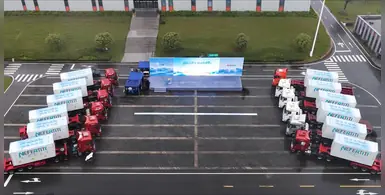
Gotion has begun global delivery of the equipment, with 50 heavy-duty trucks carrying its self-developed Gotion Grid 5MWh storage systems departing simultaneously from its Jinzhai and Nantong facilities.
The storage systems will support renewable energy integration at two major sites. At the Benban solar complex, the technology is designed to enhance solar power consumption, while at the Zafarana wind farm it will provide flexible peak-shaving capabilities.
The systems have been upgraded for operating conditions including extreme heat, sandstorms and salt fog. According to Gotion, their capabilities include high-voltage stability, high safety and millisecond-level response, features intended to support reliable operation in Egypt's challenging environmental conditions.
The deployment also highlights the role of battery energy storage in managing variable renewable generation. By storing electricity and providing flexible grid support, standalone storage can help align renewable power generation with periods of demand and provide additional operational flexibility for power systems with increasing shares of solar and wind generation.
Gotion completed the first shipment within three months of signing the project, reflecting its role in large-scale storage integration, global supply chain coordination and localised delivery.
"This shipment opens a new stage of broader cooperation," said by Hussain Al Nowais, chairman of AMEA Power, "We are proud and satisfied with our partnership with Gotion and are actively exploring new opportunities across the Middle East and Africa."
Li Chen, Senior vice-president of Gotion and president of Gotion Americas said, "Egypt is Gotion's key step into the Middle East and North Africa, proving it can deliver end-to-end, operate locally, and commit for the long term."