




cb.web.local

twitter Facebook Linkedin acp Contact Us

Schneider Electric’s Steven Santini at the IDC CIO Summit 2026 in Johannesburg

As artificial intelligence (AI) investment accelerates globally, Africa is increasingly being viewed as the industry’s next major growth frontier, but according to Steven Santini, vice president for Secure Power, Sub-Saharan Africa at Schneider Electric, the continent’s AI ambitions will ultimately depend on its ability to solve one critical challenge: infrastructure readiness
 
Speaking at this year’s IDC CIO Summit 2026, a premier gathering for technology decision makers, held at the Sandton Convention Centre in Johannesburg, Santini said global AI players are already looking toward Africa as a strategic investment destination.
 
“The question becomes: is Africa ready? Global AI players increasingly view Africa as the next frontier, the new gold rush, in many respects. We have the land, the resources, and the growth potential. As many have already seen, data centres are being developed across Kenya, Nigeria, South Africa and other regions where investment is welcomed.”
 
However, while momentum around AI infrastructure is rapidly building, Santini cautioned that the continent faces significant barriers that could slow adoption if not addressed strategically.
 
“Power remains the number one challenge for AI, particularly AI data centres. To put this into perspective, some of the projects we are involved with in the Middle East have power requirements comparable to entire cities.”
 
Focus on smaller infrastructure too
 
He added that Africa’s infrastructure conversation cannot focus solely on hyperscale facilities. Instead, organisations should rethink how AI is deployed and where it delivers the greatest operational value.
 
“When people hear ‘AI’, they often picture massive hyperscale data centres. But AI exists in many different forms. Your laptop can run AI workloads. A small ten-node server cluster deployed at an industrial site can support AI applications. AI does not always require enormous, high-density centralised environments.”
 
Santini believes this shift is particularly relevant for Africa, where industries such as mining, agriculture, financial services, and government are increasingly adopting AI to improve operational efficiencies, automation, predictive maintenance, and decision-making closer to the edge.
 
“We are seeing many African organisations deploying smaller AI environments through prefabricated systems, containerised data centres, or even single racks within existing facilities. This allows them to leverage existing cooling and power infrastructure while simplifying deployment.”
 
He adds that connectivity remains just as important as power in enabling AI success across the continent.
 
“A data centre without reliable network infrastructure is effectively just an expensive paperweight. If data cannot move efficiently in and out, the infrastructure cannot deliver value.”
 
All parties at the table
 
Beyond physical infrastructure, Santini highlighted the growing importance of software intelligence in helping organisations maximise energy efficiency and optimise cooling performance in increasingly power-constrained environments.
 
“We live in a world where power is constrained and nowhere is that reality felt more strongly than in Africa. Because of this, we need both the right physical infrastructure and the right software intelligence to maximise efficiency and performance.”
 
Ultimately, Santini believes Africa’s AI success will depend on aligning infrastructure investments with clearly defined business outcomes rather than pursuing AI for its own sake.
 
“AI in Africa is not a future concept is already happening. But success will depend on defining the right operational outcomes first, and then aligning the appropriate technologies, power, cooling, computing, storage, and networking around those goals.”
 
“As Schneider Electric, we position ourselves as the energy technology partner helping organisations achieve those outcomes efficiently and sustainably,” he concluded.
 
Read more:


South Africa advances grid-scale gravity energy storage

Energy Vault Holdings, Inc. has entered into a strategic development agreement with Eskom Holdings SOC Limited to introduce a large-scale gravity energy storage system in South Africa, marking a major step in the region’s transition toward cleaner and more resilient energy infrastructure

The first gravity energy storage system (GESS) project will be developed at Eskom’s Hendrina Power Station in Mpumalanga, among the country’s oldest operational coal-fired facilities. The installation is expected to deliver 25MW of power capacity with four hours of storage, representing 100MWh in total, while also offering future scalability of up to 4GW.

The agreement establishes a long-term collaboration between the two organisations aimed at accelerating the decarbonisation of Southern Africa’s electricity sector. Under the partnership, Energy Vault will supply its EVx 2.0 gravity storage technology alongside engineering expertise, project execution services and localised workforce training.

The companies also plan to jointly license and expand the deployment of up to 4GWh of gravity-based energy storage capacity throughout the 16-member Southern African Development Community (SADC) region by 2035.

Energy Vault’s EVx 2.0 platform introduces several upgrades compared to earlier versions of the technology, particularly in areas such as software coordination, mechanical performance, energy efficiency and automated construction processes. The updated design enables deployment at multi-gigawatt scale to support growing renewable energy penetration across electricity networks.

A notable feature of the technology is its ability to repurpose coal ash into large storage blocks weighing between 25 and 30 tonnes, creating an alternative use for combustion waste materials while supporting more sustainable infrastructure development.

“This landmark agreement with Eskom represents a transformational milestone for Energy Vault and for Africa’s energy future,” said Robert Piconi, chairman and CEO.

“By combining our breakthrough EVx 2.0 platform with Eskom’s extensive power generation, grid expertise and regional reach, we’re not only advancing long-duration storage at unprecedented scale but also pioneering a new model for sustainable industrial development. This partnership will create local jobs, establish resilient supply chains, and demonstrate how gravity energy storage can accelerate Africa’s transition from coal dependency to energy independence and security — all while delivering reliable, affordable power to communities that need it most.”

The initiative aligns closely with Eskom’s Just Energy Transition Partnership (JETP), which seeks to reduce dependence on coal while maintaining energy reliability, encouraging economic participation and supporting employment opportunities.

"Eskom is committed to reducing the environmental impact of its electricity generation activities and will continuously drive projects to support South Africa’s local and global emission reduction targets and transition responsibly. Eskom’s strategy is designed to position us as a resilient and competitive energy leader in a liberalised energy market."

"We will drive a just and inclusive energy transition that includes intensifying the repowering and repurposing of coal power stations and exploring clean coal technologies and solutions using technology as a strategic enabler to improve efficiencies and lower the cost of electricity. This partnership with Energy Vault and its innovative gravity storage technology will play a pivotal role in achieving our Just Energy Transition goals,” said Dan Marokane, group CEO, Eskom Holdings.

Southern Africa’s energy sector continues to evolve as governments and utilities pursue wider access to reliable and sustainable electricity. Electricity access across the SADC region has increased to 56% of the population, compared to 36% a decade earlier, reflecting expanding infrastructure investment and regional cooperation efforts.

Although coal still accounts for more than 80% of South Africa’s electricity generation, countries across the region are increasingly investing in renewable energy and storage technologies to diversify supply, strengthen grid resilience and improve long-term energy security. Utility-scale storage solutions are expected to become increasingly important in supporting renewable integration while also contributing to industrial growth, job creation and community development initiatives.

Aptech Africa electrifies 69 Sierra Leone schools with off-grid solar systems. (Image source: Aptech Africa)

Aptech Africa has completed the installation of standalone solar PV systems across 69 schools in Sierra Leone’s Western Area, covering both urban and rural districts including Central I & II, East I–III, West I–III, Koya Rural, Waterloo Rural and Mountain Rural

The company is also responsible for the ongoing maintenance of the systems.

Designed as hybrid off-grid installations, the systems generate solar electricity during daylight hours while simultaneously charging battery storage units. During the night or periods of cloudy weather, stored battery energy ensures a continuous electricity supply without reliance on the national grid. The systems provide dependable power for lighting, computers, Wi-Fi routers and printers within school administration blocks, enabling internet connectivity and digital operations in areas lacking grid infrastructure.

Installation teams secured the solar panels on reinforced roof-mounted rail systems, while batteries and inverters were placed within protected and ventilated enclosures inside principals’ offices or school administration buildings. Each installation operates independently, supplying power solely to local school equipment such as lights, laptops, routers and printers. Electrical cabling, fuses and breakers were integrated according to industry standards, while detailed commissioning reports and maintenance documentation were prepared for every site to support future servicing requirements.

The rollout faced several logistical and environmental challenges during implementation.

Accessing remote schools, particularly within Mountain Rural and other rural districts, proved difficult due to poor road infrastructure. Teams relied on four-wheel-drive vehicles and support from local communities to transport personnel and equipment to project sites. To improve efficiency, installations were grouped geographically, allowing crews to complete several nearby schools during a single deployment. In some locations, equipment was temporarily stored at regional hubs to reduce transport delays.

Seasonal weather conditions also created interruptions. Sierra Leone’s heavy rainy season occasionally delayed rooftop installations and electrical works. Project teams adapted schedules around weather forecasts and used temporary coverings where possible to continue work safely during short rain periods. Flexible planning and additional time allocations enabled all 69 systems to be completed successfully despite these constraints.

The project is expected to deliver significant educational, economic and social benefits across participating schools and communities.

Reliable electricity now supports extended study hours, improved administration and enhanced access to digital learning tools. With continuous power for internet routers and computers, schools can connect students and staff to online educational resources and modern learning platforms. The solar systems effectively introduce digital infrastructure into previously underserved schools and 'make education more flexible and accessible by powering the technology and infrastructure needed for digital learning'.

Consistent power also helps bridge connectivity gaps in rural education. Internet routers and communications equipment can now operate independently through off-grid solar supply, ensuring reliable access for teachers and students. Devices such as laptops, mobile phones and printers can also be charged directly through the systems. International community solar initiatives have similarly identified device charging as an essential service for improving educational access.

Administrative functions within schools have also improved. Teachers and principals can now operate office equipment including fans, projectors, printers and phones without disruptions caused by unreliable electricity or fuel shortages. Stable lighting additionally supports safer environments, improved record management and better operational efficiency.

The shift from diesel generators and inconsistent grid supply is also reducing operational costs. Lower spending on fuel and electricity allows schools to redirect funds toward educational materials, maintenance and staff development. International research has shown that solar PV systems can reduce school electricity costs by between 20% and 50%. In some instances, excess power generated by schools may also be shared with nearby buildings.

Environmental gains are another major outcome of the initiative. Replacing diesel and gasoline generators with renewable solar power significantly cuts emissions and local pollution levels. Similar school electrification projects supported by UNICEF in Eritrea demonstrated reductions in carbon emissions while improving access to digital education. Over the operational life of the systems, the Freetown installations are expected to avoid substantial volumes of CO₂ emissions.

Beyond the schools themselves, the project is anticipated to strengthen community confidence in public education. Access to functioning lights, internet services and digital technology can help improve student attendance and encourage enrolment. Previous UNICEF-supported programmes found that improved school infrastructure, including solar-powered facilities, contributed to higher attendance rates among girls in rural communities.

Overall, the initiative highlights how solar PV systems can transform educational infrastructure in off-grid regions. Schools gain “improved learning environments” alongside greater access to digital tools while supporting broader sustainability and climate objectives. The project also demonstrates the wider potential for renewable energy to support connected, technology-enabled education systems throughout Sierra Leone.

Newly inaugurated Graspan Solar PV plant adds 75MW to South Africa’s grid

Pele Green Energy and ENGIE South Africa have formally inaugurated the Graspan Solar PV facility in South Africa’s Northern Cape, celebrating a project that has already entered commercial operation and is currently supplying electricity to the national grid

The 75 MW solar project was developed under Bid Window Five of South Africa’s Renewable Energy Independent Power Producer Procurement Programme (REIPPPP). Combined with ENGIE’s Grootspruit Solar PV project in the Free State, the developments contribute a total of 150MW of renewable generation capacity to the country’s electricity network.

Having already commenced operations earlier this year, Graspan is actively feeding power into the grid, underlining the growing importance of utility-scale solar projects in addressing South Africa’s ongoing energy supply challenges while supporting longer-term grid resilience.

“These projects demonstrate what matters most in the current environment, which is execution,” commented Sanjeev Mungroo, managing director: renewables and batteries at ENGIE South Africa.

“Graspan is an operating asset contributing power to the grid today. That is critical as South Africa works to close its supply gap and build a more resilient electricity system.”

The project was developed in collaboration with local stakeholders, reinforcing the role of partnerships between the public and private sectors in expanding generation capacity through the REIPPPP framework.

Beyond increasing electricity supply, the solar facility reflects the broader transformation underway within South Africa’s energy sector. As renewable generation capacity continues to grow, projects such as Graspan are expected to contribute to a more balanced and diversified energy mix while reducing dependence on conventional power sources.

“Graspan shows what happens when partnerships are anchored in shared purpose. We’re not just delivering sustainable power into the grid – we’re driving economic activity, creating pathways for growth, and making sure communities feel the benefits of the energy transition. Today isn’t just about infrastructure. It’s a foundation for opportunity, dignity, and progress. Beyond the megawatts, impact means jobs, skills, and lasting value for local communities. For Pele Green Energy, this is moving from promise to performance – commercially sound and socially meaningful,” remarked Nicolas Lecomte, general manager, Pele Green Energy.

In addition to strengthening energy security, the project is anticipated to generate wider economic benefits through local procurement opportunities, workforce skills development and long-term investment initiatives aimed at surrounding communities.

For ENGIE South Africa, the commissioning of Graspan also forms part of a larger renewable energy pipeline that includes newly commissioned facilities, preferred bidder projects and participation in South Africa’s evolving electricity market.

“Graspan is part of a wider portfolio that reflects our long-term commitment to South Africa. The focus now is not only on adding capacity, but on ensuring that projects are delivered, integrated, and operated in a way that supports reliability, growth, and system resilience over time,” added Mungroo.

Hybrid power plant impression. (Image source: Wartsila Energy)

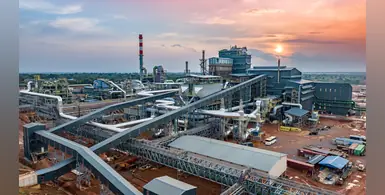
Africa’s cement industry is expanding quickly, driven by urbanisation, infrastructure investment and rising demand for housing. Yet behind this growth lies a persistent operational challenge: reliable and affordable access to electricity, writes Krzysztof Lokaj, Africa development manager, Wärtsilä Energy
 
Cement production is energy intensive and highly sensitive to power interruptions. Kilns operate continuously, and sudden shutdowns disrupt production and increase costs. In many African markets, however, limited access to grid power and volatile energy prices leave many cement producers with no other choices but to invest in power generation capabilities on site.
 
In this context, the question facing the cement industry is no longer whether to generate their own power, they often must, but which technology provides the most practical and resilient solution to do so.
 
The technological options typically envisaged include open-cycle gas turbines, reciprocating gas engines and sometimes even coal-fired steam turbines. But only one of these technologies offers the optimal balance of flexibility, reliability and affordability suited to highly demanding cement operations.
 
Flexibility in matching industrial power demand
 
An essential factor to take into consideration when assessing options is the way power demand fluctuates within cement plants. Although production processes often run continuously, electricity demand varies depending on grinding operations, maintenance cycles and seasonal production patterns.
 
By design, engine power plants are highly effective at adapting to these changing demand profiles since plant operators can simply change power output from each engine between 10% and 100% within minutes. Because they are composed of multiple engines operating in parallel, independent units can even be switched on or off to match real-time demand.
 
More importantly, flexible engines can operate stably at very low loads while maintaining high efficiency, giving operators a responsive tool for managing fluctuating power requirements. This capability allows the power plant to maintain very high electrical efficiency across a wide range of output levels.
 
This operational flexibility is also of paramount importance to support the integration of intermittent renewable energy in microgrids. As the cement industry increasingly turns to solar and wind to lower their carbon emission footprint, matching them with flexible engine capacity will provide the critical dispatch dependability needed in hybrid power plant configurations.
 
Open-cycle gas turbines, on the other hand, significantly lose efficiency when operating below full capacity. For industrial users that rarely operate at a constant full load, this translates into higher long-term fuel consumption, offsetting the turbines’ lower up-front cost. In a sector where energy costs represent a significant share of operating expenses, differences in efficiency over time will outweigh any initial capital cost advantages.
 
Unlike engines that can be turned on and off multiple times during a day and require no minimum up and down time, turbines need to operate constantly to avoid thermal stresses and therefore increased maintenance costs. This lack of operational flexibility will significantly undermine the efficiency, but also severely limit the performance of renewables in hybrid microgrid configurations. 
 
Reliability & scalability as baseline requirements
 
For cement plants, electricity supply must be dependable above all else. Reciprocating engine power plants typically achieve availability rates over 98 percent, making them well suited to industrial environments where access to energy must always be dependable.
 
One reason for this reliability lies in the modular nature of engine-based plants. Unlike turbine power plants, their configuration allows individual units to be serviced without shutting down the entire plant. Servicing can be planned and carried out on site while the remaining engines continue to operate. Spare parts planning, local technical support and straightforward servicing procedures also help keep downtime to a minimum.
 
The modular structure of engine power plants also allows for new generation capacity to be expanded gradually. As cement plants increase production, additional generating units can be installed without redesigning the entire power system, whilst avoiding the need for oversized plants. This structural flexibility reduces investment risk, allowing power infrastructure to grow alongside industrial demand.
 
In this regard, engine power plants offer a degree of adaptability that is difficult to achieve with other generation technologies.
 
Coal, a cheap option with considerable downsides
 
Coal-fired power plants are sometimes considered as an alternative for captive power in certain countries, particularly where cheap coal resources are locally available. However, coal-based generation presents its own set of challenges for industrial users.
 
Much like open-cycle gas turbines, coal plants are designed primarily for steady, continuous operation and are less suited to environments where power output must adjust frequently and rapidly. Startup times can extend to many hours, and maintenance often requires large sections of the plant to be taken offline. This lack of flexibility negatively impacts project economics.
 
Environmental considerations also represent a major downside for coal. Financing institutions, investors and owners are paying closer attention to emissions profiles and long-term climate risks. As a result, coal-based power plants can encounter significant barriers to financing.
 
Preparing for an evolving energy landscape
 
Energy systems across Africa are evolving, with new gas infrastructure, renewable energy projects and volatile fuel markets reshaping the landscape. Industrial power solutions therefore need to be able to accommodate these transformations.
 
Of course, no single power technology is universally optimal. Yet, when, sustainability, scalability, reliability, operational flexibility and long-term efficiency are considered together, engine-based power plants present a compelling option for many cement producers across the continent.
 
Read more:


More Articles …