




vc.web.local

twitter Facebook Linkedin acp Contact Us

Energy

Venus secures EGP 70mn financing from Banque Misr to expand Cairo 3A off-grid hybrid power project supporting poultry operations

Venus has secured Shariah-compliant financing of EGP 70mn (approx. US$1.3mn) from Banque Misr to support the expansion of the Cairo 3A project, bringing the total funding obtained from the bank for the development to EGP 154mn (approx. US$2.9mn)

The new financing will be used to scale up the project’s energy infrastructure, with a focus on strengthening sustainable power solutions and maintaining uninterrupted, high-efficiency operations. The expansion is particularly important for energy-intensive agricultural activities that operate in areas beyond the reach of conventional electricity grids.

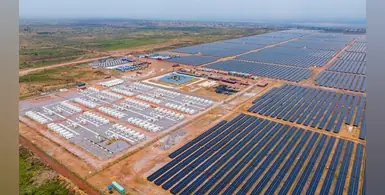
Cairo 3A is an off-grid energy initiative serving the poultry sector, providing reliable and integrated power systems to support large-scale farming operations. The project uses a hybrid generation model that combines solar PV, battery storage and gensets. This approach helps improve operational resilience while reducing reliance on traditional fuel-based electricity generation.

The first phase of the project, launched in 2020, delivered a contracted capacity of 3 MVA along with 2.5 MWp of solar generation. As the farm has expanded and its energy requirements have grown, a second phase is now being implemented. Scheduled for completion in 2026, this phase will increase the total capacity to 5.5 MVA and solar generation to 4.5 MWp, representing an 83% increase compared with the initial phase.

Karm Holding stated that the additional financing represents an important milestone in its growth strategy and highlights the strength of its partnership with Egypt’s banking sector. The company reaffirmed its commitment to delivering projects that meet high standards of efficiency and sustainability, while supporting Egypt’s broader transition toward a more resilient and sustainable economy.

Globeleq investing Zambia’s hydro sector (Image source: Adobe Stock)

Globeleq has completed its acquisition of a 51% equity stake in Zambia’s Lunsemfwa Hydro Power Company (LHPC) from Norfund, the Norwegian development finance institution

The transaction marks a major step in Globeleq’s entry into the Zambian energy market and the South African Power Pool (SAPP) according to Jonathan Hoffman, CEO of Globeleq.

LHPC operates two hydroelectric power plants with a combined capacity of 56 MW and is constructing a 27 MWp solar PV project.

Its growth pipeline includes a 200 MWp solar portfolio and various hydropower expansions.

“LHPC’s strong operational base and ambitious growth plans align with our strategy, providing an operational entry into Zambia and active trading in SAPP,” said Hoffman.

“Combined with our project pipeline, LHPC strengthens our ability to offer tailored power solutions to major consumers in the region.”

Based in Kabwe, Zambia’s Central Province, LHPC supplies electricity to ZESCO, the national utility, under a long-term power purchase agreement and serves private off-takers such as Copperbelt Energy Corporation and Jubilee Metals.

LHPC also holds a SAPP trading license, enabling regional energy trade.

The remaining 49% of LHPC is owned by Wanda Gorge Investments, a Zambian-based infrastructure investment company.

The acquisition of LHPC is a key moment for Globeleq, not only as its first hydropower investment in Africa complementing its existing portfolio of solar, wind, battery energy storage systems (BESS), hybrid solar-plus-BESS, and geothermal assets, but also because it enables active electricity trading within the SAPP.

Globeleq has called Zambia is a “priority market” and recently opened a new office in Lusaka to serve as a local hub for project development, partnerships and commercial activities.

In addition to its LHPC investment, it has made progress with various other projects in the country.

The 40 MWac (56 MWp) Kafue solar project is on track to reach financial close and start of construction during Q1 2026.

The main financing agreements were signed in December 2025 with British International Investment and FMO as joint mandated lead arranger as well as senior lenders, and Standard Bank acting as security trustee.

Globeleq is also advancing the Leopard’s Hill project – a 150 MWac solar PV plant paired with a 150 MW / 600 MWh battery – with financial close targeted later in the year.

“We are delighted to have found the right partner to advance LHPC’s long‑term potential,” said Øystein Øyehaug, investment director at Norfund.

“Globeleq has the expertise and resources needed to enhance LHPC’s performance and drive its future development. This transaction supports our mission to promote sustainable development and expand access to clean energy in Zambia.”

Read more:

Ethiopia inaugurates GERD hydro dam

Burundi's Jiji hydro power plant opened

Globeleq to support Zambia hydro project


Powering up solar in South Africa (Image source: Adobe Stock)

Lyra Energy has reached financial close on the 255MW Thakadu solar power project in South Africa

It has also commenced construction of the facility, located on the border of South Africa's Free State and North West provinces.

Lyra is a renewable energy partnership between Scatec, Standard Bank and Stanlib.

“This marks an important milestone for Lyra Energy and the Thakadu project,” said Scatec CEO Terje Pilskog.

“With contracted private sector offtake in place and financing secured, the project is well positioned for construction and delivery.”

The project will be built in two phases, with construction of the first phase now commencing.

The second phase is expected to start construction in the second half of 2026.

The total capital expenditure for the project is approximately ZAR 4bn (US$240mn) and will be financed by a combination of non-recourse project debt and equity from the owners, with a target leverage of 80%.

The senior lender is Standard Bank of South Africa.

Scatec will provide Engineering, Procurement and Construction (EPC), Asset Management (AM) and Operations & Maintenance (O&M) services for the project.

Its EPC-scope corresponds to approximately 80% of total capex.

Commercial operations date for the first phase is expected in the first half of 2027.

Read more:

Nigeria onsite power delivered by Jubaili Bros

Beyond diesel: rethinking power for Africa's data centres

Trafo Power Solutions designs scalable mining infrastructure 

David Wendt, account manager at John Deere Power Systems, at the company's stand. (Image source: Alain Charles Publishing)

At CONEXPO-CON/AGG, John Deere Power Systems debuted the latest additions to its Next Generation Engine (NGE) range, where they formed the cornerstone of a versatile lineup designed to meet the industry’s evolving demands

The upcoming JD5 and JD8 industrial engines will offer more flexible power solutions to meet the diverse needs of its OEM customers, reflecting the company’s commitment to customer choice and providing the right power for the right application. The JD5 and JD8 will enhance power options in key mid-range applications where power density and installation flexibility are critical.

The JD5 5.0L engine will offer an anticipated power range of 125–268 hp (93–200 kW), and the JD8, a 7.5L engine, will offer an anticipated power range of 250–389 hp (187–290 kW). They will be compatible with renewable diesel fuel and biodiesel blends.

The lead application for the JD8 is anticipated to be launched in 2029, followed by the JD5.

JDPS also showcased the latest in KREISEL Electric (KREISEL) batteries, an advanced battery technology designed to prioritise runtime, energy density, and seamless integration, as well as highlighting a versatile charging ecosystem to support the transition to electric, with the development of both stationary and mobile charging options with varying power outputs.

Speaking to African Review at CONEXPO-CON/AGG, David Wendt, account manager at John Deere Power Systems, underlined the company’s commitment to investing in diesel engine technology as part of a multiple-pathway approach which includes advancing next-generation diesel engines, enabling compatibility with renewable fuels, and integrating battery technology in applications where it delivers the most value — all supported by comprehensive aftermarket and customer support solutions. This strategy allows OEMs to leverage advanced diesel technology alongside emerging power solutions, providing the flexibility to thrive in an evolving landscape without compromising performance. There is no one size fits all solution.

“Over the past five years, we have introduced three new John Deere diesel engines in addition to the two we’re showcasing here,” said Wendt. “This marks a new era of power and an expanded displacement range for our engine lineup. It’s important for our customers to see John Deere’s continued commitment to investing in diesel technology.”

Wendt also highlighted a focus on serviceability and maintainability within the NGE engines. This is evidenced by extended service intervals and a design that prioritises accessible, cost-effective maintenance for common repair items — all aimed at reducing the customer’s total cost of ownership.

“What is important for customers, whether in Africa, the Middle East or anywhere around the world, is not only engine performance, but serviceability. This is something we are really focused on,” he stressed.

He explained that common design characteristics across its JD series mean that technicians are able to address issues and get machines back up and running faster. Often engines will have identical part numbers or common systems, which makes it much easier for technicians to service different engines.

“These engines were all designed to be power dense, to be electronically controlled, to meet emissions requirements and to be easy to service,” he said.

Wendt added that certain features have been designed into the NGE engines to help reduce maintenance and downtime, helping customers to keep their operations up and running. One of these is hydraulic valve lash adjustment, which allows for the elimination of a maintenance interval that usually takes place between 2,000 and 2,500 hours. It also allows for quiet operation, contributing to a better operator experience, and reduces wear and tear on the valve train, resulting in better durability and reliability. Additionally, the gear train has been moved from the front of the engine to the rear, which not only eliminates torque and torsion, but also allows for a belt-driven water pump at the front, eliminating the possibility of coolant entering the oil system should the pump fail.

“Ultimately, it is about keeping the customer’s overall experience at the forefront of everything we do,” he concluded.

Jubaili Bros completes its latest installation in Nigeria (Image source: Jubaili Bros)

Jubaili Bros has announced the delivery of three 2000kVA diesel generator sets to an undisclosed client in Nigeria

In a statement released on its social media, it reported that each unit was engineered to meet specific load requirements and site constraints, incorporating a remote radiator cooling system for efficient thermal management and installation flexibility.

“Part of our Marapco X-Series, these generator sets are designed for high-performance, mission-critical applications, delivering operational stability, optimised fuel efficiency and compliance with applicable emissions standards,” it noted.

With advanced acoustic engineering to control sound pressure levels and a configuration aligned with environmental and regulatory requirements, the genset units are designed to ensure reliable power while meeting both technical and sustainability expectations.

“This project reflects our capability to design and deliver customised, high-capacity power solutions tailored to complex operational needs,” the company added in the post.

Jubaili Bros recently completed the factory testing of new MWM gas generator sets at its Nigeria facility, the latest step in a new partnership with the global genset producer.

The company said it marked a major step forward in its journey toward high-capacity, efficient gas power solutions, delivered with the quality, precision, and OEM-backed assurance its projects demand.

It called it a proud moment for its team “and a strong signal of what’s ahead in gas power execution.”

It added that the new units are part of a larger integrated power package combining gas and diesel generation, synchronisation, and ABB transformers engineered for reliability, flexibility, and performance.

Jubaili Bros announced its collaboration with MWM last year.

MWM is a provider of sustainable gas gensets, to provide large, gas-fuelled electrical power solutions across Africa and the Middle East.

Read more:

Motheo copper mine onsite power project

Jubaili Bros Nigeria's onsite power milestone

Burkina Faso onsite power project completed


More Articles …