




cb.web.local

twitter Facebook Linkedin acp Contact Us

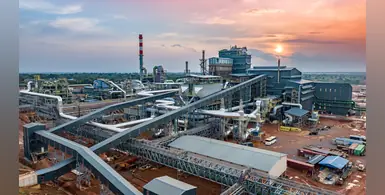
AFC reaches financial close on 119MW power plant, Burkina Faso's largest, to help close its electricity access gap (Image source: AFC)

A major power project in Burkina Faso is to proceed after securing a first US$60mn tranche of a US$300mn corporate loan facility from Africa Finance Corporation (AFC)

The funds will support the development of the 119MW thermal power plant by Aksa Enerji Üretim A.Ş., Türkiye’s largest publicly-listed power generation company.

The project is expected to make a huge dent in accss to electricity in Burkina Faso, a country of 24 million people where only one in five currently have access to power.

“Burkina Faso represents an important milestone in our long-term commitment to Africa,” said Cemil Kazanci, chairman of Aksa Enerji.

“Together with AFC, we are delivering critical energy infrastructure that will strengthen energy security, support economic development and improve the reliability of electricity supply for millions.”

The transaction marks AFC’s first investment in Burkina Faso, but builds on its US$150mn corporate loan facility to Aksa Enerji in 2025, which supported the company’s utility-scale gas-to-power projects in Senegal and Ghana.

This includes Senega’s new 255MW combined-cycle gas power plant designed to use domestic natural gas to deliver more reliable and lower-emission baseload power.

Collectively, these projects have established Aksa as a major partner in delivering large-scale energy infrastructure across Africa.

The Burkina Faso project is expected to transform the nation’s electricity system.

The West African state currently imports 60% of its power supply, leaving homes, businesses and industry vulnerable to supply disruptions and elevated energy costs, constraining industrialisation and economic growth.

Once operational in 2027, the power station will reduce dependence on imported electricity by more than 50% while significantly strengthening domestic generation capacity.

By delivering more reliable, lower-cost baseload power, the project is expected to improve energy security, attract private investment and create a stronger foundation for long-term economic growth, according to the AFC.

Expanding reliable electricity access is a central part of the Corporation’s mission in unlocking sustainable growth across the continent.

“Africa’s path to industrialisation and global competitiveness by 2050 depends on the infrastructure decisions we make today,” said Samaila Zubairu, AFC’s president and CEO.

“Reliable electricity is fundamental to economic transformation. Without dependable power, countries cannot industrialise, businesses cannot grow and communities cannot realise their full economic potential. Aksa shares our commitment to delivering the reliable energy infrastructure needed to power Africa’s industrial growth and long-term transformation.”

Read more:

Nesa Power gets cash boost for C&I power growth

Gensets to boost Algeria's powdered milk production

Nestle sites gain nearly seven megawatts of solar

South Africa set for C&I power boost (Image source: Adobe Stock)

Nesa Power, a South African commercial and industrial (C&I) renewable energy group has secured R150mn in mezzanine debt funding from Maia Capital Partners

The money will be used by Nesa as growth capital to fund the acquisition of solar photovoltaic (PV) sites and expand its portfolio.

The company delivers integrated solar, storage and energy solutions under long-term power purchase agreements (PPAs) for clients in South Africa and beyond.

Since its inception, Nesa Power and its founders have built over 46 megawatt-peak (MWp) of solar PV generation capacity and 6.5 megawatt-hours (MWh) of battery storage, and has raised over R400mn in capital in managed funds that have invested in and currently operate over 70 solar PV C&I assets on a PPA basis.

The company is committed to providing renewable energy solutions that drive savings, ensure uninterrupted operations and reduce businesses’ carbon footprints by offering tailored renewable solutions, including on-site and off-site generation and storage.

“Securing this mezzanine facility from Maia Capital is a significant milestone for the group and reflects the strength of the business we have built,” said Mike Bleyenheuft, co-founder and CEO of Nesa Power.

He said the partnership with Maia Capital will ensure that Nesa Power continues to deliver innovative, high-quality renewable energy solutions to the C&I market.

“The energy transition in South Africa is accelerating, and with the private renewable market on a trajectory to surpass R200bn by 2030, the opportunity ahead of us is substantial. We look forward to leveraging this partnership… to drive our next chapter of growth.”

Nesa Power has built and operated C&I renewable energy assets through strategic investment partnerships and managed funds for more than a decade and has now evolved into an integrated renewable services group providing the C&I market with turnkey renewable energy services.

Through its group companies, it offers the market greenfield development, in-house design, engineering, procurement and construction management (EPCM), PPA funding, ownership and maintenance (O&M) services as well as carbon credit development services where the group has one of the first solar-based VERRA carbon grouped projects in South Africa.

Nesa Power’s co-founder and group chief investment officer, Percy Ying, said the new investment “materially strengthens” the company’s ability to execute on its growth strategy.

“The investment will also facilitate meaningful job creation and contribute positively to the broader South African economy — an outcome we are deeply committed to."

Read more

Gensets to boost Algeria's powdered milk production

Nestle sites gain nearly seven megawatts of solar

GE Vernova drives Africa's industrialisation with integrated power 

Elmed Project advances Europe-Africa power link

Terna, the company that manages the Italian national electricity transmission grid, led by Pasqualino Monti, and STEG, the Tunisian electricity and gas grid operator, have awarded Hitachi Energy, a global leader in electrification, a contract worth approximately €770 million (approx. US$893mn) for the construction of the converter stations for the Elmed project, the first electricity interconnection between Italy and Tunisia

The awarding of the contract for the converter stations marks the completion of the procurement process for the first high-voltage direct current (HVDC) submarine link between Europe and North Africa.

The tender, published in 2023 jointly by Terna and STEG in the Official Journal of the European Union, concerned the design, supply and construction of the converter stations for the interconnection. The project is one of the infrastructure initiatives included in the Mattei Plan for Africa, aimed at strengthening economic, energy and geopolitical partnerships between Europe and African countries.

The two infrastructures will be built in Italy at Partanna, in the province of Trapani, and in Mlaabi, in the Menel Temime area of Tunisia. The link, powered by advanced HVDC technology, will have a capacity of 600 MW and extend for approximately 220 km, mainly through submarine cable, reaching a maximum depth of around 800 metres in the Strait of Sicily.

Hitachi Energy will provide the HVDC solution, combining its expertise in HVDC converter valves, its MACH digital control platform, power transformers and high-voltage switchgear. The company will also deliver system studies, design and engineering, supply, installation supervision and commissioning services. The project will leverage its experience gained through the successful delivery of some of the world’s largest and most significant interconnection projects.

Other consortium members, including D’Agostino Costruzioni Generali S.p.A. for the Partanna station and Orascom Construction SAE for the Mlaabi station, will mainly undertake civil works, electromechanical installations and auxiliary systems.

Representing a significant step towards greater interoperability between European and North African electricity systems, Elmed comes as governments and transmission system operators worldwide accelerate investment in transmission infrastructure. These developments are supporting the move towards fully electrified energy systems capable of integrating renewable energy sources at scale, strengthening cross-border interconnections and improving energy security.

Elmed is a major infrastructure project designed to strengthen energy security and integrate electricity systems between Europe and North Africa, aligning with energy transition and market integration objectives under the Integrated National Energy and Climate Plan (PNIEC).

The project, which is strategically important for Tunisia, has the full support of Tunisian authorities and forms part of the country’s national vision to strengthen energy security, promote regional electricity market integration and support the energy transition.

Elmed also supports the European Commission’s REPowerEU objectives of reducing dependence on fossil fuels and achieving decarbonisation targets, primarily through diversified energy supplies and increased renewable energy development.

With a total investment value of €1.42 billion (approximately US$1.65bn), the electricity link has received €307 million (approximately US$356 million) from the European Commission through the Connecting Europe Facility (CEF) grant programme managed by CINEA. For the first time, the European Union has financed a project involving a non-member country, highlighting the strategic importance of the interconnection.

The project is also supported on the Tunisian side by additional European and international financial institutions, including the World Bank, the European Investment Bank, the European Bank for Reconstruction and Development and KfW.

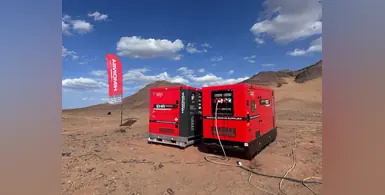
Gensets working in Algeria (Image source: FPT)

FPT, a brand of Iveco Group N.V., and its distributors Bimotor and Avoni Industrial, joined Green Power Systems to power one of Algeria’s largest agro-industrial projects

The new facility is set to transform powdered milk production in the North African country.

The project, worth US$3.5bn and cofounded by the Algerian National Investment Fund and Qatari dairy producer Baladna Q.P.S.C., involves the construction of one of the world’s largest integrated dairy farm and powdered milk facility, spanning 117,000 hectares of agricultural land, and designed to support 270,000 dairy cows.

Located in Algeria’s Adrar province, the agro-industrial facility is scheduled to start production in late 2027.

Once fully operational, it expected to produce up to 100,000 tonnes of powdered milk per year, meeting about 50% of Algeria’s needs.

The gensets provided by Green Power Systems and powered by FPT engines will play a key role in feeding the dairy cows and a huge non-stop irrigation project — a challenging assignment with temperatures often exceeding 40° C for over 130 days a year.

In total, Green Power Systems delivered 50 GP330 S/I-A generator sets powered by FPT CURSOR 13 engines, providing up to 330 kVA, suitable for round-the-clock operation of irrigation systems in extreme conditions.

The FPT-powered Green Power Systems will support central pivot irrigation systems, a crop irrigation method in which the equipment rotates around a central pivot and crops are irrigated using sprinklers, thus creating circular irrigated area centred on the pivot.

Less labour-intensive and more water-efficient, this irrigation method is particularly effective in large plots of arid land and can rapidly transform them into agriculturally productive zones.

“Being part of a such a large-scale project, meant to improve Algeria’s food security and to create about 5,000 local jobs, is both a great honour and a great responsibility,” said Vittorio Bertalli, head of sales EMEA at FPT.

“But we are confident that our CURSOR 13 engines, together with hi-tech Green Power Systems products, will once again live up to the most demanding expectations.”

The CURSOR 13 is designed to deliver robust performance and optimised fuel efficiency for power generation applications, ranging from unregulated to Stage V / Tier 4 Final emissions standards.

Engineered with an electronically controlled unit injector, it ensures precise power delivery, rapid load response, and consistent fuel optimisation under all operational conditions.

The G-Drive configuration provides a ready-to-integrate solution, while highly regulated versions incorporate an ATS pack with patented Hi-eSCR2 technology, enabling advanced emissions reduction without compromising performance.

The engine offers 50/60 Hz frequency switching capability, facilitating inventory management for customers and is designed to maximise uptime and minimise maintenance requirements.

“Green Power Systems’ participation in this project further confirms its role as a reliable international partner in the supply of power generation solutions for large-scale agro-industrial and infrastructure applications,” said Flavio Faggiolini, export area manager for Green Power Systems.

“In projects of this magnitude, power continuity is essential to ensure the proper functioning of the entire infrastructure. The collaboration with FPT Industrial contributed to delivering a solution aligned with the reliability requirements of the operational context.”

Read more:

Nestle sites gain nearly 7MW of solar

GE Vernova drives Africa's industrialisation with integrated power

On-site power for Angolan cold-storage facility 

Daystar Power Group expands solar installations across Nestlé facilities in Côte d’Ivoire, Ghana and Senegal

Daystar Power Group has strengthened its energy partnership with Nestlé across West Africa, with solar installations now fully operational at four manufacturing facilities in Côte d’Ivoire, Ghana and Senegal

The projects bring Nestlé’s total installed solar capacity across these sites to 6,884 kWp, close to 7 MW, making it one of the region’s largest commercial and industrial solar partnerships.

The four facilities, including two sites in Abidjan, one in Tema and one in Dakar, are now operational. Each solar system has been customised to match the specific grid conditions and operational requirements of its respective location.

“Nearly 7 megawatts across four Nestlé facilities is a number we are proud of, but what it represents matters more than the figure itself. It means that one of the world's most demanding manufacturers has tested our model, trusted it, and come back. Our job now is to keep earning that, across every market where industry needs energy it can count on,” added Yischai Beinisch, CEO, Daystar Power Group.

From one site to four sites

The collaboration began with a single installation before expanding across three countries and four manufacturing facilities. In Côte d’Ivoire, Daystar Power has delivered 3,447 kWp of solar capacity across two Abidjan sites. Ghana’s Tema factory now operates with a 2,547 kWp system, while Senegal’s Dakar facility has an 890 kWp installation.

Each project has been designed to deliver measurable environmental and social benefits, including lower greenhouse gas emissions and improved energy resilience. The systems are tailored to local grid conditions and operational demands, providing reliable clean energy access while supporting local development and contributing to Nestlé’s publicly stated net-zero commitments.

“This investment reflects our commitment to building a business that not only grows but does so responsibly. By advancing solar energy projects in Ghana, Côte d'Ivoire, and Senegal, we are embedding sustainability into our growth, reinforcing our role as a force for good, creating long-term value for communities, and ensuring that our footprint actively contributes to a cleaner, more resilient future,” stated Samer Chedid, CEO, Nestlé Central and West Africa Region.

A footprint that keeps growing

Nestlé’s manufacturing network continues to expand across West Africa, including markets where Daystar Power has established strong operational capabilities. With projects now spanning three countries and nearly 7 MW of installed solar capacity, the partnership has created a foundation to support future clean energy expansion.


More Articles …