








In The Spotlight

The customer was originally supplied with standard liners but the new ESCO liner design doubled the liner life. (Image source: Weir)
African mining operations are increasingly turning to aftermarket optimisation to improve plant availability, control operating costs and extend equipment life. Weir is supporting these efforts through its premium ESCO crusher liners and ENDURON screen panels, backed by local technical expertise and global engineering capabilities
The company's approach focuses on understanding individual mine operations, including their ore characteristics and equipment wear patterns, rather than simply supplying replacement components.
According to Natalie Makhanya, Weir's aftermarket manager for comminution in EMEA, this strategy has delivered extended equipment service life across different mining applications.
"Where customers are dealing with highly abrasive applications, we have been able to extend crusher liner changeout cycles to four to six weeks, while in less demanding environments liner life can extend to four to six months," Makhanya commented. "ENDURON screen media has delivered equally impressive results with wear life ranging from two to four weeks in high-impact feed zones and up to 24 weeks in dewatering applications."
Longer equipment service life helps increase plant availability, reduce maintenance costs, improve shutdown planning and enhance workplace safety by limiting the frequency of maintenance interventions.
South African iron ore operation doubles liner wear life
A recent optimisation project at an iron ore reprocessing operation in South Africa's Thabazimbi region demonstrates the impact of Weir's aftermarket solutions.
When the site's ore proved significantly more abrasive than initially anticipated, Weir collaborated with the customer and its ESCO engineering teams in the United States over six months. The teams analysed wear patterns, assessed liner performance and refined the design to address the operating conditions.
The resulting 25% manganese ESCO liner doubled wear life from two weeks to four weeks.
"The project demonstrates how combining local application knowledge with global engineering expertise enables us to develop solutions that deliver measurable improvements in performance," JD Singleton, comminution director EMEA at Weir, commented.
Other African mining operations have also recorded improvements following equipment upgrades. A South African chrome producer extended crusher liner life from four months to six months after switching to ESCO liners.
Meanwhile, a major iron ore operation in Liberia improved drainage efficiency and classification performance after introducing ENDURON screen panels on its dewatering screens.
Expanding screen technology and local manufacturing
The growing adoption of aftermarket solutions is complementing increased demand for ENDURON crushers and ENDURON Elite screens across Africa.
According to Singleton, the latest ENDURON Elite screens incorporate high-capacity exciter technology capable of generating up to 1.28 mega-newtons of force. This enables large screens to operate with two exciters, compared with the three often required by competing designs, reducing maintenance requirements by approximately 30%.
To meet rising demand, Weir has expanded its South African ENDURON® screen media manufacturing operation from an initial 150m² facility to a 3,500m² production plant.
A further expansion is planned to double production capacity and reduce lead times across the continent, strengthening local manufacturing capabilities and equipment supply to African mining customers.
"Mines are increasingly looking for partners who can deliver technical expertise alongside reliable product supply," Makhanya concludes. "Our focus is on working collaboratively with customers to optimise plant performance, reduce maintenance costs and create long-term operational value."

Tata Motors and Iveco unite to create Global commercial mobility giant. (Image source: IVECO)
Tata Motors Limited, India’s largest commercial vehicle manufacturer, and Iveco Group N.V., an international manufacturer of commercial vehicles, buses and powertrains, have marked the start of a new phase as a combined global commercial mobility enterprise
Ranked fourth among commercial vehicle manufacturers worldwide, the combined business brings together the companies’ industrial heritage, established brands and complementary product portfolios, with operations and a growing presence across Europe, India, South America, Asia, the Middle East and Africa.
The announcement was made at a global press meet in Turin, Italy, where N Chandrasekaran, chairman of Tata Sons, Tata Motors and Iveco Group, said: “Today marks the beginning of an exciting new chapter for Tata Motors and Iveco Group. Two strong and successful organisations, united by shared values, a common commitment to sustainable mobility and an ambition to shape the future of commercial transportation, have come together to create a truly global commercial mobility enterprise."
"We will invest for the long term, enable ideas and capabilities to flow in both directions, and harness our combined scale, reach and talent to shape a future of mobility that is safer, smarter, more connected and more sustainable. I take this opportunity to express my appreciation to the Italian Government, the regulatory authorities across jurisdictions, our employees, shareholders and all the stakeholders whose trust, cooperation and support have helped us reach this important milestone. I also warmly welcome our colleagues from Iveco Group into the Tata family and look forward to all that we can achieve together.”
The combined expertise of the two companies in advanced powertrains, alternative energy, software, connected technologies and manufacturing is expected to support faster innovation and expand growth opportunities. Their shared capabilities will also help deliver cleaner and more technologically advanced mobility solutions to customers across markets.
Girish Wagh, managing director & CEO of Tata Motors, said, “We are pleased to turn our strategic vision into an operational reality alongside our colleagues at Iveco Group. Together we have a compelling opportunity to create greater value for our customers and stakeholders. Our complementary portfolios, capabilities and geographic strengths provide a strong foundation for growth, while ensuring continuity from day one for customers, dealers and partners. Our ambition is to build a stronger enterprise by combining our strengths in engineering, new age technologies, sourcing, distribution and customer networks. We will accelerate innovation, broaden our reach and bring advanced solutions to customers faster and more competitively.”
With a shared focus on growth and green mobility, the combined enterprise will draw on a workforce of more than 73,000 people. The companies also intend to facilitate the exchange of engineering expertise, technology and capabilities across their operations to strengthen the business and pursue new opportunities.
Olof Persson, CEO of Iveco Group, stated, “This is a defining moment for Iveco Group, and one we approach with confidence and great energy. We begin this new chapter proudly, with the brands, people, capabilities and industrial heritage that have shaped our company, alongside Tata Motors, a partner of great strength, with a deep understanding of the commercial vehicle business and a shared long-term perspective and commitment to sustainable transport. I want to thank our employees, customers, dealers, suppliers and partners for their trust and support. We now have the opportunity to build on everything Iveco Group has achieved, unlock new possibilities with Tata Motors and create an even stronger future.”

TwinLead gives product labels a lasting digital identity
A label stays on a product, but the information behind it can change. With TwinLead, Brady bridges physical markings with digital product data, turning a QR code into a permanent gateway to documentation, service, and compliance information.
From a label to a digital access point
The concept of a label is usually straightforward: it sticks to a product and displays information. But what happens when that information changes? This is precisely where Brady comes in with TwinLead. The software links physical identification markings with digital product data, turning an ordinary label into a lasting gateway to information, documents, and service offerings.
TwinLead is Brady’s Digital Product Platform. It links Brady labels to a cloud-based digital twin. Every appropriately labelled product receives a verifiable digital identity that can be accessed with a smartphone via a QR code—no additional app required.
The decisive difference compared to traditional identification lies behind the QR code. Printed information is permanent once the label is applied. By contrast, the digitally hosted contents in TwinLead can be updated at any time.
This becomes particularly compelling for products that remain in service for years. Operating manuals, technical specifications, and compliance details no longer need to remain locked to their production-day status. Companies can update the stored data while the original label stays on the product.
With a single scan, users can retrieve product specifications, manuals, videos, or support resources. Direct service requests, spare part orders, and repeat purchases can also be tied directly to the respective product.
A QR code accompanies the product
Setup is handled through a no-code platform. Companies first determine which digital information should be associated with an item. Product attributes and documentation can be maintained in a single central repository.
Next, TwinLead generates unique, serialized QR codes for individual product units. These can be incorporated into existing production marking workflows or pre-printed directly by Brady.
This ensures that not just an entire product line, but - if desired - each individual unit receives its own digital identity. The associated data can then be centrally managed and updated remotely.
New printing hardware is not strictly required. According to Brady, TwinLead works seamlessly with existing Brady printers and label materials. The QR code simply becomes part of the existing label layout.
Brady sees key applications across industries including electronics, manufacturing, EV and battery technology, energy and utilities, and field services.
 Product information never needs to go out of date
This highlights Brady’s core objective with TwinLead. While a standard QR code often points only to a generic website, TwinLead goes a step further by connecting individual products permanently to a centrally managed digital identity.
Manufacturers can continue to maintain product data long after an item has left the factory floor. New documentation, revised notices, and supplementary information can be pushed out dynamically at any time.
For end users, the experience of accessing product information changes as well. Instead of searching for paper manuals or contacting customer support, users retrieve everything on demand directly at the point of use via the product marking.
Brady also highlights the ability to streamline customer support: answers to frequently asked questions, troubleshooting workflows, and deeper technical resources are readily accessible right on the asset.
In addition, there is the regulatory dimension. Brady points to emerging mandates such as the Digital Product Passport (DPP), the Packaging and Packaging Waste Regulation (PPWR), and Right to Repair initiatives. For the Digital Product Passport, TwinLead offers dedicated templates pre-configured with required fields such as manufacturer details, origin, compliance records, and certifications.
Enterprise-grade security and infrastructure
Product and label data are hosted by default on infrastructure within the European Union. The platform also supports role-based access control and comprehensive audit logging.
With TwinLead, Brady expands its foundational identification portfolio into the digital realm. While the physical label remains anchored to the product, the data behind it continues to evolve—transforming a piece of labeling into an intelligent touchpoint connecting product, manufacturer, and user.
Watch the video and learn more on Brady’s website!
Brady Corporation in Africa
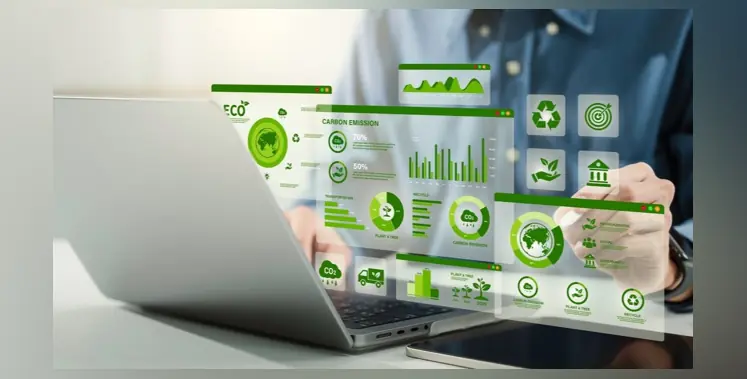
Navigating Nigeria's decarbonisation challenge (Image source: Schneider Electric)
Industries today continue to be under pressure to reduce their carbon footprint and align with global climate commitments, writes Belema Koleoso, software leader, West Africa at Schneider Electric
However, as the adage goes, easier said than done, with many countries including Nigeria that still have to overcome numerous challenges to reduce emissions whilst running competitive, sustainable operations.
As it stands, Nigeria’s Nationally Determined Contribution (NDC), developed in accordance with the Climate Change Act of 2021 and updated in October 2025, pledges to achieve net zero emissions by 2060.
However, without the ability to effectively measure emissions and energy use at a granular level, many manufacturers will continue struggle to build meaningful decarbonisation strategies. And the result; climate ambitions that remain aspirational as opposed to actionable.
Measurement is critical
As mentioned, for many manufacturers, the journey toward sustainability must begin with a simple but critical step: measurement.
A significant number of industrial facilities operate machinery that has been running reliably for decades, but with limited visibility into how efficiently those machines perform. While operators know that production lines are functioning, they often lack insight into the energy intensity, operational efficiency, and emissions impact of the equipment.
Without this visibility, companies are unable to establish a baseline for key performance indicators (KPIs) related to energy use and carbon emissions. And without that baseline, it becomes extremely difficult to create a credible decarbonisation roadmap.
Measurement should therefore become the important, first step any sustainability strategy. By understanding exactly how energy is consumed and how emissions are generated across operations, companies can begin to identify where improvements are possible and where investments will deliver the greatest impact.
Establishing visibility and efficiency
The first step toward improved emissions management is typically a comprehensive operational audit. At Schneider Electric, our process involves assessing the existing infrastructure within a plant and identifies gaps in monitoring and digital capabilities.
In many cases, we find facilities operate with a mix of technologies, some modern, others outdated which can be entirely manual processes. The audit helps determine where new monitoring systems, sensors, and digital tools should be introduced.
At the physical layer, this typically often involves deploying connected devices such as:
Temperature sensors
Flow meters
Level sensors
Transmitters
Energy monitoring devices
These sensors, which can be retrofitted, then capture real-time operational data and feed it into control systems where it can be aggregated and analysed.
Once this data is available, automation and analytics can then be introduced to optimise processes. This will allow manufacturers to align energy consumption more closely with production output, ensuring that systems use only the energy required to deliver the desired results.
The next step, optimisation
Once visibility and efficiency are established, the next step is optimisation. Here, we recommend using digital tools and advanced analytics platforms which analyse operational data across multiple processes and identify opportunities to further reduce energy consumption and emissions.
These systems can also support decision-making by recommending specific actions to improve performance.
For example, energy and sustainability management platforms can track emissions data across an organisation and align it with decarbonisation targets. These systems act as digital co-pilots, analysing patterns and performance indicators, which align with sustainability initiatives.
Sustainability management enable companies to answer key questions like:
Where are the largest sources of carbon attribution?
Which processes consume the most energy?
What operational changes could reduce carbon intensity without compromising output?
Decarbonisation is not just a technology challenge
Successful decarbonisation efforts require both organisational and governance alignment. Decarbonisation strategies will therefore typically align three elements:
Technology – digital monitoring, automation, and analytics
People – operational teams trained to use data to improve performance
Governance – policies and frameworks that support carbon accountability
When these elements work together, companies gain a complete view of their operations – from production output and energy consumption to workforce processes and sustainability policies.
Lessons from the energy sector
In Nigeria, progress toward decarbonisation has been more visible in sectors such as oil and gas. Many companies in this industry have already adopted digital monitoring and emissions tracking technologies, partly due to international regulatory expectations and partnerships with global organisations.
Through technology partnerships, many operators have been able to retrofit existing infrastructure with digital monitoring systems that extract new insights from long-standing equipment.
Ultimately, by implementing monitoring technologies, establishing clear governance frameworks, and leveraging digital tools to optimise operations, manufacturers can transform their decarbonisation efforts from a reporting exercise into a strategic advantage.

RUSAL to invest in Ghana's mining sector (Image source: Adobe Stock)
Ghana’s mining industry is set for a major bauxite boost after RUSAL, one of the world’s largest aluminium producers, agreed to develop operations in the West African country
The Russian minerals giant has teamed up with the Ghana Integrated Aluminium Development Corporation (GIADEC) to develop bauxite mining operations with annual output of up to 5 million tonnes.
There are also plans to build an alumina refinery with an annual capacity of 1.2 million tonnes.“Our agreement with GIADEC marks an important step in implementing RUSAL’s strategy to strengthen its own raw material base,” said Evgeniy Nikitin, RUSAL’s general director, after the agreement was signed in Moscow during the Russia–Africa Forum.
“Ghana has some of the largest undeveloped bauxite reserves in West Africa, and we see an opportunity to establish an integrated production chain here – from mining 5 million tonnes of ore per year to producing 1.2 million tonnes of alumina.”
The mining project involves the construction and operation of a bauxite mine at the Nyinahin deposit in the Ashanti Region of southwestern Ghana.
Estimated mineral resources in the area of the deposit earmarked for development exceed 100 million tonnes of bauxite.
The second phase of the project envisages the construction and operation of an alumina refinery with an annual capacity of 1.2 million tonnes, using bauxite from the Nyinahin deposit.
The refinery will utilise natural gas, RUSAL reported.
Two joint ventures, Nyinahini Bauxite and Ghana Alumina Company, are to be established to coordinate the project, with RUSAL taking a majority stake in each.
RUSAL added that the joint ventures will be granted rights to explore for, mine and process bauxite in Ghana as part of the development of Ghana’s Integrated Aluminium Industry.
“RUSAL has been operating in Africa for more than 20 years, and this experience will enable us to implement the Ghanaian projects efficiently, from design through to reaching full production capacity,” added Nikitin.
The projects also envisage broad participation on the Ghanaian side.In addition to its equity stakes in the joint ventures, this will include job creation during construction and operations, the involvement of local contractors and suppliers, and the development of transport infrastructure in Ghana, to boost the local economy.
Reindorf Twumasi Ankrah, CEO of GIADEC, said the agreements fully align with its goal of establishing an integrated aluminium industry in Ghana that can process bauxite domestically.
“In RUSAL, a company with extensive technological expertise and many years of successful experience in Africa, we have found a partner capable of delivering on these objectives. The Nyinahin projects will bring investment, thousands of jobs, improvements to rail and port infrastructure, and new opportunities for Ghanaian businesses.”

Liebherr powers Zimbabwe's next platinum mining milestone. (Image source: Liebherr)
The arrival of a 300-tonne Liebherr R 9350 excavator at Zimbabwe's Karo Platinum Project in February 2026 marked a significant milestone in the development of one of the country's major greenfield mining operations.
Standing approximately 8.5 metres tall, the mining excavator represents more than an addition to the site's equipment fleet; it is part of the heavy-duty machinery being deployed to prepare the mine for its future production phase.
The machine was delivered as part of the fleet operated by EPSA Group, an international earthmoving services company awarded the contract for the project. From the beginning of site development, the R 9350 has been involved in large-scale material movement, supporting the preparation of the mine's infrastructure and operational areas.
The deployment comes as EPSA Group prepares for the project's transition towards production, with the first ore expected to be processed in the second half of 2027.
‘EPSA is preparing for the first ore at Karo to be milled in the second half of 2027, and we’re proud that Liebherr machines will play a role in reaching this critical point,’ says Claus Dieter Homberg, regional sales manager, Liebherr-Mining Equipment Colmar SAS.
A major mining project demands high-capacity equipment
The Karo Platinum Project is situated along the eastern and western sections of Zimbabwe's Great Dyke, one of the world's largest igneous complexes and an important geological formation containing the second-largest deposit of platinum-group minerals.
The development is planned as an open-pit mining operation for its first decade, after which activities are expected to transition underground. This phased approach requires a fleet capable of handling substantial material volumes while operating under demanding mining conditions.
For EPSA Group, equipment selection was therefore an important consideration in establishing the project's operational capabilities. The Liebherr R 9350 was selected for its combination of performance, reliability and suitability for intensive mining applications.
Its deployment during the mine's early development phase is expected to support the material handling requirements associated with establishing the operation and preparing for future production.
First mining-class Liebherr excavator delivered in Zimbabwe
The arrival of the R 9350 also represents a milestone for Liebherr, marking the first delivery of a mining-class excavator from the company into Zimbabwe.
Getting the machine operational required coordination between several teams across Liebherr's international and regional network.
The excavator was manufactured at Liebherr's production facility in Colmar, France, which worked alongside EPSA Group to coordinate its delivery to Zimbabwe. Following its arrival at the mine, a product support representative from Colmar supervised the assembly process.
The assembly team primarily comprised personnel from Liebherr-Africa (Pty) Ltd, supported by specialists from Zimbabwean dealer R&S DieselPro Services. The Colmar representative subsequently remained at the project for seven additional weeks, providing technical assistance and practical training to personnel responsible for operating and maintaining the equipment.
This collaborative approach helped establish the technical and operational support required to commission the excavator and prepare the local teams for its continued operation.
Regional service network strengthens equipment support
EPSA Group's relationship with Liebherr spans approximately 15 years, with the two companies having worked together at mining sites across several international markets.
The partnership has developed through experience with Liebherr equipment and its ability to provide machinery and technical assistance across different applications. This established relationship was an important factor in selecting the R 9350 for the Karo operation.
Although Liebherr-Africa is the company's nearest sales and service organisation to the project, its facilities are located more than 800 kilometres away. To ensure timely assistance, R&S DieselPro Services will provide the primary on-site support, covering routine maintenance, technical services and spare parts availability.
The Zimbabwean dealer has been working with Liebherr-Africa since 2017, initially supporting its earthmoving equipment range before extending the relationship to mining machinery in 2025.
Its established familiarity with Liebherr products provides a local support foundation, while Liebherr-Africa remains available to assist with more specialised technical requirements when necessary.
‘Being associated with the commissioning and support of this flagship machine is a testament to our commitment to delivering world-class equipment, technical expertise and after-sales support to Zimbabwe's growing mining sector,’ commented Kevin Wilson, general manager, technical, R&S DieselPro Services.
The partnership between Liebherr-Africa and R&S DieselPro Services is expected to play an important role in maintaining equipment availability and supporting EPSA Group as mining activities at Karo expand.
Additional excavators to support the production ramp-up
The initial R 9350 delivery was followed by a second unit in July 2026, with a third excavator scheduled to arrive before the end of the year.
The additional machines will contribute to the project's ongoing development requirements as it moves closer to its planned first ore processing milestone in 2027.
As the Karo Platinum Project progresses from initial site preparation towards full operational readiness, the expanding Liebherr fleet is expected to support the material movement requirements of the open-pit operation.
The deployment also demonstrates the importance of combining high-capacity mining equipment with reliable technical assistance and an established regional service network, particularly for large-scale greenfield developments.
‘Behind every Liebherr machine is a team committed to keeping it performing at its best,’ says Homberg. ‘We’re looking forward to supporting EPSA Group as operations at Karo continue to grow and evolve over the coming years."
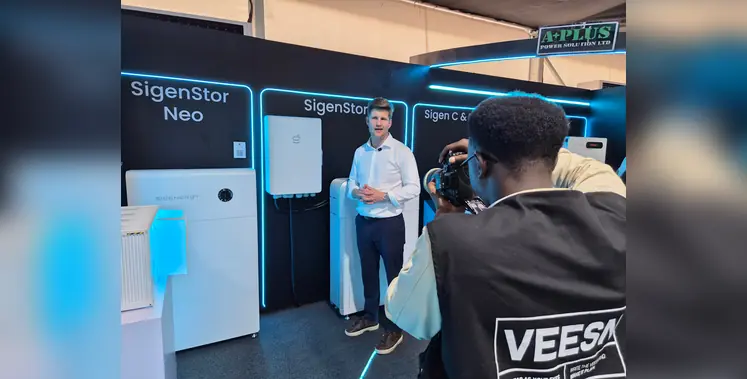
Sigenergy introduces an AI-powered residential storage system. (Image source: Sigenergy)
Sigenergy has unveiled its next-generation residential energy storage solution, SigenStor Neo, to the West African market at Nigeria Energy 2026, took place from 27–29 October at the Landmark Centre in Lagos
The launch marks an important step in the company's regional expansion, bringing an integrated residential energy platform to a market where households increasingly require greater control over electricity generation, storage and backup power.
Designed to combine several essential energy functions within a single system, SigenStor Neo brings together battery storage, power conversion, backup capabilities and intelligent energy management. Its architecture is intended to help homeowners coordinate different energy sources while simplifying the way residential power systems are configured and operated.
In Nigeria, where households often combine grid electricity with solar installations and generators, the ability to manage multiple power sources is particularly relevant. SigenStor Neo addresses this requirement through an integrated platform designed to connect and coordinate different energy resources within one residential ecosystem.
Jade Martyn, sales director - Africa at Sigenergy, said, "West Africa is an important market for Sigenergy, with customers looking for reliable and flexible ways to manage increasingly complex home energy needs. SigenStor Neo is designed to bring different energy resources together within one intelligent ecosystem, giving homeowners greater flexibility in how they generate, store and manage their energy. We are excited to introduce the next generation of SigenStor to West Africa at Nigeria Energy 2026,"
Smart connectivity for multiple energy sources
A defining feature of SigenStor Neo is its Smart Port and Backup Port configuration, which gives the system the ability to accommodate a wider range of energy resources.
The Smart Port supports connections with compatible third-party inverters, external generators and electric vehicle chargers. This enables homeowners to bring different technologies into a coordinated energy setup rather than managing each resource independently.
For Nigerian households that rely on generators during periods of grid interruption, this connectivity offers an additional layer of flexibility. External generators can be integrated into the wider system, while households with existing solar installations can connect compatible third-party inverters when upgrading their energy infrastructure.
The architecture also provides scope for future system modifications as household consumption patterns and energy requirements change. By supporting additional devices and energy sources, SigenStor Neo offers a more adaptable approach to residential energy management.
Advanced backup capabilities for greater power continuity
Power reliability remains a key consideration for residential energy consumers. SigenStor Neo incorporates several features designed to maintain electricity supply when interruptions occur.
The system offers 0 ms load-side disruption and peak power output of up to 200%, supporting the continued operation of connected household appliances during grid outages.
Its dedicated Backup Port provides an additional connection for supplying household loads, while the Smart Port allows compatible external backup resources, including generators, to become part of the overall energy configuration.
By combining stored electricity with grid connectivity and additional backup options, the system gives homeowners more flexibility in determining how their power supply is maintained under different operating conditions.
This integrated configuration positions SigenStor Neo as a comprehensive residential energy management solution rather than simply a battery storage installation.
Modular storage designed for future expansion
Flexibility also extends to the system's storage configuration. SigenStor Neo supports up to six vertically stacked battery modules, enabling customers to select an initial capacity based on their present consumption and expand it as requirements increase.
This modular arrangement allows households to avoid committing to their maximum anticipated storage capacity at the outset. Instead, additional battery capacity can be introduced as electricity consumption grows or new energy requirements emerge.
Another important feature is the built-in pack optimiser, which enables compatible existing and newly added batteries to operate together within the same system.
The platform also incorporates an eight-layer protection architecture to support operational safety and system reliability.
For households planning to add more appliances, increase solar generation or eventually incorporate electric vehicle charging, the expandable design provides greater flexibility over the longer term.
Integrated engineering simplifies installation
Beyond its residential applications, SigenStor Neo has been developed with installation efficiency in mind.
The platform combines the inverter, battery, power conversion system (PCS), energy management system (EMS) and gateway within a unified design. Integrating these functions reduces the need for multiple standalone components and creates a more streamlined installation arrangement.
Sigenergy has also incorporated several practical design features to support installers. These include lightweight battery modules equipped with lifting handles, a single side cover for wiring access, and an optimised terminal layout.
Together, these elements are intended to simplify equipment handling, reduce installation complexity and minimise on-site labour requirements.
For installation partners, the integrated architecture offers a more straightforward approach to deploying residential energy storage systems, while homeowners benefit from a compact and consolidated setup.
AI integration brings intelligent energy management
Intelligent energy management is another central element of SigenStor Neo, which forms part of Sigenergy's broader AI in All strategy.
The system incorporates SigenAgent, described by the company as the energy industry's first all-domain AI agent, accessible through mySigen App 4.0.
The platform is designed to make residential energy management more intuitive by allowing users to communicate their broader energy objectives rather than manually adjusting individual operating settings.
For example, homeowners can establish priorities such as lowering electricity expenditure or maintaining sufficient stored energy for backup requirements. SigenAgent can then analyse operating conditions and coordinate connected hardware to support those objectives.
This approach is particularly relevant to households using a combination of grid electricity, solar generation, batteries and generators. By bringing these resources together through intelligent control, the platform aims to simplify energy management and provide users with greater visibility into their household electricity consumption.
The combination of connected hardware, automated energy coordination and AI-driven management further expands the functionality of SigenStor Neo beyond conventional residential battery storage.
Sigenergy expands its presence across west africa
The introduction of SigenStor Neo at Nigeria Energy 2026 represents another milestone in Sigenergy's regional development strategy.
The company is targeting opportunities across several West African markets, including Nigeria, Ghana, Côte d'Ivoire, Sierra Leone, Liberia and Togo, where interest in distributed solar generation and energy storage continues to create opportunities for residential energy technologies.
Nigeria serves as the launch platform for the new system, providing an opportunity to introduce its integrated capabilities to customers, distributors and industry stakeholders across the region.
By combining solar integration, battery storage, generator connectivity, backup power and AI-based energy management, Sigenergy is positioning SigenStor Neo as a flexible solution for households seeking to improve their control over electricity supply.


-
-

In the final webinar of its African Review-hosted 2023 campaign, Convergent Group explored its modern, eco-friendly concrete solutions for African projects
Such solutions – delivered to cut maintenance costs by eliminating hazardous silicate products – were showcased by company experts in the form of Jean-Claude Biard, SEO of Convergent Group SA; Mputu Schmidt, former CEO of Convergent Group SA and founder of Bondeko MB (exclusive distributor of Convergent Group in Africa); Carlos Garcia, technical and sales for ADI Group (Spanish distributor for Convergent Group); and Amritpal Singh Sura, external consultant for flooring treatments, former distributor of Convergent products in the Middle East.
“A number of projects we were doing in the Middle East required protection,” remarked Sura. “Longevity of protection requires a system which basically impregnates and becomes a densified surface as opposed to something which is topical and lifts off due to moisture migration. I found that being exposed to Convergent, it was important to stay focused on those systems in the Middle East. Jean-Claude, Mputu and I met several times in Dubai and there was emphasis on providing systems which were affordable and still ending up having a robust, lasting longevity of product. So you are not spending money all the time in order to maintain the finishes which you have already paid for.”
Over the course of the session, the participants guided the audience through the potential of cutting-edge lithium silicate technology for enhancing the protection of concrete surfaces, maximising cost-effectiveness and meeting sustainability targets.
-

In a comprehensive webinar hosted by African Review, a panel of professionals associated with Convergent Group explored new generation lithium silicate technology and why it is emerging as the optimum solution for concrete floor protection.
Robert Daniels, editor of African Review, was joined by Jean-Claude Biard, CEO of Convergent Group; Mputu Schmidt, former CEO of Convergent and founder of Bondeko MB, an exclusive distributor of Convergent; Hicham Sofyani, president of Texol; Carlos Garcia, technical and sales for ADI Group; and Marc Puig, commercial manager of Comace Import.
Each providing a unique angle, the panellists combined to provide a masterclass around concrete treatments and the increasing challenges around them, explaining to attendees how to choose the right formula for their requirements and touching on issues such as why lithium densifiers are better than sodium and potassium densifiers.
Throughout the session, those watching were treated to informative case studies showcasing how Convergent eco-friendly products are increasing abrasion resistance, raising ease of maintenance, and ensuring the highest quality gloss retention.
By the end of the webinar, a majority of attendees (many of which had not had much experience with Convergent) expressed their interest in using the company’s new generation lithium silicate technology with the rest indicating their desire to learn more about Convergent and its products. Watch the webinar, in full, to discover why viewers were convinced and learn more about advanced floor care solutions for your operations.
-

Presenting on an African Review-hosted webinar, Martin Provencher, global industry principal for mining, metals and materials at AVEVA, explored the digital transformation of mining operations and its impact on sustainability.
“Sustainability is becoming a key aspect for mining operations,” remarked Provencher. “If we look at the latest EY research on the top ten business risks and opportunities for mining and metals globally in 2023, ESG remains at the top. Of course, most companies have environmental goals or are expected to reach a net zero emission by 2050, which is a pretty aggressive target. Many of them are targeting 30% reduction by 2030; seven years from now. So there is a lot of action that needs to take place quickly to get there. It is possible to get there, but we need to make sure we are doing this correctly.”
Fast becoming a huge part of ESG initiatives is fleet electrification where particular progress is being made in underground mines. While some countries are certainly more advanced than others here, Provencher noted that 40% of total emissions from the mining industry come from diesel trucks, making EVs a very attractive low-hanging fruit for companies to pursue.
There are, however, a number of challenges associated with bringing in electric vehicles which remains a barrier for introduction. One of the predominant reasons, is the limited range of EVs against diesel counterparts. To mitigate this, Provencher continued, data management is key and ensuring a strong grasp of real-time information coming in will show operators when machinery needs to be charged, allowing them to plan effectively for maximum efficiency on site.
Indeed, this is but a small advantage that digitalisation can bring to the mining industry as it grapples to meet ESG goals while achieving production targets. By getting a better grip of their data and using it to empower tools such as artificial intelligence, advanced analytics and machine learning, companies can achieve tangible benefits such as reduce downtime, enhance worker safety, cut operating costs and, of course, ensure compliance with environmental regulations and targets.
Through the course of the webinar, Provencher outlined this in more detail and explored AVEVA’s suite of cutting-edge software solutions, specifically designed to help mining companies make progress on their digitalisation journey and empower their operations.
Watch the full webinar, completed with detailed case studies and an insightful Q&A session.
-

-

-
Convergent, in association with African Review, has held a detailed webinar exploring the usage and effectiveness of lithium silicates and densifiers over traditional methods of concrete surface management which often struggle to meet the increasing challenges posed by concrete surface management.
Convergent experts including Mputu Schmidt, CEO of Convergent; Carlos Garcia, product manager end-user solutions, construction chemicals, Spain and Portugal for the RD Group; Matteo Mozzarelli, CEO of concrete Solutions Italia; and Jean-Claude Biard, global senior executive for the Convergent Group, presented across the session.
Together, they delved into the latest cost-effective application methods for long lasting finishing of concrete that can help reduce maintenance costs and avoid unexpected repair action. In addition, they examined the advancements in technologies that can sustain increased abrasion resistant stains and ensure gloss retention to the highest quality.
As part of the webinar, the representatives explored case studies including a case in DRC where a medical centre had been constructed with a low-quality concrete floor. The customer was considering completely replacing the floor but instead, Convergent put forward a special treatment with its 244+ Pentra-Sil lithium hardener, densifier and sealer. With this solution, Convergent can increase the hardness of a surface by up to 40% and therefore saved the customer significant recuperation costs over a complete replacement. Convergent were happy to report that the solution was perfect for the facility and the customer was pleased to avoid the extra construction work that would have been required for a complete replacement.
Watch the full webinar, including more information about Convergent’s innovative solutions.
Solar boost for Benin (Image source: Adobe Stock)
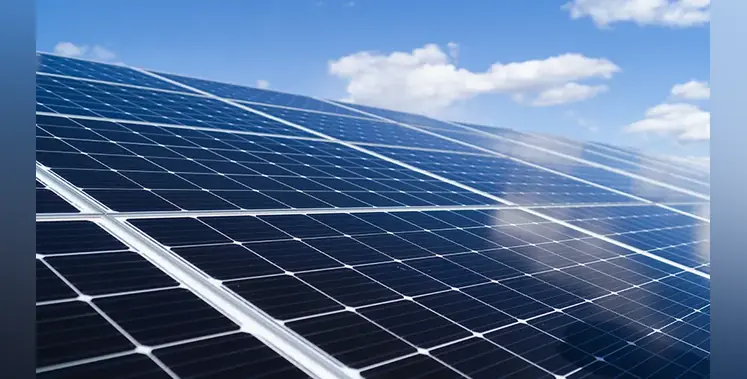
Benin is investing €45mn in four solar power plants, backed by international financiers, to increase domestic electricity production, reduce energy imports, improve energy security and expand clean energy access
It follows the signing of €30mn in financing agreements for the IPP50 solar project from a group of leading financiers that include AXIAN, a pan-African group, Caisse des Dépôts et Consignations du Bénin, International Finance Corporation (IFC), a member of the World Bank Group, and Proparco, the private financing arm of Agence Française de Développement (AFD).
The agreements aim to increase domestic power generation, strengthen energy security and expand access to renewable energy across Benin.
The country's first independent power producer (IPP) solar project is expected to supply clean electricity to 383,000 people, reduce reliance on imported power and avoid around 62,000 tonnes of CO2 emissions annually.
Benjamin Memmi, CEO of AXIAN Group's energy division, said: IPP50's financial close marks a milestone for AXIAN and the development of Benin's energy sector.
“This project, comprising four solar power plants with a combined capacity of 63 MW, reflects the ambition of the Beninese authorities to accelerate the country's energy transition, particularly through strong partnerships with the private sector,” Memmi said.
“With IPP50, we are once again demonstrating our ability to bring together international partners and financing to turn a vision into tangible infrastructure that serves communities and supports economic development.”
Memmi also cited AXIAN’s partnership with Sika Capital, an investment vehicle jointly owned by Caisse des Dépôts et Consignations du Bénin and Egnon Consulting, which “reflects our conviction that Africa's energy transition depends on strong local roots and long-term commitments.”
Landmark solar financing
A first for solar power financing in BeninThe IPP50 project, with a total project cost of €45mn, represents a significant step towards opening up Benin's power generation sector to private investment.
The project is also part of a public-private partnership structured around concession agreements granted by the Benin government, which is supporting its development and helping to establish a secure contractual framework.
It also contributes to Benin's National Energy Compact, which aims to provide approximately 928,000 additional households with access to electricity by 2030, raise the national electrification rate to at least 70%, and increase the share of renewables to 30% of the power generation mix.
The €30mn financing package is provided jointly by Proparco and IFC, which is mobilising resources from the Clean Technology Fund (CTF), an international fund dedicated to financing clean technologies in developing countries.
It will support the construction and operation of the four solar photovoltaic power plants with a combined capacity of 62 MWp in Natitingou, Djougou, Parakou and Bohicon.
Once operational, the plants are expected to generate approximately 110 GWh of renewable electricity annually, equivalent to an increase of around 17% in domestic power generation over the 2028–2035 period.
Nathalie Kouassi Akon, World Bank Group regional director, said financing the IPP50 project demonstrates the role of the private sector in accelerating Benin's energy transition.
“By supporting construction of the solar power plants alongside Proparco, IFC is helping mobilise long-term capital to expand the supply of clean electricity, strengthen the country's energy security and pave the way for further private investment in renewable energy.”
The new investment is also seen to be helping to de-risk Benin's first private-sector, enabling private investors to commit and construction to begin.
“Alongside the Beninese authorities, AXIAN Group, Sika Capital, French contractor Sagemcom and IFC, this transaction reflects our commitment to Benin's energy sovereignty, in full complementarity with the work of AFD Group in the country,” said Sadio Dicko, Proparco's regional director for West Africa.
Electricity generated by the plants will be sold to Société béninoise de production d'électricité (SBPE) under long-term power purchase agreements (PPAs).With 20-year concessions and commercial operations scheduled to begin in the first quarter of 2028, IPP50 is expected to make a lasting contribution to Benin's electricity supply.
Incorporating distributed energy resources into Africa's grid (Image source: Adobe Stock)
Navigating Nigeria's decarbonisation challenge (Image source: Schneider Electric)

Aerial view of Conakry, Guinea (Image source: Adobe Stock)
A number of key infrastructure projects in Africa are set to advance after the UK government’s export credit agency backed funding worth £330mn for contracts secured by various British firms
The export contracts will help deliver nine major infrastructure projects across Guinea and Benin and will see UK companies supplying goods and services spanning education, clean water, electricity transmission and government infrastructure.
The deals are being supported by £1.1bn in financing and guarantees from UK Export Finance (UKEF) and were unveiled at the fifth UK-West and Central Francophone Africa Trade and Investment Forum (WCAF) in Conakry, Guinea.
The forum brought together British businesses and potential partners from across the region.
UKEF announced that it is also increasing its exposure capacity across the region by £1.7bn, giving it greater capacity to support future projects involving UK firms.
Key projects covered include:
• £91 million to back the Guinea Regional Water Project, a multi-region programme expanding access to clean, potable water through new treatment and distribution infrastructure, delivered by UK-headquartered Aqua Africa, which has previously secured UKEF-backed financing for water infrastructure in the region.
• £129 million towards the La Cotiere Conakry Transmission project in Guinea, part of a wider electricity network programme to improve power distribution around the country’s coastal region, with the contract secured by Elecnor and expected to create UK supply-chain opportunities in transmission equipment, grid technology and engineering services.
• £82 million to help fund a new government administrative complex in Benin, consolidating public services within a modern urban development, with the contract awarded to ACC UK Group Ltd and opportunities for UK firms to contribute design, engineering, security systems and specialist building services.
• £75 million to support a large-scale education infrastructure programme delivering new primary and secondary schools across four regions, improving access to education for thousands of children through modern classrooms, sanitation and related facilities, with the contract won by Planet One.
“British businesses have won a huge number of contracts to support key infrastructure projects across the region in recent years, driving job creation in the UK while helping our partners in francophone Africa build the infrastructure they need,” said UKEF’s CEO Tim Reid.
“This is part of the reason we hold the WCAF: we’ve seen many deals signed over the years, and it highlights how UKEF can make a real difference around the world while driving growth in every postcode of the UK.”

SANRAL awards R1.43bn Gauteng road resurfacing contracts
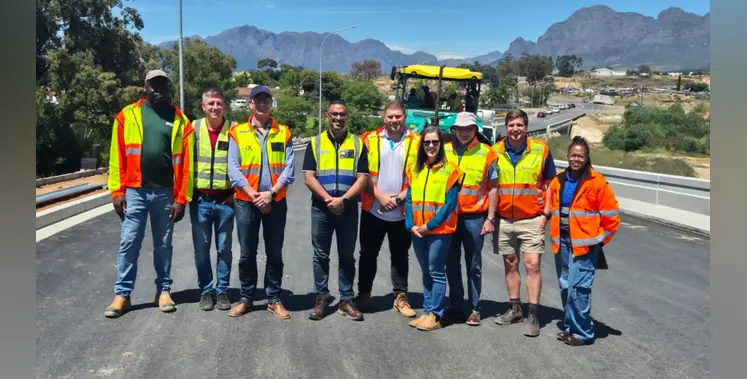
Western Cape advances a R1.165 billion road upgrade to improve Franschhoek Pass safety. (Image source: Western Cape Government)
Liebherr powers Zimbabwe's next platinum mining milestone. (Image source: Liebherr)
The arrival of a 300-tonne Liebherr R 9350 excavator at Zimbabwe's Karo Platinum Project in February 2026 marked a significant milestone in the development of one of the country's major greenfield mining operations.
Standing approximately 8.5 metres tall, the mining excavator represents more than an addition to the site's equipment fleet; it is part of the heavy-duty machinery being deployed to prepare the mine for its future production phase.
The machine was delivered as part of the fleet operated by EPSA Group, an international earthmoving services company awarded the contract for the project. From the beginning of site development, the R 9350 has been involved in large-scale material movement, supporting the preparation of the mine's infrastructure and operational areas.
The deployment comes as EPSA Group prepares for the project's transition towards production, with the first ore expected to be processed in the second half of 2027.
‘EPSA is preparing for the first ore at Karo to be milled in the second half of 2027, and we’re proud that Liebherr machines will play a role in reaching this critical point,’ says Claus Dieter Homberg, regional sales manager, Liebherr-Mining Equipment Colmar SAS.
A major mining project demands high-capacity equipment
The Karo Platinum Project is situated along the eastern and western sections of Zimbabwe's Great Dyke, one of the world's largest igneous complexes and an important geological formation containing the second-largest deposit of platinum-group minerals.
The development is planned as an open-pit mining operation for its first decade, after which activities are expected to transition underground. This phased approach requires a fleet capable of handling substantial material volumes while operating under demanding mining conditions.
For EPSA Group, equipment selection was therefore an important consideration in establishing the project's operational capabilities. The Liebherr R 9350 was selected for its combination of performance, reliability and suitability for intensive mining applications.
Its deployment during the mine's early development phase is expected to support the material handling requirements associated with establishing the operation and preparing for future production.
First mining-class Liebherr excavator delivered in Zimbabwe
The arrival of the R 9350 also represents a milestone for Liebherr, marking the first delivery of a mining-class excavator from the company into Zimbabwe.
Getting the machine operational required coordination between several teams across Liebherr's international and regional network.
The excavator was manufactured at Liebherr's production facility in Colmar, France, which worked alongside EPSA Group to coordinate its delivery to Zimbabwe. Following its arrival at the mine, a product support representative from Colmar supervised the assembly process.
The assembly team primarily comprised personnel from Liebherr-Africa (Pty) Ltd, supported by specialists from Zimbabwean dealer R&S DieselPro Services. The Colmar representative subsequently remained at the project for seven additional weeks, providing technical assistance and practical training to personnel responsible for operating and maintaining the equipment.
This collaborative approach helped establish the technical and operational support required to commission the excavator and prepare the local teams for its continued operation.
Regional service network strengthens equipment support
EPSA Group's relationship with Liebherr spans approximately 15 years, with the two companies having worked together at mining sites across several international markets.
The partnership has developed through experience with Liebherr equipment and its ability to provide machinery and technical assistance across different applications. This established relationship was an important factor in selecting the R 9350 for the Karo operation.
Although Liebherr-Africa is the company's nearest sales and service organisation to the project, its facilities are located more than 800 kilometres away. To ensure timely assistance, R&S DieselPro Services will provide the primary on-site support, covering routine maintenance, technical services and spare parts availability.
The Zimbabwean dealer has been working with Liebherr-Africa since 2017, initially supporting its earthmoving equipment range before extending the relationship to mining machinery in 2025.
Its established familiarity with Liebherr products provides a local support foundation, while Liebherr-Africa remains available to assist with more specialised technical requirements when necessary.
‘Being associated with the commissioning and support of this flagship machine is a testament to our commitment to delivering world-class equipment, technical expertise and after-sales support to Zimbabwe's growing mining sector,’ commented Kevin Wilson, general manager, technical, R&S DieselPro Services.
The partnership between Liebherr-Africa and R&S DieselPro Services is expected to play an important role in maintaining equipment availability and supporting EPSA Group as mining activities at Karo expand.
Additional excavators to support the production ramp-up
The initial R 9350 delivery was followed by a second unit in July 2026, with a third excavator scheduled to arrive before the end of the year.
The additional machines will contribute to the project's ongoing development requirements as it moves closer to its planned first ore processing milestone in 2027.
As the Karo Platinum Project progresses from initial site preparation towards full operational readiness, the expanding Liebherr fleet is expected to support the material movement requirements of the open-pit operation.
The deployment also demonstrates the importance of combining high-capacity mining equipment with reliable technical assistance and an established regional service network, particularly for large-scale greenfield developments.
‘Behind every Liebherr machine is a team committed to keeping it performing at its best,’ says Homberg. ‘We’re looking forward to supporting EPSA Group as operations at Karo continue to grow and evolve over the coming years."
The customer was originally supplied with standard liners but the new ESCO liner design doubled the liner life. (Image source: Weir)
RUSAL to invest in Ghana's mining sector (Image source: Adobe Stock)

Revitalising Africa's railways (Image source: Adobe Stock)
Preferred bidders for the engineering, procurement and construction (EPC) contracts on the 830-kilometre Zambia Lobito Railway Project have been named
It follows a competitive international tender process by lead sponsor and developer, Africa Finance Corporation (AFC).
The consortium comprising Webuild S.p.A., Mota-Engil and IC İçtaş Construction has been selected as the preferred bidder for the Zambian section, while the consortium comprising Mota-Engil and Odebrecht Engineering and Construction has been selected as preferred bidder for the Angolan section of the project.
Preferred bidders:
Zambian section: Webuild S.p.A., Mota-Engil and IC İçtaş Construction
Angolan section: Mota-Engil and Odebrecht Engineering and Construction
AFC announced that contract negotiations will begin in November 2026, with the aim of concluding EPC agreements within eight to twelve weeks, subject to technical, commercial and legal negotiations.
Key infrastructure project
The Zambia Lobito Railway Project is expected to unlock billions of dollars in economic value through new opportunities for trade and industrialisation along the corridor connecting Zambia to Angola's Atlantic coast, facilitating value addition to the region’s strategic minerals, including copper and cobalt, as well as agricultural products.
According to the AFC, by reducing logistics costs and improving access to global markets, the railway will strengthen regional integration and enable African economies to process their resources locally.
The project is being developed by AFC through the Trans African Rail Company FZCO (TARC), the holding company, and the project companies, Zambia Lobito Railway Limited and Zambia Lobito Railway S.A.
“Africa’s growing market needs infrastructure that connects our resources to production, our producers to consumers, and our people to opportunity,” said Samaila Zubairu, AFC’s president and CEO.
“The Zambia Lobito Railway will help build competitive battery mineral and agricultural value chains, anchoring new industrial cities and creating jobs along the corridor.”
Zubairu said the selection of the preferred EPC bidders brings the project closer to delivery.
“Working with our partners, we are building the foundations for African economies to produce more, trade more and retain more of the value they create.”
Project makes headway
The announcement follows significant progress since the signing of a memorandum of understanding in October 2023 involving the governments of Angola, Zambia, the USA and Italy, as well as the European Union and the African Development Bank.
Subsequent milestones include the completion of feasibility and technical studies, the signing of concession agreements in 2024 and intergovernmental agreements in 2025, and the completion of preliminary engineering designs.
The Lobito Corridor is a flagship project under Italy’s Mattei Plan for Africa, a government initiative to strengthen investment and economic partnerships with African countries.
It includes a €250mn financing facility from Italian development finance institution CDP, backed by Italian export credit agency SACE, to support Italian participation in infrastructure projects, including the railway.
AFC and its partners have also advanced the Environmental and Social Impact Assessments and Resettlement Action Plans, alongside preparations for the competitive EPC tender process.
Zubairu added that AFC remains committed to advancing this “transformative” infrastructure investment alongside its partners and mobilising capital to accelerate its implementation.

Hapag-Lloyd marks 20 years in South Africa. (Image source: Hapag-Lloyd)
Tata Motors and Iveco unite to create Global commercial mobility giant. (Image source: IVECO)

Africa can still thrive amid global geopolitical upheaval (Image source: Adobe Stock)
Africa has an opportunity to convert geopolitical tensions and shifting global trade patterns into a catalyst for industrialisation and long-term economic resilience, according to a new Afreximbank report
Leveraging Geopolitics for Trade and Industrialisation in Global Africa examines trade and economic developments across the continent and globally, and outlines strategies for African nations to benefit from supply chain realignments and changing geopolitical dynamics.
“Africa stands at a critical juncture,” said Dr Yemi Kale, group chief economist and managing director of research and trade intelligence at Afreximbank.
“Geopolitical tensions and economic fragmentation are reshaping global trade patterns, but they also present a historic opportunity for the continent. By strategically leveraging these shifts, Africa can build a more resilient, competitive and inclusive economic future.”
Despite a challenging global backdrop, the report highlights Africa’s strong recent economic performance.
While global economic growth slowed to 3.4% in 2025 and is projected to ease further to 3.1% in 2026, Africa’s real GDP growth accelerated from 3.4% in 2024 to 4.5% in 2025, outperforming the global average.
Africa’s merchandise trade also expanded by 6.1% to approximately US$1.5 trillion, while aggregate inflation fell significantly from 21.6% in 2024 to 13.1% in 2025.
According to Afreximbank, these gains reflect improved macroeconomic management, ongoing policy reforms and the role of development finance institutions in supporting economic stability.
However, the report warns that significant structural challenges remain.
Africa’s trade finance gap is estimated at approximately US$74bn in 2025, limiting the continent’s ability to fully capitalise on trade and industrial opportunities.
The situation is compounded by foreign exchange constraints and a continued decline in correspondent banking relationships.
The report also notes that evolving shipping routes and persistent disruptions in global logistics networks are increasing freight costs and extending delivery times, particularly for economies dependent on imported inputs and external markets.
To strengthen resilience, Afreximbank identifies accelerated implementation of the African Continental Free Trade Area (AfCFTA), expansion of the Pan-African Payment and Settlement System (PAPSS) and reforms to the global financial architecture as key priorities.
The report notes that stronger industrial ecosystems, increased intra-African trade and sustained financial support will be critical if the continent is to transform geopolitical disruption into sustainable and inclusive economic growth.
“It is imperative for the continent to act decisively to strengthen regional value chains, deepen industrial capacity, expand access to trade finance, and accelerate continental integration,” said Kale, adding that Africa “cannot afford to delay.”
Read more:
Supply chain boost for African businesses

Chinese investment in Africa is at an all-time high (Image source: Adobe Stock)

Lobito is a strategic project connecting central and west African markets to the USA. (Image source: AFC)

Prometal SA to boost Cameroon steel sector (Image source: Adobe Stock)
Cameroon is stepping up efforts to expand domestic manufacturing and reduce reliance on imported industrial goods, with steel processing playing a growing role in the country’s industrialisation drive
Rising demand from the construction, infrastructure and agricultural sectors is creating opportunities to develop more local value chains and increase the production of finished goods.
It is against this backdrop that Prometal SA is expanding its steel processing capacity, backed by €40mn in fresh financing from Afreximbank.
The funding comes from an African Export-Import Bank (Afreximbank) revolving working capital facility and will support processing and transforming semi-processed steel into a range of finished steel products, including agricultural equipment and construction materials.
Hayssam El Jammal, Prometal SA’s CEO, said it marked a new stage for the company’s growth plans.Jammal said the growth strategy combines “vertical integration across the value chain from the processing of raw materials to the production of finished goods…[to the]…horizontal expansion into new markets with the clear ambition of producing in Africa goods that are still largely imported today.”
This, in turn, would strengthen African production capacity, reduce dependence on imports and retain greater value within the continent.
African industrialisation
Jammal said the deal also reflects Afreximbank’s commitment to turning African industrial ambitions into reality “further contributing to the broader industrialisation and economic transformation of our continent.”
The facility is expected to the production of a wide range of finished steel products, including agricultural equipment and construction materials.
It will also boost Prometal SA’s capacity to meet growing demand for steel and metal products across the construction, infrastructure, industrial and agricultural sectors within Cameroon.
“By identifying and capacitating African industrial champions, like Prometal SA, the Bank is strengthening Africa’s domestic manufacturing capacity and creating domestic and regional value chains,” said Dr. George Elombi, Afreximbank’s president and chairman.
Growth plans
Prometal SA is a leading metallurgical and industrial group with a growing industrial footprint.
Over recent years, it has already implemented various investments aimed at developing local manufacturing capacity and replacing the import of products previously sourced from international markets.
The group is organized around two principal business lines: Prometal Acier and NOVIA Industries.
Prometal Acier is the group's core steel and metallurgical business and a key player in the regional steel industry with operations across seven industrial plants and an aggregate annual production capacity of approximately 360,000 metric tons of finished steel products.
NOVIA Industries, established in 2018, is the group's expansion into the agribusiness sector and has rapidly developed into one of the leading players in its market segment.
It has an estimated production capacity of 500 tons per day of edible oil and 160 tons per day of soap, positioning it as a significant producer of refined palm-oil products and related by-products.
Read more:
Maersk opens 1,500 teu container depot in Cameroon

Facility localises production of critical grid and energy technologies supporting Egypt's target of 45% renewable energy by 2028. (Image source: Siemens)

Brady i7500 automates UHF RFID encoding for industry. (Image source: Brady Corporation)
Most Read
-
Infinity Power is a joint venture between Infinity and Masdar. (Image source: Infinity Power)
-
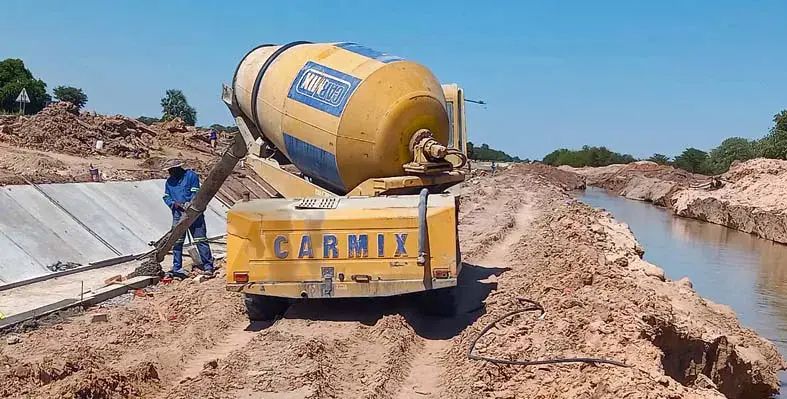
The Carmix 3.5TT is renowned for its robust performance in concrete mixing. (Image source: Carmix)
-
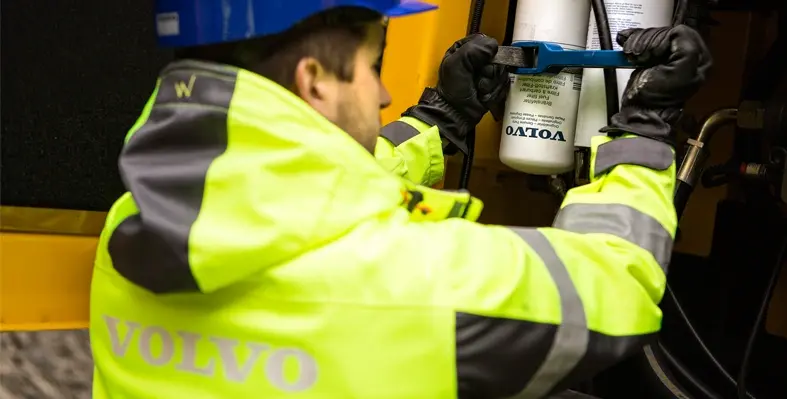
Genuine Volvo Parts are specifically developed, tested and approved to get the very best results from your Volvo machine. (Image source: Volvo CE)
-

The transaction will give TotalEnergies an interest in hydropower projects in Uganda, Rwanda and Malawi
-

The project carries an estimated total cost of US$12bn. (Image source: The Republic of Ghana Presidency)
-
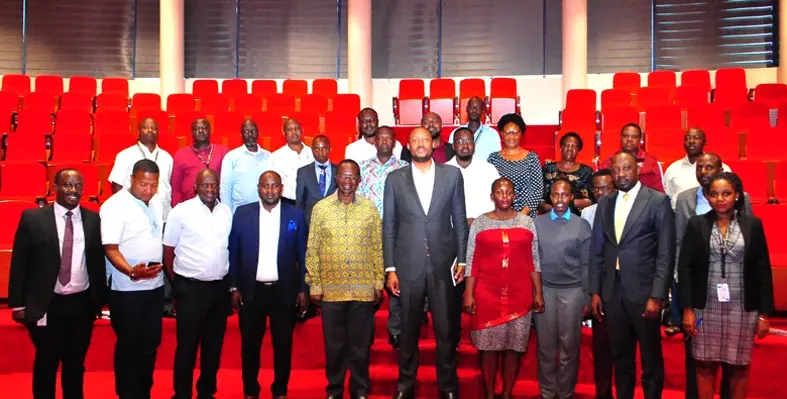
The initiative was unveiled at a meeting at the UIA head office. (Image source: UIA)
-

The Forte Secondary School fulfils an important role of educating 2,400 learners. (Image source: Bell Equipment)
-

Dangote's refinery is essential for Nigeria's transport economy
-
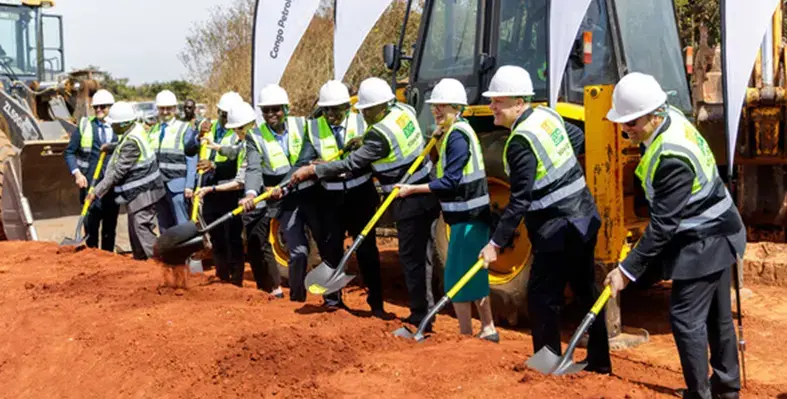
Groundbreaking begins at Kiswishi City SEZ. (Image credit: Rendeavour)
-
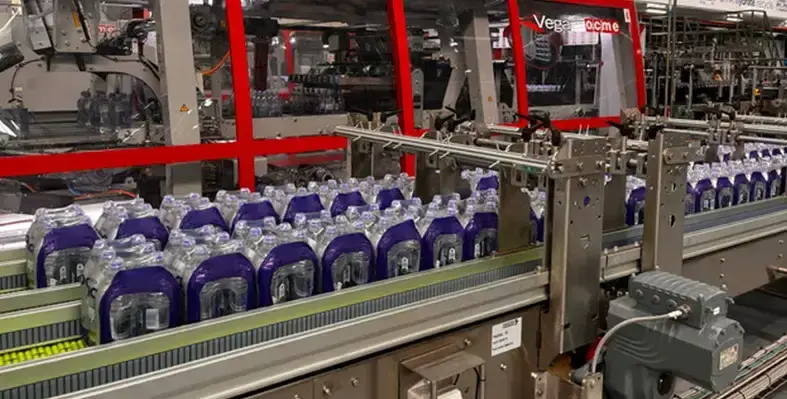
Coca-Cola invests in Midrand production
-
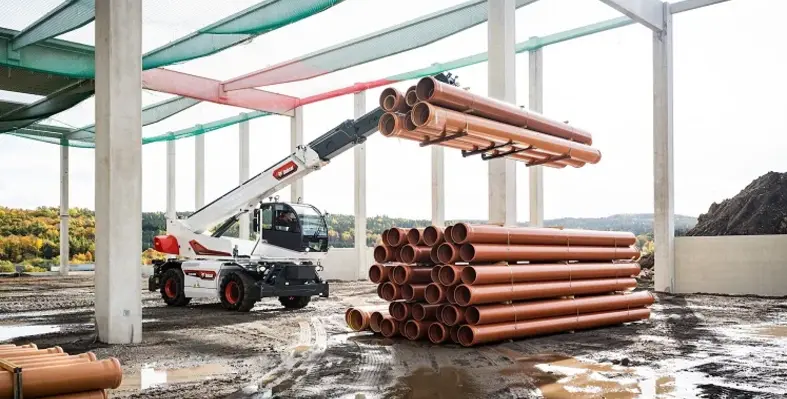
Bobcat has included additional features to enhance the visibility around the machines. (Image source: Bobcat)
-
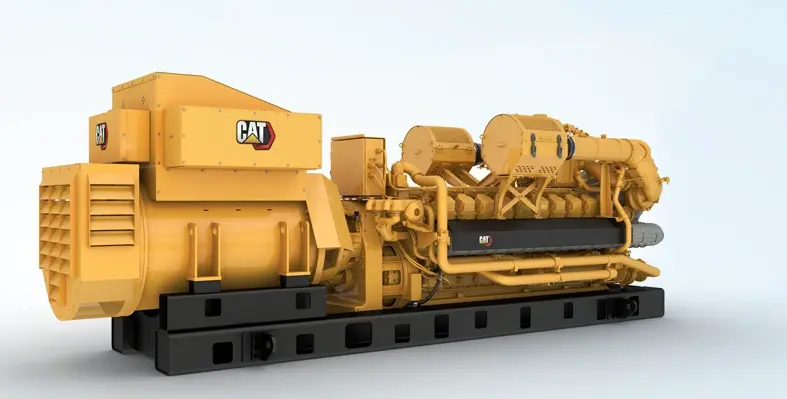
The Cat G3520 Fast Response natural-gas generator set is available for dealers around the world. (Image source: Cat)
-

Hyde Johannesburg marks a major milestone for Ennismore as the brand’s first hotel in Africa. (Image source: Ennismore)
- Details
-
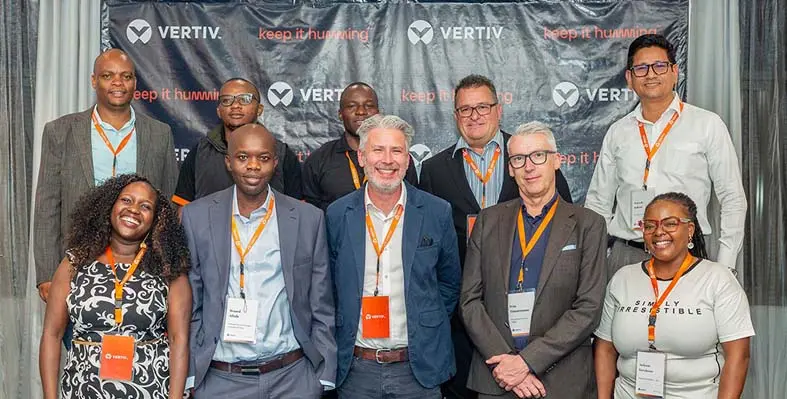
Vertiv is a global provider of critical digital infrastructure and continuity solutions. (Image source: Vertiv)
- Details
-
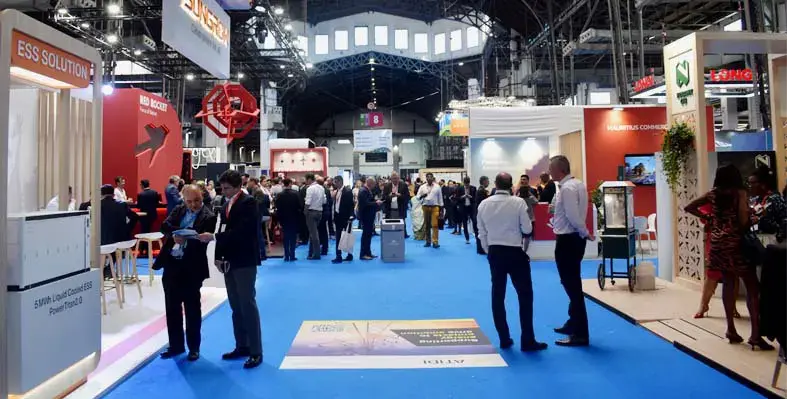
Africa Energy Forum 2024 was held in the Fira de Montjuïc in Barcelona. (Image source: ACP)
-
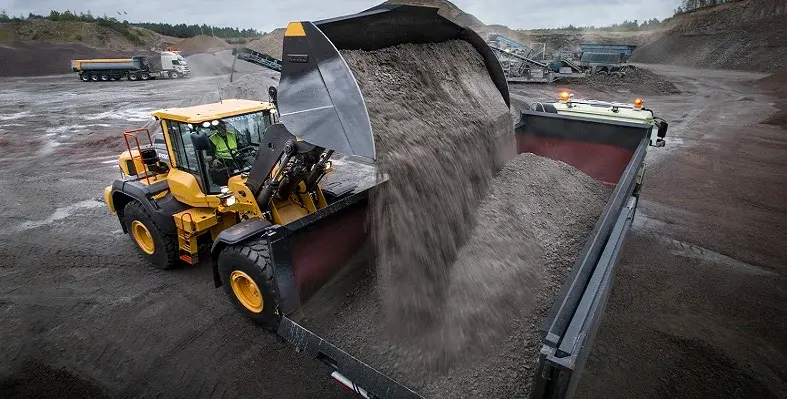
Volvo’s On-Board Weighing systems are designed for wheel loaders, excavators and articulated haulers. (Image source: Volvo CE)
-
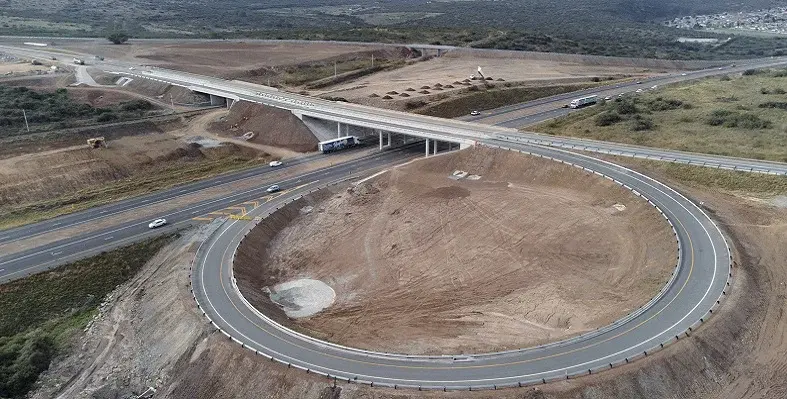
The project sought to address the high accident rate at the old Breidbach intersection and the traffic congestion. (Image source: SANRAL)
-

By localizing production, Stellantis is contributing to job creation, skill development, and technology transfer in Egypt. (Image source: Stellantis)
-
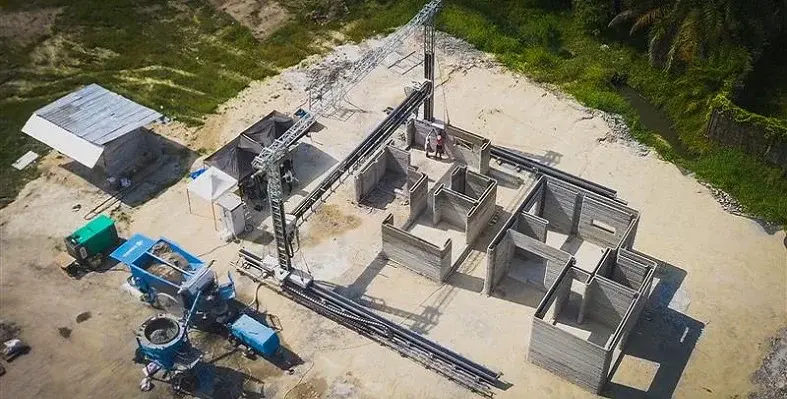
BOD3 3D Construction Printer with Material Delivery System Onsite. (Image source: COBOD)

Latest News
-
Incorporating distributed energy resources into Africa's grid (Image source: Adobe Stock)
-
SANRAL awards R1.43bn Gauteng road resurfacing contracts
-
Hapag-Lloyd marks 20 years in South Africa. (Image source: Hapag-Lloyd)
-
Tata Motors and Iveco unite to create Global commercial mobility giant. (Image source: IVECO)
-
TwinLead gives product labels a lasting digital identity
-
Navigating Nigeria's decarbonisation challenge (Image source: Schneider Electric)
-
Solar boost for Benin (Image source: Adobe Stock)
-
Revitalising Africa's railways (Image source: Adobe Stock)
-
Sigenergy introduces an AI-powered residential storage system. (Image source: Sigenergy)
-

GALAXUS R5&C5 and TUNLAND V PHEV released in Africa
-
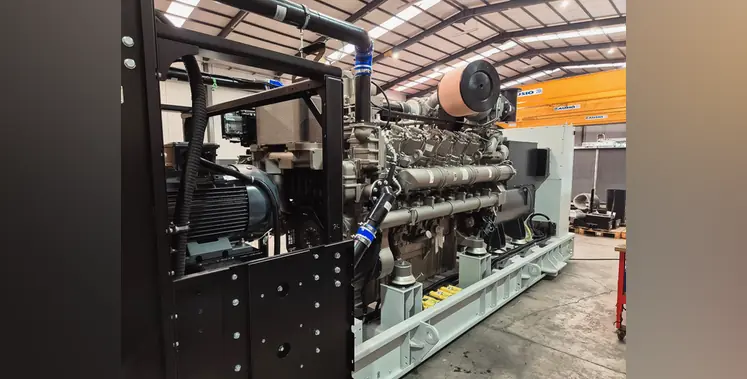
On-site power for Algerian hospitals (Image source: Himoinsa)
-

With 54 wagons and a capacity of 108 containers (Twenty-foot Equivalent Units), the service will initially operate one train per week, with potential to increase frequency and introduce a return service. (Image source: CMA CGM)
-

AI set to boost Nigerian refinery (Image source: Adobe Stock)
-
Facility localises production of critical grid and energy technologies supporting Egypt's target of 45% renewable energy by 2028. (Image source: Siemens)
-
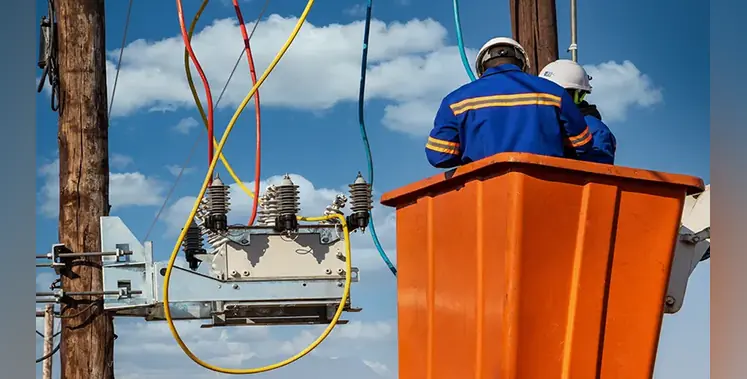
Burundi to expand electrification (Image source: Adobe Stock)
-

UD Trucks expands Southern African network with Zambia launch. (Image source: UD Trucks)
-

The 24MWp solar facility is the first solar PV plant in the West Nile region. (Image source: AMEA Power)
-
Western Cape advances a R1.165 billion road upgrade to improve Franschhoek Pass safety. (Image source: Western Cape Government)
-
Aerial view of Conakry, Guinea (Image source: Adobe Stock)
-
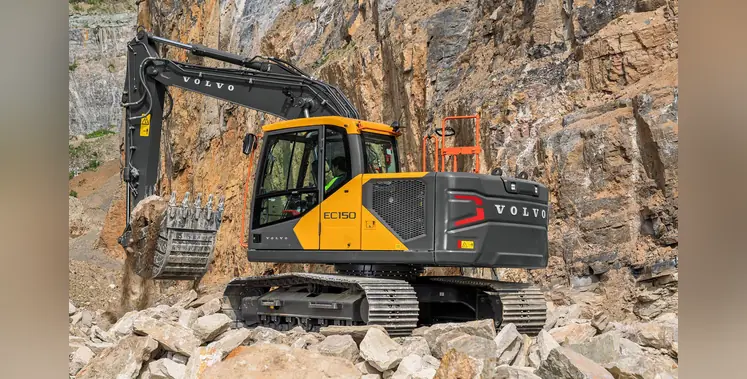
Volvo CE expands excavator range with EC130 and EC150. (Image source: Volvo CE)
More Articles
TwinLead gives product labels a lasting digital identity
AI set to boost Nigerian refinery (Image source: Adobe Stock)

GSMA targets 1bn connected Africans with new digital roadmap. (Image source: GSMA)

Ericsson celebrates 150 years of global innovation and 30 years of partnership and digital transformation in Ghana. (Image source: Ericsson)

The new service will boost connectivity for remote operations (Image source: Adobe Stock)

Ericsson launches telecom field operations learnership in South Africa. (Image source: Ericsson)

A newly certified drone pilot explains how one of the nine drones works. (Image source: African Development Plan)

Demand for data centres in Africa is rising (Image source: Adobe Stock)

At the opening of MPT’s new Midrand base (Image source: MPT)

OADC’s Parklands data centre in South Africa (Image source: Vertiv)

Bentley Systems and the Western Cape government are deploying AI-powered analytics to strengthen road safety and infrastructure resilience. (Image source: Bentley Systems)
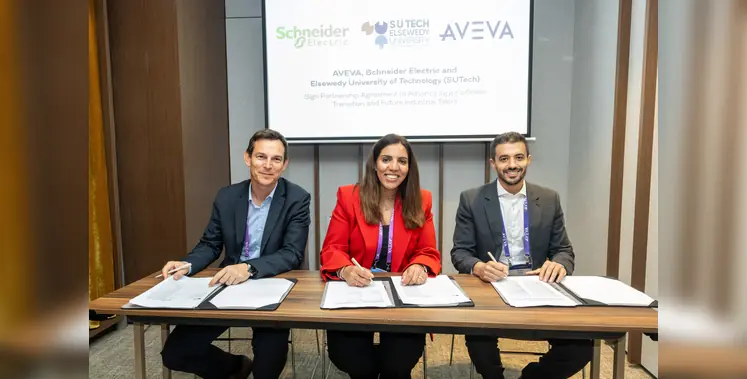
The partnership signing. (Image source: AVEVA)