





vc.web.local

twitter Facebook Linkedin acp Contact Us

Finance

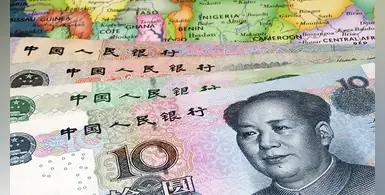
Afreximbank accession to help power South Africa’s economy (Image source: Adobe Stock)

South Africa has joined the ranks of the African Export-Import Bank (Afreximbank), bringing with it an US$8bn country programme that will target industrialisation efforts in the republic, and support projects in sectors like mining, automotives and manufacturing

It becomes the 54th state to accede to the banking group, marking the formal entry of one of Africa’s largest economies into the Bank’s membership, “heralding deeper financial sovereignty,” an Afreximbank statement read.

The bank called the accession a “historic milestone” as the two partners seek to unlock trade opportunities “within a global financial architecture that is rapidly fragmenting due to protectionist policies and shifting trade blocks.”

The US$8 billion country programme aims to enhance industrial development and regional supply chains and boost intra-African trade and investment flows, Afreximbank said.

“We have put together what we consider an important package of US$8bn for South Africa,” said Dr George Elombi, the bank’s president and chairman.

“The country programme is aligned with South Africa's national development plan 2030 and national industrial and trade priorities, and targets key strategic areas.”

He added that Afreximbank’s current pipeline of projects in South Africa, at different stages of review, already exceeds US$6bn, spanning healthcare, financial services, manufacturing, energy and the industrial and mining sectors.

Leveraging Afreximbank’s trade infrastructure and pan-African reach, South Africa can also more readily diversify export markets and further regional economic integration.

South African President Cyril Ramaphosa called it a milestone in the quest to realise the economic integration of our continent.

“South Africa’s accession to the African Export-Import Bank affirms our commitment to African industrial development and to deepening trade, investment and development across our continent,” he said.

“Once finalised, the South African-Afreximbank country programme will be operationalised with a finance package that will initially support a range of strategic projects across the trade and industrial cluster.”

He said one of those areas to receive immediate effect will be the nation’s Transformation Fund with the aim of supporting more black businesses.

“This partnership will strengthen in more ways than one South Africa’s ability to support South African exporters, industrial projects and regional value chains while advancing our continent’s progress.”

Read more:

AFC confirms Nigeria power bond issue

Africa poised for growth despite geopolitical upheaval

AFC, Eaglestone share the Lobito limelight


Revitalising Nigeria’s power industry. (Image source: AFC)

Africa Finance Corporation (AFC) confirmed its advisory role in a recent landmark bond issue that aims to resolve many of the deep-rooted problems that have long blighted Nigeria’s power sector

The Nigeria’s government recently issued N501bn (US$358mn) as the inaugural tranche of the N4 trillion (US$2.9bn) power sector bond programme under the Presidential Power Sector Financial Reforms Programme (PPSFRP).

The initiative is designed to resolve more than a decade of legacy debts that have constrained liquidity, discouraged investment and weakened confidence across the electricity value chain.

It forms an integral part of sweeping power sector reforms, marking a major step toward restoring financial stability in the electricity market.

The bond programme will be used to settle verified outstanding receivables owed to power generation companies for electricity supplied between February 2015 and March 2025.

By clearing arrears, the government aims to reset the financial foundation of the power market and strengthen the balance sheets of the generating firms.

“The successful issuance of the inaugural tranche under the power sector bond programme underscores AFC’s commitment to supporting transformative reforms in Nigeria’s power sector,” said Banji Fehintola, executive board member and head, financial services at AFC.

“By resolving long-standing liquidity challenges and restoring confidence among investors and operators, this transaction lays the foundation for sustainable growth and improved electricity supply across the country.”

AFC acted as co-financial adviser, providing support on programme design, negotiation strategy, settlement agreements with the generating companies and the structuring of the bond issuance.

The transaction mobilised significant domestic capital, with pension fund administrators accounting for roughly half of the total financing, highlighting growing local investor confidence in the reform agenda.

Officials say the programme goes beyond debt resolution and forms part of a broader package of power sector reforms that includes investments in transmission infrastructure, accelerated rollout of consumer metering and a transition toward bilateral electricity trading based on market-reflective pricing.

Together, the measures are intended to create a more transparent, commercially viable and sustainable electricity market.

When fully implemented, the programme is expected to impact about 5,398MW of generation capacity and settle payments for more than 290,000GWh of electricity supplied over the past decade, benefiting companies serving around 12 million registered customers nationwide.

The bond programme is major step toward reviving Nigeria’s electricity sector, according to Olu Verheijen, Special Advisor to the President on Energy.

“The programme represents a decisive reset of Nigeria’s electricity market, combining debt resolution with broader financial and structural reforms,” said Verheijen.

“AFC brought strong sector expertise, deep local market knowledge and a clear understanding of the market’s commercial complexities, playing a critical role in delivering a credible outcome that supports liquidity restoration, investor confidence and long-term sustainability.”

Read more:

Africa's flaring problem: less waste, more megawatts

AFC backs Mota-Engil Africa with US$108mn mining facility

New agreements advance Zambia Lobito rail project

Africa well positioned despite current global uncertainties (Image source: Adobe Stock)

The countries of sub-Saharan Africa are set to become more important as the global economy realigns in the face of wider geopolitical shifts, a new report suggests

South Africa, as one of the so-called BRICS nations, also stands to prosper.

The report, by Boston Consulting Group, suggests that global trade will show some resilience, and could grow 2.5% annually through to 2034 despite rising fragmentation.

According to the report, nations in the so-called ‘Rest of the world’ category — which includes all of sub-Saharan Africa, with the exception of South Africa — look set to gain overall on the back of strategic neutrality.

“These free agents, however, will become increasingly important in the future, both as markets and suppliers of goods and services,” the report notes.

While there are a wide range of trade scenarios, reflecting current volatility, small non-aligned countries appear to be relatively isolated from any potential negative fallout.

The BRICS+ nations — including South Africa, and countries that joined later, such as Egypt and Ethiopia — will also seek to expand relationships within the Global South.

“BRICS+ countries have been taking steps to collaborate with each other on trade, which they see as a driver of growth,” the report notes. But their approach to trade differs, with some negotiating deals with other groupings and some not.”

BRICS+ nations (excluding China) could see 3% growth with the rest of the world over the period as well as trade growth among themselves, it adds.

“Global trade isn’t retreating, it’s reorganising,” said Marc Gilbert, managing director and senior partner, Global Leader of the Center for Geopolitics, and a co-author of the report.

“Leaders who embed geopolitics in capital and strategic decision-making will be best positioned to navigate the next decade of change to secure resilience as well as growth.”

Read more:

AFC, Eaglestone share the Lobito limelight

Afreximbank backs Heirs Energies expansion

Dangote secures landmark US$4bn refinancing deal

AFC signs landmark financing to transform the Lobito Atlantic Railway corridor and unlock regional trade. (Image source: AFC)

Africa Finance Corporation (AFC) and Eaglestone, a financial services platform focused on sub-Saharan Africa, have outlined their role as co-financial advisers on the recent Lobito Atlantic Railway project in Angola

It follows the signing of a US$753mn funding package, consisting of US$553mn from the US International Development Finance Corporation (DFC) and US$200mn from the Development Bank of Southern Africa (DBSA).

Lobito Atlantic Railway S.A. (LAR) is the borrower and concessionaire in the 1,300 km brownfield railway corridor project.

“The signing of the financing agreements for the Lobito Atlantic Railway demonstrates the strength of AFC’s financial advisory expertise in structuring and advancing complex, cross-border infrastructure transactions of strategic significance,” said Samaila Zubairu, AFC’s president and CEO.

“This initiative aligns with AFC’s broader development efforts to deliver a transformational transport corridor linking Angola, the DRC, and the wider southern Africa region, reinforcing the critical role of integrated rail and port infrastructure in unlocking regional trade, industrial growth and supply-chain resilience.”

The Lobito Corridor is also of special importance for Angola, one of AFC’s member countries and shareholders, he added, “reaffirming our long-standing commitment to supporting the country’s infrastructure development and economic priorities.”

This infrastructure scheme is backed by a variety of international project sponsors including Mota-Engil, the Portuguese-based engineering and construction group which has a strong presence across Africa.

Other sponsors include commodities trader, Trafigura, and Vecturis, an international rail operator with experience in freight rail concessions.

The flagship regional infrastructure project will rehabilitate, upgrade and operate the 1,300-km brownfield rail line connecting the Port of Lobito on Angola’s Atlantic coast to the Democratic Republic of Congo (DRC) border.

The financing package is expected to increase Lobito’s transportation capacity ten-fold to approximately 4.6 million metric tonnes per annum and to reduce the cost of transporting critical minerals by an estimated 30%.

“We are delighted to have advised LAR in this landmark transport infrastructure transaction that is a key milestone to unlock regional trade and boost economic activity along the Lobito Corridor,” said Nuno Gil, founding partner of Eaglestone.

“The Eaglestone team can be proud in once again delivering world-class services within the project finance advisory industry in Southern Africa.”

Manuel Mota, Deputy CEO of Mota-Engil, said his company’s participation underscores its commitment to deliver an infrastructure that supports Angola’s national priorities, economic diversification, and regional connectivity.

“This strategic agreement will expand transport capacity, reduce transit costs, and open access to the mineral-rich regions of the Democratic Republic of Congo and Zambia.”

Richard Holtum, CEO of Trafigura, said the railway “will drive economic development and support the movement of critical metals to global markets.”

Read more:

Angola's Lobito Atlantic Railway financial close

South Africa's largest private freight rail investment

South Africa secures World Bank loan for infrastructure revival


Afreximbank, Heirs Energies secure US$750m financing deal. (Image source: Afreximbank)

African Export-Import Bank (Afreximbank) and Heirs Energies Limited have unveiled a US$750mn financing arrangement aimed at strengthening Heirs Energies’ capital structure and releasing liquidity to meet its working capital needs as it advances an extensive field development programme

The funding is expected to play a key role in boosting Nigeria’s domestic energy supply at a time of rising demand.

The agreement was signed in Abuja by Dr George Elombi, president and chairman of the board of directors of Afreximbank, and Tony O Elumelu CFR, chairman of Heirs Energies Limited. Structured as a dual-tranche, senior secured reserve-based lending facility, the financing is intended to support Heirs Energies’ next phase of expansion as the company seeks to increase and sustain oil and gas production.

Under the transaction, Afreximbank served as Mandated Lead Arranger, Facility Agent, and Security Agent. The deal is viewed as a significant step in the strategic relationship between Afreximbank and Heirs Energies, reflecting deeper collaboration between the two organisations.

Speaking after the signing, Dr Elombi described the partnership as evidence of Afreximbank’s focus on value creation and backing African entrepreneurs.

“Without investments, such as the one being provided to Heirs Energies, many fossil fuel-dependent African economies would face dire economic challenges,” said Dr Elombi. “Our aim, among others, is to empower the African entrepreneur. Our core strength is in the value of the partnerships we continue to forge.”

He also acknowledged Mr. Elumelu’s continued support for Afreximbank, noting that such collaborations have helped position the institution as a key driver of Africa’s economic transformation and broader development objectives.

Dr Elombi reiterated Afreximbank’s commitment to advancing the African Energy Bank initiative, stating, “we should get to higher strides and get the Energy Bank so we can move most of the energy portfolio there. We will put tremendous capital in it to be as bold and as innovative as Afreximbank”.

He further indicated that Afreximbank is open to working with Heirs Holdings and its affiliated businesses as they expand into other West African markets, including Ghana and Côte d’Ivoire, as well as across the wider continent. “Our aim is to spread and support the domination of the African brand across Africa.”

Tony O Elumelu, CFR, chairman of Heirs Energies Limited, said, “This transaction is a powerful affirmation of what African enterprise can achieve when backed by disciplined execution and long-term African capital. It reflects the successful journey Heirs Energies has taken – from turnaround to growth – and reinforces our belief in African capital working for African businesses. This is Africa financing Africa’s future.”

Heirs Energies occupies a central position in Nigeria’s oil and gas sector, where crude oil continues to hold major national and international significance.

The relationship between Afreximbank and Heirs Energies dates back to 2021, when the company, then operating as Heirs Oil and Gas, completed the acquisition of a 45% participating interest in the OML 17 Joint Venture. The US$1.1bn transaction was financed by a consortium of international and local banks led by Afreximbank and represented one of the largest indigenous energy acquisitions in Nigeria’s oil and gas industry.

Afreximbank contributed up to US$250mn to that financing, highlighting its commitment to developing Africa’s energy sector and supporting intra-African trade and African-owned businesses.

Following the acquisition, crude oil output increased from around 25,000 barrels per day to an average of 50,000 barrels per day, alongside growth in associated and non-associated gas production. Heirs Energies also achieved first gas from the Agbada Non-Associated Gas Plant on 21 November 2021, only months after assuming control of an asset that had remained under construction for more than a decade under the previous operator.

Today, Heirs Energies is the leading gas supplier within the Eastern Domestic Network and provides gas to three major power plants, together accounting for roughly 15% of Nigeria’s installed electricity generation capacity.

More Articles …