




cb.web.local

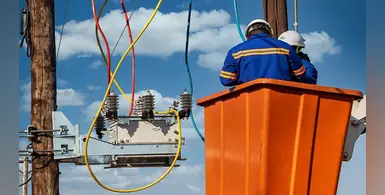
Eight African nations to benefit from UK-backed energy projects. (Image source: HornDiplomat)

The UK government is supporting more than £2mn (approxim. US$2.7mn) in investment for 10 clean-energy projects across eight African countries, with the aim of reducing reliance on diesel generators used by hospitals, telecommunications networks, agricultural businesses and small enterprises

The projects, announced by the Zero Emission Generators initiative (ZE-Gen), will be implemented in Kenya, Uganda, Rwanda, Tanzania, Madagascar, Nigeria, Mozambique and Lesotho. The programme is supported by the UK government’s Ayrton Fund through the Transforming Energy Access platform and aims to help businesses advance renewable-energy technologies beyond pilot stages towards wider commercial deployment.

In Kenya, planned installations will combine solar power and battery storage to improve electricity supplies for hospitals, schools and businesses affected by unreliable grid connections. University of Oxford spin-out SHIELD will partner with a major Kenyan hospital to replace diesel-powered generation with a solar and battery system. The project will also assess financing approaches intended to lower costs and encourage additional investment.

In Uganda, British battery manufacturer AceOn will introduce battery-first energy systems, including sodium-ion technology, for telecommunications infrastructure, healthcare facilities and humanitarian operations.

Agriculture and food distribution are the focus of two Nigerian projects. Farm Warehouse plans to install 100 solar-powered cold-storage systems for vendors selling fish, meat and dairy products. KAMIM Technologies will establish four solar-powered agricultural hubs equipped with irrigation, cold storage, ice production and grain-processing facilities.

In Mozambique, renewable-powered fishing hubs will combine solar generation, battery storage and cold-chain technologies. Rwanda’s projects will explore the use of second-life electric vehicle batteries for stationary energy storage.

Additional initiatives will support rural enterprises in Uganda and Tanzania, community electrification in Madagascar and battery storage for mini-grids in Lesotho.

“These ZE-Gen supported projects show how clean energy can power the services and businesses people rely on every day – from hospitals and telecommunications networks to food systems and local enterprises,” ZE-Gen programme director Lily Beadle said.

“The next challenge is scaling the most successful approaches,” she added.

According to ZE-Gen, the projects will demonstrate how renewable-energy systems can deliver more reliable and affordable electricity while reducing dependence on fossil-fuel generators in locations where grid infrastructure is weak or electricity supplies are inconsistent.

Launched at the COP27 climate summit, ZE-Gen is led by the Carbon Trust and Innovate UK. The initiative aims to mobilise £100mn to accelerate the transition from fossil-fuel generators to renewable-energy alternatives.

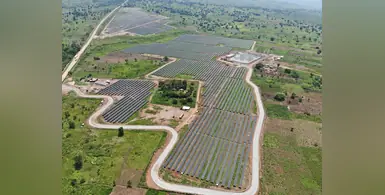
Kamoa-Kakula solar project delivers 60 MW of continuous power. (Image source: Ivanhoe Mines)

Kamoa-Kakula’s on-site hybrid solar power facilities, integrated with battery energy storage, are now fully operational, supplying 60 MW of continuous baseload power to its mining operations

The combined capacity is set to double to 120 MW within 18 months under plans supported by two additional power purchase agreements (PPAs).

Construction and commissioning of the two solar photovoltaic (PV) facilities and their battery energy storage system (BESS) were completed during the third quarter of 2026. By the end of September, both facilities had reached their combined nameplate capacity. Construction of the two 30-MW facilities began in June 2025, with the first starting power deliveries in August 2026 and the second becoming operational in late September. CrossBoundary Energy and Green World Energie own, operate and fund the facilities.

The installation comprises a 433-MW-peak PV facility and an adjacent battery storage system with a capacity of 1,107 MWh. The stored solar energy enables the system to supply Kamoa-Kakula, its sole offtaker, with 60 MW of power continuously over 24 hours. The installation is the largest hybrid solar PV and battery storage facility at a mining operation in Africa.

Kamoa-Kakula plans to increase its on-site hybrid solar capacity to 120 MW within 18 months. In April 2026, it awarded a contract to Green World Energie and signed a PPA for an additional 30 MW. In August 2026, it awarded a further contract and signed another 30-MW PPA with Lualaba Solar Company. Both facilities are planned for construction within Kamoa-Kakula’s joint-venture licence area.

Kruger National Park secures renewable energy equivalent to over 25% of annual electricity use through an Ampli Energy sponsorship. (Image source: Kruger National Park)

Kruger National Park is SANParks’ largest electricity user, accounting for approximately 70% of the organisation’s Scope 2 emissions. Electricity demand is also increasing, with the park welcoming more than 1.8 million visitors in 2025

Developing large-scale renewable energy generation within the park would require substantial capital investment and land. SANParks has prioritised conserving its land rather than using it for energy generation.

Changes in South Africa’s electricity market have created an alternative approach, allowing renewable energy to be generated at suitable locations and delivered through the electricity network to consumers elsewhere.

Dr Sarushen Pillay, executive vice-president: Business Building, Strategy and Technology, said, “Ampli Energy is demonstrating how South Africa’s industrial base can be a catalyst for both energy security and the energy transition. By using our Secunda complex as the backstop oRtaker for Ampli’s renewable energy portfolio, we are accelerating decarbonisation across our business while helping SANParks and other organisations do the same. With its scale and energy demand profile, Secunda is a cornerstone of South Africa’s energy system, showing how the country’s largest industrial assets can support both energy security and the transition. We are excited to see Ampli bringing to life the vision we share with Discovery Green: making renewable energy accessible at scale and helping organisations such as SANParks achieve their sustainability goals.”

The partnership is already operational. Through Ampli, Discovery Green and Sasol have supplied renewable energy equivalent to more than 25% of Kruger National Park’s electricity consumption over the past few months.

Hapiloe Sello, SANParks CEO, said the arrangement forms part of a wider strategy to modernise infrastructure and strengthen resilience.

“Kruger National Park is not only South Africa’s premier tourism destination, but also a cornerstone of conservation in our country and across the SANParks system. By securing renewable energy equivalent to more than 25% of the park’s annual electricity consumption, we are strengthening the park’s long-term sustainability, improving energy resilience and demonstrating how conservation institutions can contribute meaningfully to a lower-carbon future,” she said.

A partnership for the next century

The agreement is expected to help SANParks progressively reduce emissions associated with its electricity consumption while allowing the organisation to maintain its focus on conservation.

Andre Nepgen, CEO of Discovery Green, stated, “We deeply value our partnership with SANParks. Through Ampli Energy, we are sponsoring the park with renewable energy in a way that supports the economic and environmental health of South Africa. This contribution supports SANParks’ mission to conserve, expand and sustainably manage the country’s natural and cultural assets for current and future generations.”

The initiative also supports Kruger National Park’s position as a nature-based tourism destination. Sello said, “Today’s travellers increasingly seek destinations that demonstrate genuine environmental responsibility. By integrating renewable energy into park operations, Kruger National Park strengthens its ability to combine exceptional visitor experiences with responsible environmental management.”

Nepgen concluded, “It is a privilege to apply our data-led approach to renewable energy in partnership with Sasol through Ampli Energy to support an iconic South African institution. We are proud to help power KNP’s next 100 years.”

Nigeria targets lower solar imports through domestic production

Kowatek Solar LTD has highlighted the Rural Electrification Agency's framework for procuring 200 megawatts of locally manufactured solar photovoltaic modules and 200 megawatt-hours of battery energy storage products annually as a move towards strengthening domestic production and reducing expenditure on imports

Reports published in early September 2026 showed that solar-panel imports across 15 African countries exceeded US$400mn in the first quarter of 2026, compared with approximately US$650mn for the whole of 2025. Demand for alternative electricity supplies remains strong among households and businesses facing unreliable grid power. Nigeria continues to have one of the continent's largest electricity-access deficits, with agency leadership citing more than 85 million people, equivalent to approximately 40% of the population, without reliable grid electricity.

The proposed partnership was presented as the first commitment by a Tier-One Chinese renewable energy company to establish manufacturing and assembly operations in Nigeria. However, implementation will depend on commissioning the factory, obtaining quality certifications, securing foreign exchange and establishing whether the planned public-sector offtake provides sufficient certainty for lenders.

Local module production alone does not guarantee an effective solar installation. Commercial and industrial users must still assess electricity demand, ensure compatibility between inverters and batteries, and establish reliable maintenance and servicing arrangements.

For residential estates, hotels, clinics and factories looking to reduce diesel consumption, the key consideration is the cost per reliable kilowatt-hour rather than the purchase price of solar panels alone. Kowatek Solar recommends viewing local assembly as another sourcing option within properly engineered hybrid power systems.

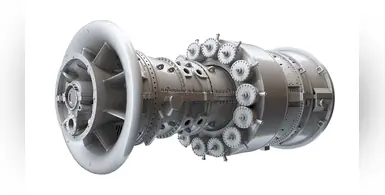
Perkins 5016 EP engine (Image source: Perkins)

Perkins has unveiled its latest power generation engine designed to support Africa’s growing energy demands across the data centre industry, healthcare, airports and remote worksites

Its new 5016 full-authority electronic engine for power generation is now in production in both India and the UK and available for markets in Africa and worldwide, offering reliable power, fuel efficiency and robust load acceptance.

The full range of 6-, 8-, 12-and 16-cylinder 5000 Series engines offer up to 2500 kVA of standby power and up to 2250 kVA of prime power for customers around the world.

The new 5016 delivers a powerful 1400-2500 kVA range at 50 Hz for base load, prime and standby applications.As with all engines in the 5000 Series range, the 61-litre, V16 configuration engine has been designed specifically for power generation.

The 5016 is engineered to offer reliable power at worksites where uptime matters.

“With the 5016 in production, we have a comprehensive range of 6-, 8-, 12-and 16-cylinder full-authority electronic engines, delivering up to 2500 kVA, available to power our customers’ prime and critical standby applications,” said Dan Bentley, EAME sales director at Perkins.

Fuel efficiency benefits

Engineered to meet ISO G3 and NFPA110 standards to handle demanding load acceptance challenges, the 5016 uses a pair of smaller turbochargers on each bank, which are designed to reduce transient response time when compared with a single large unit.Its exhaust manifolds are engineered to optimise gas flow to the turbochargers, further reducing ramp-up time and enhancing load acceptance.

The power unit is also built to world-class standards for optimised efficiency and improved fuel consumption.

An advanced electronically controlled fuel injection system precisely manages fuel delivery to optimise combustion, improving engine efficiency, reducing fuel consumption and supporting lower emissions.

The engine also incorporates a unique low-pressure fuel system developed specifically for the 5000 Series, providing excellent tolerance to variations in fuel quality and enabling operation on biodiesel blends up to B20 or 100% HVO1.

The use of renewable HVO fuel can reduce lifecycle greenhouse gas emissions, helping customers meet their sustainability goals while maintaining engine performance and reliability, with low oil consumption and extended 750-hour service intervals helping to minimise waste, reduce maintenance requirements and lower total cost of ownership.

Ideal for fast-growing territories

While particularly well suited to data centre and critical power installations, the company believes the 5016 is an attractive choice for other high-power applications around the world, including projects in rapidly growing territories where demand for dependable large-engine solutions continues to increase.

“The 5006, 5008 and 5012 models are already delivering dependable power in a wide variety of electric power generation installations around the world,” said Bentley.

Equipped with the latest technology to operate at peak efficiency over its full rated output range, the 5016 has been designed as a compact package, making it an ideal choice for space-limited applications.

Electronically controlled injectors can alter both timing and pressure to accommodate a broad range of ambient temperatures and altitudes without sacrificing performance.

Working together with the advanced turbocharging technology developed for the 5000 Series the combination has been proven to help optimise load acceptance, altitude capability and fuel consumption.

“The extensive endurance testing work across the range, including the 5016, means I have every confidence that the 16-cylinder will also meet our customers’ expectations for uptime,” added Bentley.

As with all Perkins engines, the 5000 Series is backed by Perkins’ global service and support network of authorised distributors offering connectivity and condition monitoring solutions and ongoing engine maintenance and repair.

Read more:

BESS system powers up at OCPS Benguerir mine site

On-site power boost for Kamoa Copper

On-site trigeneration plant for Ivorian pasta factory 


More Articles …