




cb.web.local

twitter Facebook Linkedin acp Contact Us

MTN Nigeria expands renewable power infrastructure

First WATT Renewable Limited and MTN Nigeria have entered into a strategic renewable energy infrastructure partnership aimed at reducing reliance on diesel power, enhancing resilience at critical telecommunications facilities, and supporting renewable energy solutions for electric vehicle (EV) charging infrastructure across selected MTN locations in Nigeria

The initiative consists of two key components. The first involves an Energy-as-a-Service deployment that will deliver approximately 34 MWp of solar photovoltaic generation capacity and 40 MWh of battery energy storage across selected MTN facilities nationwide. These locations include data centres, switch facilities, cable landing stations, customer service centres, and other network-critical sites.

The second component focuses on providing renewable energy infrastructure to support 60 kW EV charging stations at eight MTN facilities in Ikoyi, Matori, Ojota, Abuja, Port Harcourt, Asaba, Kano, and Ibadan.

Together, the projects are designed to reduce dependence on diesel-powered systems, decrease operational emissions, improve uptime, strengthen business continuity, and increase the adoption of renewable energy solutions across MTN’s operational facilities and EV charging locations.

With digital services continuing to expand, dependable energy infrastructure has become increasingly important for maintaining telecommunications networks and supporting the broader digital economy. Through this partnership, MTN Nigeria aims to improve the resilience of its critical operations while increasing the integration of renewable energy across selected sites.

Based on current project assumptions, the programme is expected to help avoid approximately 25,000 tonnes of carbon dioxide equivalent emissions (tCO₂e) over five years, subject to operational performance and final emissions assessments.

Commenting on the partnership, Oluwole Eweje, CEO of WATT Renewable Corporation, said, “This partnership is a defining milestone for First WATT and an important step in strengthening the energy infrastructure that supports Nigeria’s digital economy. By deploying solar photovoltaic generation and battery energy storage across selected MTN facilities, we are helping to improve energy reliability at critical locations where uptime is essential.

“The EV charging component also demonstrates how renewable energy infrastructure can support Nigeria’s transition to lower-carbon mobility. By providing renewable power systems for EV charging sites, this programme helps address one of the key requirements for wider EV adoption: reliable and cleaner energy supply.”

Speaking on the initiative, Tobechukwu Okigbo, chief corporate services and sustainability officer at MTN Nigeria, stated, “As Nigeria’s energy and mobility landscape evolves, renewable energy will play an important role in building cleaner and more reliable infrastructure. This partnership supports our efforts to reduce diesel dependence, improve operational efficiency, and strengthen the resilience of the systems that power connectivity.

“It is also aligned with Project Zero, under our Doing for Planet sustainability pillar, through which we are focused on reducing greenhouse gas emissions, improving energy efficiency, and increasing the use of renewable energy across our operations.”

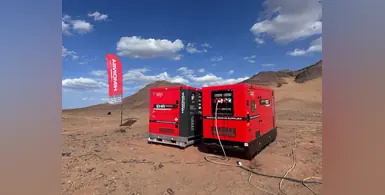
The new on-site power facilities in Angola (Image source: Margen S.p.A.)

Italy’s Margen S.p.A. has completed a project in Angola to supply a total of more than 4.5 MVA of on-site power to underpin food security in the country

The project involved the shipment of two high-capacity power plants, each of 2,270 kVA, designed and tested in-house to meet a critical need: ensuring uninterrupted energy backup for the African country’s large cold storage facilities.

Powered by heavy-duty Perkins motors, the two high-capacity units are designed to ensure immediate response and continuous cooling, protecting temperature-sensitive products from any network instability.

“Reliability is essential when food safety is at stake,” a company statement noted.

“In contexts where the stability of the cold chain is directly related to the security of supply, the choice of heavy-duty Perkins engines is strategic, configured to ensure immediate response times and total operational resilience even in the presence of an unstable national electricity grid,” Margen S.p.A. reported in a recent social media post.

“This order is not only a logistical milestone, but also reaffirms the company's technological ability to customise MPS power plant solutions for complex global infrastructures, where the protection of temperature-sensitive goods leaves no margin for error,” it added.

“By exporting innovation from its headquarters to emerging markets, Margen confirms itself as a strategic partner for major international development projects, enhancing the technical rigour and reliability of ‘Made in Italy’ at every latitude.”

Read more:

Eskom advances flagship gas-to-power project

Anzana Electric nets US$20mn for small hydropower

SA wastewater-to-green-methanol plant

Liberia advances clean energy with solar commissioning

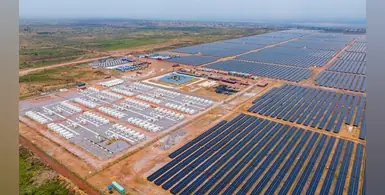
A new 20-megawatt solar power plant at Mount Coffee has been commissioned, strengthening Liberia’s push toward cleaner and more reliable electricity supply

The commissioning of the project marks a significant milestone in Liberia’s ongoing efforts to strengthen its national energy infrastructure, coming less than two years after President Joseph Boakai broke ground on October 11, 2024. The development reflects steady progress under the Government’s broader agenda to expand reliable electricity access and modernise power systems across the country.

The project comprises a newly constructed 20 MW solar photovoltaic facility and forms part of wider plans to expand the Mount Coffee Hydropower Plant by an additional 42 MW.

Speaking at the dedication ceremony, President Boakai described the solar facility as a major addition to Liberia’s energy infrastructure and a significant step toward increasing access to reliable and affordable electricity across the country.

The President noted that the project supports his Administration’s efforts to expand infrastructure, stimulate economic activity, create jobs, and improve the quality of life for Liberians.

He explained that inadequate and expensive electricity has long hindered economic growth, discouraged investment, and limited the delivery of essential services. He emphasized that reliable electricity is vital for hospitals, schools, businesses, agriculture, mining, manufacturing, and other productive sectors of the economy.

President Boakai also announced that his Administration secured an additional US$57mn in World Bank financing in March 2026 to further strengthen Liberia’s energy sector. The funding will support the expansion of solar generation capacity from 20 to 30 MW, the installation of a 12 MW battery energy storage system, and additional upgrades at the Mount Coffee facility.

The President disclosed that 22 MW of lost generation capacity at Mount Coffee have already been restored and revealed plans to further expand the hydropower facility by an additional 42 MW.

Highlighting the broader impact of expanded electricity access, President Boakai said the solar farm represents an investment in economic growth, job creation, improved public safety, and a more resilient future. He added that efforts are underway to strengthen transmission and distribution systems so that more communities across Liberia can benefit from reliable electricity services.

President Boakai further noted that, under the ARREST Agenda for Inclusive Development, the Government is investing in energy, roads, ports, digital connectivity, and water systems. He stressed that increased electricity generation is essential for industrialization, value addition, private-sector growth, and the development of a vibrant 24-hour economy capable of creating opportunities for young Liberians.

The project is part of the Regional Emergency Solar Power Intervention (RESPITE), an initiative launched in April 2022 by the World Bank and the Governments of Liberia and Sierra Leone to address electricity shortages and accelerate renewable energy development across West Africa.

Lesotho energy plan targets gigawatt scale

Convalt Energy Inc.has signed a binding Memorandum of Agreement with the Government of Lesotho to explore the development of renewable energy and digital infrastructure projects in the country

Under the proposed framework, Convalt US plans to develop up to 1.2 GW of power generation capacity, around 4.6 GW of solar energy projects, including both ground-mounted and floating solar installations, up to 4 GWh of battery energy storage systems (BESS), and support the development of a large-scale data centre.

Hari Harry Achuthan, CEO of Convalt Energy, said the company has been repositioning its strategy toward integrated infrastructure solutions tailored for AI-driven and energy-intensive sectors.

He added that the company is expanding its capabilities by leveraging the development and manufacturing expertise of its leadership team, and is moving across the value chain from infrastructure development and advanced manufacturing, particularly in solar, to data centre infrastructure. He said the partnership with Lesotho aims to deliver clean energy, employment opportunities and broader economic development.

The progression of the project is subject to standard development requirements, including feasibility assessments, permitting, financing arrangements, regulatory approvals and final project agreements. The Lesotho project entity is expected to be housed under Convalt International, a proposed holding structure for the company’s international assets, pending completion of corporate and regulatory processes.

Projects under Convalt International may incorporate products manufactured by Convalt US where commercially viable and are expected to be financed through a mix of equity investment, multilateral development finance institutions, strategic partners and international project finance structures.

If the project proceeds successfully and all technical, commercial and regulatory conditions are met, Convalt US may supply solar modules for the development. Preliminary estimates suggest deliveries could begin as early as Q4 2028 and continue over several years, although no binding supply agreements have been signed and final terms may differ significantly from current expectations.

The statement also notes that it contains forward-looking information based on current assumptions and projections, which are subject to risks and uncertainties that could cause actual outcomes to differ materially.

Eskom keen on gas power (Image source: Adobe Stock)

Eskom and Zululand Energy Terminal (ZET) have signed an agreement to work together in support of South Africa’s gas-to-power programme
 
Eskom will assume ‘foundation customer’ status at the proposed Zululand Energy Terminal that will provide open access to liquefied natural gas (LNG) import, storage and regasification infrastructure.
 
This will underpin the utility’s planned 3,000 MW gas-to-power scheme.
 
Eskom’s Richards Bay 3,000MW gas-to-power project is to be constructed and operated in the Richards Bay Industrial Development Zone (RBIDZ), in KwaZulu-Natal.
 
Its group chief executive, Dan Marokane, said gas will be used as a “bridge fuel” to support the transition to a low-carbon energy system.
 
“These gas plants are designed to complement intermittent renewable sources like solar and wind, ensuring reliable 24/7 power, while clean energy technologies are being developed and introduced onto the grid,” he said.
 
“The availability of dispatchable power is at the very heart of the energy transition and industry cannot operate without it as it forms the backbone for renewable energy integration into the grid.”
 
Both Eskom and ZET reaffirmed their commitment to progressing the necessary regulatory approvals, long-term commercial contracting approach and structuring, and infrastructure development required to bring the project to fruition.
 
ZET, a joint venture between Vopak Terminal Durban, owned by Royal Vopak, with South Africa’s Reatile Group Proprietary Limited and Transnet Pipelines, was awarded a concession by Transnet National Ports Authority to develop, construct, operate and maintain the LNG terminal.
 
The Eskom Richards Bay project envisages the import and consumption of regasified LNG as the primary fuel source of the power plant.
 
ZET director, Oliver Naidu, said the deal with Eskom marked a significant milestone for the project and for South Africa’s energy future.
 
“As one of our anchor customers, Eskom’s participation demonstrates growing confidence in LNG as an enabler of energy security, grid stability and industrial growth,” he said.
 
“This agreement strengthens the commercial foundation of the terminal, and we look forward to building a long-term partnership as we progress towards a Terminal Use Agreement, financial close and the delivery of South Africa’s first LNG import terminal.”
 
Read more:


More Articles …