




cc.web.local

South Africa’s Koeberg nuclear power station (Image source: Adobe Stock)

Nuclear power could help meet Africa’s growing electricity needs, including rising demand from artificial intelligence (AI) and data centres, according to North-West University (NWU) principal and vice-chancellor Prof. Bismark Tyobeka

“It is a match made in heaven,” said Tyobeka, a nuclear energy expert, who made the case during an NWU public lecture on AI and nuclear power.

The argument comes as electricity demand from data centres is expected to rise sharply as AI develops.

The International Energy Agency (IEA) expects global data-centre electricity consumption to roughly double by 2030, although renewables are expected to meet a substantial share of the additional demand.

Tyobeka said many African countries would need additional reliable generation to support economic and technological growth.

“These two fields are converging to address one of the world’s most pressing energy challenges: delivering reliable, clean and secure electricity for a sustainable future,” he said.

“The need for more electricity therefore immediately accompanies our advances in artificial intelligence,” he said.

But we do not only need electricity, he added, we also need clean electricity.

Nuclear power can provide continuous, low-carbon electricity, while small modular reactors (SMRs) and microreactors are being developed as potentially more flexible alternatives to conventional plants.

“SMRs and microreactors are particularly well suited because their size allows them to be deployed almost anywhere. They can be built in factories,” said Tyobeka.

He also argued that AI could improve nuclear-plant safety and maintenance.“AI is a game changer,” he said.

“It can potentially enhance the safety features of nuclear power-plant designs. It can help us optimise the efficiency of nuclear power plants. It can also help us make rapid decisions across the entire nuclear value chain.”

However, nuclear projects face significant challenges, including high upfront costs, lengthy construction times, regulation, waste management and public acceptance.

“People do not trust AI as we sit here. People do not trust nuclear power as we speak. How do you secure buy-in from such suspicious people? Transparency is key.”

Tyobeka said nuclear investment could also support African mining, manufacturing and mineral processing.

“Nuclear power can enable Africa’s AI and industrial future. We have seen that the need is real and the opportunity is now.”

Read more:

China's DoGo Power launches in Mali

Solar power set for record growth in 2026

ePointZero to buy Azura Power majority share


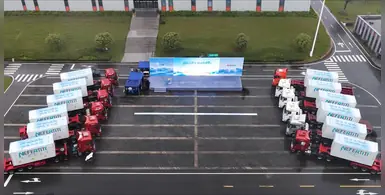
Mali launch for DoGo Power (Image source: Adobe Stock)

China’s DoGo Power has expanded into Mali, launching grid-forming energy storage solutions for commercial & industrial (C&I) and utility-scale power stations

Guided by a long-term localisation strategy, the company said in a statement that it will partner with local industry players to expand green energy access and accelerate Mali's power system upgrade and low-carbon transition.

“This move marks a key milestone in DoGo Power's Africa market strategy,” the statement read.

“The company will build local service and technical support teams covering full-cycle solution customisation, delivery and O&M, aligning its proven grid-forming technology with local power development needs.”

It added: “With its first batch of products arriving at port, DoGo Power will continue to deepen its presence in Mali and the wider African market.”

In April, DoGo Power held a partnership recruitment event in Mali, to bring together representatives from local government departments, key enterprises, investment institutions, industry consulting agencies and local media, to discuss development opportunities in North Africa’s energy storage market.

Mali faces severe energy supply constraints: national electrification coverage stands below 50% (less than 30% in rural areas), with over 80% of generation coming from costly diesel fuel.

Frequent outages caused by weak grid stability have become a major bottleneck for local development and industrial users.Meanwhile, the country's annual average of over 3,000 hours of sunshine lays a solid foundation for solar-plus-storage growth.

“Adapted to Mali's grid conditions, DoGo Power’s intelligent grid-forming energy storage solutions ensure uninterrupted power for critical loads during grid fluctuations or outages, and support PV-storage-diesel hybrid configurations to cut diesel reliance and increase green energy consumption, flexibly catering to off-grid and weak-grid demands,” the company’s statement noted.

“Leveraging full industrial chain strengths and localised capabilities, it will iteratively optimise tailored storage solutions to help build a more stable, cleaner and inclusive modern power system in Mali, serving as a trusted long-term technology partner for the region's energy transition.”

Read more:

Solar power set for record growth in 2026

Financial close for SA's Lion Thorn solar park

ePointZero to buy Azura Power majority share

From mining and manufacturing to renewable energy and data centres, Trafo Power Solutions delivers dependable dry-type transformer solutions for demanding environments. (Image source: Trafo Power Solutions)

As industries place greater emphasis on electrical safety, reliability, maintenance and environmental considerations, dry-type transformers are gaining adoption as an alternative to conventional oil-filled transformers

The technology is being used across applications including mining, mineral processing, manufacturing, commercial facilities and renewable energy projects, particularly where indoor installation, reduced fire risk and low maintenance are important considerations. Trafo Power Solutions supplies dry-type transformer solutions for a range of industrial applications in Africa.

According to David Claassen, managing director of Trafo Power Solutions, the growing interest in dry-type transformers reflects a shift towards electrical infrastructure that considers not only initial equipment costs, but also safety, reliability, maintenance and operating conditions.

"Customers today are evaluating electrical infrastructure far more strategically than they did in the past," commented Claassen.

"They are looking beyond the initial purchase price to consider safety, reliability, maintenance requirements, environmental impact and total cost of ownership. Dry-type transformers offer significant advantages across all of these areas."

Unlike oil-filled transformers, dry-type transformers do not use insulating oil as the cooling and insulation medium. Depending on their design, dry-type transformers can use air and solid insulation systems, including cast-resin or vacuum pressure impregnation (VPI) technology. This eliminates the need for transformer oil and removes the associated risk of oil leakage.

The absence of insulating oil can also provide advantages where fire safety and environmental protection are important. Trafo Power Solutions notes that its dry-type transformers are suitable for indoor, confined and demanding industrial environments, while its cast-resin technology is classified according to international fire-resistance requirements.

These characteristics have supported wider use of dry-type transformers in mining and mineral processing. In mining applications, the technology can be used for underground operations, processing facilities and mobile or modular substations. Trafo Power Solutions has supplied customised dry-type transformer solutions for mining projects, including applications where equipment must meet strict space, environmental and operating requirements.

Manufacturing facilities can also benefit from dry-type transformers where equipment must operate reliably in demanding environments while limiting routine maintenance requirements. Trafo Power Solutions has supplied dry-type transformers for industrial facilities, including an automotive plant expansion near Pretoria, where 10 transformers and two mini-substations were installed.

"One of the greatest strengths of dry-type transformer technology is its versatility," explained Claassen. "Whether it is supporting a remote mine, a modern manufacturing facility, a commercial development or a renewable energy installation, the technology delivers reliable performance while addressing increasingly important safety and environmental requirements."

Another advantage is the elimination of oil-related environmental risks. Oil-filled transformers require measures to manage potential oil leakage and, depending on the installation, may require additional containment infrastructure. Dry-type transformers do not require insulating oil, which can simplify installation in applications where oil containment and fire protection are significant considerations.

Maintenance requirements can also differ between the two technologies. Trafo Power Solutions has highlighted the relatively low maintenance requirements of its dry-type transformers, with the company previously noting that routine inspection requirements can be significantly simpler than those associated with oil-filled equipment.

As industrial electrical systems become increasingly application-specific, Claassen believes transformer selection should take into account the operating environment, load requirements, available space and other project-specific conditions.

"There is no single transformer solution that suits every application," he said. "Each project has unique operating conditions, load profiles and environmental considerations. By understanding these requirements, we can engineer solutions that deliver reliable performance, maximise operational efficiency and provide long-term value throughout the life of the installation."

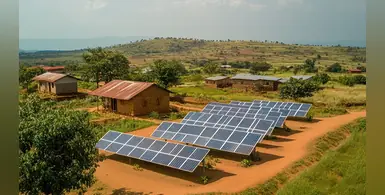
Solar power is growing fast in Africa (Image source: Adobe Stock)

Africa’s love for solar power shows no sign of easing up

The continent is on track to install 17 GW of solar in 2026 — up 45% year-on-year, according to new analysis by energy think tank, Ember, in collaboration with African Tech Futures Lab.

It would represent the third consecutive record year for African solar installations, the analysis notes.

Solar growth is also spreading across the continent: 36 of Africa’s 54 countries are expected to install record volumes of solar in 2026.

The analysis also shows that 19 countries have seen year-on-year growth of over 100%, including 544% in the Democratic Republic of the Congo (DRC), 282% in Zimbabwe and 176% in Egypt.

South Africa, once responsible for over half of the continent’s solar imports, will account for less than a fifth of installations in 2026 as growth spreads to new markets.

Key findings

The new solar installed in 2026 alone is expected to generate around 23 TWh a year, enough to meet Africa’s average annual electricity demand growth over the past decade.

In more than half of Africa’s 54 countries, the rise in solar generation is expected to exceed the historic pace of demand growth.

Ten countries, home to a combined 190 million people, will see 2026’s new solar add more than 10% to annual electricity generation: Sierra Leone (97%), Togo (24%), Somalia (21%), Djibouti (21%), DRC (14%), Comoros (14%), Namibia (12%), Liberia (12%), Chad (11%) and Lesotho (10%).

Africa’s solar panel manufacturing is also set to quadruple in 2026, reaching around 3.5 GW as new plants come online in Egypt and Tanzania.

However, most of this output is destined for export to the US — 94% of the panels installed across Africa are still imported from China.

Data challenges

Despite the challenges of collecting data on the growth of solar power across the continent, there is little doubt that the trajectory is upwards.

Only three African countries – South Africa, Tunisia and Tanzania – currently publish solar capacity data every quarter or more frequently.

The analysis finds official reporting on national solar capacity for just 36 of Africa’s 54 countries, and only 14 of those had 2025 data, even that likely undercounting real installations.

However, that is starting to change: at least 15 African countries now have solar registration and permitting systems at an advanced stage, with several already in force, a step Ember and African Tech Futures Lab say is essential if planners, grid operators and regulators are to see the market they are trying to manage.

An estimated three-quarters of the solar capacity added across Africa between 2023 and 2025 was distributed solar — a category largely missing from official national and international statistics.

Read more:

Financial close for SA's Lion Thorn Solar Park

ePointZero to buy Azura Power majority share

Tassili DZ Power, Yuchai plan Algeria genset factory 


Construction set to begin on South Africa's Lion Thorn Solar Park project (Image source: Adobe Stock)

UAE-based Yellow Door Energy and Nedbank Corporate and Investment Banking (Nedbank CIB) have announced financial close on the 49 MWp Lion Thorn Solar Park in South Africa

It comes as South Africa’s electricity sector enters a more stable phase, with state utility Eskom reporting recently a second consecutive annual profit and the country passing 470 days without load-shedding.

At the same time, private investment is increasingly helping to add new generation capacity as the electricity market opens to a wider range of developers, traders and corporate offtakers.

Nedbank CIB is financing the Lion Thorn Solar Park project, enabling construction work to proceed at Leeudoringstad in North West Province.

Utility-scale project

The utility-scale project has secured long-term power purchase agreements with PPC and POWERX, a NERSA-licensed private electricity trader.

Once operational, it is expected to generate approximately 115 gigawatt-hours of renewable electricity in its first year and avoid an estimated 104 190 tonnes of carbon emissions annually.

John Taylor, managing director for Yellow Door Energy South Africa, said reaching financial close demonstrated the company’s ability to develop bankable, large-scale renewable energy projects in the country.

“The project will provide reliable, cost-effective clean electricity to our customers while supporting energy security, economic growth and the country's transition to a lower-carbon future,” he said.

Private investment

The transaction comes as private investment in South Africa's electricity sector continues to grow and supports the development of new renewable generation capacity while contributing to South Africa's energy transition, long-term energy security and economic growth.

In 2025, NERSA-registered private generation projects represented an estimated R158bn in investment and 7,464 MW of generation capacity.

Hlatse Nkune, principal of power and renewables finance at Nedbank CIB, said South Africa's electricity market is evolving, creating new opportunities for renewable energy developers, traders and corporate customers.

“Lion Thorn Solar Park demonstrates how innovative financing and long-term offtake arrangements can unlock new generation capacity, strengthen energy security and support the country's transition to a more sustainable energy future,” said Nkune.

“Transactions such as these are critical to accelerating private sector participation in the energy market and expanding access to reliable electricity.”

Construction update

Construction work on the site is now scheduled to begin during September, with commissioning anticipated in 2028.

The project is also expected to create employment and economic opportunities during construction and operations.

Read more:

Tassili DZ Power, Yuchai plan Algeria genset factory

On-site power boost for Kamoa Copper

Tanzania opens Julius Nyerere hydropower plant


More Articles …