




cb.web.local

twitter Facebook Linkedin acp Contact Us

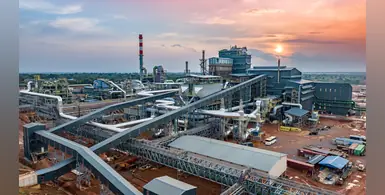
New hybrid power solutions for Africa’s mines (Image source: Adobe Stock)

Edith Kikonyogo, managing director, Aggreko Africa, explains why the case for hybrid power has never been stronger

Brent crude prices have recently moved sharply, rising from US$92 to over US$113 per barrel in a single week. The International Energy Agency’s March 2026 Oil Market Report calls this the largest supply disruption in the history of the global oil market, with nearly 20 million barrels per day of crude and product exports affected by conflict in the Middle East and disruptions to the Strait of Hormuz.

For mining operations across Africa, shifts like these carry practical implications for operating costs. Energy is closely tied to almost every stage of the mining value chain, from crushing and milling to ventilation, dewatering, and processing. For off-grid operations, where on-site diesel generation keeps production running, oil price volatility hits production costs directly. Delivered fuel prices at remote mine sites across Africa already exceed international benchmarks once you factor in transport, security, and handling. When global crude surges 40% in a matter of weeks, as it has this quarter, the financial exposure compounds quickly.

This is not a new challenge, but the pace and scale of disruptions are accelerating. Energy strategy is becoming an increasingly important part of mining resilience and long-term planning.

The risk of a single-fuel strategy

Thermal generation continues to play an important role in many remote mining power strategies. Diesel and gas-powered generators deliver the firm, dispatchable capacity you need to keep operations running around the clock. In many cases, thermal generation remains a practical requirement for maintaining reliable baseload capacity.

The issue is not thermal power. Over-reliance on a single fuel source can increase exposure to cost and supply volatility outside your operational control. When every kilowatt-hour depends on diesel alone, you are not just running a mine, you are running a fuel logistics operation, exposed to currency swings, transport bottlenecks, and geopolitical shocks that have nothing to do with your orebody or your team’s capability.
In parts of East Africa, fuel prices have surged more than 75% since the start of 2026. In South Africa, petrol could see a price increase of over R5 per litre in April, while diesel is expected to see a R8.60 increase per litre. For a mine consuming millions of litres annually, these swings can add millions of dollars to your cost base, with zero increase in output. That is not energy security.

Hybrid power: cost predictability through diversification

One practical response to fuel volatility is to complement thermal generation with additional energy sources. It is to reduce the share of your energy mix that is exposed to volatile commodity prices.

Hybrid power solutions are designed to support a more balanced and diversified energy mix. Solar photovoltaic arrays, battery energy storage, and flexible thermal generation work together under advanced control to give you a more balanced, more predictable energy mix. Solar delivers low-cost energy during daylight hours at a fixed cost. Batteries smooth your load profile and capture excess renewable generation. Thermal assets provide firm backup and peak capacity, running more efficiently because they are no longer carrying the full baseload alone.

The economics speak for themselves. Past regional data shows solar-plus-storage can deliver electricity at US$0.06 to US$0.20 per kilowatt-hour, compared with US$0.15 to over US$0.50 per kilowatt-hour for diesel in off-grid contexts. Across multiple projects in Africa, well-designed hybrid power solutions have displaced up to 40% of diesel consumption while maintaining round-the-clock reliability. The Middle East and Africa microgrid market, valued at over US$10bn today, is projected to exceed US$21bn by 2030. Mining is a leading driver of that growth.

These outcomes are increasingly being demonstrated across operating sites in demanding environments, proven in some of the continent’s most demanding environments.

Beyond cost: the strategic case for acting now

Energy security in mining increasingly extends beyond fuel pricing considerations alone. It comes down to several factors that are becoming increasingly relevant for executive and board-level consideration.

Operational resilience is improved by hybrid power solutions, as they build redundancy into your energy supply. If one source is disrupted, others compensate. Advanced controllers manage load balancing in real time, and well-designed solutions routinely deliver uptime above 99.9%. For a mine where every hour of downtime means lost production, that resilience matters.

Financial predictability improves when a significant share of your energy comes from solarits fuel costs are zero once installed. That creates a natural hedge against fluctuations in fossil fuel prices and provides your finance team with a more stable cost base for long-term planning. Mines with lower, more predictable energy costs also unlock better access to sustainability-linked finance and stronger terms from offtake partners.

Licence to operate remains key - institutional investors, international lenders, and major commodity buyers now factor Scope 1 emissions and renewable energy adoption into their due diligence. A mid-sized mine transitioning to hybrid power can cut CO₂ emissions by 50,000 to 100,000 tonnes annually. That is not just an environmental metric. It is a commercial advantage that strengthens your position across the value chain.

What holds mines back, and how to move past it

If the case is this strong, why has adoption not been faster? While adoption challenges exist, a growing range of solutions is helping address them.

Capital allocation is the most common constraint. You rightly prioritise investment in core operations: expanding the pit, upgrading processing, and extending mine life. Large upfront capital spent on energy infrastructure competes with those priorities.

Alternative commercial models, including Opex-led structures, can help reduce upfront capital requirements. Power purchase agreements and Opex-led structures give you access to hybrid power solutions with minimal upfront investment. You pay for power on a per-kilowatt-hour basis, typically lower than your existing diesel cost from day one.

Operational complexity is another concern. You are experts in extracting and processing minerals, not in managing integrated energy solutions that combine solar, storage, and thermal generation. This is where working with an experienced energy partner can add value. The right energy partner brings lifecycle management: operations, maintenance, remote monitoring, fuel mix optimisation, and the ability to scale your energy solution as production evolves.

Regulatory environments across African jurisdictions vary. Navigating permitting, environmental compliance, and grid interconnection (where applicable) requires local knowledge and established on-the-ground relationships.

A practical path forward

The current oil price environment has made the cost of inaction hard to miss. But decisions around hybrid power are often informed by long-term trends rather than short-term price movements. It should be driven by a clear view of where the world is heading.

Africa holds over 40% of global reserves of cobalt, manganese, and platinum, as well as growing deposits of lithium, graphite, and rare earths. Demand for these minerals will intensify as the global energy transition accelerates. The mines that extract them will operate for decades. Your energy strategy should reflect that time horizon.

At Aggreko, we have spent decades powering mining operations in some of Africa’s most remote and challenging locations. We understand that reliability is non-negotiable, that every site has its own constraints, and that the shift from diesel-only to hybrid power must be practical, staged, and proven at every step. We design, deploy, and optimise modular hybrid power solutions that pair thermal and renewable assets in configurations you can scale over time, backed by flexible commercial structures and operational support across the continent.

Increasingly, the discussion is shifting from whether hybrid power can work to how to implement it effectively. Many projects are already demonstrating the viability of hybrid approaches. The question is how quickly you can move to protect your operations from the next disruption, the next cost surge, the next shift in investor expectations.

Mines exploring hybrid approaches today may be better positioned for long-term cost stability and resilience.

Read more:

Beyond diesel: rethinking power for Africa's data centres

Trafo Power Solutions designs scalable mining infrastructure

Motheo copper mine on-site power project

Partnering to power Mauritania's energy future (Image source: GoGas, Madkour)

Madkour Holding and GoGas Holding have signed an agreement to work together to build a new power plant in Nouakchott, Mauritania drawing on gas from the offshore Banda-Tevet field

The project hopes to generate 200 MW by 2028, expanding to 365 MW, and is the country’s first gas-to-power initiative.

With its roots in Egypt, infrastructure firm, Madkour Holding, has built a portfolio of projects across Africa and the Middle East, with interests spanning Libya, Nigeria and Equatorial Guinea, among other states.

Egyptian-UAE company GoGas Holding is an energy company that specialises in the development of small and medium-sized oil and gas fields in various countries in Africa.

This includes the offshore Banda gas field off the coast of Mauritania, which it operates, in addition to its new role advancing the country’s first gas-to-power project.

“This collaboration represents a vital bridge for energy integration in the region,” said Tarek El Molla, chairman of GoGas Holding, and Egypt's former Minister of Petroleum and Mineral Resources.

“By leveraging our collective expertise, we are ensuring that Mauritania’s natural resources are transformed into sustainable power for its people and the wider West African market."

He said the project aims to boost electricity supply, support economic growth, as well as strengthen Mauritania’s role in the West African Power Pool.

“The signing of this joint development agreement marks a milestone in our expansion strategy into West Africa,” said Adham Alkady, CEO of Madkour Holding.

“Our focus remains on delivering reliable, clean, and efficient energy solutions that meet the highest international institutional standards.”

Dr. Mostafa Madkour, chairman of Madkour Holding, said the partnership agreement also reflects its commitment to being a “strategic partner” for African governments.

“By combining our engineering excellence with GoGas’s expertise, we are not just building a power plant — we are establishing a sustainable energy foundation for Mauritania’s industrial and social growth.”

Khaled Abu Bakr, founding president of GoGas, and vice president of the International Gas Union, added that it also reflected strong commitment from Egypt’s own energy and infrastructure community to developing projects elsewhere across Africa.

“Our alliance with Madkour is a testament to the energy of Egyptian industrial synergy. Together, we will work to deliver world-class solutions to transform gas into sustainable energy, contributing to economic and social development in Mauritania.”

Read more:

IPT Powertech energy funding for telecom sites

Mauritania on-site power for Into Africa Procurement

New on-site power plant for Benin's Cotonou stadium


Delivering cleaner power to remote telecom sites in Africa (Image source: IFC)

IPT PowerTech has secured investment from the International Finance Corporation (IFC) to expand clean on-site power for telecom networks in Ethiopia, Liberia and Sierra Leone

The funds will support the modernisation, operation and maintenance of 2,235 telecom sites across the three countries, more than 90% of which are located in off‑grid or weak‑grid locations.

“This agreement with IFC reflects a shared vision for a greener telecom industry,” said Nabil Haddad, CEO of IPT PowerTech Group, a company based in Lebanon.

“It empowers IPT PowerTech to scale its innovative energy platforms and deliver measurable environmental and operational impact across our global footprint.”

With new solar and battery systems powering most of the sites, mobile networks will experience fewer outages, improved service quality, and reduced reliance on diesel generators, an IFC statement noted.

By improving the quality and stability of on-site power to telecom towers, the initiative will strengthen coverage and ensure households, schools, health centres and small businesses can rely on more consistent digital services.

It will also bring with it cost savings. Optimising the energy mix is estimated to reduce power costs for operators by up to 30% in Liberia, 26% in Sierra Leone, and 52% in Ethiopia, the IFC statement added.

“Reliable and affordable power for telecom networks is a cornerstone of Africa’s digital transformation,” said Nathalie Kouassi-Akon, IFC division director, West Africa Gulf of Guinea.

“Through this partnership with IPT PowerTech, we are supporting a scalable, private sector-led solution that enables mobile operators to extend coverage, improve service quality, and reach underserved and fragile communities more sustainably.”

To enable the expansion, IFC is providing a US$45mn corporate financing package consisting of an A‑Loan of US$27mn and US$18mn in blended finance from the Canada‑IFC Blended Climate Finance Program and the IDA20 Private Sector Window Blended Finance Facility.

It marks IFC’s first direct infrastructure engagement in Liberia in a decade and in Sierra Leone in six years and will help scale solar‑ and battery‑based power systems that reduce reliance on diesel and support greener, more resilient telecom networks.

“This investment demonstrates how innovative InfraTech solutions can simultaneously strengthen connectivity, reduce emissions, and unlock economic opportunity at scale,” said Kouassi-Akon.

Read more:

Mauritania on-site power for Into Africa Procurement

New on-site power plant for Benin's Cotonou stadium

Motheo copper mine on-site power project 

ENGIE secures PPA for 900 MW wind farm in Egypt

ENGIE has signed a Power Purchase Agreement with Egyptian Electricity Transmission Company for a 900 MW onshore wind project to be developed near Ras Shokeir

The project will follow a 25-year Build-Own-Operate model, ensuring stable and predictable revenues over the contract period.

The development will be undertaken by a consortium consisting of ENGIE with a 35% stake, Orascom Construction holding 25%, and Aeolus with 40%. Orascom Construction will also be responsible for executing all civil and electrical balance of plant works, along with supplying selected locally sourced components. Aeolus operates as an African renewable energy independent power producer platform backed by Toyota Tsusho Corporation.

With the PPA now in place, financial close is anticipated in early Q3 2026. Delivery of the first wind turbines is expected by the end of 2026. Given the scale of the project, commissioning will take place in stages, with the initial 300 MW planned to be operational by December 2027, followed by full commissioning of the 900 MW facility by mid 2028.

Upon completion, the development will represent ENGIE’s largest onshore wind installation globally, exceeding the capacity of its Assurua wind complex in Brazil, which stands at 846 MW. It will also mark the company’s third wind project in Egypt, bringing its total installed wind capacity in the country to nearly 2 GW. The initiative builds on the consortium’s proven experience, having already delivered two BOO wind farms in Egypt, Red Sea Wind Energy (650 MW) and Ras Ghareb (262.5 MW), with a combined capacity of 912.5 MW, both completed ahead of schedule and below budget.

This project further underscores ENGIE’s long term commitment to supporting Egypt’s energy transition and advancing large scale renewable energy deployment in collaboration with government stakeholders and international partners.

Paulo Almirante, ENGIE senior executive vice-president in charge of renewable & flexible power, said, “This project marks a new milestone for ENGIE in Egypt and confirms the confidence of our long-term partners in our ability to deliver largescale renewable assets. With this 900 MW wind farm, our largest onshore project worldwide, we are reinforcing our role in Egypt’s energy transition while accelerating growth in a key market for the Group.”

Perkins 4000 Series diesel engine overhaul kits for power generation applications (Image source: Perkins)

Perkins has released new, simplified overhaul kits designed to keep the full range of Perkins 4000 Series diesel engines performing at their best

The company's 4000 Series engines provide power for gensets across Africa and in other global markets.

The new kits, which can be used on all 4000 Series diesel engines, including 6- and 8-cylinder inline models, as well as 12- and 16-cylinder vee configurations, are intended to maximise engine working life.

“Perkins engines are built for the long haul, offering industry-leading performance, reliability, durability and value,” said Matt Burton, senior product lifecycle manager.

“Our new overhaul kits for the full diesel range of Perkins 4000 Series engines allow equipment owners to select the precise mix of components they need to revitalise their engines and achieve even greater returns on their investments.”

The new overhaul kits deliver the factory fit and performance of genuine Perkins parts, simplify ordering with a single part number, and provide peace of mind with a 12-month standard Perkins warranty. By including only the necessary components, they also help customers avoid unnecessary waste and expense.

Available now from Perkins distributors worldwide, each modular kit contains the latest specification genuine Perkins parts, manufactured to fit specific engines and restore them to optimal working condition, improving compression, efficiency, power and fuel economy.

Various kits have been developed to support servicing requirements typically carried out every 15,000 hours.

Copper kits are designed for single cylinder head overhauls:

Top gasket kit: Includes the head gasket (combustion ring), exhaust and induction gaskets, rocker box gasket, rocker cover gasket, and seals. Typically used during cylinder head overhauls at 15,000-hour intervals.

Valvetrain kit: Includes valves, guides, seats, springs, injector tube, injector washer, and seals. Typically used during cylinder head overhauls and servicing at 15,000-hour intervals.

Silver kits are designed for single cylinder overhauls:

Includes piston, piston rings, cylinder liner, gaskets and seals, and conrod bolts. These are intended for major overhaul inspections typically required every 15,000 hours.

“The kits are ideal for both single and multiple cylinder overhauls, ensuring greater stock availability compared with complete overhaul solutions,” added Burton.

“We can help specify kits depending on the required service, including head replacement, head overhaul, single cylinder overhaul, either full replacement or ‘re-ring’, and full bottom-end overhaul, providing flexibility and convenience for engine overhaul needs.”

Perkins has also introduced a range of gasket kits, including inspection door seals, oil cooler seals, and additional gaskets for 4012 and 4016 engines.

As many components are shared across different engine models, a relatively small inventory can support a wide range of engines.

Perkins 4000 Series engines are also widely used in Europe, the Middle East, Asia and Latin America.

Read more:

Perkins showcases latest power system technologies at bauma

Perkins Engines: strengthening the core, pioneering the future

Comapire SARL becomes Perkins distributor in Morocco

More Articles …