




vc.web.local

twitter Facebook Linkedin acp Contact Us

Energy

Hybrid microgrids disrupting mining energy economics (Image source: Adobe Stock)

Emissions cuts matter as much as ore grades in an era defined by energy security and climate accountability, according to Etienne le Roux, business development manager – mining at Aggreko.

Here, he examines the value of hybrid microgrids in resolving costs, energy expectations and climate compliance:

Working with mining companies across Africa and other remote regions, Aggreko sees firsthand how hybrid microgrids are reshaping the economics, resilience and climate performance of modern mining operations.

Hybrid power is emerging as one of the fastest environmental, social and governance (ESG) and financing wins in the mining sector. It cuts emissions and costs effectively while mitigating energy security risks, improving an organisation’s bankability and investor appeal.

These hybrid microgrids have the potential to reduce diesel consumption at remote mines by as much as 40-60%, which translates into millions in annual fuel savings and operating costs. And the decarbonisation gains from hybrid microgrids increasingly matter as much as ore grades as lenders, equity investors and stakeholders screen projects and spend on both financial returns and credible transition pathways.

In today’s investment environment, emissions performance has become inseparable from project value. In Africa, mining is entering a decisive new phase because the global energy transition has made it strategically unavoidable to prioritise ESG. The irony is that many of the deposits essential to this transition are isolated, far from national grids, making it challenging for companies to maintain reliable power.

The power systems enabling the supply of future-facing minerals are often anchored in diesel, which has been the default solution for decades as it’s mature, reliable and can be rapidly deployed in modular blocks, allowing for production to start quickly in remote locations.

However, today’s diesel reality carries high costs, volatile fuel logistics and increased scrutiny as a major contributor to Scope 1 emissions. The economics of energy, the tightening expectations of investors and lenders, and the growing influence of downstream buyers who now care how minerals are produced are also putting pressure on companies to change their energy approaches. Energy decisions are no longer operational alone; they are financial, reputational and strategic.

The financial exposure of diesel is also a challenge, particularly when operating off-grid. Every litre has to be trucked, piped or shipped to a site across insecure or poorly maintained transport networks, adding layers of cost and operational risk. Delivered fuel prices at remote EMEA sites frequently exceed international benchmarks once the costs of transport, security and handling are added – the World Bank study found that the cost of diesel and petrol for generators is around $40-$50bn a year at $0.40 to several dollars per kWh in remote locations.

The hybrid microgrid is a strategic step away from this reliance. Designed to integrate solar generation, battery storage and flexible thermal assets under advanced control systems, hybrid microgrids allow mines to displace significant diesel volumes without compromising reliability.

Hybrid solutions have also gained momentum because the economics of renewables have changed measurably over the past few years. Utility-scale solar costs in many parts of Africa have fallen below $0.08 per kWh, with some competitive procurements achieving prices as low as $0.05 per kWh[2][3]. The challenge is no longer cost; it is how to deploy and optimise these assets while maintaining uninterrupted operations.

As a result, this integration quickly becomes an essential part of a mine’s investment profile. Mining’s license to operate increasingly relies on demonstrating that ESG responsibility, and Scope 1 emissions are being adopted into due diligence. Emissions reduction is becoming a signal of management quality, long-term risk control and resilience, which is why mines that reduce diesel dependence are gaining improved access to sustainability-linked finance and preferential terms for offtake agreements.

A mine’s power strategy can strengthen or weaken its financing narrative, and hybrid microgrids offer one of the fastest ways to show measurable progress. Importantly, this transition is not theoretical. Working with mines across Africa, Australia, Europe and the Middle East, Aggreko has deployed hybrid microgrids that deliver immediate cost savings alongside improved reliability and lower emissions.

Aggreko has demonstrated savings of up to 40% compared with diesel-only systems, offering mines both cost stability and decarbonisation within credible and reliable energy infrastructure. With advanced controls and built-in redundancy, hybrid microgrids can achieve more than 99.9% uptime. For emissions, a typical mid-sized mine can save 50,000–100,000 tonnes of CO₂ annually, improving its carbon footprint in a way that is visible and auditable.

This transition isn’t frictionless, however. Financial and capital allocation constraints, regulatory complexities, security and supply chain risks, as well as limited expertise to manage hybrid systems, make it a careful and strategic investment. This is where working with an experienced energy partner becomes critical.

Aggreko is a practical partner for mines trying to navigate this move, offering flexible commercial models such as PPAs and OPEX-led structures alongside rapid deployment with modular systems and the ability to optimise thermal assets while layering in solar and battery storage. Aggreko is the step between, bringing the expertise and the solutions into a simplified solution that makes it easier and faster for companies to benefit.

This is the pivot facing Africa’s mining sector now. Mines can remain dependent on high-cost, carbon-intensive diesel generation, or transition to hybrid microgrids that provide reliable, low-carbon energy at lower cost. And because hybrid microgrids simultaneously address cost, emissions, reliability and investor confidence, they represent one of the few interventions capable of unlocking multiple benefits at once, rather than incrementally.

Read more:

Uganda's extractives industry: the electrification imperative

Sany commences Zimbabwe mining solar power project

Powering sustainable dairy production in South Africa

Renewable energy and infrastructure propel MENA's SAF growth

The Middle East and North Africa (MENA) region could emerge as a global leader in sustainable aviation fuel (SAF) production and trade, according to a new white paper examining the region’s feedstock, infrastructure and policy advantages.

While SAF production is currently concentrated in Europe and North America, the paper, published by the SAF MENA Congress, argues that MENA has a unique opportunity to scale both biobased and synthetic fuels at pace, driven by abundant renewable energy, established hydrocarbon infrastructure and strong domestic aviation demand.

A central pillar of this potential lies in synthetic SAF, produced via power-to-liquids (PtL) pathways using green hydrogen and captured carbon dioxide. The region benefits from some of the world’s highest solar irradiation levels and growing wind capacity, enabling access to low-cost renewable electricity. This, combined with large-scale electrolysers and emerging carbon capture infrastructure, positions Gulf states in particular as highly competitive producers of e-SAF.

Unlike many regions facing land constraints and grid congestion, MENA can deploy renewables at scale and co-locate projects with industrial hubs, export terminals and aviation infrastructure. The paper highlights that existing refining, storage and pipeline assets can be repurposed for SAF, reducing costs and shortening project timelines.

The report also challenges assumptions that the region lacks viable biobased feedstocks. Urban waste, used cooking oil, animal fats and agricultural residues are identified as underutilised resources, particularly in Egypt and Turkey. In addition, desert-adapted biomass such as algae, halophytes and wastewater-grown crops could provide non-competitive feedstock options suited to arid climates.

Geography is another strategic advantage. Situated at the crossroads of Europe, Asia and Africa, MENA already hosts some of the world’s busiest aviation hubs. Short shipping distances, established fuel trading ecosystems and high volumes of long-haul refuelling make the region well placed to become a global SAF bunkering and export centre as international mandates tighten.

Policy alignment and access to sovereign capital further strengthen the region’s position. Several governments have adopted net-zero targets, hydrogen strategies and state-backed aviation offtake, creating conditions for large-scale investment and accelerated deployment.

The white paper concludes that SAF leadership will be determined not by technology alone, but by scale, cost and speed. With rising global demand and regulatory pressure, the question is no longer whether MENA can play a major role in aviation decarbonisation, but how quickly it chooses to do so.


Masdar and Octopus Energy deepen collaboration to unlock grid capacity in the UK and scale distributed clean energy systems across Africa. (Image source: Masdar)

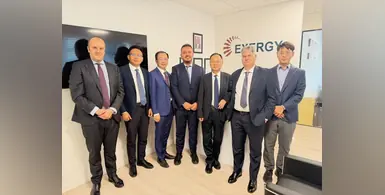
Masdar and Octopus Energy have entered into two new Memoranda of Understanding covering clean energy initiatives in the UK and Africa, marking an expansion of their collaboration across key global markets

Under the UK-focused agreement, Masdar and Octopus Energy will explore ways to unlock unused capacity within the country’s electricity distribution network to support the rapidly growing power needs of data centres. The agreements were formalised during Abu Dhabi Sustainability Week in the UAE.

The UK is currently experiencing severe constraints on grid connections, with renewable projects often facing multi-year delays before being connected. At the same time, electricity demand is rising sharply, driven in part by data centres that require large, reliable power supplies that can take years to secure.

The partnership proposes a new approach by identifying underutilised capacity within local distribution networks and building tailored energy systems around it. These systems will combine on-site solar generation, battery storage and flexible grid connections, enabling data centres to access power much faster while avoiding prolonged network upgrades.

Octopus Energy’s Kraken optimisation platform will play a central role by intelligently managing on-site generation, storage and grid electricity. This will ensure reliable power for energy-intensive AI workloads while reducing costs by shifting consumption to lower-priced periods.

The second MoU focuses on Africa, where Masdar and Octopus Energy will work together to scale clean energy solutions for commercial and industrial users. The collaboration aims to tap into Africa’s abundant solar and wind resources through local grids and distributed energy systems.

By addressing persistent gaps in grid investment, flexibility and system integration, the initiative seeks to support job creation, productivity and industrial development across the continent. Initial projects will be developed in South Africa, with plans to expand into additional African markets.

Mohamed Jameel Al Ramahi, CEO of Masdar, said, “Masdar and Octopus Energy share a commitment to overcoming challenges, expanding access to renewable energy, and powering progress across the globe. Through these agreements, we continue to reimagine the potential of renewables in the AI era, while also bringing much-needed clean energy to communities and businesses across Africa. We look forward to extending our partnership with Octopus Energy and transforming the energy market in the UK and in Africa.”

Greg Jackson, Founder and CEO of Octopus Energy, said, “This is a huge partnership and exactly what we need to move faster. Masdar is world-class in its vision and capabilities, and like us they’re focused on finding ways for renewables to deliver real value to countries and citizens.

“This is about delivering projects that make energy cheaper, cleaner, and unlock real opportunities for businesses and industry.”

The partnership also aligns with Masdar’s Power Africa Initiative, part of Global Citizen’s Scaling Up Renewables in Africa campaign, which aims to mobilise US$450 million for clean energy investments. These include grid infrastructure, distributed assets and technologies designed to deliver clean power directly to homes and businesses while supporting economic growth.

Masdar and Octopus Energy already have an established relationship, having signed a framework agreement in 2023 that enabled Masdar to license Octopus’ Kraken platform to manage its battery storage portfolio in the UK.

Volvo Penta introduces the G17 natural gas engine to deliver scalable, lower-emission backup power for data centres, utilities & mission-critical infrastructure. (Image source: Volvo Penta)

Rising global energy demand, fuelled largely by data centres, utilities and other mission-critical infrastructure, is increasing the need for backup power solutions that are reliable, scalable and lower in emissions. In response, Volvo Penta has introduced its new G17 natural gas engine, designed to support these fast-growing sectors with dependable and flexible power generation

The G17 natural gas engine complements Volvo Penta’s established D17 genset platform and marks an important milestone in the company’s broader transformation strategy. It delivers fuel flexibility, scalable output and a clear pathway towards a more resilient and lower-carbon energy system.

“The energy transition isn’t one-size-fits-all. It requires multiple technologies and fuel pathways working in parallel,” said Kristian Vekas, product manager for Industrial Power Generation at Volvo Penta.

“The G17 expands our power generation portfolio with a gas option engineered to meet rising global demand for dependable, lower-emission solutions that are backed by the strength of the Volvo Group and our global support network. It reflects our commitment to providing customers with fit-for-purpose solutions to support their energy objectives as the landscape continues to evolve.”

Developed on the same robust platform as the D17 engine, the G17 is a 17-litre, six-cylinder, spark-ignited unit capable of operating on both conventional pipeline-quality natural gas and renewable natural gas. This dual-fuel capability enables customers to lower carbon intensity today without compromising the performance, reliability or uptime required for critical operations.

Pipeline-ready natural gas capability

The G17’s ability to run directly on pipeline-quality natural gas or renewable natural gas offers a practical, lower-carbon alternative to diesel in applications where continuous availability and environmental performance are essential. Direct connection to existing gas networks simplifies installation and removes the need for additional fuel-conditioning equipment.

“The G17 is engineered to deliver lower emissions without trade-offs,” said Vekas. “Its flexible fuel capability helps reduce carbon intensity while maintaining the power density, responsiveness and durability customers expect from Volvo Penta’s heavy-duty platform.”

Rated at approximately 450 kWe at 1,800 rpm, the engine delivers high output from a compact design. Its smaller enclosure can reduce installation space requirements and housing material costs, while fast load acceptance and rapid power response help ensure stable operation during grid disturbances or peak demand events.

Designed for flexibility and efficiency

The G17 has been developed with emissions performance in mind, targeting reduced NOₓ and particulate matter. Features such as advanced combustion management, low-pressure Exhaust Gas Recirculation (EGR) and a high-efficiency three-way catalyst enable compliance with U.S. EPA stationary power application standards. This makes the engine particularly suitable for operators with strong ESG priorities or those working within strict air-quality regulations.

Its compact, stackable architecture makes the G17 well suited for space-constrained environments such as data centres. The engine can also form part of hybrid energy systems that combine internal combustion engines with renewable fuels and battery storage. This modular approach allows power systems to scale and adapt as demand evolves. Lower potential fuel costs compared with diesel and reduced noise levels further improve economic viability and community acceptance.

Leveraging Volvo Group’s proven automotive-scale technology, the G17 is built on platforms trusted worldwide in demanding heavy-duty applications. With the same footprint and cooling configuration as the D16 and D17 engines, it supports straightforward installation and retrofit projects. Delivered as a fully integrated OEM solution, the engine’s simplified component layout and reduced cylinder count enhance serviceability and can help lower total cost of ownership over its operational life.

MENA solar wind power transition analysis

The report, Rise of Renewables in the Gulf Region, launched at the World Future Energy Summit, highlights that variable renewable energy capacity across the Middle East and North Africa is expected to increase by roughly ten times by 2040 and continue expanding through to 2060, even as the region maintains its role as a leading oil and gas producer

According to the analysis, renewables will play an increasingly central role in the region’s power system over the coming decades. By 2060, electricity is projected to account for around 35% of total energy demand in MENA, with the majority of this electricity generated from renewable sources. Solar and wind combined are expected to deliver about 85% of electricity generation by that point, with solar contributing approximately 45% and wind close to 40%.

“The rapid rise of renewables in the Gulf, and MENA more broadly, is not replacing hydrocarbons overnight, but it is reshaping the power system,” said Ditlev Engel, Energy Systems CEO at DNV.

“GCC countries are building some of the world’s largest solar and storage projects while still supplying global oil and gas markets. This development is driven mainly by economics. Renewables now provide low-cost electricity, and clean power is becoming necessary for competitive industry and future hydrogen production.”

DNV’s report explains that this growth is being propelled by a combination of expanding renewable supply and rising electricity demand. Utility-scale renewable projects are being rolled out across the region, including mega solar installations, hybrid solar-and-storage plants, and new wind farms. At the same time, electricity demand is increasing from data centres, electric transport, and green hydrogen production. Established industries are also shifting towards low-carbon electricity in response to policy measures such as the European Union’s Carbon Border Adjustment Mechanism.

A significant inflection point is expected around 2040, when annual increases in renewable electricity generation are forecast to outpace growth in overall electricity demand. This shift is projected to steadily lift the share of renewables within the regional power mix.

Solar energy remains the dominant renewable technology. Installed solar capacity is forecast to rise from 76GW in 2024 to 340GW by 2029, with solar expected to supply nearly 20% of total electricity by the end of the decade. An increasing proportion of these projects will incorporate battery storage to enable continuous power delivery and enhance grid flexibility.

Wind power, while currently less developed, is projected to triple in capacity each decade between 2020 and 2060. Its generation profile complements solar, producing more electricity at night and during specific seasonal periods, particularly when paired with storage solutions. Overall, DNV estimates that combined solar and wind generation in MENA will expand by around fourteen times by 2040, alongside a tenfold increase in installed capacity.

“The Gulf is moving from discussion to deployment,” remarked Jan Zschommler, market area manager for Middle East & Africa, Energy Systems at DNV.

“Utility-scale solar, wind, and storage projects are now being built at a pace that changes the regional power mix. Our modelling shows that renewables growth will exceed demand growth after 2040. That is when the transition in the region’s power mix starts to accelerate.”

Energy storage and system flexibility are identified as critical enablers of this transition. Storage capacity across the region is expected to surge from about 36GWh today to nearly 9,500GWh by 2060, with batteries increasingly taking over the role of thermal plants in providing short-term flexibility. Enhanced regional interconnections will further support grid stability and cross-border electricity trade.

These findings align with insights from DNV’s 2025 Energy Industry Insights survey, which shows that energy executives in the Middle East are the most optimistic globally about the sector’s outlook. Most respondents anticipate revenue and profit growth, citing the rapid expansion of renewables and associated infrastructure as key factors. The survey points to strong investment momentum, growing project pipelines, and confidence in the region’s long-term energy transition.

More Articles …