




vb

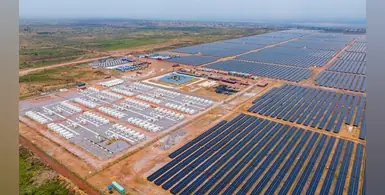
The 461MW Azura-Edo independent power plant near Benin City, Edo State, Nigeria (Image source: Azura Power)

In a deal that reflects growing interest in Africa’s energy sector, Abu Dhabi’s ePointZero is acquiring a 90% stake in Azura Power, marking a major entry into the continent’s power generation market

The deal also provides Azura with the long-term capital and strategic backing needed to accelerate its expansion and help address Africa’s growing electricity deficit.

Azura Power operates 752 MW of operational capacity across three assets, all underpinned by long-term power purchase agreements:

Nigeria: Azura-Edo (461 MW)

Senegal: Tobene (116 MW)

Mozambique: CTRG (175 MW)

"Reliable power is fundamental to economic growth, industrial development and long-term prosperity,” said Sheikh Zayed bin Hamdan bin Zayed Al Nahyan, chairman of 2PointZero.

“This investment through ePointZero reflects our commitment to deploying long-term capital into critical infrastructure that can support that growth in key markets across Africa.”

Development pipeline

The funding also offers a platform to Azura Power to pursue its current development pipeline, which comprises more than 1.5GW of gas, renewable and BESS projects across the continent.

Dave Peacock, Azura Power’s CEO, called the transaction a significant milestone for the company.

“Azura is well positioned to build on its strong foundations, broaden its opportunity set and accelerate its growth across Africa's energy sector,”he said.

Africa's power market is entering a period of sustained investment as population growth, urbanisation and industrial development drive demand for new generation capacity.

Electricity demand across the African region is expected to nearly double by 2040.

Yet, electricity access across sub-Saharan Africa remains at roughly 55% according to the World Bank, underscoring both the scale of infrastructure needs and the opportunity for long-term private capital.

Transaction terms

Under the transaction terms, ePointZero has partnered with Amaya Capital to establish an acquisition vehicle, through which ePointZero will acquire the respective ownership stakes of Actis and Africa50.

Amaya Capital, Azura Power's founding partner, will retain a minority interest of 10%, underscoring its continued confidence in the future growth of the platform it founded in 2010.

Completion of the transaction is subject to customary regulatory approvals and closing conditions.

Mariam Almheiri, vice chair and managing director, 2PointZero, said the deal reflects its approach to investing in businesses with strong fundamentals, local expertise, and long-term value.

It continues other recent interest by the company in Africa’s expanding energy sector, including an investment in Egypt’s Elsewedy Electric.

Mohamed Hesham, CEO of ePointZero, said Azura Power brings together many of the qualities it looks for in an energy platform: critical operating assets, an experienced management team and a strong position in markets with significant long-term power needs.

“We are acquiring a business built on nearly a decade of disciplined execution, with significant opportunity to support its continued growth as demand for reliable power infrastructure across the continent accelerates,” he said.

“Together with our strategic investment in Elsewedy Electric and its established industrial and EPC presence across Africa, our acquisition of Azura Power deepens ePointZero's capabilities in energy and infrastructure and positions us to pursue new opportunities across Africa's evolving energy markets."

Read more:

Tassili DZ Power, Yuchai plan Algeria genset factory

On-site power boost for Kamoa Copper

Tanzania opens Julius Nyerere hydropower plant


The new factory aims to capitalise on AfCFTA opportunities (Image source: Adobe Stock)

Algeria’s Tassili DZ Power is courting investment as it seeks to expand in-country power manufacturing utilising Yuchai (Guangxi Yuchai Machinery Group) engines

As well as growing Algerian manufacturing capacity, the long-term goal is to take advantage of emerging export opportunities for gensets arising from the African Continental Free Trade Area (AfCFTA).

“Tassili DZ Power is launching Algeria’s premier power generation and energy storage factory — a national industrial project, and we're opening the door to partners right now,” said Ouahid Arous, sales director Yuchai and managing Yuchai G-drive Marine Engine, writing in a post on social media.

Tassili Power Generation in Algiers, which has a long partnership with Yuchai, has a track record in supplying diesel and natural gas gensets to customers across the country, from Saharan oil camps and desert telecom sites to coastal hospitals and highland farms.

The planned manufacturing project includes:

• 6,000 generator sets per year (30–3,500 kVA)

• 250 hybrid power units per year (250–2,500 kW)

• 300 MWh per year of battery energy storage (BESS)

• Smart factory: robotics, AGVs, ISO 8528-certified test bays

• Training & R&D centre powering Algerian skills

• 500+ direct jobs for Algerian engineers and technicians

In his post to LinkedIn, Arous flagged the strategic role of Yuchai and other partners in the proposed manufacturing project.

“Our gensets will be built on world-class Yuchai engines — China's leading engine manufacturer — paired with Leroy-Somer alternators. Proven technology, assembled and tested in Algeria, by Algerians.”

He also called for investors and equity partners to join the project as the venture seeks to raise an additional US$79.5mn in funding.

“Algeria’s genset imports fell 65% — the market is ready for local production,” he added.

The proposed manufacturing site will cover around 100,000 square metres in the Algiers area, with Arous flagging the Rouïba, Réghaïa, Oued Smar industrial corridor or an equivalent industrial zone.

This will include 40,000 square metres of production halls, plus test yards, logistics and space for future expansion.

The venture is also interested in hearing from industrial and mechanical contractors for the provision of overhead cranes and gantry systems (10–50t); steel structure erection and industrial buildings; ventilation, compressed air and industrial utilities.

“From Algiers to Africa: with AfCFTA, this factory will export Algerian-made power across the continent,” he added.

Read more:

On-site power boost for Kamoa Copper

DSE unveils next generation generator controllers

Malawi unveils first standalone utility-scale BESS project


A glimpse of the new power plant in the DRC (Image source: CrossBoundary Energy)

CrossBoundary Energy’s solar PV and battery energy storage system (BESS) facility for Kamoa Copper S.A. has achieved commercial operation and is now supplying 30 MW baseload power from the sun to Africa’s largest copper mining complex

The project in the Democratic Republic of Congo (DRC) highlights growing interest in renewable and alternative power sources to offset reliance on traditional thermal gensets for remote mining operations and reduce diesel cost volatility, as well as supply chain risk.

“Achieving this milestone with Kamoa Copper S.A. is a significant step to mainstreaming round-the-clock renewable power,” said Gracia Munganga, project development director at CrossBoundary Energy.

“It proves how quickly clean, stable energy can be deployed – and the great potential of renewable energy solutions to support the mining sector’s ambitious growth.”

Kamoa Copper S.A., a joint venture between Ivanhoe Mines, Zijin Mining Group, and the DRC government, signed the power purchase agreement with CrossBoundary Energy in April 2025, just 16 months ago.

Key takeaways:

• CrossBoundary Energy’s baseload solar/BESS plant in the DRC has reached commercial operation, just 16 months after signing a PPA with Kamoa Copper S.A. in April 2025

• The solution comprises 233 MWp solar PV and 123 MVA/526 MWh BESS that will supply the mine with 30 MW firm power from solar and batteries

• Reaching commercial operation date 16 months after PPA signing makes it the fastest solar/BESS project of this type and scale to be delivered on the African continent

Powering growth

The installed energy system consists of a 233 MWp solar PV array and 123 MVA/526 MWh BESS to supply at least 30 MW baseload power to the mine.

According to a statement by CrossBoundary Energy, firm renewable electricity costs have fallen by around 50% over five years, making solar-plus-storage “cheaper” than conventional thermal baseload generation.

The speed of delivery ensures that Kamoa-Kakula will receive cheaper and cleaner electrons years ahead of other power supply options, it noted.

Auguy Bakome, project manager at Kamoa Copper S.A., said the speed at which the project was delivered also demonstrates how quickly renewable energy can be deployed at scale to support remote mining operations.

“This project shows that solar and battery storage can deliver dependable, sustainable and cost-effective baseload power for large mining operations,” he said.

“We are confident that renewable energy will continue to play a critical role in supporting the growth of our operations and the mining sector more broadly."

Environmental impact

The project also allows the mine site to expand production at the same time as reducing environmental impact, according to Annebel Oosthuizen, managing director at Kamoa Copper S.A., who noted that Kamoa-Kakula copper production is among the lowest carbon-intensive in the world.

“The new facility by CrossBoundary Energy will help power our planned growth in copper production, delivering an additional 30 megawatts of reliable, renewable baseload power."

Read more:

Tanzania opens Julius Nyerere hydropower plant

Scatec completes second phase of Egypt's Obelisk project

Jivo Energy hails Malawi BESS project teams 

Aerial view of the new dam and power project (Image source: The Arab Contractors)

In a major boost to the country’s energy sector, Tanzania has officially inaugurated the Julius Nyerere hydropower plant and dam (JNHPP) — officials hailed the move as a turning point for the East African country, which has long been plagued by electricity constraints
 
The project, estimated to cost around US$2.8bn, is expected to more than double the nation’s generation capacity with a surplus that could support power exports, as well as drive domestic industrial growth.
 
One of the largest dams in Africa, the 2,115 MW project was completed by an Egyptian joint venture of The Arab Contractors and Elsewedy Electric.
 
The official inauguration ceremony was attended by Tanzania’s President Dr. Samia Suluhu Hassan and other dignitaries and included a joint field tour of key facilities:
 
The concrete dam extends for 1,036 metres and reaches 131 meters high.
 
The power house building at the hydropower plant comprises nine giant water turbines with a capacity of 235 MW each.
 
The 400-kV switchyard will transmit generated power and integrate it into the national grid via the Chalenzi 1 and Chalenzi 2 interconnection circuits.
 
The bridge built on top of the top of the dam body (Dam Crest Bridge) connects the two banks of the Rufiji River.
 
Behind the dam is a giant storage lake with a capacity of 34 billion cubic metres, equipped with seven water outlets to control and discharge water flows.
 
The completion of the JNHPP project could bring relief to some of Tanzania’s major power consumers, including industries such as mining and cement, which have long faced challenges in securing reliable, affordable energy.
 
The new electricity produced from JNHPP could improve stability of supply, ease costs and reduce reliance on thermal-based generators, or gensets.
 
Read more:


DSE launches future-ready DSEG7 generator control series. (Image source: DSE)

Deep Sea Electronics (DSE) has unveiled the new DSEG7-Series, a next-generation range of generator controllers designed to establish a new standard in power control technology

Developed to meet the evolving needs of the global power generation industry, the DSEG7-Series combines advanced processing capabilities, enhanced connectivity and an intuitive user experience within a robust, future-ready platform. Designed for generator manufacturers, system integrators and end users, the new range offers greater performance, flexibility and operational efficiency across standby, prime power and rental applications.

At the core of the DSEG7-Series is an all-new hardware architecture designed to support the next generation of connected and intelligent power systems. With faster processing speeds, expanded functionality and improved system responsiveness, the platform provides a foundation for increasingly sophisticated power management strategies while helping customers prepare for future industry requirements.

Recognising the growing importance of secure and resilient infrastructure, the DSEG7-Series features a cyber-security-ready architecture to support the increasing connectivity demands of modern power systems. As remote monitoring, cloud connectivity and digital integration become increasingly standard across the industry, the platform provides the foundation needed to support evolving cyber security standards and customer expectations.

The DSEG7-Series has also been developed with a Functional Safety (FuSa)-ready architecture, addressing the growing demand for safety-critical control systems across a wide range of applications. As regulatory requirements and system complexity increase, the platform provides a future-ready foundation for applications where reliability, system integrity and operational safety are critical.

A new high-resolution graphical display and redesigned user interface give operators greater visibility of system performance, enabling faster commissioning, simpler diagnostics and more informed decision-making. Enhanced connectivity and networking capabilities also support seamless integration with remote monitoring platforms, SCADA systems and building management systems, helping users maximise uptime and improve operational efficiency.

Designed for demanding real-world environments, the DSEG7-Series features a newly engineered enclosure with enhanced environmental protection for dependable performance in challenging operating conditions. Whether deployed in critical standby power systems, industrial applications or rental fleets, the platform is designed to provide long-term reliability where it matters most.

For OEMs, panel builders, rental operators and end users, the DSEG7-Series provides enhanced flexibility through a common hardware platform. Each controller can be configured for either Remote Start or Auto Mains (Utility) Failure applications, enabling customers to standardise on a single controller variant across multiple projects and installations. By reducing the number of part numbers required in stock, organisations can simplify procurement, lower inventory costs and improve product availability while retaining the flexibility to adapt to changing application requirements.

Manufactured at DSE's UK headquarters, the DSEG7-Series marks the latest chapter in the company's continued investment in engineering excellence, product innovation and future-focused technology development.

"The DSEG7-Series represents a significant step forward in generator control technology," said Felipe Wisintainer, sales director at DSE. "As power systems become more connected, more intelligent and increasingly safety critical, our customers need solutions that are ready for the challenges of tomorrow. With a cyber-security-ready architecture for connected power systems, a Functional Safety-ready foundation for safety-critical applications, and the flexibility to support both Remote Start and Auto Mains (Utility) Failure applications from a single hardware platform, the DSEG7-Series provides a smarter, more future-ready approach to generator control."

With the launch of the DSEG7-Series, DSE continues its commitment to delivering innovative control solutions that enable customers to operate more efficiently, safely and confidently in an increasingly connected world.

The DSEG7-Series is more than a new controller range; it is a future-ready platform engineered to meet the evolving requirements of the global power generation industry.

More Articles …