




vc.web.local

twitter Facebook Linkedin acp Contact Us

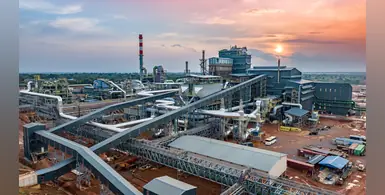
Hybrid power plant impression. (Image source: Wartsila Energy)

Africa’s cement industry is expanding quickly, driven by urbanisation, infrastructure investment and rising demand for housing. Yet behind this growth lies a persistent operational challenge: reliable and affordable access to electricity, writes Krzysztof Lokaj, Africa development manager, Wärtsilä Energy
 
Cement production is energy intensive and highly sensitive to power interruptions. Kilns operate continuously, and sudden shutdowns disrupt production and increase costs. In many African markets, however, limited access to grid power and volatile energy prices leave many cement producers with no other choices but to invest in power generation capabilities on site.
 
In this context, the question facing the cement industry is no longer whether to generate their own power, they often must, but which technology provides the most practical and resilient solution to do so.
 
The technological options typically envisaged include open-cycle gas turbines, reciprocating gas engines and sometimes even coal-fired steam turbines. But only one of these technologies offers the optimal balance of flexibility, reliability and affordability suited to highly demanding cement operations.
 
Flexibility in matching industrial power demand
 
An essential factor to take into consideration when assessing options is the way power demand fluctuates within cement plants. Although production processes often run continuously, electricity demand varies depending on grinding operations, maintenance cycles and seasonal production patterns.
 
By design, engine power plants are highly effective at adapting to these changing demand profiles since plant operators can simply change power output from each engine between 10% and 100% within minutes. Because they are composed of multiple engines operating in parallel, independent units can even be switched on or off to match real-time demand.
 
More importantly, flexible engines can operate stably at very low loads while maintaining high efficiency, giving operators a responsive tool for managing fluctuating power requirements. This capability allows the power plant to maintain very high electrical efficiency across a wide range of output levels.
 
This operational flexibility is also of paramount importance to support the integration of intermittent renewable energy in microgrids. As the cement industry increasingly turns to solar and wind to lower their carbon emission footprint, matching them with flexible engine capacity will provide the critical dispatch dependability needed in hybrid power plant configurations.
 
Open-cycle gas turbines, on the other hand, significantly lose efficiency when operating below full capacity. For industrial users that rarely operate at a constant full load, this translates into higher long-term fuel consumption, offsetting the turbines’ lower up-front cost. In a sector where energy costs represent a significant share of operating expenses, differences in efficiency over time will outweigh any initial capital cost advantages.
 
Unlike engines that can be turned on and off multiple times during a day and require no minimum up and down time, turbines need to operate constantly to avoid thermal stresses and therefore increased maintenance costs. This lack of operational flexibility will significantly undermine the efficiency, but also severely limit the performance of renewables in hybrid microgrid configurations. 
 
Reliability & scalability as baseline requirements
 
For cement plants, electricity supply must be dependable above all else. Reciprocating engine power plants typically achieve availability rates over 98 percent, making them well suited to industrial environments where access to energy must always be dependable.
 
One reason for this reliability lies in the modular nature of engine-based plants. Unlike turbine power plants, their configuration allows individual units to be serviced without shutting down the entire plant. Servicing can be planned and carried out on site while the remaining engines continue to operate. Spare parts planning, local technical support and straightforward servicing procedures also help keep downtime to a minimum.
 
The modular structure of engine power plants also allows for new generation capacity to be expanded gradually. As cement plants increase production, additional generating units can be installed without redesigning the entire power system, whilst avoiding the need for oversized plants. This structural flexibility reduces investment risk, allowing power infrastructure to grow alongside industrial demand.
 
In this regard, engine power plants offer a degree of adaptability that is difficult to achieve with other generation technologies.
 
Coal, a cheap option with considerable downsides
 
Coal-fired power plants are sometimes considered as an alternative for captive power in certain countries, particularly where cheap coal resources are locally available. However, coal-based generation presents its own set of challenges for industrial users.
 
Much like open-cycle gas turbines, coal plants are designed primarily for steady, continuous operation and are less suited to environments where power output must adjust frequently and rapidly. Startup times can extend to many hours, and maintenance often requires large sections of the plant to be taken offline. This lack of flexibility negatively impacts project economics.
 
Environmental considerations also represent a major downside for coal. Financing institutions, investors and owners are paying closer attention to emissions profiles and long-term climate risks. As a result, coal-based power plants can encounter significant barriers to financing.
 
Preparing for an evolving energy landscape
 
Energy systems across Africa are evolving, with new gas infrastructure, renewable energy projects and volatile fuel markets reshaping the landscape. Industrial power solutions therefore need to be able to accommodate these transformations.
 
Of course, no single power technology is universally optimal. Yet, when, sustainability, scalability, reliability, operational flexibility and long-term efficiency are considered together, engine-based power plants present a compelling option for many cement producers across the continent.
 
Read more:


Work at Kamoa mine site (Image source: Ivanhoe Mines)

Canadian mining group Ivanhoe Mines has provided an update on its various power projects at its mine sites in the Democratic Republic of Congo (DRC)

Construction of Kamoa-Kakula’s on-site solar (PV) facility, with battery storage, is advancing “on schedule”, it reported in its Q1 statement, delivering a total baseload of 60 MW to the copper complex from early Q3 2026.

The solar facility is already the largest solar project with battery storage on the African continent, the mining group added.

Kamoa-Kakula is planning to increase total on-site solar power generation capacity, with battery storage, to 120 MW by the end of 2027.

A tender was awarded, and a power purchase agreement (PPA) signed in late April for an initial 30 MW expansion of the existing on-site solar facilities.

“A further 30-MW facility is currently being tendered and is expected to be awarded in the next month,” the Q1 report noted.

However, energy supply at the mining complex is also underpinned by thermal power plant.

This has resulted in efforts to secure fuel supplies in a volatile market amid tensions in the Middle East and the Strait of Hormuz.

“Preparations have been made across the group to secure on-site consumables in the event of continued global supply chain disruptions,” the company noted.

“This includes Kamoa-Kakula securing five months’ worth of diesel supply.”

However, the company added that the use of backup diesel generators could be be curtailed to rationalise diesel consumption.

Ivanhoe’s founder and co-chairman Robert Friedland said he remained bullish despite these challenges.

“Ivanhoe has a portfolio of tier-one mines powered by hydroelectric and solar power…built to withstand disruption,” he said.

“Our company is ideally positioned in this volatile environment, with exploding global demand for the copper, zinc, nickel and precious metals that we produce.”

At its Kipushi mine, the company is also currently tendering for a dedicated solar project with up to 200 megawatt hours (MWh) of battery energy storage.

This facility would provide 10 MW of baseload power, reducing reliance on the backup diesel generators that are used intermittently.

Located on a 70-hectare site near the mine, it is expected to be operational by the end of 2027.

Read more:

Hybrid power: energy security for mines in Africa

Mauritania on-site power for Into Africa Procurement

John Deere Power Systems underlines commitment to diesel technology

Laua solar park to boost Angola's clean energy sector (Image source: Adobe Stock)

Portuguese engineering firm MCA Group has inaugurated what it says is Africa’s largest off-grid solar park in Angola’s Luau municipality — marking a major milestone for renewable energy development along the strategically important Lobito Corridor

The opening of the €87mn Luau Photovoltaic (PV) Park was attended by Angolan President João Lourenço and Energy and Water Minister João Baptista Borges.

The facility has a generation capacity of 31.85 MWp and battery storage of 75.26 MWh, supplying electricity to more than 90,000 people without relying on fossil fuels.

According to MCA, the project surpasses the capacity of the nearby Cazombo Solar PV Park, previously regarded as the continent’s largest off-grid installation.

Together, the two projects form part of Angola’s wider Rural Electrification Programme, which aims to deploy 46 autonomous solar mini-grids across 60 communes by 2027, potentially benefiting more than one million people.

MCA’s chairman Manuel Couto Alves called it an important step in Angola’s energy transition as it expands solar power capacity throughout the country.

“The completion of the Cazombo and Luau parks marks just the beginning of a structural and ambitious programme which will continue to expand in the coming years,” he said.

“We believe that energy transforms lives, creates opportunities and strengthens regions, and it is with this aim that we will continue to work, side by side with the communities, to ensure that electrification reaches where it makes the most difference.”

The Luau facility includes nearly 55,000 solar panels and is expected to save around 18 million litres of fuel annually while reducing carbon emissions.

The project, which created more than 200 local jobs during construction, was jointly developed with Angola’s state-owned utility PRODEL EP, while financing was arranged by Standard Chartered Bank with support from German export credit agency Euler Hermes under the European Union’s Global Gateway infrastructure strategy.

Read more:

Elgin Orchards pure-air switchgear project

Toyota Tsusho completes Tunisia solar milestone

Bolobedu solar farm begins full operations

Project implementation at Elgin Orchards (Image source: Schneider Electric)

Schneider Electric and Technoserve Medium Voltage (MV) have implemented RM AirSeT SF₆-free medium voltage (MV) switchgear at Elgin Orchards, one of South Africa’s leading fruit producers

Situated in Grabouw in the Western Cape, the project marks another step in the continued adoption of RM AirSeT and its pure-air switchgear technology in the South African marketplace.

“The RM AirSeT installation at Elgin Orchards delivers 100% elimination of SF₆, improved reliability, and cost savings of up to 20% over the system’s lifecycle,” said Brighton Mwarehwa, offer and marketing director for power systems at Schneider Electric.

“It’s more than equipment; it’s a step toward responsible growth and energy resilience”.

The installation of the RM AirSeT forms part of Elgin Orchard’s journey to establish sustainable and resilient operations.

The switchgear replaces an existing Schneider Electric RM6 unit which has been moved to a new cold storage plant – a move that underscores the fruit producer’s commitment to resource efficiency.

“At Elgin Orchards, sustainability is at the heart of everything we do,” said Neil Reid at Elgin Orchards.

“Togeher with Schneider Electric and Technoserve Medium Voltage we’ve made a change that aligns to reliable, safe and low-carbon energy”.

According to Schneider Electric, the RM AirSeT represents the ‘next generation’ of sustainable switchgear, using pure air insulation and vacuum technology instead of sulphur hexafluoride (SF₆), a greenhouse gas (GHG) with 24,300 times the global warming potential of carbon dioxide.

By removing SF₆ entirely, Elgin Orchards has achieved measurable carbon footprint reduction and eliminated associated regulatory risks, while ensuring uninterrupted operations for its cold chain and processing facilities.

“The RM AirSeT offers not just reliability but future-proof flexibility,” said Evans Coetzee, general manager at Technoserve MV.

“It’s compact, robust and digital-ready, providing Elgin Orchards with a durable and sustainable medium-voltage solution that’s simple to install and maintain. The swap from RM6 to RM AirSeT was seamless and completed in a single day, minimising downtime.”

Coetzee said the RM AirSeT delivers up to 10,000 switching cycles and offers integrated digital capabilities for real-time monitoring and diagnostics through Schneider’s Easergy T300 platform.

“This makes it ideally suited for hybrid energy systems, frequent operations and future smart grid integration,” he said.

“The Elgin Orchards project is a clear example of how sustainability and performance can coexist,” said Mwarehwa.

“By replacing SF₆ with pure air, we are helping our customers transition towards cleaner, more resilient energy systems without compromising reliability or safety.”

Mwarehwa added: “It demonstrates how innovation in electrical distribution can make a tangible impact on climate goals while supporting South Africa’s all-important agricultural sector.”

Read more:

Phelan selects Honeywell technology for South Africa eSAF

iTek Drives expands SA industrial base

Booyco Engineering expands global defence HVAC solutions amid demand 

Toyota Tsusho launches two Tunisia solar plants, delivering 100MW clean energy to 120,000 homes nationwide. (Image source: Toyota Tsusho)

Toyota Tsusho Corporation has announced that, through its Group company AEOLUS SAS, it has completed construction of two solar power plants in Tunisia with a combined capacity of 100MW, and both facilities have now entered commercial operation

The development marks Toyota Tsusho’s first renewable energy project in Tunisia and the first investment project undertaken by AEOLUS.

The two plants were developed in Tunisia’s Sidi Bouzid Governorate and Tozeur Governorate through an operating company financed by AEOLUS and Scatec ASA, a Norwegian company specialising in the construction and operation of solar power facilities.

The Sidi Bouzid Mezzouna PV Power project, with a capacity of 50MW, commenced commercial operations on January 1, 2026. The Tozeur PV Power facility, also rated at 50MW, began commercial operations on March 4, 2026.

Together, the two plants are expected to provide electricity equivalent to the yearly consumption of around 120,000 Tunisian households. The project is also projected to reduce carbon dioxide emissions by approximately 108,000 tonnes annually. Power generated from the facilities will be supplied to the Tunisian Company of Electricity and Gas under a 30-year agreement.

Both solar projects were selected under the Ministry of the Environment, Japan Financing Programme for Joint Crediting Mechanism (JCM) Model Projects in fiscal year 2023.

Toyota Tsusho Group stated that it is advancing carbon neutrality initiatives to help create a better global environment for future generations. In Africa, under the key message 'for the future children of Africa,' the Group said it will continue promoting green businesses that support social development and economic growth across the continent.

The Ministry of the Environment, Japan has been implementing the 'JCM Model Projects,' which provide financial assistance covering up to half of the initial investment costs. The programme is designed to support projects that lower greenhouse gas emissions through advanced decarbonisation technologies in developing countries, while enabling the acquisition of JCM credits that contribute to Japan’s emissions reduction goals and partner countries’ climate targets. This Tunisia project is being carried out with the cooperation of the Tunisian and Japanese governments.


More Articles …