




vb

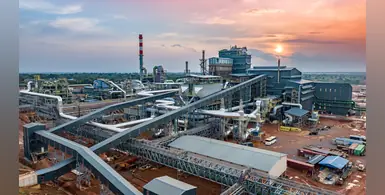
BESS facility at Morocco mine site (Image source: Envision Energy)

Morocco's first large-scale lithium iron phosphate (LFP) battery energy storage system (BESS) has been successfully energised at OCP Green Energy's Benguerir mining site

The energization milestone marks the start of the progressive commissioning of this large-scale BESS.

The 25 MW / 125 MWh system was supplied and commissioned by Envision Energy under a contract signed in late 2025, and is now undergoing testing before entering commercial operation.

“The successful energisation of Morocco's first large-scale battery storage project demonstrates the reliability, flexibility and cost-effectiveness of integrated renewable-plus-storage solutions in industrial applications,” said John Lee, general manager of Envision Energy for the Middle East and Africa.

“Envision is proud to be part of this landmark project and to contribute green technology to Morocco's energy transition.”

Envision Energy provided the full storage system and led the commissioning work, integrating the BESS with the site's solar generation, grid conditions and industrial load profile.

The system is designed to shift surplus solar power from daytime generation to peak consumption hours, reducing the site's peak-hour electricity bill by approximately 25%.

With five hours of storage capacity, the BESS functions as an industrial energy management tool rather than a short-duration grid asset.

It is supported by US$20mn from the Clean Technology Fund, managed through the African Development Bank, and is designed for a 25-year lifetime with daily charge-discharge cycles.

The project marks a milestone for battery storage and industrial decarbonisation in Morocco and supports the country’s target of achieving 52% of installed electricity capacity from renewable sources by 2030.

For OCP, the value lies not in battery capacity, but in the system’s ability to reduce peak-hour costs over a 25-year operating life.

“Storage is the natural extension of our energy strategy. It allows us to reconcile the variable output of renewable energy with the continuous needs of our industrial platforms, while strengthening the reliability of our energy supply,” said Omar Kadir, CEO of OCP Green Energy.

“Beyond OCP Group's own needs, this technology paves the way for a more harmonious integration of renewable energy into the national power system. By bringing greater flexibility and resilience to the grid, it will help accelerate the deployment of renewable capacity.”

On 21 September, OCP S.A. also announced that it had raised almost US$150mn in financing, to be used for corporate purposes, through a tap issue on its April 2026 hybrid bond.

Read more:

Exergy to pursue East Africa's clean energy opportunity

Norway guarantees financing for South African solar project

Nuclear power key to Africa's growing energy needs

Exergy and TICA leaders at the opening of Exergy East Africa's Nairobi office (Image source: Exergy)

Clean energy group Exergy International has established a permanent local presence in Nairobi as its gateway to Kenya and the wider East African region

The opening allows the company, which is headquartered in Italy and a part of TICA Group, to pursue opportunities in geothermal power, renewable energy and industrial energy efficiency.

“After several years of studying the market and evaluating its opportunities, we are pleased to establish Exergy East Africa Ltd and begin a new phase of direct engagement in Africa,” said Luca Pozzoni, deputy CEO of Exergy.

“The region combines exceptional renewable resources with fast-growing demand for reliable and affordable electricity.”

From Nairobi, the newsubsidairy will work more closely with customers, project developers, industrial partners and institutions, gaining a deeper understanding of market requirements and providing direct support throughout the development of new energy projects.

“Africa will be a strategic growth market for Exergy in the years ahead and we aim to support its energy development with technologies and international expertise that can strengthen industrial growth, energy resilience and a responsible and equitable transition,” added Pozzoni.

In a statement, the company cited Africa’s exceptional renewable resources and rapidly growing electricity demand, describing it as one of the most attractive markets for energy and infrastructure development.

Private-sector clean energy investment in Africa almost tripled, from approximately US$17bn in 2019 to nearly US$40bn in 2024.

However, the statement noted that investment remains below the levels needed to support future demand and achieve the continent’s energy and development objectives, leaving “considerable opportunities” for new projects, technologies and long-term industrial partnerships.

Kenya, for years a regional renewable energy leader with its geothermal history, is a prime example.

Exergy said that it selected Kenya as the base for its East African operations because of the country’s established renewable energy ecosystem, strategic regional position and recognised leadership in geothermal development.

The country is already the world’s sixth-largest geothermal market, with around 980 MW of installed capacity and an estimated potential of up to 10 GW.

Across the wider East African Rift System, largely untapped geothermal resources have been estimated at up to 20 GW.

“Together with growing opportunities in solar power, energy storage and industrial energy efficiency, this creates a broader market for technologies that can provide reliable power generation, improve efficiency and reduce emissions,” the statement noted.

As well as nurturing closer relationships with local stakeholders, understanding regulatory and technical requirements, and becoming involved in projects from their earliest stages, the Nairobi office will also serve as a platform for developing opportunities in geothermal generation, renewable energy, industrial waste-heat recovery, energy storage and energy efficiency.

Matteo Cavadini will be permanently based in Nairobi and serve as business development manager for Africa, working alongside Erdoğan Arpacı, general manager of Exergy Turkey, who leads the company’s business development activities across Africa, and Pozzoni.

“A permanent presence in Nairobi will allow us to engage directly with the market and build relationships based on continuity, local knowledge and shared objectives,” said Arpacı.

“We want to work alongside customers and partners from the earliest stages of project development, combining Exergy’s international engineering and operational experience with a clear understanding of local priorities and operating conditions.”

The company said that it will primarily focus on projects where advanced energy-conversion technologies can improve efficiency, reliability and long-term economic performance.Its portfolio combines Organic Rankine Cycle solutions for geothermal power generation and industrial waste-heat recovery with high-efficiency heat pumps and battery energy storage systems.

Read more:

Norway guarantees financing for South African solar project

China's GoGo Power launches in Mali

Solar power set for record growth in 2026


Norway supports 255 MW solar project in South Africa. (Image source: Scatec)

Norway is supporting the expansion of South Africa’s renewable energy capacity and the development of its power market through a state guarantee of up to NOK 150 million (approx. US$16.1mn)

Norwegian renewable energy company Scatec will develop and operate the solar power plant

The support is intended to encourage investment in solar generation for industrial users while helping reduce the risks associated with private-sector investment in South Africa’s energy market.

Norway’s Minister of International Development Åsmund Aukrust said the initiative could deliver economic benefits beyond electricity generation, including employment and additional tax revenues.

The Norwegian guarantee scheme for renewable energy is a real win-win. It is cost-effective development assistance because the guarantee costs nothing unless the beneficiary incurs a loss.

"The project creates jobs which are key to reducing poverty and generates tax revenues the country can use to provide welfare for its citizens. This is exactly the type of support African leaders say they want from countries like Norway," said minister of international development Åsmund Aukrust in a press release at regjeringen.no.

South Africa has experienced persistent challenges related to electricity shortages and an unreliable power supply, while its electricity system continues to rely heavily on coal.

The guarantee scheme is administered by Norad and was launched in 2025. The Thakadu Solar project represents the first guarantee issued to the private sector under the scheme.

Norad director General Gunn Jorid Roset said the mechanism can help reduce risks for private companies investing in renewable energy and support wider development of the electricity market.

"This is an effective way to use development funding. When we issue a sovereign guarantee, we help reduce the risk for private actors that want to contribute to expanding renewable energy. This is not just about a single power plant, but about contributing to an evolving energy market. Access to energy is fundamental to development, and in this effort, we need to work together with the private sector."

Supporting renewable generation and private power sales

The guarantee will support Scatec’s development and operation of the Thakadu Solar power plant, in which the company is also a co-owner.

Once completed, Thakadu Solar will add 255 MW of renewable electricity generation. The project’s output is equivalent to the electricity consumption of approximately 150,000–200,000 households.

The additional renewable capacity is expected to contribute to increased clean electricity generation, lower emissions and continued development of South Africa’s electricity market.

The project forms part of Lyra Energy, a platform established by Scatec with South African partners to supply electricity to large private-sector customers. Norway’s guarantee is designed to reduce counterparty risk for Lyra Energy, supporting the financing required to unlock the investment.

Scatec CEO Terje Pilskog said investment in renewable generation remains important for reducing electricity costs and improving energy access in emerging markets.

– Investment in renewable power generation in emerging markets is critical to reducing power costs and securing energy access, and schemes such as the state guarantee help accelerate the energy transition through solutions like these, said Scatec CEO Terje Pilskog.

Scatec has established Lyra Energy Trading with Standard Bank South Africa and Stanlib. The trading platform is designed to connect electricity producers with private-sector buyers.

The arrangement means Norway’s support extends beyond the addition of solar generation. It also contributes to the development of a market in which private electricity producers can sell power directly to industrial customers in South Africa.

Guarantee designed to unlock project financing

Norad is providing Standard Bank South Africa with a guarantee of up to US$15mn, approx. NOK 150 million. The guarantee will cover part of the payment risk associated with private buyers purchasing electricity.

The guarantee is a key condition for lenders to finance the solar power plant. By reducing the risks associated with private-sector power purchasers, the mechanism is intended to enable investment in new renewable generation that commercial players may otherwise be unwilling to finance independently.

Per Fredrik Pharo, Director of the Department for Climate, Nature and Private Sector at Norad, said the guarantee is intended to support financing for the solar project while contributing to broader reforms in South Africa’s electricity market.

The purpose of this guarantee is to help secure financing for a planned 255 MW solar power plant in South Africa.

Per Fredrik Pharo, director of the department for climate, nature and private sector at Norad added that the initiative would also support a developing market structure in which private electricity generators can supply industrial customers directly.

"In addition, the guarantee will support the development of the power market, in which private producers can sell electricity directly to industry – an important part of the country’s power market reform."

South Africa’s Koeberg nuclear power station (Image source: Adobe Stock)

Nuclear power could help meet Africa’s growing electricity needs, including rising demand from artificial intelligence (AI) and data centres, according to North-West University (NWU) principal and vice-chancellor Prof. Bismark Tyobeka

“It is a match made in heaven,” said Tyobeka, a nuclear energy expert, who made the case during an NWU public lecture on AI and nuclear power.

The argument comes as electricity demand from data centres is expected to rise sharply as AI develops.

The International Energy Agency (IEA) expects global data-centre electricity consumption to roughly double by 2030, although renewables are expected to meet a substantial share of the additional demand.

Tyobeka said many African countries would need additional reliable generation to support economic and technological growth.

“These two fields are converging to address one of the world’s most pressing energy challenges: delivering reliable, clean and secure electricity for a sustainable future,” he said.

“The need for more electricity therefore immediately accompanies our advances in artificial intelligence,” he said.

But we do not only need electricity, he added, we also need clean electricity.

Nuclear power can provide continuous, low-carbon electricity, while small modular reactors (SMRs) and microreactors are being developed as potentially more flexible alternatives to conventional plants.

“SMRs and microreactors are particularly well suited because their size allows them to be deployed almost anywhere. They can be built in factories,” said Tyobeka.

He also argued that AI could improve nuclear-plant safety and maintenance.“AI is a game changer,” he said.

“It can potentially enhance the safety features of nuclear power-plant designs. It can help us optimise the efficiency of nuclear power plants. It can also help us make rapid decisions across the entire nuclear value chain.”

However, nuclear projects face significant challenges, including high upfront costs, lengthy construction times, regulation, waste management and public acceptance.

“People do not trust AI as we sit here. People do not trust nuclear power as we speak. How do you secure buy-in from such suspicious people? Transparency is key.”

Tyobeka said nuclear investment could also support African mining, manufacturing and mineral processing.

“Nuclear power can enable Africa’s AI and industrial future. We have seen that the need is real and the opportunity is now.”

Read more:

China's DoGo Power launches in Mali

Solar power set for record growth in 2026

ePointZero to buy Azura Power majority share


Mali launch for DoGo Power (Image source: Adobe Stock)

China’s DoGo Power has expanded into Mali, launching grid-forming energy storage solutions for commercial & industrial (C&I) and utility-scale power stations

Guided by a long-term localisation strategy, the company said in a statement that it will partner with local industry players to expand green energy access and accelerate Mali's power system upgrade and low-carbon transition.

“This move marks a key milestone in DoGo Power's Africa market strategy,” the statement read.

“The company will build local service and technical support teams covering full-cycle solution customisation, delivery and O&M, aligning its proven grid-forming technology with local power development needs.”

It added: “With its first batch of products arriving at port, DoGo Power will continue to deepen its presence in Mali and the wider African market.”

In April, DoGo Power held a partnership recruitment event in Mali, to bring together representatives from local government departments, key enterprises, investment institutions, industry consulting agencies and local media, to discuss development opportunities in North Africa’s energy storage market.

Mali faces severe energy supply constraints: national electrification coverage stands below 50% (less than 30% in rural areas), with over 80% of generation coming from costly diesel fuel.

Frequent outages caused by weak grid stability have become a major bottleneck for local development and industrial users.Meanwhile, the country's annual average of over 3,000 hours of sunshine lays a solid foundation for solar-plus-storage growth.

“Adapted to Mali's grid conditions, DoGo Power’s intelligent grid-forming energy storage solutions ensure uninterrupted power for critical loads during grid fluctuations or outages, and support PV-storage-diesel hybrid configurations to cut diesel reliance and increase green energy consumption, flexibly catering to off-grid and weak-grid demands,” the company’s statement noted.

“Leveraging full industrial chain strengths and localised capabilities, it will iteratively optimise tailored storage solutions to help build a more stable, cleaner and inclusive modern power system in Mali, serving as a trusted long-term technology partner for the region's energy transition.”

Read more:

Solar power set for record growth in 2026

Financial close for SA's Lion Thorn solar park

ePointZero to buy Azura Power majority share

More Articles …