




vc.web.local

IVECO and Transaid strengthen Ghana’s HGV driver training. (Image source: IVECO)

IVECO, backed by Iveco Group’s commitment to supporting local communities, has donated an IVECO Stralis unit to Transaid, a UK-based international development charity working with regional stakeholders to address transport challenges, improve road safety and expand access to sustainable transport across sub-Saharan Africa

Iveco Group has supported Transaid since 1998 and is a founding partner of the organisation.

The donation marks the latest development in the longstanding partnership between IVECO and Transaid, which focuses on improving road safety across sub-Saharan Africa. A ceremony to mark the vehicle handover was held at the Driver and Vehicle Licensing Authority (DVLA) Head Office in Accra, with representatives from Ghana’s Ministry of Transport, Ghana Driving Association and other local stakeholders in attendance.

The IVECO Stralis 4x2 tractor model AS440S50T/P will support Transaid’s Driving Safety Across Ghana project by helping train driver examiners and applicants seeking F-class licences. The initiative is working with transport associations to support the introduction of a new national Heavy Goods Vehicle (HGV) driver training standard.

Through direct engagement and awareness activities, the project aims to reach 8,000 HGV drivers nationwide. It will also strengthen the capacity of driver trainers in inland Ghana to meet the expected rise in demand for training and support the establishment of an institutional home for HGV driver trainer development.

As part of the programme, Master Examiners from the Ghana Driver and Vehicle Licensing Authority will receive training to enable them to assess applicants according to the new HGV standard and associated assessment tools.

IVECO and its local official dealer, Silver Star Auto Limited, which serves the Ghanaian market with IVECO’s full range of vehicles, played a key role in coordinating and facilitating the logistics required to deliver the vehicle to its final destination.

The Ghana Driver and Vehicle Licensing Authority will also roll out the new HGV standard following the passage of the amended Road Traffic Act, L.I. 2180. Under the new framework, refresher training will become compulsory for drivers before licence renewal, while HGV drivers will be required to complete structured training before obtaining their F-class licence.

Annalisa Citterio, Head of Sustainability at Iveco Group, commented: “Standing alongside local communities, understanding their needs, and providing concrete support represent a fundamental commitment for us. Our partnership with Transaid reaffirms our aim to generating tangible impact on the ground by promoting training, road-safety awareness, and high professional standards for drivers and local stakeholders. At Iveco Group, we believe that sustainable development is also driven by education and capacity-building, which are essential elements for fostering safer and more inclusive transport systems.”

Thelma Ayisi, project manager at Transaid and team lead for the Driving Safety Across Ghana project added, “This donation comes at a crucial time and affirms the work we have undertaken since 2021 to enhance driver training standards in Ghana. It places the DVLA in a stronger position to further build the capacity of its driver examiners, enabling them to operate at the high standards we have established. In addition, it creates an important opportunity for the Authority to assess F-class licence applicants using a standard vehicle. We extend our sincere appreciation to IVECO for this generous contribution, which will significantly support ongoing efforts to improve road safety in Ghana.”

Strengthening a long-term partnership

The latest IVECO vehicle donation builds on years of collaboration with Transaid and follows the company’s donation of a Stralis for a similar driver training initiative in Tanzania in 2011.

IVECO has previously donated three Daily Vans to support an access-to-healthcare project in Ghana, as well as an on/off-road Trakker to assist with post-tsunami clean-up operations in Sri Lanka.

The company has also taken part in Transaid’s cycle challenges for the past four years, including this year’s ride from London to the Isle of Wight. Transaid was also chosen as the beneficiary of IVECO’s Mission Awards for 2026, which recognise standout fleets, resilient businesses and innovative vehicle body builds.

About Transaid

Transaid works to improve lives through safe, available and sustainable transport. Founded by Save the Children, The Chartered Institute of Logistics and Transport (CILT), and its Patron, HRH The Princess Royal, the international development organisation works with communities, partners and governments to address transport challenges across sub-Saharan Africa.

The organisation focuses on two core areas: road safety and access to health. Its road safety programmes seek to influence safer driver behaviour through long-term initiatives in Ghana, Tanzania, Uganda and Zambia, responding to local requirements for improved training for truck, bus, motorcycle and forklift drivers and riders.

In the access-to-health area, Transaid works with local partners and communities to improve access to healthcare services, particularly in rural areas. The organisation also works alongside local partners and governments to strengthen health supply chains.

Transaid has strong support from the transport and logistics industry and benefits from the active involvement of its Patron, HRH The Princess Royal.

XCMG accelerates global equipment deliveries for infrastructure and mining projects (Image source: XCMG)

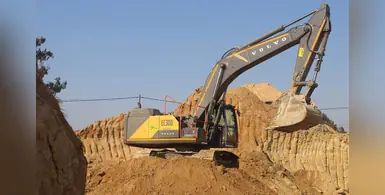
XCMG has accelerated deliveries of road and construction machinery and equipment in Angola and Mozambique — reflecting the expanding role of Chinese equipment manufacturers in Africa’s infrastructure and mining sectors

The company announced in a statement that it is also supporting road construction, lifting, aerial access and green mining projects in territories in Southeast Asia and South America, as well as Mozambique.

Deliveries include more than 100 units of integrated road construction equipment in Angola, nearly 300 crawler cranes across Southeast Asia and 80 aerial work platforms in South America.

“In Mozambique, XCMG delivered an integrated road construction solution and deployed a fully electric mining excavator, highlighting its broad portfolio and localised service capabilities,” the statement read.

Its latest deliveries highlight not only commercial growth, but also the broader China–Africa partnership in infrastructure development, while the introduction of electric machinery points to a growing focus on more efficient and lower-emission technologies.

Angola: road construction projects

The announcement is particularly significant for XCMG in Angola given its scale.

“Representing Angola’s largest single procurement order for conventional construction machinery in a decade, the delivery included crushing and screening, earthmoving and road construction equipment, covering the process from aggregate production to road paving,” XCMG noted.

It also marked the first batch introduction of mobile and stationary crushing plants to Angola, it added.

“The equipment will serve key road projects, supporting infrastructure development and China-Africa cooperation.”

The statement reported that XCMG managed manufacturing, quality control, logistics and after-sales support, ensuring on-time delivery for the Angolan orders.

Mozambique: infrastructure and mining

In Mozambique, its integrated solutions will support various infrastructure work and green mining developments.

“In Mozambique, XCMG introduced an integrated road construction solution and deployed a fully electric mining excavator to support infrastructure upgrades and greener mining operations,” the statement read.

“In Beira, a key transport hub facing ageing pavements, equipment shortages and limited asphalt capacity, XCMG delivered a solution covering asphalt production, paving, compaction and rehabilitation,” the company said.

“The equipment, including asphalt mixing plants, pavers and cold recyclers, supports new road construction, reconstruction and maintenance, improving efficiency and road quality.”

It includes the deployment of the XE1350E, which XCMG said marked Mozambique's first introduction of an electric mining excavator.

The zero-emission, low-noise machine features intelligent real-time fault monitoring and combines high productivity with low energy consumption.

Read more:

Intelligent process control reshapes cement production

Volvo electric trucks surpass 250,000km in South Africa

Zenitaka signs Uganda Karuma Bridge contract

Technology is improving cement production in Africa (Image source: Adobe Stock)

Improving efficiency: Hlulani Mathonsi, sales specialist, ABB South Africa, on how intelligent process control is reshaping Africa’s cement production

Africa’s cement industry is under growing pressure to produce more while consuming less. As urbanisation accelerates across the continent, demand for cement continues to rise, driven by infrastructure development, housing projects, renewable energy investments, and industrial expansion. Whilst the manufacturers are operating in an increasingly challenging environment marked by rising electricity costs, unstable power supply, sustainability pressures, and tighter operational margins.

Globally, cement manufacturing accounts for approximately 7-8 % of total carbon emissions, according to the International Energy Agency (IEA). The sector is also one of the most energy-intensive industries in the world, requiring substantial electricity and thermal energy to sustain production. The IEA estimates that cement production consumes around 100 kWh of electricity per ton produced, placing enormous pressure on energy systems and operational costs.

In South Africa and across Africa, the challenge is even more pronounced. Persistent energy instability and rising utility tariffs continue to impact industrial productivity, forcing manufacturers to rethink how operations are managed and optimised. In this environment, digitalisation and intelligent automation are becoming critical tools for improving resilience, efficiency, and competitiveness.

Industrial automation

Across global manufacturing, companies are increasingly investing in advanced process control, predictive analytics, and automation technologies to improve productivity while reducing waste. According to McKinsey research, industrial automation is rapidly expanding across process-intensive sectors such as mining, chemicals, and cement production as businesses seek greater efficiency, reliability, and sustainability.

For cement plants, this shift is particularly important because production environments are highly complex and highly variable. Small fluctuations in kiln temperature and fuel mix can significantly affect energy efficiency, product quality, and equipment lifespan. Traditional manual operating methods are increasingly unable to manage these variables effectively in real time.

Digital solutions

This is where advanced process optimisation technologies such as ABB’s Expert Optimizer are reshaping operations. Using model predictive control, neural networks, and real-time analytics, these systems continuously monitor and adjust plant conditions to stabilise performance and maximise efficiency. Expert Optimizer is a digital solution that provides advanced process techniques, including linear and non-linear model predictive control, fuzzy logic, neural networks and analytical AI to always make the best operational decisions accurately and consistently in high-pressure environments.

The global results demonstrate the value of this approach. ABB Ability Expert Optimizer results in maximising the use of alternative fuels, increasing recovery in product by 1% to 3%, reducing quality variation by up to 30%, and increasing throughput by up to 8%. In many use cases, plants have achieved return on investment in less than 12 months through lower fuel consumption, reduced downtime, and improved process stability.

Recent global projects further illustrate how integrated automation is transforming industrial production. ABB’s collaboration with Novada Cement in the USA is one such example. ABB deployed electrification, automation, and drives solutions at a new cement plant in Florida to improve process visibility, reliability, and control over cement production to provide operational decision-making across the facility.

Urgency and opportunity

For African manufacturers, this creates both urgency and opportunity. Many industrial facilities across the continent are currently modernising or expanding, creating an opportunity to adopt more advanced and efficient production systems from the outset. However, successful digital transformation is not only about technology deployment. It also depends on aligning systems, people, and operational priorities. Human expertise remains essential in industrial environments, particularly in operationally demanding sectors.

This collaboration between operational expertise and automation is increasingly shaping the future of industrial manufacturing globally. As energy costs rise and sustainability expectations intensify, operational efficiency will become one of the cement sector’s most important competitive differentiators. In fact, the future of cement production will not be defined solely by how much is produced, but by how intelligently, efficiently, and sustainably production is achieved.

Read more:

Africa's cement industry: the push for energy security

Giatec and Sika aim to enhance digital concrete technology

Dangote seals XCMG refinery, infrastructure pact

Volvo Trucks South Africa marks 250,000 km milestone as customer-operated electric trucks accelerate sustainable freight transport. (Image source: Volvo)

Volvo Trucks South Africa has marked a major milestone in its electromobility journey, with its customer-operated electric truck fleet surpassing 250,000 km since the vehicles were first introduced to the local market in 2023

The achievement highlights the growing adoption of battery-electric trucks across a range of commercial transport applications.

The fleet has been operating in diverse environments, helping customers reduce emissions while gaining first-hand experience in electric transport operations. The milestone was achieved using Volvo's current generation of heavy-duty electric truck models.

"While a quarter of a million kilometres may seem modest compared with the more than 400 million already accumulated by Volvo electric trucks globally, it represents a significant achievement in the South African context, where the majority of Volvo electric trucks are operating on shorter-route and urban distribution applications," said Eric Parry, senior manager sustainable solutions at Volvo Trucks South Africa.

Across the customer fleet, the vehicles are averaging approximately 2,000 km per month, while the highest-utilisation trucks consistently record around 10,000 km per month. Average energy consumption across the fleet stands at 1.77 kWh/km, covering a range of applications from eight-tonne 4x2 trucks carrying payloads of five to seven tonnes to 6x4 tractor units hauling interlink trailers with payloads exceeding 32 tonnes.

The milestone reflects customers' confidence in Volvo Trucks' electric mobility solutions and demonstrates that battery-electric trucks can reliably support everyday commercial transport operations.

Reflecting on the progress, Parry said, "Our customers have embraced this technology with a willingness to learn, adapt and pioneer new ways of operating. Reaching a quarter of a million kilometres is not only a testament to the capability of the trucks, but also to the commitment of the customers and drivers who are making this achievement possible."

The operational data collected over the past two years has also provided valuable insights into charging strategies, vehicle utilisation, uptime requirements and driver experience under real-world South African operating conditions.

All customer fleets currently charge their electric trucks either at depots or loading and off-loading facilities using their own charging infrastructure. Depending on operational requirements, customers utilise a combination of overnight slow charging and fast top-up charging.

"One of the most satisfying aspects of this journey has been seeing electric trucks move from being a future concept, to becoming part of everyday transport operations," said Parry. "Every kilometre travelled helps build confidence in the technology and strengthens the business case for broader adoption."

To support fleet operators, Volvo Trucks provides specialised dealer and workshop services for electric vehicles, including real-time battery pack monitoring, dedicated 24/7 roadside assistance and range prediction tools.

Next-generation electric trucks on the horizon

Building on the experience gained to date, Volvo Trucks South Africa is preparing to introduce its next generation of electric trucks later this year. The new models will offer longer operating ranges and additional power options, enabling electric transport solutions to be deployed across an even wider range of applications.

"The trucks currently operating in South Africa are laying an important foundation for what comes next. With increased range and capability on the horizon, we are excited about the opportunities the next generation of electric trucks will bring," explained Parry.

As more fleet operators begin adopting battery-electric transport, Volvo Trucks South Africa views the 250,000 km achievement as an important step in the country's transition towards cleaner commercial mobility.

"While a quarter of a million kilometres is an important milestone, it is what those kilometres represent that matters most: growing customer confidence, valuable operational experience, and a foundation for the next generation of electric transport," said Parry.

Uganda to get new Karuma Bridge (Image source: Adobe Stock)

Japan’s Zenitaka Corporation has signed a contract with Uganda for the new Karuma Bridge project

The new bridge will replace the existing ageing structure and is expected to improve transport and trade links to northern Uganda, South Sudan, and the wider region.

Groundbreaking works are scheduled for September 2026, with civil construction works expected to commence the following month.

The contract was signed in Tokyo recently by Osamu Tanabe on behalf of Zenitaka Corporation, the main contractor for the project, and Isaac Wani, Commissioner for National Roads at Uganda’s Ministry of Works and Transport.

The signing followed the issuance of the Notice of Award by the Ministry of Works and Transport to Zenitaka Corporation as the most responsive and successful bidder for the civil works.

Zenitaka Corporation, which will work alongside Oriental Consultants Global, the project consultants, previously delivered the Jinja Nile Bridge under Japanese funding.

Speaking at the Tokyo event, Wani highlighted the strategic importance of the new Karuma Bridge in restoring safe and efficient movement along the Kampala-Gulu highway.

He noted that the bridge will strengthen regional connectivity, support trade and investment, improve access to essential services, and enhance the resilience of Uganda’s national transport network.

Wani also expressed appreciation to the Japan International Cooperation Agency (JICA) and the Japanese government for their continued support through the Official Development Assistance (ODA) Grant Aid programme, which has enabled the implementation of key infrastructure projects, including the new Karuma Bridge.

Tophace Kaahwa, Uganda’s Ambassador to Japan, described Japan’s support as a “clear demonstration of the strong and cordial bilateral relations between Uganda and Japan.”

She also emphasised the need to further consolidate the partnership for the mutual benefit of both countries.

Read more:

Abidjan-Lagos highway project comes into focus

HMD Ghana-Tuboshu report strong Wampex 2026 interest

Benin, Togo get border highway funding


More Articles …