cc.web.local

Bell Equipment’s newest investment will enhance Richard’s Bay manufacturing capabilities (Image source: Bell Equipment)

A massive moving double-column bridge-type CNC machining centre (DC MC) – the largest of its kind privately owned in the Southern Hemisphere – has been commissioned at Bell Equipment’s Richards Bay factory in South Africa, where the company produces a range of vehicles and machinery for the mining and construction industries

The SP10040GL, complete with Renishaw probing, includes a 36 kW two-axis automatic positional angular head, a right-angle positional head and an extension head.

The machine, which also features automatic head changing, horizontal and vertical tool changers as well as high spindle motor torque and axis motors, was supplied and installed by ZOPO Intelligent Equipment Company Ltd together with the Durban branch of its local agent, WD Hearn Machine Tools.

According to Clive Hodgson, Bell Equipment’s executive manager of manufacturing, the installation marks a commitment to local manufacturing and the latest technologies.

Together with the civil works, the R35mn project is the single largest asset expenditure at Bell Equipment’s Richards Bay factory and was primarily motivated by the need to machine the draw bar and circle frame for the company’s motor grader range.

“These two parts require intricate machining,” said Hodgson.

“We were using our existing boring mills, but these are dedicated to our articulated dump truck (ADT) production and any increase in grader production would have put these assets under stress.”

Greater efficiencies

Although the machining times are comparable to those of the existing boring mills, the DC MC offers efficiencies in terms of reduced setup times, improved precision and higher machine utilisation.

“The machining centre can machine in various planes, so the accessibility of a part is significantly better than what we currently have,” said Hodgson.

“And with the machine having XYZ travel of 10 m x 5,5 m x 1,7 m, we can be machining on the table while setting up the next job. In theory, the machine never has to stop, and the utilisation will be significantly higher.”

The operation of the DC MC is “not that complicated,” he added, and is similar to Bell Equipment’s other production assets.

However, it has introduced the company to new technology through its full simulation capability using Mastercam with CIMCO advanced milling and machining simulation features.

“We can now take a drawing of the part we want to machine and simulate how we would machine it, to see what would make the most sense and what tooling heads we’d need to use.”

Teamwork approach

ZOPO DC MC was chosen based on WD Hearn’s aftersales support, including access to spares and technical backup in nearby Durban, according to Bell Equipment Group technical director, Justin Bell, highlighting the importance of partnership.

“Today marks an important milestone in Bell’s journey towards the future of manufacturing with this significant investment,” he said.

“We started our journey with ZOPO some two years back with a smaller double column machine. We were guided by the absolute confidence shown by the WD Hearn team in ZOPO and its products and we have since added more ZOPO machines to our asset register, with this imposing arrival being our fifth unit.”

He added: “We have much to learn to extract the full value from this machining tool but have trust in our strong relationship the team at WD Hearn that we will walk this path together and make a great success of it, something our two companies have done for the past 28 years.”

The ZOPO and WD Hearns teams spent 75 days installing and commissioning the machine.
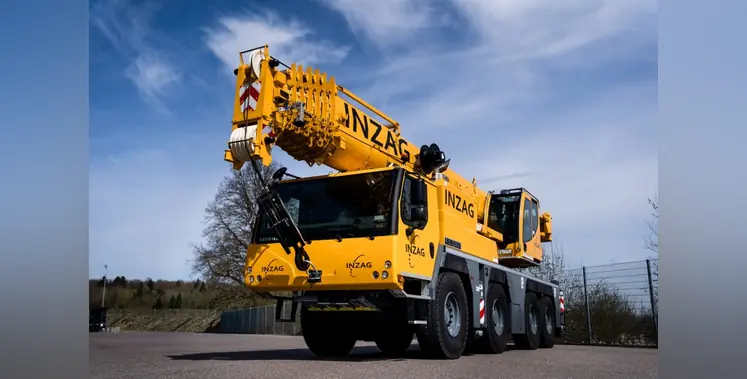
Somalev’s crane fleet now includes the 750 t LR 1750/2 crawler crane

Moroccan heavy-lift and specialised transport company Somalev Cranes & Logistics is strengthening its operational capacity with an order for ten new Liebherr mobile cranes

The all-terrain LTM series machines offer lifting capacities between 50 and 250 tonnes, adding to the company's equipment portfolio as it pursues further growth in domestic and international markets.

The investment reflects Somalev's focus on expanding its fleet with advanced lifting technology while maintaining high safety and operational standards. The company selected Liebherr for its technical capabilities and established local presence through Liebherr Maroc S.A.R.L.

Partnership supporting long-term expansion

For Somalev, the latest acquisition forms part of a wider strategy to increase its ability to serve customers across different industries. ‘Our guiding principle is clear: we want to continuously expand our fleet to support our customers and partners with ever more innovative solutions,’ emphasises company founder and managing director Mohamed Moufid. ‘This step puts us in the big league. Africa is ready for the new generation of mobile cranes, and we are planning further investments in Liebherr machinery – for us, Liebherr is far more than just a supplier: it is a strong partner that has been supporting our growth for twelve years.’

Founded in 2014 by Moufid, Somalev has developed into a business employing approximately 400 people across four divisions: heavy-lift technology, port handling, industrial relocations and project cargo, and specialised transport. Its equipment portfolio includes mobile and crawler cranes, specialised transport vehicles and heavy-lift handling machinery. The company's largest crane is the 750-tonne LR 1750/2 crawler crane.

Liebherr equipment accounts for approximately 70% of Somalev's fleet. Explaining the company's preference for the manufacturer, Moufid said: ‘Our machines are more than just tools – they are assets. That is why they must be of the highest quality. Liebherr is a premium brand that stands for reliability and value retention.’

New cranes equipped for connected operations

The order consists of six cranes with lifting capacities of 50–60 tonnes, two LTM 1110-5.1 models rated at 110 tonnes, one LTM 1230-5.1 with a 230-tonne capacity and one LTM 1250-5.1 capable of lifting 250 tonnes.

Liebherr will prepare all ten machines to its factory specifications, with the manufacturer's warranty included. Some units will feature Somalev's corporate colours and folding jibs. Each crane will also have a telemetry modem connected to Liebherr's Performance app, enabling the company to monitor equipment across its operating locations in real time.

Alongside location information, the platform provides operational data covering fuel consumption, wind speed and the current load on the hook. This will give Somalev greater visibility of fleet performance and support more efficient equipment management.

The new cranes will serve several sectors, including renewable energy, particularly as auxiliary equipment for wind power projects, as well as port logistics, oil and gas, chemicals, industrial operations and infrastructure development.

Somalev is also looking beyond the African market, with preparations under way for projects in Southern Europe and partnerships with international lifting service providers. ‘We are also preparing projects in Southern Europe and partnerships with international lifting service providers,’ adds Moufid.

Moroccan company gains international recognition

Somalev's expansion follows its recognition at the 2025 ESTA Awards, where it became the first Moroccan and African company to reach the finalist stage. The company secured European runner-up position in the Lattice Boom Crane category at the awards ceremony in Munich.

Its operations are supported by triple ISO certification covering quality management (ISO 9001), environmental management (ISO 14001) and occupational health and safety (ISO 45001).

‘We are a 100 % Moroccan company, both in terms of capital and employees, and we hold triple certification to ISO 9001, 14001 and 45001. Our goal is clear: we want to prove that a company founded in Casablanca can compete with the very best,’ says Moufid.

SANRAL awards R1.43bn Gauteng road resurfacing contracts

The South African National Roads Agency SOC Limited (SANRAL) has awarded three road resurfacing contracts worth approximately R1.43bn across the City of Tshwane and City of Ekurhuleni metropolitan municipalities, targeting improvements to key sections of Gauteng's national road network

The projects cover the R21, N3 and N17 highways and form part of SANRAL's programme to maintain national road infrastructure, strengthen road safety and create economic opportunities for surrounding communities.

Construction on all three projects will commence following a three-month mobilisation period. Progress Hlahla, SANRAL's Gauteng Provincial Head, said the contract awards would support the upkeep of important transport routes used for passenger and freight movement.

“I am pleased with the awards of these projects as they represent the work that SANRAL puts in the upkeep of Gauteng’s national road network. These routes are important for the transportation of goods and people, connecting communities and facilitating economic activity. The improvement of these routes will ensure that our infrastructure continues to serve road users safely and efficiently,” said Hlahla.

Three national routes set for rehabilitation

The largest contract, valued at R499.8mn, has been awarded to Roadmac Surfacing (Pty) Ltd for resurfacing the R21 between the Olifantsfontein and Hans Strydom interchanges in the City of Tshwane.

Work is scheduled to begin in early January 2027, with completion expected in April 2028. The programme includes road resurfacing, replacing danger plates at culvert structures, installing new permanent regulatory and warning signs, replacing guardrails where necessary, and applying fresh road markings and road studs.

Roadspan Surfaces (Pty) Ltd has secured the R463mn contract for the N3 section between the Heidelberg Road and Geldenhuys interchanges in the City of Ekurhuleni.

Construction is expected to begin towards the end of February 2027 and finish in September 2028. Planned works include resurfacing, drainage repairs, guardrail installation and replacement, and upgrades to road signs, markings and studs.

The third contract, worth approximately R469.5mn, has also been awarded to Roadmac Surfacing (Pty) Ltd. It covers the N17 between Springs and the Leandra Interchange, beginning in the City of Ekurhuleni and extending into the Gert Sibande District in Mpumalanga, ending near the Leandra toll plaza.

Construction is expected to start in mid-May 2027. The work will involve removing the existing asphalt and laying a new surface, alongside replacing bridge joints.

Contracts create opportunities for local communities

Alongside the road improvement works, SANRAL has incorporated public participation and skills development requirements into the contracts. A total of 30% of the final contract award value for each project will be allocated to public participation initiatives.

These provisions will create opportunities for targeted labour and enterprises, including businesses owned by young people, women, military veterans and persons living with disabilities.

The projects will also provide community-based training opportunities through Technical and Vocational Education and Training (TVET) colleges and universities.

“Whilst the primary objective of these awards is for construction, we also recognise the importance of creating opportunities for meaningful participation and skills development for people and small businesses within the communities in which we operate,” added Hlahla.

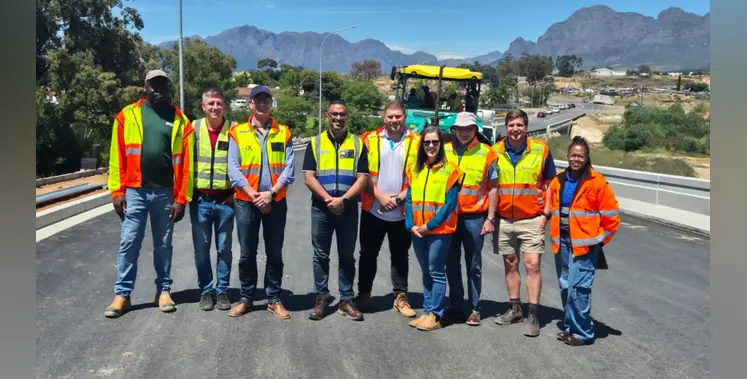
Western Cape advances a R1.165 billion road upgrade to improve Franschhoek Pass safety. (Image source: Western Cape Government)

The Western Cape Government is advancing a R1.165 billion (approx. US$12.25mn) road improvement and flood-recovery project along Franschhoek Pass, focusing on safer travel, improved regional connectivity and stronger infrastructure capable of withstanding extreme weather

Led by the Department of Infrastructure, the MR191 project includes road upgrades, resurfacing, drainage improvements and repairs to sections damaged by repeated flooding. Construction is expected to be completed in July 2027, subject to favourable conditions.

Franschhoek Pass is expected to reopen during the construction holiday, from mid-December to mid-January, with stop-and-go traffic controls in place. However, the reopening will depend on safety assessments, and the road will remain closed if conditions are considered unsafe.

Repeated flooding prompts major road repairs

Severe rainfall in October 2023 caused 16 slope failures and slips along Franschhoek Pass, leaving sections of the route damaged. Further heavy rainfall in May 2026 resulted in five additional slips and erosion at the Du Toits River bridge abutment on the Villiersdorp side.

The recurring damage has highlighted the challenges of maintaining transport links in areas exposed to extreme weather. The additional flood-recovery work has therefore been incorporated into the wider MR191 improvement programme, combining urgent repairs with measures intended to improve long-term road resilience.

Engineering measures target road safety and slope stability

The project covers several sections of the road network, with work focused on upgrading deteriorated surfaces, improving drainage and stabilising vulnerable slopes.

Approximately 9.57 km of MR191 between Old Paarl Road (MR189) and Helshoogte Road (MR172) is being widened and upgraded to a Class 1 road. Rehabilitation work also covers approximately 14 km between the Helshoogte intersection and the Franschhoek urban area, as well as approximately 16 km between Franschhoek and the Theewaterskloof Dam.

Construction activities include asphalt surfacing, pavement reconstruction, drainage upgrades and repairs to the Du Toits River bridge abutment. Specialist slope protection measures include soil nails, high-strength steel mesh, anchored gabion walls and reinforced concrete structures.

These engineering interventions are designed to address existing damage, improve road stability and reduce the risk of further deterioration during periods of heavy rainfall.

Road construction supports local employment and businesses

Beyond its transport benefits, the Franschhoek Pass project is creating opportunities for local workers, suppliers and emerging contractors.

The project has generated 94,090 person-days of local labour, exceeding its target of 70,160 person-days. A total of 357 work opportunities have been created against a target of 440, while 57 local enterprises have supplied goods and services, surpassing the target of 40.

Six emerging contractors have received subcontracting opportunities, meeting the project's target. Meanwhile, R141.15 million (approx. US$8.53mn) has been directed towards targeted enterprises, exceeding the planned allocation of R126.17 million.

These figures illustrate the wider economic contribution of infrastructure development, particularly through local procurement, employment and opportunities for smaller businesses to participate in major public works projects.

Minister Simmers emphasises on long-term infrastructure resilience. 

Minister Simmers highlighted the importance of strengthening transport infrastructure following repeated flood damage and ensuring that public investment delivers lasting benefits for communities and businesses.

“The damage caused by successive flooding events reminds us why investing in resilient infrastructure is so important.

“We are not simply repairing damaged roads. We are strengthening vital transport connections, improving road safety and investing in infrastructure that must serve our communities and economy for years to come.

“Equally important is the economic value created during construction. With more than 94,000 person-days of local labour and over R141 million directed towards targeted enterprises, this project demonstrates how infrastructure investment can support livelihoods and create opportunities for local businesses

“Our commitment remains to deliver infrastructure that is safer, more resilient and capable of supporting economic growth across the Western Cape.”

Franschhoek pass upgrade targets July 2027 completion

Work on the MR191 road improvement and flood-recovery programme will continue across the affected sections, with completion anticipated in July 2027, subject to construction conditions.

The planned holiday-period reopening will depend on whether the route can be operated safely under the required traffic controls. The Department of Infrastructure will prioritise road-user safety if weather conditions or other hazards prevent the safe passage of traffic.

Once completed, the project is expected to provide improved road conditions, stronger slope protection and better drainage, helping safeguard an important regional transport connection while supporting economic activity across the Western Cape.

Aerial view of Conakry, Guinea (Image source: Adobe Stock)

A number of key infrastructure projects in Africa are set to advance after the UK government’s export credit agency backed funding worth £330mn for contracts secured by various British firms

The export contracts will help deliver nine major infrastructure projects across Guinea and Benin and will see UK companies supplying goods and services spanning education, clean water, electricity transmission and government infrastructure.

The deals are being supported by £1.1bn in financing and guarantees from UK Export Finance (UKEF) and were unveiled at the fifth UK-West and Central Francophone Africa Trade and Investment Forum (WCAF) in Conakry, Guinea.

The forum brought together British businesses and potential partners from across the region.

UKEF announced that it is also increasing its exposure capacity across the region by £1.7bn, giving it greater capacity to support future projects involving UK firms.

Key projects covered include:

• £91 million to back the Guinea Regional Water Project, a multi-region programme expanding access to clean, potable water through new treatment and distribution infrastructure, delivered by UK-headquartered Aqua Africa, which has previously secured UKEF-backed financing for water infrastructure in the region.

• £129 million towards the La Cotiere Conakry Transmission project in Guinea, part of a wider electricity network programme to improve power distribution around the country’s coastal region, with the contract secured by Elecnor and expected to create UK supply-chain opportunities in transmission equipment, grid technology and engineering services.

• £82 million to help fund a new government administrative complex in Benin, consolidating public services within a modern urban development, with the contract awarded to ACC UK Group Ltd and opportunities for UK firms to contribute design, engineering, security systems and specialist building services.

• £75 million to support a large-scale education infrastructure programme delivering new primary and secondary schools across four regions, improving access to education for thousands of children through modern classrooms, sanitation and related facilities, with the contract won by Planet One.

“British businesses have won a huge number of contracts to support key infrastructure projects across the region in recent years, driving job creation in the UK while helping our partners in francophone Africa build the infrastructure they need,” said UKEF’s CEO Tim Reid.

“This is part of the reason we hold the WCAF: we’ve seen many deals signed over the years, and it highlights how UKEF can make a real difference around the world while driving growth in every postcode of the UK.”

More Articles …