




vb

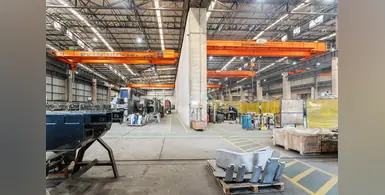
Condra overhead cranes installed in a factory environment (Image source: Condra)

Artificial intelligence (AI) will disrupt business sectors in different ways and to different degrees, but will hardly disrupt the lifting equipment industry at all.

This is the opinion of Marc Kleiner, managing director of crane and hoist manufacturer Condra, who says AI is more likely to change processes and work flows at customer installations, rather than the equipment itself or the lifting industry as a whole.

“People are talking about AI as a change agent equal to the industrial revolution, and maybe that is so,” he said. “But when something heavy needs lifting, artificial intelligence is not going to change the fact that you will still need a machine of some sort to do that.“

Over time, AI will probably change the methodology of manufacture where the crane is installed, but it will not change the lifting industry itself,” he said.

Kleiner pointed out that AI has been around for years, with a presence established throughout commerce and industry long before the headline-grabbing advancement of today’s large-language machine learning models.

“Motion control sensors, frequency drives and vibration monitoring pods have long been a part of crane safety, efficiency and reliability,” said Kleiner. “All these components make use of artificial intelligence. But you still need a skilled technician to fit them, or replace the part predicted to fail. There is not suddenly going to be some kind of magic wand that will get the installation to do that.

“The large-language machine learning AI models that use artificial neural networks to train and advance themselves – well, I don’t think you’re going to find much of that in the lifting equipment industry, and you might never find them.”

Crane automation

Kleiner said that what was more likely to happen was a move to crane automation within processes involving repetitive lifting and positioning tasks, for example warehouse packing and picking operations, or sensitive tasks such as the replacement of fuel rods in nuclear reactors.

“In these types of processes, there will probably be a shift of the operator away from the crane to a more remote workstation,” he said. “But this type of automation has been around for a long time. It is nothing new. Condra has several fully automated and semi-automated crane installations in our customer base.”

Kleiner said that today’s crane operators tend to view AI systems with a sort of cautious scepticism, appreciating their usefulness while still relying on their own skill, awareness and split-second judgement.

He cautioned that the AI add-ons available for cranes and hoists are expensive.“Customers often exclude them from specifications at the tender phase because of the cost,” he said, “instead investing in a better quality crane at the outset, one that is going to last without needing the add-ons.

“Whether AI is used or not will always depend to a large extent on the answer to a single question: can the crane perform the same task for a lower investment?”

Design impact

Turning to design, Kleiner admitted that AI is likely to have a substantial impact.“Condra has invested heavily in AI-driven CAD programmes to enable optimal component design,” he said. “But you have to be careful with optimisation because the programme can progress in the wrong direction. And you still need an engineer to go through the results, you still have to manufacture that component. So the jobs are safe. The AI drive toward improved theory continues, but the people remain, at least in the lifting equipment industry they do.”

On hacking, Kleiner pointed to last year’s hack at Jaguar Land Rover which resulted in a five-week halt to production worldwide, an estimated US$2bn fallout from lost production, and severe disruption to 5,000 supplier businesses, some of which needed government support to avoid financial ruin.

“Hacking by bad actors is always going to be a danger,” he admitted, “so accelerating use of AI technology will certainly increase that risk.”

Asked about driverless cars progressing to the point of operator-free cranes, he dismissed the analogy as irrelevant.

“Even if the crane could position itself correctly, you would still need people to attach the hooks or change the bottom block to a grab so that the crane can carry out the designated lift. As I said before, AI will change the way things are manufactured, but not the application of a crane to lift the part that needs to be moved.”


Rwanda study assesses market for green building materials. (Image source: GGGI)

The Global Green Growth Institute (GGGI) and AFD Group / Expertise France, working with the Government of Rwanda through the Rwanda Housing Authority (RHA) and Rwanda Public Procurement Authority (RPPA), have completed a market readiness study examining the availability, affordability and supply of selected green building materials and equipment in Rwanda

The Market Study on Rwanda’s Green Building Materials and Equipment Market was validated on 24 September 2026 at an event attended by representatives from government, the construction and engineering sectors, academia and other stakeholders.

The study is expected to support the development of green technical specifications for selected products and contribute to the implementation of Rwanda’s Green Building Minimum Compliance Standards.

Assessing Rwanda’s green construction market

Following stakeholder consultations, three products widely used in Rwanda’s construction sector were selected for detailed market readiness analysis.

The assessment examined market demand, lifecycle costs and supply chains, providing evidence on existing market conditions as well as the opportunities and constraints affecting the availability and uptake of sustainable construction solutions.

Caroline Raes, GGGI Africa’s deputy regional director for quality of delivery and country representative for Rwanda, highlighted Rwanda’s efforts to promote green building and the partnership with AFD Group / Expertise France.

“The transition to greener construction requires more than standards and policies. It also requires markets that can provide accessible, affordable and reliable green solutions. This study helps connect Rwanda’s policy ambition with the market conditions needed for implementation, supporting a more sustainable built environment and contributing to the country’s broader transition to a green economy.” Said Caroline.

Green procurement and construction

The study was undertaken under the Green Public Financial Management (PFM) technical assistance programme, funded by Agence Française de Développement (AFD) and implemented by Expertise France.

The programme supports Rwanda’s efforts to incorporate environmental and climate considerations into public financial management and public spending.

As part of the programme, Expertise France commissioned GGGI Rwanda to conduct the market study. Its findings are intended to provide evidence-based insights for green procurement guidelines and support the development of Rwanda’s green construction ecosystem.

Anthea Manasseh, AFD Country Director for Rwanda, said:

“Sustainable public procurement can help turn public spending into a driver of market transformation. By strengthening the evidence base on green construction materials and equipment, this study provides practical information that can help public institutions make more informed procurement decisions while creating opportunities for more sustainable solutions and local market development.”

Rwanda’s green building standards

The market assessment builds on Rwanda’s existing efforts to improve sustainability in the built environment.

In 2019, the Government of Rwanda, through RHA, developed the Rwanda Green Building Minimum Compliance System (GBMCS), with technical support from GGGI and other partners.

The system establishes environmental performance indicators covering energy and water efficiency, environmental protection, indoor environmental quality and green innovation.

Jimmy Christian Byukusenge, director general of the Rwanda Public Procurement Authority, said, “Every public procurement decision is an opportunity to advance Rwanda’s sustainability agenda while maximizing value for public resources. By integrating national and international sustainability standards and adopting life-cycle cost analysis, we can move beyond the lowest upfront price to consider long-term economic, environmental, and social value. This strategic approach ensures that public procurement delivers greater efficiency, responsible resource utilization, and sustainable development outcomes for present and future generations.”

Building Rwanda’s sustainable construction market

Alphonse Rukaburandekwe, director general of the Rwanda Housing Authority, called for greater collaboration between the government and private sector to translate Rwanda’s sustainable construction policies into practical solutions at scale.

He said Rwanda has established an important policy direction for sustainable construction, but strengthening the market and institutional systems needed to implement these commitments is now a priority.

Rukaburandekwe also highlighted the potential for sustainable construction to support local industry development, employment, innovation and the Made in Rwanda agenda, while maintaining required quality and performance standards.

“For green building standards to translate into practice, the market must be able to provide the materials, equipment and technical solutions required to meet them,” stated Rukaburandekwe. 

The study also addresses practical barriers to scaling green construction in Rwanda, including limited awareness of green materials, concerns about upfront costs, local production capacity and market availability.

By connecting market evidence with sustainable procurement, the initiative is expected to strengthen the conditions required for wider adoption of green building materials, equipment and solutions in Rwanda.

Construction boost for Accra's hotels sector

Ghana will see the construction of a new 170-room hotel near Accra International Airport, in a project that is set to boost local jobs and the local supply chain

The Hampton by Hilton Accra Airport project is aimed at expanding Ghana’s midscale hospitality offering while supporting local businesses.

The Accra construction project is expected to provide nearly 1,000 direct and indirect jobs, including 200 permanent positions, as well as create new opportunities for local suppliers.

The International Finance Corporation (IFC) announced that it is providing long-term financing to PLP Properties Ltd, a Ghanaian property investment and development company, in support of the scheme.In a statement, IFC, a part of the World Bank Group, noted that its I’d long-term financing will give the project “sufficient time” to complete construction and establish operations.

“Our vision goes beyond building a hotel,” said Jean-Louis Feghali, executive director of PLP Properties.

“Hampton by Hilton Accra Airport will strengthen Accra’s hospitality offering, create jobs, support local suppliers, and serve business and leisure travellers.”

Travel and tourism contributed an estimated 5.7% of Ghana’s gross domestic product and supported more than 800,000 jobs in 2024.

By expanding midscale accommodation and strengthening hospitality infrastructure, the project is expected to support Ghana’s tourism sector and its contribution to employment and economic activity.

Hampton by Hilton Accra Airport will broaden the range of quality accommodation available to business and leisure travellers in a market where most internationally branded hotels serve the upscale segment.

“Investment in quality, sustainable accommodation can strengthen Ghana’s tourism sector and support jobs across the wider economy,” said Nathalie Kouassi Akon, IFC division director for West Africa Gulf of Guinea.

“IFC’s partnership with PLP Properties will expand Accra’s hospitality offering, strengthen demand for local goods and services, and promote more sustainable hotel development.”

The hotel is expected to source goods and services from Ghanaian businesses, including small and medium-sized enterprises.

The project is also targeting IFC’s green building standards — the hotel is being designed to use at least 40% less energy and 20% less water than a conventional building, while also reducing embodied carbon in construction materials.

These efficiencies are expected to lower operating costs and establish a stronger benchmark for resource-efficient development in Ghana’s hospitality sector, IFC noted in its statement.

Read more:

Iveco supports Ghana road safety training with Stralis donation

HMD Ghana, Tuboshu report strong Wampex 2026 interest

Terra Industries builds Ghana drone factory expansion


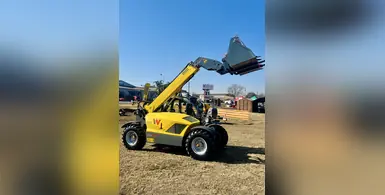
Telehandlers are among the Wacker Neuson compact machines supplied by newly appointed dealer Welgro in Mpumalanga (Image source: Wacker Neuson)

Wacker Neuson South Africa has expanded its dealer network and reinforced its presence in Mpumalanga with the appointment of Welgro Engineering and Mining Supplies

“Welgro’s established sales network, fully equipped workshop and service infrastructure, together with its proven track record across the mining, engineering, construction and agricultural sectors, made the partnership the natural choice,” said Eric Berrington, Wacker Neuson’s regional manager for Gauteng, Limpopo, and Mpumalanga.

Welgro Engineering and Mining Supplies is a provider of industrial and construction equipment solutions that has served the region for 40 years.

“The dealership also represents several respected international brands that demand a high standard of technical expertise and aftersales support, giving us further confidence in Welgro’s ability to successfully support customers over the long term,” added Berrington.

He said Welgro’s alignment with Wacker Neuson’s core values, together with recommendations from multiple industry contacts, prompted Wacker Neuson to initiate discussions.

“Welgro Engineering and Mining Supplies has built its business on long-term relationships, practical product knowledge and dependable service, with a steadfast focus on first understanding each customer’s operation before recommending the right solution to support sustainable operations,” said Kyle Handley, managing director at Welgro.

“Because every site and operation faces unique pressures, from production deadlines to safety requirements and downtime challenges, we adopt a hands-on, consultative approach, supporting customers with a wide range of industrial and construction solutions, backed by experienced sales and technical staff and a well-equipped workshop.

”Playing a vital role in the national economy, Mpumalanga is central to Wacker Neuson’s dealer expansion strategy, with the company’s approach anchored around three key hubs – Mbombela, eMalahleni and Secunda – and aligned to the industries driving growth across the province.

Handley outlined key reasons why Welgro was eager to partner with Wacker Neuson, including product quality and reliability, as well as strong reputation in construction, plant hire and infrastructure development.

He said customers want high-performing, dependable equipment that helps optimise their operations, and highlighted Wacker Neuson’s machines as well-engineered, robust and built for tough working environments.

“The machines are practical, intuitive and productivity-driven – qualities that resonate with operators.”

Under the dealership agreement, Welgro will supply Wacker Neuson’s full range of compact machines, including mini excavators, telehandlers and wheel loaders; construction equipment, including pumps and lighting towers; compaction equipment, including rammers and plate compactors; concrete technology, including external vibrators; and other specialised worksite solutions.

The range is positioned to support the diverse requirements of customers across the construction, agricultural, mining and related industries.

“Our immediate focus is on building a strong, reliable offering around Wacker Neuson’s products already in demand locally, expanding the range over time in line with customers’ changing requirements,” said Handley.

“Compact machines and equipment are especially well-suited to the market, with the capability to perform efficiently in confined spaces – a quality that is highly valued across the sectors. We also expect to see strong demand for lighting towers, particularly in mining, where reliable site illumination is critical for safety and productivity.”

He said there are also “compelling growth prospects” for electric and zero-emission equipment.

“We are ready to introduce more of Wacker Neuson’s electric product ranges to support customers with sustainable, efficient, environmentally conscious and forward-looking solutions.” 

Chinese machinery exports benefiting from African growth (Image source: Adobe Stock)

Chinese construction machinery and equipment manufacturers, XCMG and SANY, both reported strong growth from Africa and other overseas territories in recent results round ups

SANY Heavy Industry reported H1 2026 revenues of approximately US$7.9bn, up 19.49% year over year — with Africa the single fastest-growing region.

Total overseas revenues reached US$4.7bn, up 21.82% and representing 61.33% of the company’s core business revenue.

Africa outstripped other regions, with revenues growing 47.66% to US%790.2mn.In a statement, SANY Heavy Industry also highlighted how its strategy in Africa is maturing as it seeks to nurture close ties to local markets.

“The company is moving from product exports toward localised industrial operations overseas, bringing sales, services, product development and operations closer to local markets,” it noted.

With all its major product lines — covering piling, concrete, lifting, excavation and road machinery — reporting strong growth, the company outlined moves to reform overseas organisation and strengthen production innovation and R&D management.

XCMG also reaffirmed its global ambitions after reporting that its overseas revenues had exceeded 50% of its total revenues for the first time — reaching approximately US$4.56bn for the H1 2026 period.

Africa was also highlighted as an increasingly significant market, for a company that now operates more than 60 overseas subsidiaries — during the first half of 2026, it established a new trading subsidiary in Nigeria.

“The company's global network also includes more than 300 overseas dealers and over 2,000 service and spare parts outlets,” it said in a statement.

“Construction of overhaul centres in Indonesia, and Simandou, Africa, is progressing as planned, further strengthening XCMG's overseas aftermarket service capabilities.”

The company has previously announced a series of work orders for the giant Simandou mining and infrastructure mega project in Guinea, West Africa.

Read more:

XCMG delivers in Angola and Mozambique

Chrysos technical field support enhances concrete performance

Iveco supports Ghana road safety training with Stralis donation

More Articles …